Skip to content
Winnipeg North Dental
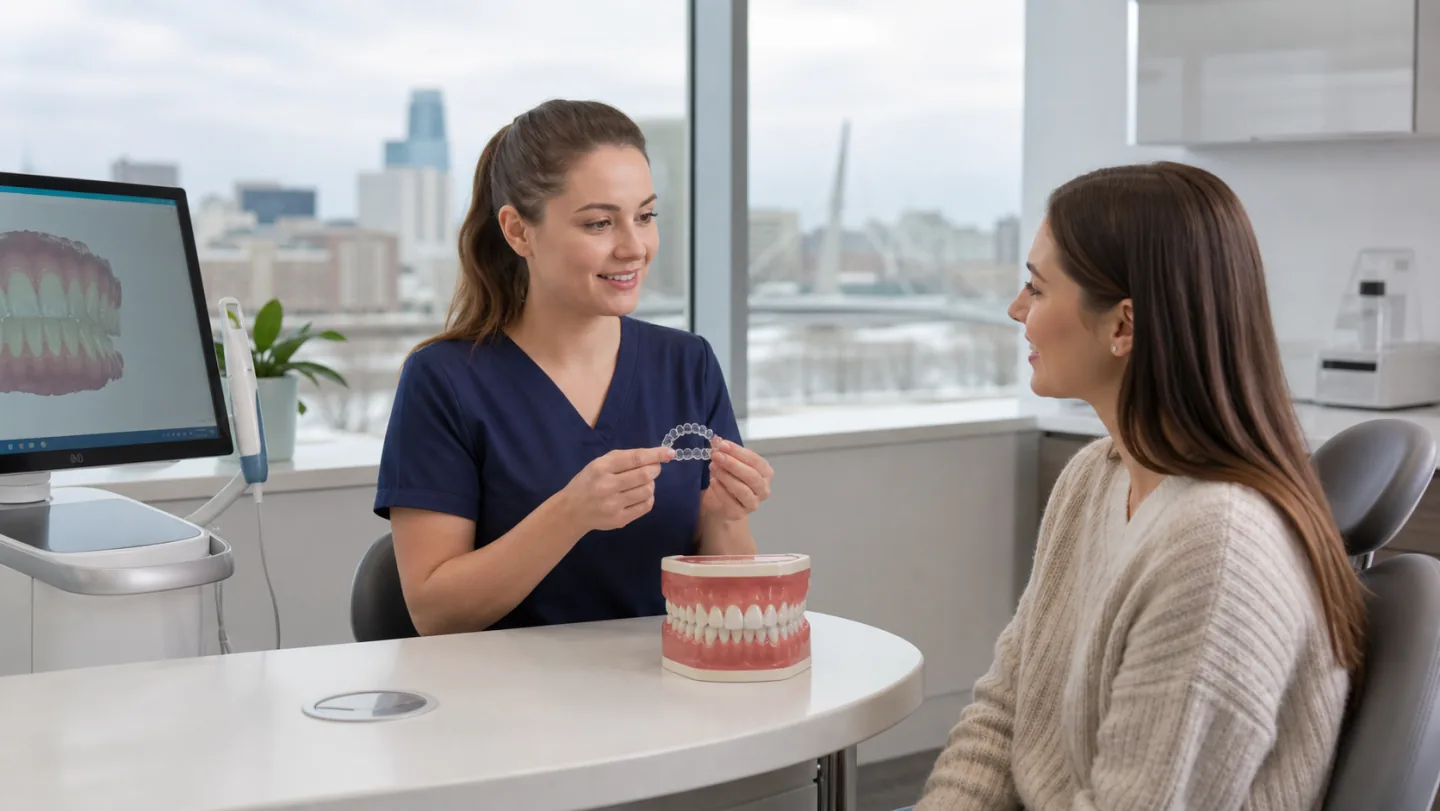
A dentist showing a clear aligner to a patient during a consultation
Gums on your mind?

Invisalign for Rivercrest Residents

Maybe you’ve had gum treatment, or a hygienist has mentioned your gums more than once. If you’re in Rivercrest and thinking about aligners, that history deserves a clear look first.

Let's find a time

Request an appointment

We’ll call to confirm your appointment. For urgent care, please call us directly.

The foundation under your teeth

Moving Teeth Means Paying Attention to What Holds Them

Teeth don’t move on their own. They shift within the bone and gum tissue that support them, and so the state of those tissues matters in any orthodontic plan. A past gum problem doesn’t decide the matter one way or the other, but it’s something the dentist needs to know about.

Tell us about it from the outset. Rivercrest is outside the City of Winnipeg, and residents come into Winnipeg for care, in this case to our McPhillips Street clinic, where your gums and root support would be examined as part of an aligner assessment.

Explore invisalign
Pale blue dental chair with an overhead light arm and a small wall-mounted screen
A dental chair, sink and frosted cabinets in a treatment room at Winnipeg North Dental.

Share your gum history

Past treatment, bleeding or recession are all things to mention, even if they happened long ago.

Roots are part of the exam

Support around each root helps determine which tooth movements can sensibly be planned for you.

Cleaning still comes first

Trays go back only onto brushed teeth with cleaned spaces, which is good news for your gums.

Looking below the gumline

Why gum health figures in aligner decisions.

A tooth’s position is what you see in the mirror. Whether it can be moved is a question that also depends on the tissues you can’t see so easily.

What the exam looks for

Your gums are checked along with your bite and tooth position. Suitable X-rays can show the dentist what’s happening around the roots, beyond what’s visible.

  • Signs of inflammation or bleeding gums.
  • Areas where gums have pulled back from teeth.
  • How much root support each tooth appears to have.
  • Any teeth that seem to have drifted or loosened.

What it could mean for you

Depending on what’s found, you may hear that gum care should come first, or that a different plan is more sensible. The dentist can explain the reasoning.

  • Gum treatment might be advised before anything else.
  • Some movements may be planned with added caution.
  • A different appliance or approach could be suggested.
  • Regular cleanings stay important during treatment.

If your gums start bleeding, swelling or feeling different while you’re in trays, let the clinic know instead of waiting until your next progress check.

Tissue checks at every stage

Where your gums come up in the process.

All aligner treatment goes through four stages. Here’s how gum health can stay in view from beginning to end.

Request your visit
  1. 01

    A full examination

    This takes in your teeth, gums, bite and jaw relationships, using photographs and suitable X-rays. Your gum history gives it useful background.

  2. 02

    A cautious blueprint

    With tissues in mind, the dentist works out each tooth’s movement and how room will be created. Ask how your history has shaped those decisions.

  3. 03

    Fit and hygiene teaching

    Aligners are confirmed for fit, and attachments go on if they’re planned. Ask to be shown how to keep the areas around attachments clean.

  4. 04

    Follow-along visits

    Progress gets measured against the sequence. Speak up about any changes in your gums you’ve noticed since you were last in.

Before you make the trip in

Pull your gum story together.

It’s often easier to be accurate with a little time to think beforehand. Gathering details also helps you make good use of a trip into the city.

Don’t postpone a visit because you’re embarrassed about your gums. An honest account is far more useful than an idealized one.

Details that may help

  • Where and roughly when any gum treatment took place.
  • Where you’ve noticed bleeding, recession or loose teeth.
  • How regularly you’ve been having dental cleanings.
  • Medications, smoking habits and relevant health conditions.
Front desk with a clear divider, a small orchid and a hallway with a frosted glass wall beside it
Consultation room with leather office chairs, a white desk and a landscape painting on the wall

A hallway with a frosted glass wall beside reception and chairs at a white desk, Winnipeg North Dental.

If you’ve been told off before

This isn’t an inspection of your character.

People who have had gum trouble sometimes dread being scolded about their flossing. The purpose here is to understand your mouth, because that’s how sound treatment decisions get made.

Sore spots

Let the clinic know if a tray edge seems to be irritating your gums, rather than adjusting it yourself.

Questions about X-rays

If you’re unsure why you’re being asked for images, ask what they would show about your roots.

A slower decision is fine

You may want time to absorb news about your gums before you think any further about aligners.

Keeping gains and gums

Long-term care for both teeth and tissues.

Gums and tooth position are likely to stay linked for you long after active treatment has ended. Think of retainers and gum care as a pair of ongoing habits.

01

Retention for the long haul

Tissues need time to adapt once movement stops, and retainers hold your teeth in the meantime. Keep wearing them as you’ve been told.

02

Refinement, if necessary

New records could support ordering a further set of trays. Your gum health would remain relevant at that point.

03

Routine cleanings

Ask how frequently you should be seen, particularly if you’ve already been treated for gum problems.

Retainers need cleaning as well. Ask how to look after yours so it doesn’t become one more thing irritating your gums.

Talk with our team
Winnipeg North Dental storefront with glass double doors and a metal railing at the entrance

Winnipeg North Dental

Unit-5 2358 Mcphillips Street, Winnipeg, MB R2V 4J6
Get directions (opens in a new tab)
Your Rivercrest route to answers

Where Your Gums and Bite Would Be Assessed

People from Rivercrest would have their Invisalign assessment and follow-up at Winnipeg North Dental, Unit 5, 2358 McPhillips Street, Winnipeg.

Filling in the form doesn’t lock in an appointment, and you’ll get a call or message to settle on a time. Sudden swelling, or anything else that worries you, is a reason to phone.

Questions about coverage?

Talk with our team before your visit or learn about CDCP.

A little clarity before your visit

Your questions, answered.

Helpful details about invisalign in Rivercrest.

Ask our team
Can I get aligners if I’ve had gum disease?

A previous diagnosis doesn’t answer the question by itself. The dentist needs to examine your current gums and root support before saying what’s advisable.

Might my gums need treatment first?

They might, depending on your examination. The dentist can explain the reasons and how the order of treatment would work in your case.

My teeth drifted after gum problems. Can trays move them back?

Drifting is something to have looked at before making any plan. Ask what caused the change, and whether an aligner movement is appropriate for your situation.

Are removable trays easier on gums than brackets?

Being able to take trays out does make brushing and cleaning between teeth simpler. Your own results will still rest on your daily habits and gum condition.

Will moving my teeth cause recession?

Raise that concern with the dentist, who can look at your tissues and explain what your plan might mean. No one can answer that well without examining you.

How do Rivercrest residents arrange a gum and bite check?

Call (204) 338-3003 or fill out the form, and note any gum treatment you’ve had. The clinic will then contact you to set up your visit.

Tell us the whole story

Have your gums and bite looked at together.

Request an aligner assessment on McPhillips Street, and mention any gum history when you do.

Patient testimonials

Kind words from our patients

★★★★★ 5.0 from 440+ reviews on Google

Close to home

Areas we serve

Convenient dental care on McPhillips Street for families across northwest Winnipeg and nearby communities.

Explore all service areas

A healthier smile is one visit away

Ready for dental care that feels genuinely comfortable?

✓ New patients welcome ✓ Direct insurance billing ✓ Multilingual team

How can we help?

Our dental team is here for you.

Ready to book or have a question? Choose the option that works best for you.

For urgent dental concerns, please call us directly.

Send us a message

Our team will reply during clinic hours.



