Skip to content
Winnipeg North Dental
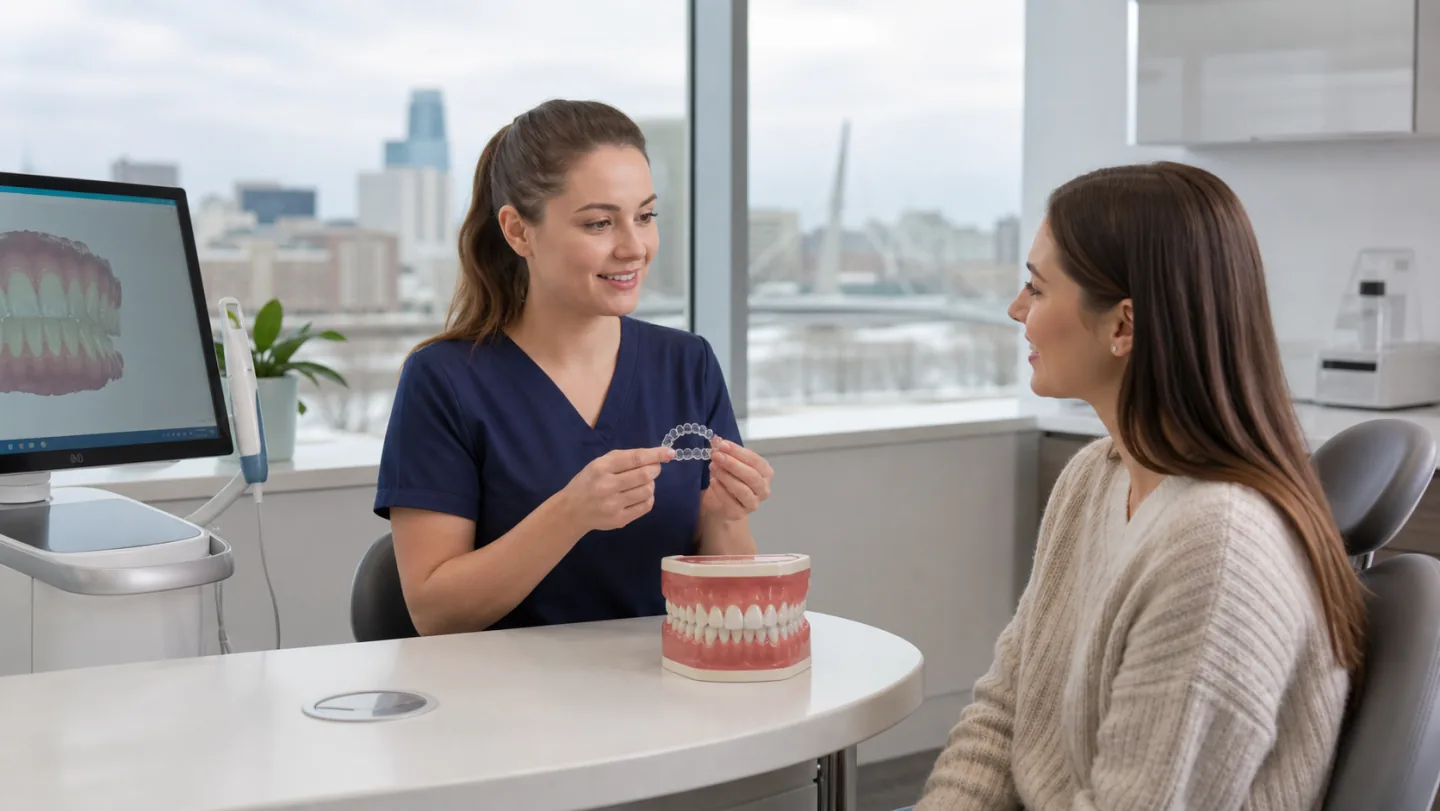
A dentist showing a clear aligner to a patient during a consultation
Is wanting this just vanity?

Invisalign for River Heights Residents

Plenty of adults hesitate to ask about straightening because it feels self-indulgent. River Heights residents may find the assessment covers more than looks: how teeth meet, how they’re supported, and whether trays suit them at all.

Let's find a time

Request an appointment

We’ll call to confirm your appointment. For urgent care, please call us directly.

Looks and function together

Appearance Is a Fair Reason, and Rarely the Only One

Caring how your smile looks is nothing to apologize for. Still, an orthodontic assessment doesn’t stop at the mirror. Your dentist examines tooth position, the bone and gum supporting the roots, how your jaws relate, and how your bite functions when you close and chew.

For River Heights residents, that assessment happens at our McPhillips Street clinic in Winnipeg. Sometimes it confirms that clear aligners could handle what you’d like changed. Sometimes it points toward braces, a combination, or a simpler cosmetic step instead.

Explore invisalign
Dental chair with pale blue upholstery, an overhead light arm and a wall monitor in a treatment room
Pale blue patient chair beside wood-front cabinets in a Winnipeg North Dental operatory.

Bite is checked too

How upper and lower teeth meet is part of every aligner assessment.

Support under the teeth

Gums and root support are reviewed before any movement is planned.

No wrong motive

Wanting a smile you like is a reasonable starting point for the conversation.

More than straight lines

What a plan is really aiming at.

A tidy row of front teeth is one goal among several. Your dentist also considers proportion, angulation and how the bite works once teeth have moved.

Where function comes in

Some concerns that look purely cosmetic involve how teeth come together. Aligners can manage a range of these when the case is suitable.

  • Overbite, open bite or crossbite that suits tray treatment.
  • Front-to-back discrepancies between upper and lower teeth.
  • Crowded or rotated teeth that need space made for them.
  • Selected gaps closed while controlling tooth angle.

How control is added

Trays sometimes need help to produce the movement planned. These features exist for a reason, even if they make aligners a little more visible.

  • Small tooth-coloured attachments for rotation or root movement.
  • Elastics joining upper and lower teeth for certain bites.
  • Careful enamel reduction between teeth, when appropriate.
  • Planned expansion where it suits the case.

If appearance is your main concern, say so. It helps your dentist explain whether moving teeth, reshaping them or leaving them alone fits what you want.

The sequence of care

From first look to finished movement.

Treatment follows four broad stages. Each one is a natural moment to ask how your cosmetic and functional goals are being balanced.

Request your visit
  1. 01

    Diagnosis

    This first stage looks at the soft tissue and bone around your teeth as well as the bite, drawing on photographs and any X-rays that suit your situation.

  2. 02

    Design

    A digital plan sets where each tooth moves, how room is found, and which steps need attachments or elastics.

  3. 03

    Delivery

    Your first aligners are checked for fit, planned attachments are placed, and you learn insertion, removal and cleaning.

  4. 04

    Tracking

    Real movement is compared with the sequence. When a tray stops fitting as intended, your dentist decides how to correct course.

Getting clear on goals

Decide what bothers you most.

It helps to put your concern into words before you arrive. A specific answer gives your dentist something concrete to examine and discuss.

If you’re unsure whether your concern is worth raising, raise it anyway. The assessment is the place to sort that out.

Think about

  • Which teeth catch your eye when you see photos of yourself.
  • Whether anything feels off when you bite or chew.
  • Spots where food tends to get caught between teeth.
  • Your general health and any medications you take.
Two black chairs facing a white desk in a consultation room with a seascape print on the wall
Blue upholstered bench below abstract artwork in a bright waiting area

Consultation room chairs and a waiting area bench at Winnipeg North Dental.

Without judgment

Nobody will weigh your reasons.

Your dentist’s job is to explain what’s possible and what it would involve, not to decide whether your wish is serious enough.

Plain answers

Ask how noticeable trays and any attachments would be in your case.

Room to reconsider

Learning what’s involved may change your mind, and that’s a perfectly good outcome.

Questions welcome

Ask why a particular movement is or isn’t predictable with aligners for you.

Keeping the change

The result needs looking after.

Whatever your reason for starting, the finish involves more than wearing the final tray. Teeth need holding in place while the surrounding tissues settle.

01

Refinements

If some movements aren’t finished, new records may be taken so extra aligners can be ordered. This is a standard planning tool.

02

Retainers

Retainers worn as prescribed help limit the shifting that teeth can show throughout adult life.

03

Speaking up

If a tray no longer fits or one gets damaged, contact the clinic before moving ahead in the series.

Something feels wrong with a tray between visits? Call the clinic.

Talk with our team
Front of Winnipeg North Dental with grey siding, large windows and the clinic sign above the entrance

Winnipeg North Dental

Unit-5 2358 Mcphillips Street, Winnipeg, MB R2V 4J6
Get directions (opens in a new tab)
For River Heights adults

Ask Your Question Out Loud

River Heights lies within Winnipeg. Residents curious about clear aligners can be assessed at Winnipeg North Dental, Unit 5, 2358 McPhillips Street.

Your request is a starting point, not a confirmed slot. The clinic gets back to you about scheduling, and phoning is just as welcome.

Questions about coverage?

Talk with our team before your visit or learn about CDCP.

A little clarity before your visit

Your questions, answered.

Helpful details about invisalign in River Heights.

Ask our team
Is Invisalign only a cosmetic treatment?

Aligners can address bite relationships and crowding as well as appearance. Whether that applies to you is decided after your teeth, gums and bite are examined.

Could my bite affect whether aligners are suitable?

Yes. Some bite corrections suit trays, sometimes with elastics, while others are more predictable with braces or a combined approach.

Would I be told if my teeth are fine as they are?

Your dentist can explain what they see and what moving teeth would involve. Choosing to leave things alone is always an option open to you.

Can aligners look obvious once attachments are on?

They can be more noticeable than advertising suggests. Tray edges and tooth-coloured bumps may show when you talk, depending on where they sit.

Do adults need retainers after aligners as well?

Yes. Teeth can keep shifting over a lifetime, so retainers worn as directed are part of finishing treatment at any age.

What should a River Heights resident do to ask about Invisalign?

Mention what you’d like changed in a request below, or ring (204) 338-3003 if talking suits you better. Your looks-and-function review would then happen in person at Unit 5, 2358 McPhillips Street, Winnipeg, MB R2V 4J6.

Permission granted

Ask about the smile you’d like.

Request an Invisalign assessment at our Winnipeg clinic and learn what your teeth, gums and bite say about the options.

Patient testimonials

Kind words from our patients

★★★★★ 5.0 from 440+ reviews on Google

Close to home

Areas we serve

Convenient dental care on McPhillips Street for families across northwest Winnipeg and nearby communities.

Explore all service areas

A healthier smile is one visit away

Ready for dental care that feels genuinely comfortable?

✓ New patients welcome ✓ Direct insurance billing ✓ Multilingual team

How can we help?

Our dental team is here for you.

Ready to book or have a question? Choose the option that works best for you.

For urgent dental concerns, please call us directly.

Send us a message

Our team will reply during clinic hours.



