Skip to content
Winnipeg North Dental
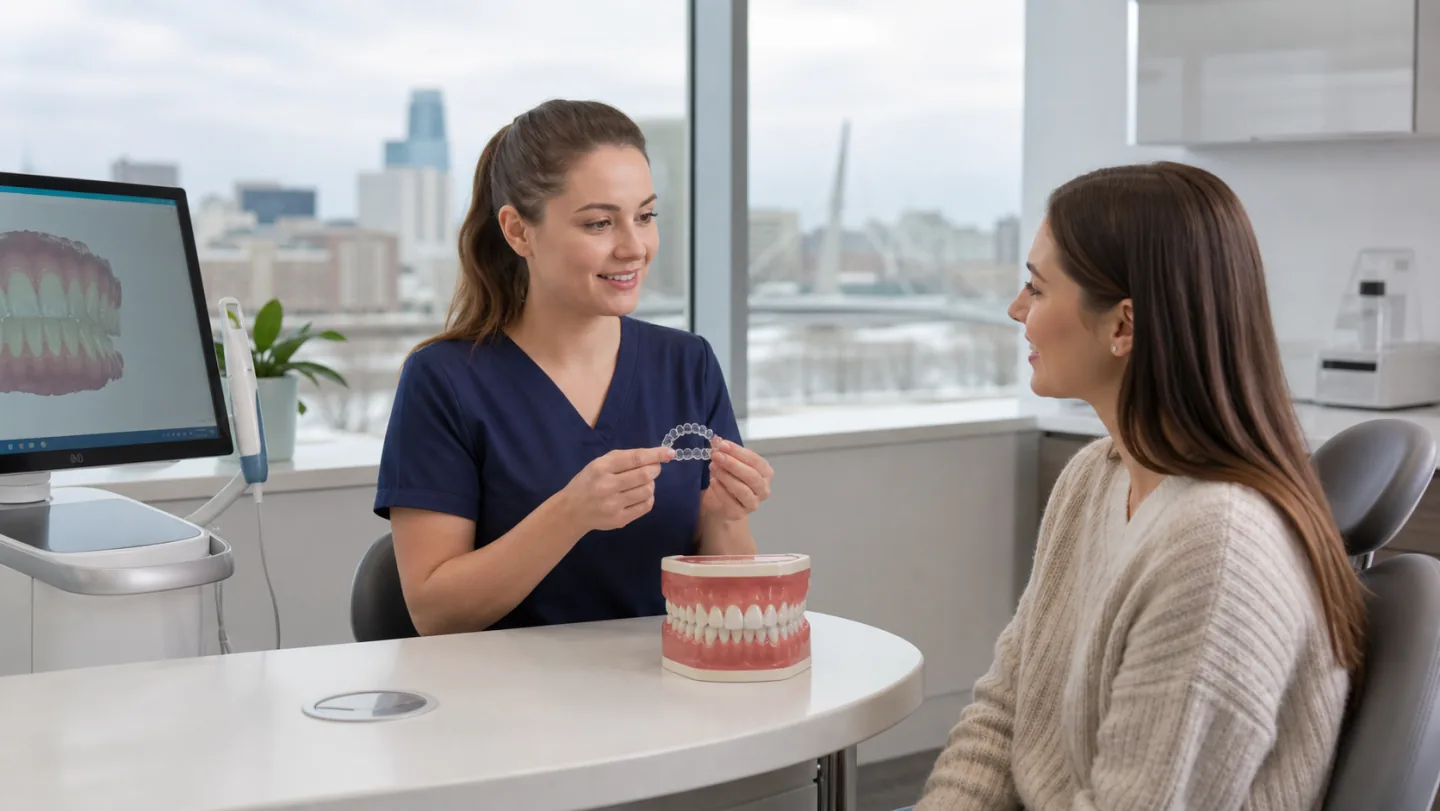
A dentist showing a clear aligner to a patient during a consultation
Aligners, braces, or a bit of each?

Invisalign for Pembina Residents

Orthodontic answers aren’t always yes or no. Pembina residents hoping for clear trays can learn why an assessment sometimes lands somewhere in between, and how to think about that answer.

Let's find a time

Request an appointment

We’ll call to confirm your appointment. For urgent care, please call us directly.

Between two appliances

When the Honest Answer Is Partly

Clear aligners manage many tooth and bite movements well. A few are more predictable with fixed braces, and in some cases a combined approach makes more sense than either appliance alone. Which group your movements fall into depends on what the examination finds.

Pembina residents can have that examination at our McPhillips Street clinic in Winnipeg. Going in knowing that a mixed recommendation is possible can make the conversation easier, and it leaves room to ask why a given movement is being handled one way rather than another.

Explore invisalign
Consultation room with a white table, a keyboard and black chairs in front of a window with blinds
Office chairs gathered around a white table in a Winnipeg North Dental consultation room.

Movement decides

The appliance is chosen for what it can deliver safely in your mouth.

Cooperation counts

Daily wear you can realistically keep up is part of the choice.

Mixed plans exist

Some cases are suited to a combination rather than one appliance.

Trays versus brackets

What each appliance brings.

The comparison isn’t about which is better in general. It’s about which can produce the movements your case needs, given how you live.

Clear aligners

Trays offer flexibility, and that flexibility depends entirely on you putting them back in.

  • Removable for meals and for brushing and flossing.
  • Less visible, though attachments may still show.
  • Results lean heavily on consistent daily wear.
  • Not every type of movement is equally predictable.

Fixed braces

Brackets and wires stay put throughout active treatment, which changes the daily experience in different ways.

  • Bonded to the teeth for the whole active phase.
  • Brackets and wires are visible and change cleaning routines.
  • There’s no appliance to remember to put in.
  • They can give direct control across a broad range of movements.

If the recommendation includes braces for part of your treatment, ask which movements drive that advice. Understanding the reason makes the choice yours.

Reaching a recommendation

How the decision gets made.

The same four stages apply whatever appliance you end up with. The first two are where a mixed answer would emerge.

Request your visit
  1. 01

    A diagnostic look

    Your dentist reviews teeth, gums, jaw relationships and bite, along with photos and appropriate X-rays, to understand what needs to move.

  2. 02

    Matching movement to method

    Each planned tooth position, source of space and need for added control is weighed against what trays and braces each manage well.

  3. 03

    Starting treatment

    If aligners are part of the plan, fit is checked, attachments are placed where planned, and you’re taught handling and care.

  4. 04

    Watching how teeth respond

    Actual movement is compared with the plan, and your dentist intervenes if an aligner stops fitting as it should.

Know your priorities

Decide what matters most to you.

If you have a strong preference, it helps to know why. Appearance, convenience, cleaning and willingness to wear trays all pull in different directions.

A preference is useful information, not a demand. Your dentist can explain how it fits with what your teeth require.

Ask yourself

  • Would visible brackets bother you at work or socially?
  • Can you commit to removing and reinserting trays every day?
  • How do you feel about attachments or elastics if they’re needed?
  • What health conditions or medications should your dentist know about?
Bright waiting room with two white chairs by a window, a small table and blue abstract art
Blue dental chair and light arm in a treatment room with wooden cabinetry

Window-side seating and a treatment chair at Winnipeg North Dental.

An open conversation

Disagreeing is allowed.

If a recommendation surprises you, say so and ask for the reasoning. You can take time to think before agreeing to any plan.

Reasons, not just verdicts

Ask which of your movements trays handle less predictably.

Trade-offs in the open

Request a plain comparison of what each option would ask of you.

Time to think

You don’t have to decide at the end of the assessment.

After active movement

The finish looks similar either way.

Whether trays, braces or both moved your teeth, the end stages share a common goal: completing movement and keeping it.

01

Refinement aligners

If some aligner movements fall short, new records can be used to order more trays. That’s an ordinary planning tool.

02

A plan that adjusts

When an aligner no longer fits properly, contact the clinic. Lost wear or teeth lagging may call for a particular correction.

03

Retention

Retainers are needed after aligners just as after braces, worn as prescribed to limit shifting over the years.

Have a concern about your appliance between visits? Call the clinic.

Talk with our team
Exterior of Winnipeg North Dental with dark siding, a tall front window and glass entry doors

Winnipeg North Dental

Unit-5 2358 Mcphillips Street, Winnipeg, MB R2V 4J6
Get directions (opens in a new tab)
Weighing it up in Pembina

Compare Options in One Assessment

Pembina is part of Winnipeg. Residents wanting to know whether trays, braces or a combination fits their case can be assessed at Winnipeg North Dental, Unit 5, 2358 McPhillips Street.

The form passes your request along without locking in a time. Expect the clinic to contact you, or pick up the phone yourself.

Questions about coverage?

Talk with our team before your visit or learn about CDCP.

A little clarity before your visit

Your questions, answered.

Helpful details about invisalign in Pembina.

Ask our team
Can a plan use both aligners and braces?

Some cases are suited to a combined approach. Whether yours is depends on the movements needed, which your dentist determines after examining you.

Which movements tend to be harder for aligners?

It varies by case. Some movements are more predictable with braces, so ask your dentist which of yours are involved and why.

If I’m told braces would work better, do I have to get them?

No. You can ask about the trade-offs, take time to decide, or choose not to proceed. The recommendation is there to inform your choice.

Do braces mean I won’t need to wear anything after?

Retainers follow either appliance. Teeth can shift throughout life, so retention as prescribed is part of finishing treatment.

Does my wearing habit change the recommendation?

It can. Aligners only work while worn, so the daily cooperation you can provide is part of choosing the right appliance.

How do I book a comparison assessment from Pembina?

Request one through the form or call (204) 338-3003 and say you’d like both options discussed. The visit takes place at Unit 5, 2358 McPhillips Street, Winnipeg, MB R2V 4J6.

Keep an open mind

Learn which appliance suits your teeth.

Request an assessment at our Winnipeg clinic and hear how aligners and braces compare for the movements you need.

Patient testimonials

Kind words from our patients

★★★★★ 5.0 from 440+ reviews on Google

Close to home

Areas we serve

Convenient dental care on McPhillips Street for families across northwest Winnipeg and nearby communities.

Explore all service areas

A healthier smile is one visit away

Ready for dental care that feels genuinely comfortable?

✓ New patients welcome ✓ Direct insurance billing ✓ Multilingual team

How can we help?

Our dental team is here for you.

Ready to book or have a question? Choose the option that works best for you.

For urgent dental concerns, please call us directly.

Send us a message

Our team will reply during clinic hours.



