Skip to content
Winnipeg North Dental
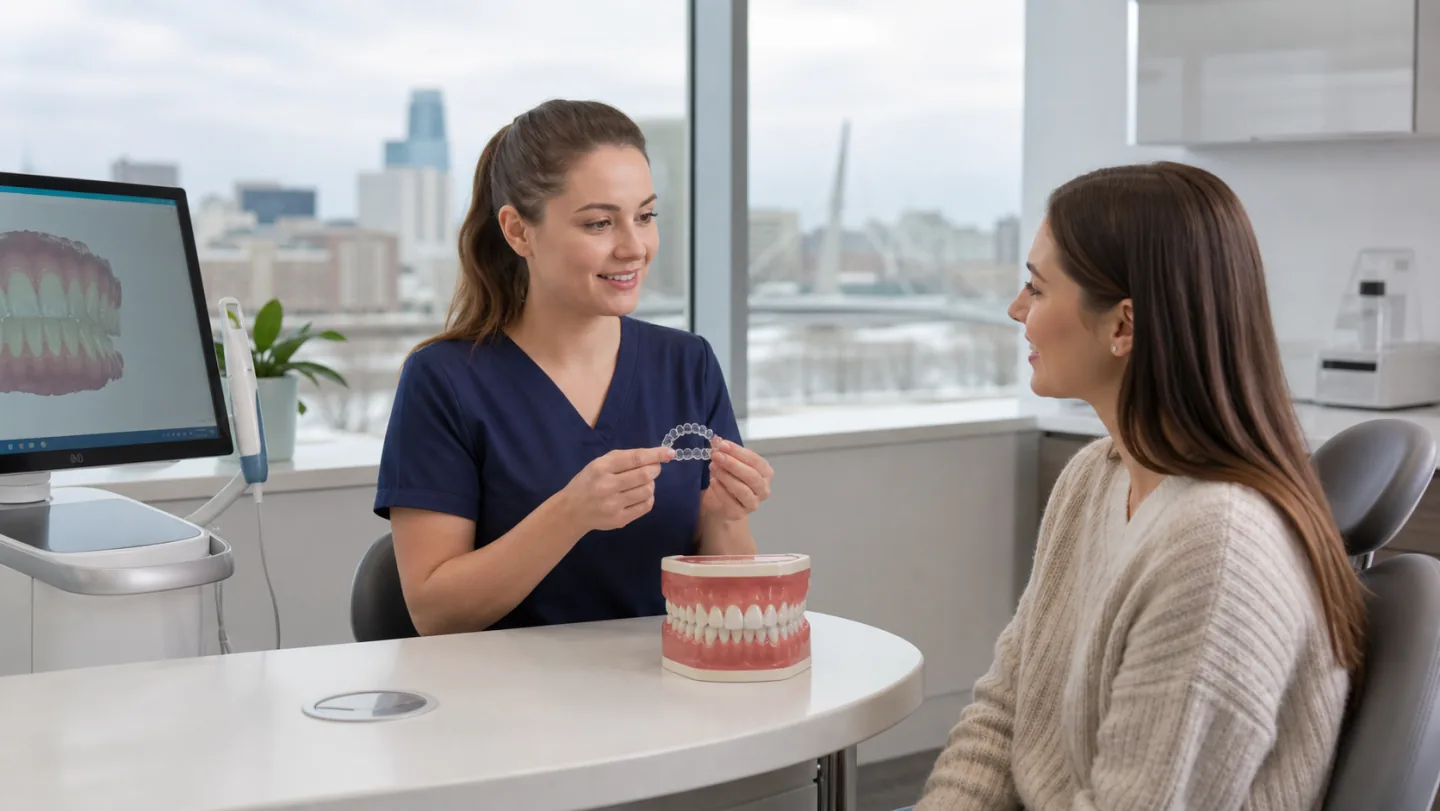
A dentist showing a clear aligner to a patient during a consultation
Think past the last tray.

Invisalign for North End Winnipeg Residents

Getting teeth straight is one commitment, and keeping them that way is another. If you live in North End Winnipeg and like to read the whole deal first, start with what comes afterward.

Let's find a time

Request an appointment

We’ll call to confirm your appointment. For urgent care, please call us directly.

The whole commitment

Invisalign Is Followed by a Long Retainer Phase

Most aligner information is about how treatment begins. The part people hear less about is the ending, when active movement is over and your teeth still have a tendency to shift. If you’ve never had orthodontics, this may be new to you, and it’s worth knowing before you agree to anything.

After active treatment, your teeth need holding while the surrounding tissues adapt, and retainers go on helping to limit movement beyond that. Should you live in North End Winnipeg, you can go over all of this at our McPhillips Street clinic, with your own teeth and plan as the starting point.

Explore invisalign
Reception counter with a clear panel, a wall thermostat and a succulent on the desk
The reception counter and work area at Winnipeg North Dental.

Know it from the start

Retention can be discussed before treatment begins, and it’s fair to weigh it as part of your decision.

Teeth aren’t fixed in place

They can go on shifting throughout life, whether or not you’ve had orthodontic treatment.

Instructions you can follow

Ask for clarity about your retainer schedule and how it would work with your daily life.

Active, then holding

Two phases, each with its own job.

The trays do the moving, and the retainers do the keeping. Knowing how those two jobs differ can help you see why treatment doesn’t really stop at your final aligner.

Moving your teeth

A planned series of aligners applies controlled pressure to reposition your teeth bit by bit, according to the proposal your dentist has made.

  • Trays are worn as prescribed through most of the day and night.
  • Selected crowding, spacing or bite concerns may be addressed.
  • Progress gets compared with the sequence at each tracking visit.
  • Refinement aligners are possible if movements aren’t complete.

Keeping them there

Retainers begin once active movement is complete. Their purpose is holding your teeth steady as tissues adapt, then limiting future shifting.

  • They’re required after aligners, in the same way as after braces.
  • Your dentist prescribes how and when you’re to wear them.
  • Skipping them can allow your teeth to drift from their new position.
  • It’s a good idea to ask about replacing them before you need to.

We can’t tell you here exactly what kind of retainer you’d have or how long you’d wear it each day. That comes from your dentist, so make it a question for your planning visit.

The road to retention

Where each step leads.

Every stage of aligner care is building toward a result you’ll later have to hold on to. Here’s how the process runs, seen with its ending in mind.

Request your visit
  1. 01

    Take stock

    A full examination covers teeth, gums, bite and jaws, and appropriate photographs and X-rays are reviewed. Now’s a good time to ask about retainers.

  2. 02

    Set the target

    Your plan describes where each tooth should go and how room is created. Ask how stable your dentist expects those new positions to be.

  3. 03

    Begin active movement

    You’ll have your trays fitted, attachments placed if planned, and receive guidance on looking after your aligners.

  4. 04

    Follow it through

    Tracking visits keep tabs on your teeth until active movement ends, and then your plan moves into the retainer phase.

Questions for the long view

Ask about the years after treatment.

You don’t have to work this out in advance. A few well-chosen questions will show you what the longer-term side of aligner treatment could look like for you.

Costs and coverage for appliances after treatment are worth asking about too. They depend on your plan, so check them with the clinic and your insurer.

Good questions to bring

  • What type of retainer would you expect me to use?
  • How should my retainer be cleaned and stored?
  • What should I do if one is lost or cracked?
  • Also bring your health history, medications and insurance or CDCP details.
Clinic waiting area with striped window blinds, cream chairs and a tall yellow-edged plant
High-backed black chair at a white desk with a framed painting behind

Striped window blinds in the waiting area and a black consultation chair.

No small print

You can ask what you’d be signing up for.

A long-term routine can sound like a lot, especially on your first visit. It may help to talk it over and hear what’s expected, so that you can decide without feeling rushed.

Take your time deciding

There’s no need to answer on the spot. Consider the long-term side carefully before you decide.

Clear retainer instructions

If something about your retainer wear isn’t clear, ask to have it explained again in plain terms.

A routine that’s realistic

Tell your dentist if you have concerns about keeping up with it, so you can talk about them openly.

Long after the aligners

What staying on top of it looks like.

Retainers don’t need to take over your life, although they do need to stay part of it. Here’s what to pay attention to once your active treatment is behind you.

01

A clean handover

Your move from aligners to retainers should come with clear instructions. Ask anything that’s unclear before leaving that appointment.

02

Watch for changes

Notice if a retainer begins to feel snug or a tooth seems to have moved. That’s a good moment to get in touch rather than wait.

03

If the routine slips

Life gets in the way sometimes. Speak with the clinic if you’ve stopped wearing your retainer, since your teeth may have shifted and you’ll want to know what to do next.

Has your retainer been lost or damaged? Call the clinic and let them know.

Talk with our team
Modern two-tone clinic building front with the Winnipeg North Dental name in raised letters

Winnipeg North Dental

Unit-5 2358 Mcphillips Street, Winnipeg, MB R2V 4J6
Get directions (opens in a new tab)
North End Winnipeg patients

Plan Ahead With Us on McPhillips Street

North End Winnipeg residents who choose Invisalign receive their care, including the retainer stage, at Winnipeg North Dental, Unit 5, 2358 McPhillips Street.

This form passes your request along, with no appointment fixed until you’ve heard back. A member of the clinic will reply, or you can simply phone.

Questions about coverage?

Talk with our team before your visit or learn about CDCP.

A little clarity before your visit

Your questions, answered.

Helpful details about invisalign in North End Winnipeg.

Ask our team
How long will I have to wear retainers?

Your dentist will give you specific instructions. Since teeth can keep shifting throughout life, you should think of retention as an ongoing part of your routine, not a short final step.

Why can’t my teeth just stay put once they’re moved?

The tissues around them need time to adapt, and teeth naturally shift to some degree over a lifetime. Retainers help hold what treatment achieved.

Is retention different after aligners than after braces?

The need is the same with either. Both appliances move teeth, and both are followed by retainers worn as your dentist prescribes.

What’s likely to happen if I stop wearing my retainer?

Your teeth may begin to drift from where treatment put them. If you’ve stopped, call the clinic to discuss what’s changed and how to proceed.

Do I need to decide on retainers before I start treatment?

There’s nothing to decide at that stage, but you can certainly ask about them in advance. Understanding what comes next will help you judge whether treatment makes sense for you.

Should I expect additional costs for retainers?

Ask the clinic what your estimate does and doesn’t include. Your insurer can tell you about coverage under your particular plan.

How do North End Winnipeg residents book a first visit?

You can ask for an assessment right on this page or by calling (204) 338-3003. Appointments are held at Unit 5, 2358 McPhillips Street, Winnipeg, MB R2V 4J6, once a time has been agreed.

See the full picture

Learn what the years after aligners could involve.

Request an assessment at our Winnipeg clinic, and ask about both moving your teeth and how to keep them there.

Patient testimonials

Kind words from our patients

★★★★★ 5.0 from 440+ reviews on Google

Close to home

Areas we serve

Convenient dental care on McPhillips Street for families across northwest Winnipeg and nearby communities.

Explore all service areas

A healthier smile is one visit away

Ready for dental care that feels genuinely comfortable?

✓ New patients welcome ✓ Direct insurance billing ✓ Multilingual team

How can we help?

Our dental team is here for you.

Ready to book or have a question? Choose the option that works best for you.

For urgent dental concerns, please call us directly.

Send us a message

Our team will reply during clinic hours.



