Skip to content
Winnipeg North Dental
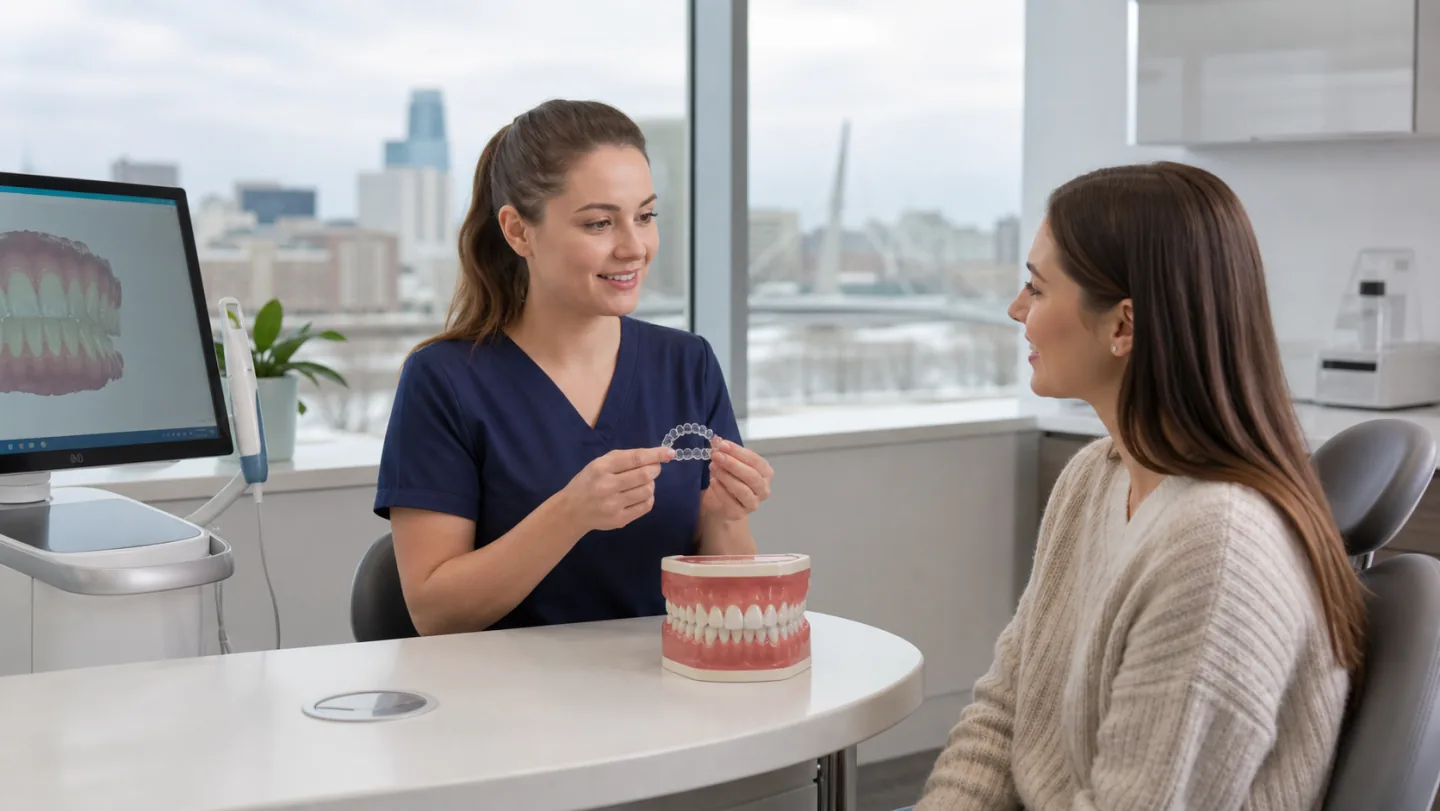
A dentist showing a clear aligner to a patient during a consultation
Wait, bumps on my teeth?

Invisalign for Mandalay West Residents

Aligners are usually pictured as nothing but clear plastic. If you’re in Mandalay West and have only just heard about attachments and elastics, here’s what those extras are for.

Let's find a time

Request an appointment

We’ll call to confirm your appointment. For urgent care, please call us directly.

The rest of the toolkit

The Small Extras That Help Aligners Do Harder Work

A smooth plastic tray can only push on a tooth in limited ways. Some movements, such as turning a tooth or shifting its root, need something extra for the aligner to grip or pull against. That’s the job of the auxiliaries many plans include.

They’re there for a reason, and they can make treatment more noticeable than advertising suggests. Mandalay West residents can see what would apply to them at our McPhillips Street clinic in Winnipeg, because which extras you’d need depends on the movements planned for your teeth.

Explore invisalign
Dental operatory seen from the foot of a pale blue chair with a monitor beyond
A dental chair and cabinets in a Winnipeg North Dental treatment room.

Each has a purpose

Attachments and elastics are added to achieve particular movements and aren’t a sign of a problem.

Specific to your plan

How many you’d have, along with their shape and position, follows from your treatment goals.

Ask before you start

You can find out what your plan would involve, and how it may look, ahead of committing.

A plain guide to the extras

Bonded shapes, removable bands and created space.

Not every plan uses all of these. Here’s a straightforward account of what they are and how each one helps your aligners.

Attachments and elastics

These two add leverage or connection that a tray can’t provide by itself, and they tend to come up in plans with more complex movements.

  • Attachments are small, tooth-coloured shapes bonded to teeth.
  • They help control rotation, angulation and movement of the root.
  • Elastics are removable bands linking upper and lower teeth.
  • These bands may assist with correcting selected bite relationships.

Making room

Teeth need somewhere to go. If the space isn’t there already, your plan may include a way of creating it where appropriate.

  • Limited enamel reduction means removing a little between certain teeth.
  • Planned expansion is another possible route to additional room.
  • This work is carefully planned, never improvised along the way.
  • Your dentist can explain why the space is needed in your case.

If any of these are a dealbreaker for you, raise that early. It’s useful to find out how it would affect your plan, and whether a different appliance would make more sense.

When extras enter the picture

At what point you’ll hear about them.

Attachments and other auxiliaries come up during planning and delivery. Here’s how they fit in with the overall path of treatment.

Request your visit
  1. 01

    Start with diagnosis

    An examination of your teeth, gums, bite and jaws comes first, supported by photographs and any X-rays considered appropriate.

  2. 02

    Decide what needs added control

    While mapping each tooth’s movement, your dentist works out which ones call for attachments and how any extra room would be found.

  3. 03

    Place what was planned

    Delivery is when your aligner fit is confirmed and planned attachments go on. You’ll also be shown how to manage your trays.

  4. 04

    Watch how it’s working

    Later check-ins compare real movement against the plan. Tell the clinic about any loose attachments or problems with elastics.

Questions to jot down

Don’t be shy about asking what’s planned.

It’s much easier to decide about extras when you’re clear on what they involve. A short list of questions will help you get what you need from your first visit.

What would apply to you can’t be known before your assessment. Answers may be more specific once your dentist has seen your records and knows your goals.

What to ask about

  • Where any attachments would go, and whether front teeth are involved.
  • If elastics are expected, and how you’d manage them day to day.
  • Why enamel reduction or expansion might be suggested for you.
  • Your medical history, medications and insurance or CDCP details are helpful too.
Tidy office-style consultation space with leather chairs and a potted plant by the window
Blue upholstered bench below two framed abstract paintings in the waiting room

Black office chairs and a blue waiting-room bench at Winnipeg North Dental.

Getting past the surprise

Unfamiliar doesn’t have to mean unwelcome.

Hearing that something could be bonded to your teeth or a bit of enamel reduced can be unsettling. Getting a clear explanation usually makes the idea less daunting.

How they’ll look on you

Tooth-coloured doesn’t mean invisible. Ask for an honest view of how noticeable they’d be at conversational distance.

How they’ll feel

If a bonded shape or elastic is bothering your lips or cheeks, mention it to the clinic rather than putting up with it.

Why enamel is involved

It’s natural to feel protective of your enamel. Ask how much reduction is planned, and where, before you decide.

Once the extras are finished

What happens at the end of active movement.

Auxiliaries are there for active treatment. As that phase draws to a close, your attention moves from achieving the movement to keeping it.

01

Taking stock of progress

Your teeth’s actual position is compared with where the sequence intended them to be, so that any leftover movement can be identified and discussed.

02

Possible refinement

New records might support another set of aligners if some tooth movements are unfinished. Requiring these doesn’t automatically point to anything having gone wrong.

03

Retainers come next

They hold everything in place during tissue adaptation and help limit later shifting. Ask what happens with your attachments and how retainers will be fitted.

If an attachment or elastic is causing you trouble, phone the clinic and describe it.

Talk with our team
Clinic storefront with charcoal and white panels and a dental logo on the sign

Winnipeg North Dental

Unit-5 2358 Mcphillips Street, Winnipeg, MB R2V 4J6
Get directions (opens in a new tab)
Mandalay West, Winnipeg

See What Your Plan Would Include

Mandalay West is part of Winnipeg. Residents who want Invisalign receive their care at Winnipeg North Dental, Unit 5, 2358 McPhillips Street.

Your online request isn’t a confirmed booking. A reply from the clinic will sort out the timing, and a phone call works just as well.

Questions about coverage?

Talk with our team before your visit or learn about CDCP.

A little clarity before your visit

Your questions, answered.

Helpful details about invisalign in Mandalay West.

Ask our team
Do attachments mean my teeth are harder to treat?

They simply mean certain movements need more control than a tray alone can give. Many plans use them, so having them doesn’t say anything alarming about your teeth.

Can I say no to attachments?

You can ask, and it’s worth doing so before treatment starts. Your dentist can explain what these shapes do in your plan and what the alternatives might be.

What are elastics doing, exactly?

These removable bands may connect your upper and lower teeth to help correct particular bite relationships. They aren’t part of every plan.

Is enamel reduction the same as filing my teeth down?

It’s a limited, planned removal of enamel between certain teeth to create room when that’s appropriate. Ask why it’s proposed and which teeth would be involved.

Will the bumps show when I talk to people?

They can. Attachments are tooth-coloured, yet along with tray edges they may be noticed at conversational distance, depending on where they sit.

Could treatment avoid extras altogether?

That depends on what your teeth need to do. Their use follows from your goals, and your assessment is where you’ll find out what your plan would likely involve.

Where can Mandalay West residents ask about all this?

Visits take place at Unit 5, 2358 McPhillips Street, Winnipeg, MB R2V 4J6. Request one here or ring (204) 338-3003, and the clinic will be in touch regarding a time.

Know what’s involved

Find out which extras your teeth would call for.

Request an assessment at our Winnipeg clinic, and leave knowing what your plan may include beyond the clear trays themselves.

Patient testimonials

Kind words from our patients

★★★★★ 5.0 from 440+ reviews on Google

Close to home

Areas we serve

Convenient dental care on McPhillips Street for families across northwest Winnipeg and nearby communities.

Explore all service areas

A healthier smile is one visit away

Ready for dental care that feels genuinely comfortable?

✓ New patients welcome ✓ Direct insurance billing ✓ Multilingual team

How can we help?

Our dental team is here for you.

Ready to book or have a question? Choose the option that works best for you.

For urgent dental concerns, please call us directly.

Send us a message

Our team will reply during clinic hours.



