Skip to content
Winnipeg North Dental
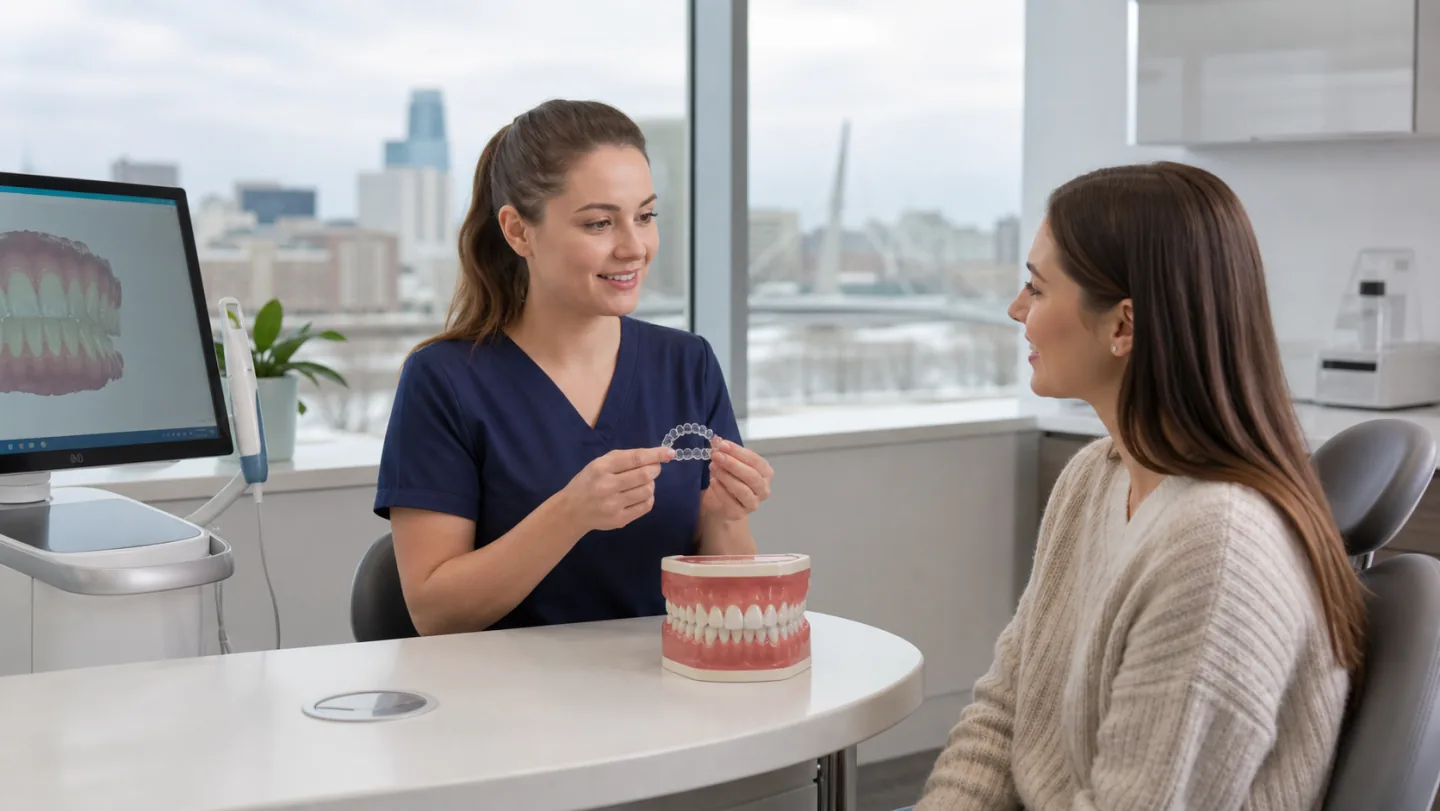
A dentist showing a clear aligner to a patient during a consultation
Old trays still in a drawer?

Invisalign for Kildonan Park Residents

Life interrupts, and a course of aligners can quietly slip away. If you’re in Kildonan Park and thinking of getting back to unfinished treatment, it helps to know what to do first.

Let's find a time

Request an appointment

We’ll call to confirm your appointment. For urgent care, please call us directly.

Unfinished treatment

Picking Things Back Up After a Long Break

It happens. Trays get set aside during a stressful stretch, then weeks become months, and eventually it feels awkward to raise the subject. Meanwhile your teeth may not have stayed at the stage you left them, since they may have shifted once the trays stopped holding and moving them.

That’s why the next tray in the bag may no longer fit as intended. The sensible move is to have your current position looked at. Kildonan Park residents can ask for this at our McPhillips Street clinic in Winnipeg, and it’s worth bringing whatever you still have from your earlier treatment.

Explore invisalign
Consultation room with three black chairs around a white desk and sunlight through blinds
Three black chairs around a white desk in a room at Winnipeg North Dental.

Don’t just restart

An old tray was made for where your teeth were back then, and that may not be where they are now.

No lecture required

A lapse is simply part of your dental history, and describing it plainly helps everyone plan.

Bring what’s left

Unused trays, retainers or paperwork from earlier treatment may be useful to show at your visit.

Where things stand

Why a gap in wear changes the picture.

Aligners assume each stage has been completed before the following one begins. A long pause breaks that assumption, and that’s what needs to be sorted out first.

What the break may have done

Every case is different, and nobody can tell you from a web page what has happened in yours. These are simply the common possibilities.

  • Teeth may lag well behind the original digital plan.
  • Some could have drifted away from where they’d reached.
  • Attachments may have been lost or worn over time.
  • Your remaining trays might no longer seat properly.

What may happen next

Once your present situation is understood, your dentist can talk about options, and those depend on the examination and what you hope to do now.

  • An updated look at teeth, gums, bite and jaw relationships.
  • Fresh records such as scans, photographs or suitable X-rays.
  • A possible new series of aligners based on those records.
  • A frank comparison with braces or a combined approach.

Please resist testing old trays to see what happens. Ask first, since forcing one that doesn’t fit isn’t the way to find out where you stand.

A second start

How returning to treatment might unfold.

Coming back follows much the same logic as starting out, although your earlier treatment now forms part of the history being considered.

Request your visit
  1. 01

    Take stock

    Your dentist examines where your teeth, gums and bite are today and reviews fresh photographs and appropriate X-rays alongside anything you’ve brought.

  2. 02

    Redraw the plan

    If aligners still make sense, tooth movements are mapped from your current position, including how space will be found and which steps need extra control.

  3. 03

    Fit and refresh

    New trays are checked for fit, planned attachments are placed, and it’s a good moment to relearn insertion, removal and care.

  4. 04

    Keep closer watch

    Progress visits set real movement against the new sequence. Ask what would help you stay on track this time, knowing what interrupted things before.

Gather what you can

Piece together your treatment history.

You needn’t remember everything or arrive with a tidy file. A rough timeline and whatever you’ve kept can go a long way in your first conversation.

If you were treated somewhere else, ask whether it would be helpful to request your earlier records. Bring what you have, either way.

If you still have them

  • Your remaining trays, in their bags or case.
  • Roughly how far you got and when you stopped.
  • What made it hard to continue at that point.
  • A current medication list and any health changes since then.
Waiting room corner with a leafy plant in a ribbed pot and two chairs by the window
Blue treatment chair with its light on, set among wood-look lower cabinets

A leafy plant by the waiting-room window and a blue treatment chair, Winnipeg North Dental.

Coming back is hard enough

No embarrassment needed for stopping.

Lots of people feel sheepish about walking away from treatment they started. There’s no need to justify anything here, so tell the clinic what happened in whatever level of detail feels right.

Why you stopped matters

If trays felt unmanageable the first time around, it’s helpful to say so when you’re looking at options again.

Old attachments

Any that remain on your teeth can be pointed out and looked at during your appointment.

Taking your time

You needn’t decide on the spot whether to resume. Hearing what’s involved can be enough for one visit.

Seeing it through

Making sure it holds this time.

If you do complete treatment, retention is the stage that protects your second effort. Retainers hold teeth in position while surrounding tissues adapt to their new places.

01

Further adjustment

Refinement aligners from new records can come at the end of a sequence too, and they’re a normal part of planning.

02

Old retainers

A retainer from years ago might not suit your teeth today. Ask about it rather than forcing it to fit.

03

Shifting is ongoing

Teeth can move throughout your life, which you may already have noticed firsthand. Wear yours just as it’s prescribed.

You’ve already been through part of this once, so you know which stage is likeliest to trip you up. Say so.

Talk with our team
Winnipeg North Dental’s entrance with a metal railing and shaded windows on either side

Winnipeg North Dental

Unit-5 2358 Mcphillips Street, Winnipeg, MB R2V 4J6
Get directions (opens in a new tab)
Back in Kildonan Park

Where to Bring Your Unfinished Treatment

Kildonan Park is an area in Winnipeg, and if you live there and want to discuss interrupted aligner treatment, your appointments take place at Winnipeg North Dental, Unit 5, 2358 McPhillips Street.

Filling in this form only sends a request, and the clinic gets back to you about a time. A sore or urgent problem is better raised by phone.

Questions about coverage?

Talk with our team before your visit or learn about CDCP.

A little clarity before your visit

Your questions, answered.

Helpful details about invisalign in Kildonan Park.

Ask our team
Can I just put my last tray back in and carry on?

It’s better to ask first. Lost wear time can leave teeth off track, and an old tray may no longer fit as it’s meant to.

My teeth look close to where they were. Do I still need checking?

A check is still useful. Small shifts can be hard to judge in a mirror, and your dentist compares your present position to what’s needed.

Would I have to start all over again?

That depends on what the exam shows. New records may be used to plan further aligners, and your dentist can explain what that would look like for you.

I began treatment at another office. Can I still ask you?

You may ask. Bring what you have from that treatment, and find out at your appointment what the clinic is able to advise.

What should I do with the trays I never used?

Keep them rather than throwing them out, and bring them with you. They shouldn’t be worn in the meantime without advice from the clinic.

What if I’m worried I’ll stop again?

Say so. Whether your daily life supports wearing trays is part of the assessment, and braces don’t depend on remembering to insert anything.

How does a Kildonan Park resident come back to this?

Phone (204) 338-3003 or use the form here to explain your situation. You’d be seen at Unit 5, 2358 McPhillips Street, Winnipeg, MB R2V 4J6.

Whenever you’re ready to ask

Find out where your teeth stand now.

Request a visit to our Winnipeg clinic and bring whatever is left from your earlier treatment.

Patient testimonials

Kind words from our patients

★★★★★ 5.0 from 440+ reviews on Google

Close to home

Areas we serve

Convenient dental care on McPhillips Street for families across northwest Winnipeg and nearby communities.

Explore all service areas

A healthier smile is one visit away

Ready for dental care that feels genuinely comfortable?

✓ New patients welcome ✓ Direct insurance billing ✓ Multilingual team

How can we help?

Our dental team is here for you.

Ready to book or have a question? Choose the option that works best for you.

For urgent dental concerns, please call us directly.

Send us a message

Our team will reply during clinic hours.



