Skip to content
Winnipeg North Dental
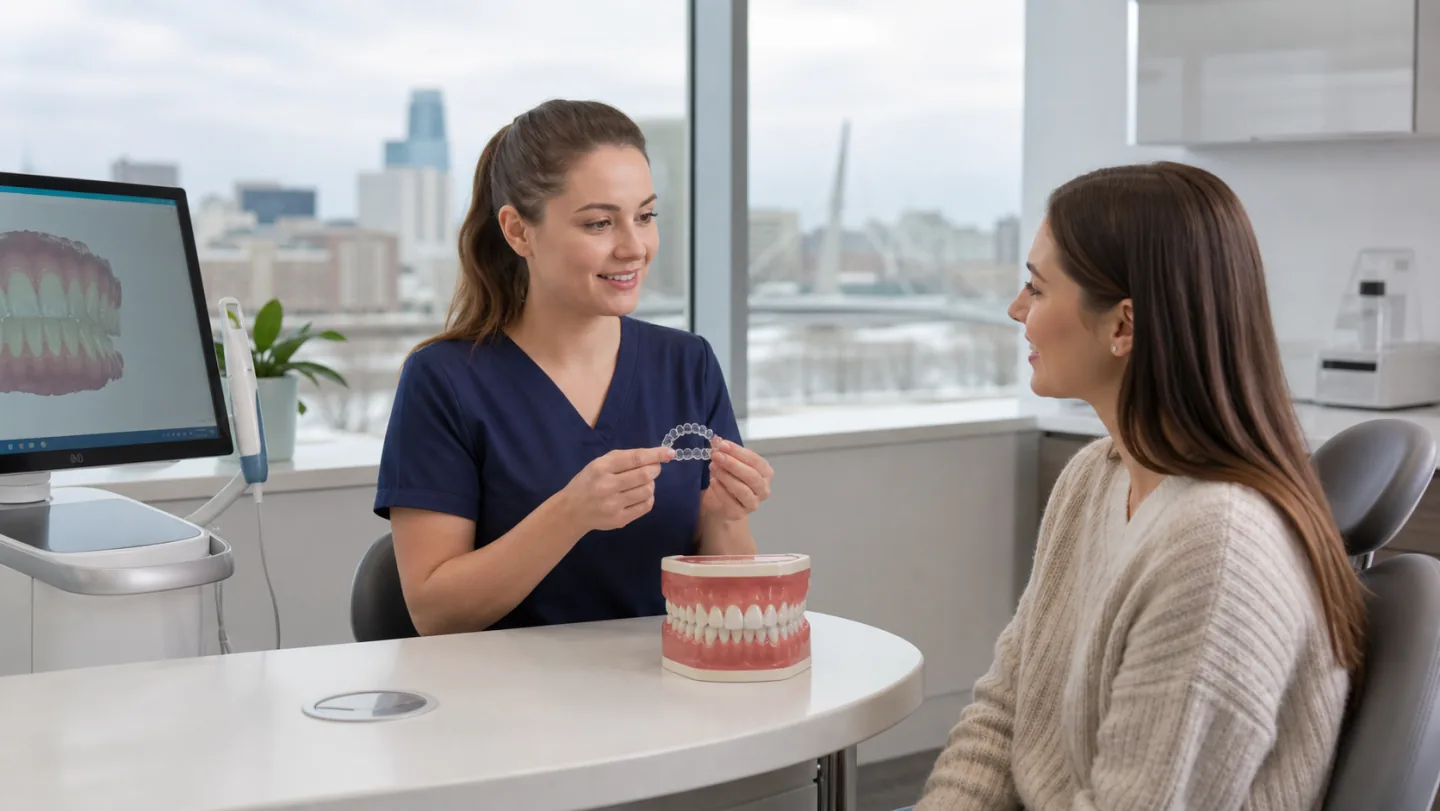
A dentist showing a clear aligner to a patient during a consultation
Trays and a trumpet?

Invisalign for Exchange District Residents

When your teeth and lips are part of how you make music, moving them is no small matter. Musicians and singers living in the Exchange District can ask these questions first.

Let's find a time

Request an appointment

We’ll call to confirm your appointment. For urgent care, please call us directly.

For players and singers

Clear Aligners If You Play a Wind Instrument or Sing

An embouchure relies on small details of how lips rest against the front teeth. Trays add a thin layer, attachments add small bumps, and the teeth themselves are slowly changing position. How much any of that will matter differs between instruments and between players, so we won’t predict it here.

Since practising with trays out reduces wear time, it’s also a scheduling question. Exchange District residents can set out what they play and how often at our McPhillips Street clinic in Winnipeg, where your dentist can consider that next to your teeth, gums and bite.

Explore invisalign
Sunlit room with a white chair, a small table and plants in front of window blinds
White chairs and small tables by the window in the clinic’s waiting area.

Lips meet teeth

Moving front teeth, or adding attachments, may change how your mouthpiece feels.

Hours count

Rehearsing with trays out takes time away from the wear your plan relies on.

Plan around dates

Share upcoming performances so that they’re part of the conversation from the outset.

Sound and movement

Two things your dentist should hear.

Your dentist will want the usual picture of your teeth, and a clear account of what you do with them when you play. Neither replaces the other.

How your playing works

Your dentist isn’t a music teacher, so explain the basics. Tell them what your instrument demands and what kinds of changes would worry you.

  • Name your instrument and describe where it contacts your lips or teeth.
  • Mention how many hours you’re practising in a normal week.
  • Note any upcoming auditions, recordings or touring plans.
  • Ask if a teacher’s or colleague’s experience is worth discussing too.

What your plan might add

Features that help with tooth movement are the ones most likely to change how things feel. Ask where these would go in your mouth.

  • Attachments are small bonded shapes that could sit on front teeth.
  • Elastics may join upper and lower teeth for certain bite corrections.
  • Enamel reduction or expansion might be planned to create space.
  • A change in tooth position could itself alter your mouthpiece contact.

Braces change how your lips meet your teeth too, and they can’t be removed before a performance. Your dentist can compare the two for your teeth, while you judge the musical side.

From assessment onward

The order of things, with practice in mind.

Knowing when something may change helps you plan rehearsals around it. These are the broad stages, and where your playing could be most affected.

Request your visit
  1. 01

    First examination

    Your teeth, gums, jaw relationships and bite are examined with photographs and appropriate X-rays. Describe your instrument at this appointment.

  2. 02

    Digital planning

    The path of each tooth and the space it needs are sequenced. Ask whether front-tooth changes occur early or late in that order.

  3. 03

    Delivery day

    Trays are checked for fit, planned attachments are bonded on, and you’re taught care and handling. Avoid booking this right before a performance.

  4. 04

    Ongoing reviews

    Actual movement is compared against the plan. Let your dentist know about any trouble with your sound, along with how the trays are fitting.

Your playing notes

Think of it as briefing a new accompanist.

A little context goes a long way. Gather the facts about your playing or singing life so that the conversation can move straight to the questions that matter to you.

If you’re unsure what to ask, your teacher or a colleague who’s been through orthodontic treatment may have ideas you can bring with you.

Bring this information

  • Your main instruments, and how long you’re playing daily.
  • Dates in your calendar that can’t be moved.
  • Anything you’ve noticed about your teeth affecting your playing already.
  • Medications, health history and any past orthodontic treatment.
Black office chairs around a white desk with a framed print and a potted plant
White reception desk with a small bouquet and plants, next to a sliding glass door

A consultation room and the front desk at Winnipeg North Dental.

The first few days

Allow some time to relearn the feel.

Any new appliance may feel odd at first, and a musician is likely to notice sooner than most. Try not to judge everything on day one, but do report what you’re finding.

Speech and diction

Singers should raise this directly, since trays can take getting used to when forming words.

Sore lips

If an attachment or tray edge is irritating you while you play, phone and describe it.

New-tray tenderness

Teeth can feel pressure with each change of tray. Ask how to plan changes around an important date.

Over your season

Tell the clinic what’s coming up.

A long run of shows or a demanding audition can disrupt anybody’s tray routine. Being open with your dentist helps keep treatment going in the right direction.

01

Heavy rehearsal periods

If you’ve been wearing your aligners less, say so. Time out may leave teeth lagging behind and could change your next steps.

02

Cases at the ready

Keep your aligners in a proper case when they’re out, not on a music stand or in a pocket of your instrument case.

03

Retainers after the last tray

Ask how your prescribed retainers would feel with your instrument. Teeth can continue to shift if they aren’t worn as directed.

Worried about a change in your playing? Call the clinic and talk it over.

Talk with our team
Sidewalk view of the clinic entrance with its logo and phone number on white panels

Winnipeg North Dental

Unit-5 2358 Mcphillips Street, Winnipeg, MB R2V 4J6
Get directions (opens in a new tab)
Living in the Exchange District

Talk It Through at Our Clinic

The Exchange District is in Winnipeg. Residents, musical or otherwise, receive Invisalign care at Winnipeg North Dental, Unit 5, 2358 McPhillips Street.

The form sends a request rather than holding a time. The clinic gets back to you to work out a suitable slot, and calling is another way in.

Questions about coverage?

Talk with our team before your visit or learn about CDCP.

A little clarity before your visit

Your questions, answered.

Helpful details about invisalign in Exchange District.

Ask our team
Can I play a brass or woodwind instrument with aligners in?

Some players may prefer one way, and others another, so there’s no universal answer. Ask your dentist what’s appropriate for your treatment, and test it carefully with your teacher’s input.

If I take trays out to practise, does that count against me?

Aligners don’t move teeth while they’re out. Long rehearsals without them can cut into your prescribed wear, which might extend or change treatment.

Will attachments on my front teeth affect my embouchure?

They could be noticeable, depending on where they go and what you play. Ask about their position before treatment starts so you can make an informed decision.

Will straightening my teeth change my sound?

Nobody can promise it won’t. Moving teeth changes the surface behind your lips, and whether that matters depends on your instrument, your technique and how far teeth will travel.

Do singers have to worry about trays?

Some speech sounds may feel different with trays at first. Bring up your singing during your assessment, and ask about taking them out for a performance.

Would it be wise to wait until after a big audition?

It could be, especially if the date is close and you’d rather not change anything yet. Tell your dentist the timing and work out whether your teeth need attention sooner.

How can someone in the Exchange District ask about all this?

Use (204) 338-3003 or the form on this page, and mention your instrument. Assessment takes place at Unit 5, 2358 McPhillips Street, Winnipeg, MB R2V 4J6, at a time the clinic confirms.

Before your next rehearsal

Talk through your instrument and your teeth.

Ask for an assessment at the Winnipeg clinic, naming what you play and what you’d want to protect, so your questions stay front and centre.

Patient testimonials

Kind words from our patients

★★★★★ 5.0 from 440+ reviews on Google

Close to home

Areas we serve

Convenient dental care on McPhillips Street for families across northwest Winnipeg and nearby communities.

Explore all service areas

A healthier smile is one visit away

Ready for dental care that feels genuinely comfortable?

✓ New patients welcome ✓ Direct insurance billing ✓ Multilingual team

How can we help?

Our dental team is here for you.

Ready to book or have a question? Choose the option that works best for you.

For urgent dental concerns, please call us directly.

Send us a message

Our team will reply during clinic hours.



