Skip to content
Winnipeg North Dental
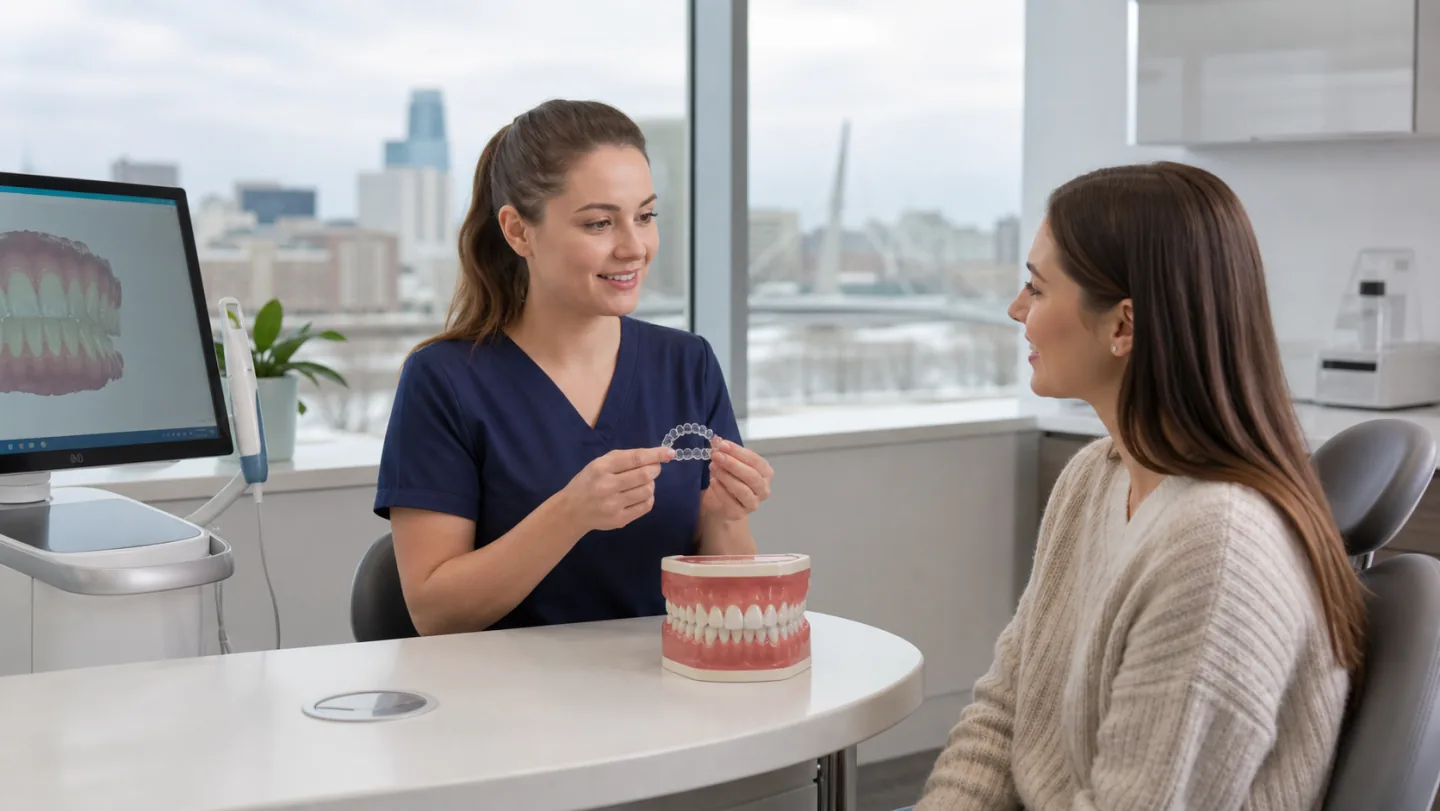
A dentist showing a clear aligner to a patient during a consultation
Already have a dentist you see?

Invisalign for East St. Paul Residents

East St. Paul is outside the City of Winnipeg, and you may have dental care already set up elsewhere. Here’s how to think about records and communication if you’re curious about aligners.

Let's find a time

Request an appointment

We’ll call to confirm your appointment. For urgent care, please call us directly.

Two offices, one mouth

Exploring Aligners When You’re Already Seeing Another Dentist

You might have a dentist you’re perfectly happy with who doesn’t figure in your thinking about aligners, or you may simply be curious what another office would say. Either way, questions naturally come up about X-rays, recent work and who keeps track of what.

There’s no universal answer, so ask directly. What we can say is where this treatment happens: East St. Paul residents coming into Winnipeg for Invisalign are seen at our clinic on McPhillips Street, where assessments and progress reviews take place.

Explore invisalign
Front desk with a clear divider, a small orchid and a hallway with a frosted glass wall beside it
A clear divider and small orchid on the front desk at Winnipeg North Dental.

Your history is useful

Recent work, past treatment and known concerns all provide context for an aligner assessment, wherever they were done.

Ask about records

Find out which existing X-rays or notes would help, and how they could be requested from your other office.

Keep everyone informed

It helps if each office knows about any treatment being done or planned elsewhere. Mention it at both.

Worth reporting up front

What your other dental work means for planning.

A tray has to fit over whatever’s in your mouth at the moment. The dentist will want to hear about existing work and anything else that may be coming up.

Dental work already done

Restorations and earlier treatment are part of the mouth being examined. Mentioning them saves guesswork, and lets the dentist ask the right follow-up questions.

  • Fillings, crowns or other restorations you’ve had.
  • Any earlier orthodontic treatment or retainers.
  • Teeth that have been removed, and roughly when.
  • Gum treatment or concerns raised in the past.

Work that’s on the horizon

Order matters when more than one kind of care is involved, because something done to a tooth could affect how a tray fits or how the plan is sequenced.

  • Treatment recommended but not yet carried out.
  • Cosmetic work you’re considering for afterward.
  • Upcoming appointments at your other dental office.
  • New problems you were planning to have checked.

Tell whichever office is treating you if you’re in aligners. New dental work can sometimes affect how a tray seats, so it’s worth raising before you have it done.

Follow the paper trail

Where existing records can fit in the stages.

Aligner treatment follows the same four stages for everyone. At each one, there’s a slightly different reason for your other dental information to come up.

Request your visit
  1. 01

    Diagnosis, with context

    Your teeth, gums, bite and jaw relationships are examined, and photographs and appropriate X-rays are reviewed. Ask here whether any existing images could be used.

  2. 02

    Design, with the whole mouth

    Each tooth’s path and the approach to creating space are planned, so tell the dentist about upcoming work before the sequence gets underway.

  3. 03

    Delivery and instructions

    Trays are checked for fit, attachments are placed if planned, and you learn their care. Keep a note of your plan’s basics to share with your other office.

  4. 04

    Tracking against the plan

    Movement is reviewed against the sequence. If you’ve had any dental work elsewhere since your last visit, mention it, as it could be relevant to fit.

Before you come into the city

Make a phone call or two first.

Some of this is easier to settle before your assessment than during it. A little groundwork with your existing dental office may give you more to bring with you.

You’re not obliged to explain your reasons to anybody. Asking for your own information is a simple request to make of a dental office.

To gather or ask

  • Your other office’s name and contact information.
  • Approximate dates for your most recent X-rays.
  • A list of medications and any changes in your health.
  • Details of any treatment you’ve recently been advised to have.
Consultation room with leather office chairs, a white desk and a landscape painting on the wall
Two abstract blue paintings on a white wall above a low navy bench

A landscape painting in a consultation room and abstract blue paintings over a bench, Winnipeg North Dental.

Mixed feelings, perhaps

Looking elsewhere doesn’t need to feel awkward.

Some people feel a little disloyal for asking about treatment at a different office. Your teeth are your own, and it’s reasonable to gather information in whatever way suits you.

No need to rehearse

Simply explain where you usually get your dental care, and say that you’re curious about aligners.

Ask whatever’s on your mind

Questions about how care might be shared are ordinary ones. Ask them at the assessment, or on the phone beforehand.

Your decision stays yours

Attending an assessment doesn’t commit you to anything. You can think it over before going any further.

After the trays are finished

Sort out who’s watching what in the long run.

Once you’ve reached the end of active movement, retention begins, and regular dental care continues. Ask how these two things would fit together in your case.

01

Any further aligners

If planned movement remains incomplete, new records could be taken so that refinement aligners can be ordered.

02

Holding things steady

Retainers worn as prescribed help keep teeth in position while tissues adapt, and they help limit future shifting.

03

A question for later

Ask where you’d turn with a retainer that’s lost or no longer fits, so that you know before you need to.

Make sure your regular dental office knows that you’re wearing retainers, and what treatment you’ve completed.

Talk with our team
Winnipeg North Dental storefront with glass double doors and a metal railing at the entrance

Winnipeg North Dental

Unit-5 2358 Mcphillips Street, Winnipeg, MB R2V 4J6
Get directions (opens in a new tab)
Your East St. Paul plan

Where Aligner Care Takes Place for You

Coming from East St. Paul, your Invisalign visits would be at Winnipeg North Dental, Unit 5, 2358 McPhillips Street, in the City of Winnipeg.

The form asks for a visit but doesn’t book one, and you’ll hear back from the clinic to arrange a time. Please phone instead of using it if something is urgent.

Questions about coverage?

Talk with our team before your visit or learn about CDCP.

A little clarity before your visit

Your questions, answered.

Helpful details about invisalign in East St. Paul.

Ask our team
Do I have to change dentists to get Invisalign?

This is worth asking at your assessment, along with how the clinic would handle your other care. Tell us who you currently see so we can answer specifically.

Can you use X-rays my other dentist took?

Ask about this before your visit. Records are reviewed as appropriate, and whether existing images are suitable depends on what’s needed for your assessment.

Should I tell my regular dentist I’m looking into aligners?

That’s up to you, though it’s generally useful for anyone treating your teeth to know about any appliance you’re wearing and any plans you have.

What if I need a filling during treatment?

Let the clinic know as soon as you’re aware of it. Trays have to fit the teeth they cover, so ask how the work could affect your plan.

Can I get a cleaning somewhere else while in trays?

Ask how your plan handles this, and bring your trays along if you’re told to. Tell the hygienist you’re in aligners and about any attachments.

What should my other office know about my attachments?

Mention that they’re small bonded shapes placed to give trays leverage for particular movements, and that they’re part of a planned sequence.

How does an East St. Paul resident ask about this?

Phone (204) 338-3003 or use the form to request a visit. You’d find the clinic at Unit 5, 2358 McPhillips Street, Winnipeg, MB R2V 4J6.

Curious, no strings attached

Ask your aligner questions on McPhillips Street.

Request an assessment at our Winnipeg clinic, and bring whatever you know about your existing dental care.

Patient testimonials

Kind words from our patients

★★★★★ 5.0 from 440+ reviews on Google

Close to home

Areas we serve

Convenient dental care on McPhillips Street for families across northwest Winnipeg and nearby communities.

Explore all service areas

A healthier smile is one visit away

Ready for dental care that feels genuinely comfortable?

✓ New patients welcome ✓ Direct insurance billing ✓ Multilingual team

How can we help?

Our dental team is here for you.

Ready to book or have a question? Choose the option that works best for you.

For urgent dental concerns, please call us directly.

Send us a message

Our team will reply during clinic hours.



