Skip to content
Winnipeg North Dental
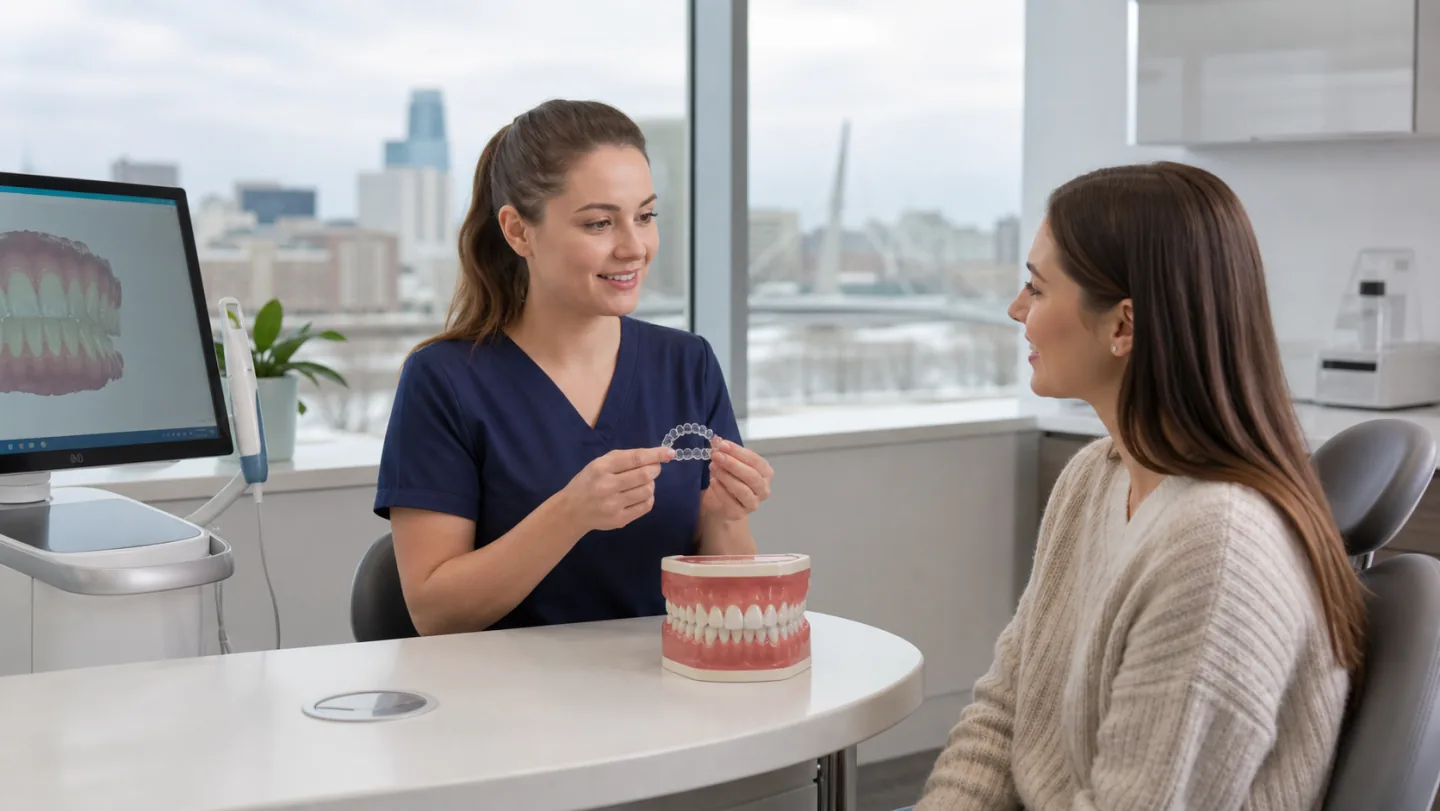
A dentist showing a clear aligner to a patient during a consultation
Does it hurt? Let’s be honest.

Invisalign for Burrows Central Residents

Moving teeth means applying pressure, so it’s natural to wonder how that would feel. For anyone in Burrows Central with a low tolerance for discomfort, here is a plain account.

Let's find a time

Request an appointment

We’ll call to confirm your appointment. For urgent care, please call us directly.

Pressure with a purpose

Why Trays Are Meant to Feel Snug

Aligners work by pressing gently and steadily on your teeth, one planned stage after another. That means some awareness of pressure isn’t a flaw in the treatment, since it’s how the movement happens. People differ in how much they notice it, and no one can say in advance exactly how you’ll find it.

If discomfort is your main hesitation, raise it at the beginning. Burrows Central residents are assessed at our McPhillips Street clinic in Winnipeg, and that’s the place to mention sensitive teeth, past experiences and anything else that’s on your mind.

Explore invisalign
Treatment room with a padded blue chair, sink and overhead equipment arm
A padded blue dental chair and sink in a treatment room at Winnipeg North Dental.

Controlled, not forceful

The series is designed to shift teeth gradually, with each tray applying its own measured amount of pressure.

Tell someone early

Rough edges or a tray that no longer feels right should be mentioned instead of put up with.

Removal has its limits

Lifting trays out for relief may feel tempting, though extra time out can let teeth fall behind.

Sorting the sensations

Ordinary snugness, or something to report.

Not every feeling means the same thing. It helps to separate the pressure that comes with movement from problems with a tray that really need a look.

Part of moving teeth

A well-seated tray holds firmly because it’s shaped slightly ahead of where your teeth currently are, which is what nudges them along.

  • Teeth may feel a firm, even hold from the tray.
  • Awareness can vary from person to person and tray to tray.
  • Night-time wear is part of the prescribed schedule too.
  • Ask your dentist what to expect in your particular plan.

Worth a phone call

Some things aren’t simply a matter of getting used to a tray. Check those with the clinic instead of handling them by guesswork.

  • A cracked tray or a sharp edge rubbing your cheek.
  • A tray that won’t seat the way it used to.
  • An attachment that has come loose or feels rough.
  • Soreness that worries you, whatever its cause seems to be.

Please don’t file down a tray or move on to the next one by yourself to escape discomfort. The clinic can advise on what your situation calls for.

Step by careful step

Where comfort comes up along the way.

Each stage below is a good moment to speak up about sensitivity. You don’t need to wait until something is bothering you to ask.

Request your visit
  1. 01

    Assess and listen

    Your dentist studies your teeth, gums, bite and jaw relationships along with photographs and fitting X-rays. Bring up tender spots at this point.

  2. 02

    Plan the movements

    Where each tooth is headed, how room will be made and which changes need added control are all decided before any tray is made.

  3. 03

    Try your first trays

    Fit is confirmed in the chair, planned attachments go on, and you get to practise taking trays out without having to tug or struggle.

  4. 04

    Check on the way

    Progress visits compare real tooth positions with the sequence. Bring any fit concerns, as the plan can be addressed if a tray isn’t fitting as intended.

If you’re a sensitive sort

Share your comfort history up front.

Nobody can feel what you feel, so the more specifically you can describe your worries, the more useful your first conversation is likely to be.

Your medications and health background are also important to mention. It’s a good time to ask about anything you’d like to know regarding easing soreness.

Things to mention

  • Teeth or gums that already feel tender or sensitive.
  • How you found any earlier orthodontic treatment.
  • Whether you clench or wake up with a sore jaw.
  • Your medication list and any allergies you know of.
Office-style consultation room with a soft blue-grey painting and a potted plant by the window
Reclined treatment chair with teal upholstery and a wall-mounted monitor beyond it

A painted landscape in the consultation room and a teal treatment chair, Winnipeg North Dental.

Going easy on yourself

A nervous patient is no bother at all.

Being wary of soreness doesn’t make you a poor candidate. It simply gives your dentist something worth knowing, so your concerns can be taken into account as you talk.

Rubbing against your lip

Trays and attachments can both feel unfamiliar against soft tissue. Tell the clinic where it’s bothering you.

Getting trays out

Removing them should become manageable with technique. If yours still feels awkward, ask to be shown again.

Questions about relief

If you’re unsure what you can take or do for soreness, the clinic is the right place to ask.

When movement winds down

Retainers hold, they don’t push.

Once active movement ends, the job shifts from moving teeth to keeping them where they are. Retainers do that while the tissues around your teeth adapt.

01

More trays, if necessary

Refinement aligners might follow if a planned movement hasn’t completed. Ask how those would be sequenced in your case.

02

A retainer that feels tight

Tell the clinic if a retainer becomes difficult to seat, since teeth can shift whenever one hasn’t been worn as prescribed.

03

Life after treatment

Teeth don’t stop responding once treatment is over, so a retainer stays useful long after your final tray.

If anything about a tray or retainer is painful or worrying, call the clinic instead of waiting for your next visit.

Talk with our team
Front of Winnipeg North Dental with a railing, double glass doors and frosted windows

Winnipeg North Dental

Unit-5 2358 Mcphillips Street, Winnipeg, MB R2V 4J6
Get directions (opens in a new tab)
Burrows Central and comfort

Where to Raise a Comfort Concern

Burrows Central is in Winnipeg. Residents receive their Invisalign care at Winnipeg North Dental, Unit 5, 2358 McPhillips Street, and tray or attachment problems are looked at there as well.

This form is a request and doesn’t reserve a time, as the clinic replies to arrange one. A painful problem is better handled by phone.

Questions about coverage?

Talk with our team before your visit or learn about CDCP.

A little clarity before your visit

Your questions, answered.

Helpful details about invisalign in Burrows Central.

Ask our team
Do aligners hurt?

They apply pressure to your teeth, and people notice this to differing degrees. Ask your dentist what to expect, and report anything that’s concerning you.

Can I take my tray out for a while if my teeth feel tender?

Check with the clinic first. Trays only move teeth while they’re worn, so regular time out may leave your teeth behind the planned sequence.

A tray edge keeps catching my cheek. Can I smooth it down myself?

Please don’t alter it yourself. Phone the clinic and describe where it’s catching, so they can tell you what’s appropriate to do about it.

Are attachments uncomfortable against the lips?

They’re small bonded shapes that you may feel at first. If one seems rough or bothers you, mention it so that it can be looked at.

Should I skip ahead if the current tray feels too tight to bear?

No. Call instead of moving forward, since a poor fit could mean teeth aren’t tracking and may need a specific correction.

Is enamel reduction something I’d feel?

Ask your dentist about this if it’s in your plan. Limited reduction between teeth is only used when it’s appropriate, and you can ask what the visit would be like.

How does someone in Burrows Central speak with the clinic about this?

Call (204) 338-3003 about anything pressing, or send a routine request through this page. Your visits would be held at Unit 5, 2358 McPhillips Street, Winnipeg, MB R2V 4J6.

Start with your worry

Tell us what makes you hesitate about aligners.

Request an assessment at our Winnipeg clinic and put your questions about comfort first.

Patient testimonials

Kind words from our patients

★★★★★ 5.0 from 440+ reviews on Google

Close to home

Areas we serve

Convenient dental care on McPhillips Street for families across northwest Winnipeg and nearby communities.

Explore all service areas

A healthier smile is one visit away

Ready for dental care that feels genuinely comfortable?

✓ New patients welcome ✓ Direct insurance billing ✓ Multilingual team

How can we help?

Our dental team is here for you.

Ready to book or have a question? Choose the option that works best for you.

For urgent dental concerns, please call us directly.

Send us a message

Our team will reply during clinic hours.


