Skip to content
Winnipeg North Dental
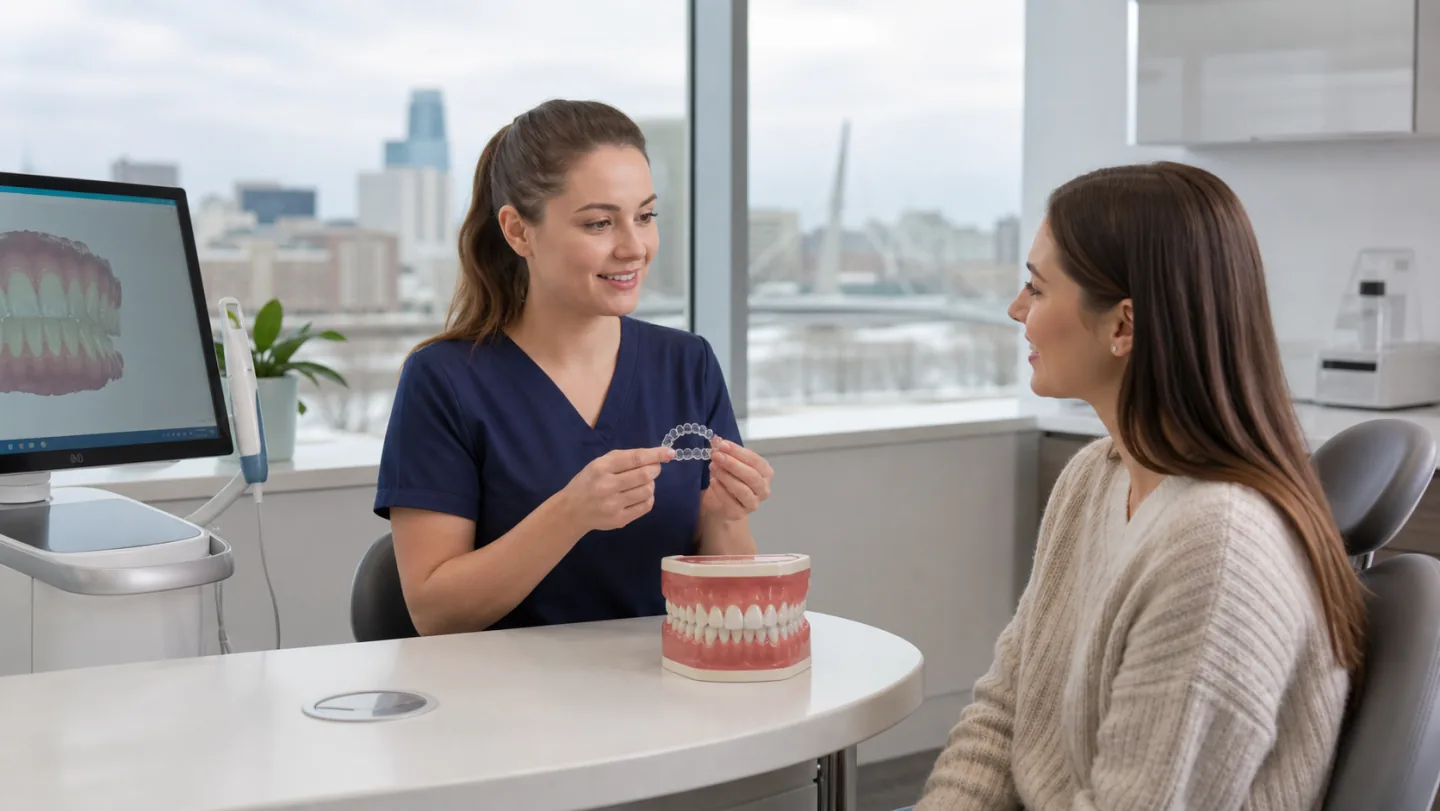
A dentist showing a clear aligner to a patient during a consultation
Your own needs last on the list?

Invisalign for Bridgwater Residents

Caring for children, parents or a household can push personal plans aside for years. Bridgwater residents who’ve quietly wanted straighter teeth can look at what aligner treatment would really ask of them.

Let's find a time

Request an appointment

We’ll call to confirm your appointment. For urgent care, please call us directly.

Time for yourself

Fitting Your Own Treatment Into a Life Built Around Others

If you’re usually the one organizing everyone else’s appointments, starting something for yourself can feel like an indulgence. It’s worth knowing what aligners involve before deciding you don’t have room for them. The demands are real, but they’re also fairly predictable.

Trays need wearing through most of the day and night, removing for meals, cleaning teeth before they go back in, and attending progress visits. Bridgwater residents can learn whether that’s workable for them at an assessment at our McPhillips Street clinic in Winnipeg.

Explore invisalign
Quiet waiting area with a navy bench, a child-sized white chair and a large shaded window
A child-sized chair sits among the adult seats in the Winnipeg North Dental waiting area.

Daily, but routine

Wear, removal and cleaning settle into habits once they’re familiar.

Visits are planned

Progress appointments let your dentist confirm teeth are tracking.

Suitability first

An assessment shows whether trays could achieve what you want.

What you’d be signing up for

A clear look at the commitment.

Aligners only move teeth while you’re wearing them. That puts much of the responsibility on you, which is worth thinking about when your days already belong to others.

The daily rhythm

Most of the work happens at home, quietly, in between everything else.

  • Keep trays seated day and night, as prescribed for you.
  • Take them out for meals and drinks other than plain water.
  • Give your teeth a brush and floss each time before the trays return.
  • Store them in their case, never in a napkin or pocket.

What the trays may address

Your dentist decides suitability, but aligners can manage a range of common concerns.

  • Crowding where overlapping or turned teeth need room.
  • Gaps that can be closed while controlling tooth angle.
  • Some overbite, open bite, crossbite or front-to-back issues.
  • Teeth that shifted after orthodontic treatment years ago.

Small attachments, elastics or careful space creation may be part of a plan. Ask whether your case would need them, since each adds a little to the routine.

Appointments, step by step

What happens at the clinic.

Knowing the shape of treatment helps you plan around family commitments. Each stage has its own purpose.

Request your visit
  1. 01

    An unhurried examination

    Teeth, gums, jaws and bite are examined, with photographs and appropriate X-rays reviewed to understand your situation.

  2. 02

    Designing your movements

    Your dentist plans each tooth’s path, how room is made, and which movements need added control.

  3. 03

    Receiving your trays

    Fit is checked, planned attachments are bonded, and you practise inserting and removing aligners.

  4. 04

    Checking in on progress

    Movement is compared with the plan at later visits, and your dentist acts if a tray stops fitting properly.

Make it manageable

Plan around the people who rely on you.

A little forethought about your week can make treatment easier to sustain. You know where the pressure points are better than anyone.

You don’t need everything figured out before your first appointment. The assessment is where practical questions get answered.

Picture your week

  • Which times of day are usually calmest for you.
  • Where you could brush when meals happen on the go.
  • Whether you tend to eat leftovers or snack while serving others.
  • Your health history and any prescriptions you take.
Bright consultation room with a white desk, office chairs and a plant near the window
Pale blue treatment chair with its headrest and side light arm in an operatory

The consultation desk by a bright window and a pale blue treatment chair at Winnipeg North Dental.

Your turn

This appointment is about you.

Take the time to ask your own questions. There’s no rush to decide, and it’s perfectly reasonable to wait until the timing feels right.

Ask about visits

Find out roughly how progress appointments work so you can plan around them.

Own your pace

Deciding later, or not at all, is a reasonable choice.

Practical concerns

Raise anything about the routine that worries you, however small.

When life gets busy

What to do if the routine slips.

Busy weeks happen. Missed wear can allow teeth to fall behind the plan, and it’s easier to correct when the clinic knows early.

01

A tray that no longer fits

Contact the clinic instead of skipping ahead. Lost wear time or teeth not tracking may need a specific fix.

02

Refinement

Extra aligners from new records are sometimes needed. That’s a normal part of planning and not a judgment on you.

03

Retainers

After active treatment, retainers worn as prescribed help hold teeth, which can keep shifting at any age.

Had a hectic week and missed wear? Let the clinic know.

Talk with our team
Winnipeg North Dental storefront with glass doors and blinds, beside a neighbouring unit

Winnipeg North Dental

Unit-5 2358 Mcphillips Street, Winnipeg, MB R2V 4J6
Get directions (opens in a new tab)
Bridgwater caregivers

Make Some Room for Your Own Smile

Bridgwater is part of the City of Winnipeg. Residents who’ve put this off can have an Invisalign assessment at Winnipeg North Dental, Unit 5, 2358 McPhillips Street.

Using the form puts in a request rather than holding an appointment. The clinic will be in touch about a time, or you can telephone.

Questions about coverage?

Talk with our team before your visit or learn about CDCP.

A little clarity before your visit

Your questions, answered.

Helpful details about invisalign in Bridgwater.

Ask our team
How much daily effort does Invisalign really take?

Trays are worn through most of the day and night, removed for meals and drinks other than water, and replaced after you clean your teeth.

What if I forget my trays during a hectic day?

Missed wear can let teeth lag behind the plan. If an aligner stops fitting well, contact the clinic instead of moving on.

Do I need to attend lots of appointments?

Progress visits are part of treatment so your dentist can compare movement with the plan. Ask what to expect for your own case.

Is it selfish to spend time on my own teeth?

Looking after your own health and comfort is reasonable. An assessment simply gives you the information to decide.

Could I pause and think after the assessment?

Yes. You can take whatever time you need before deciding whether to go ahead.

How can a Bridgwater resident book an assessment around family duties?

Fill in the form and mention the times that tend to be easier, or call (204) 338-3003. Treatment would take place at Unit 5, 2358 McPhillips Street, Winnipeg, MB R2V 4J6.

Put yourself on the list

Find out if aligners fit your life.

Request an Invisalign assessment at our Winnipeg clinic and take time to ask about what matters to you.

Patient testimonials

Kind words from our patients

★★★★★ 5.0 from 440+ reviews on Google

Close to home

Areas we serve

Convenient dental care on McPhillips Street for families across northwest Winnipeg and nearby communities.

Explore all service areas

A healthier smile is one visit away

Ready for dental care that feels genuinely comfortable?

✓ New patients welcome ✓ Direct insurance billing ✓ Multilingual team

How can we help?

Our dental team is here for you.

Ready to book or have a question? Choose the option that works best for you.

For urgent dental concerns, please call us directly.

Send us a message

Our team will reply during clinic hours.



