Skip to content
Winnipeg North Dental
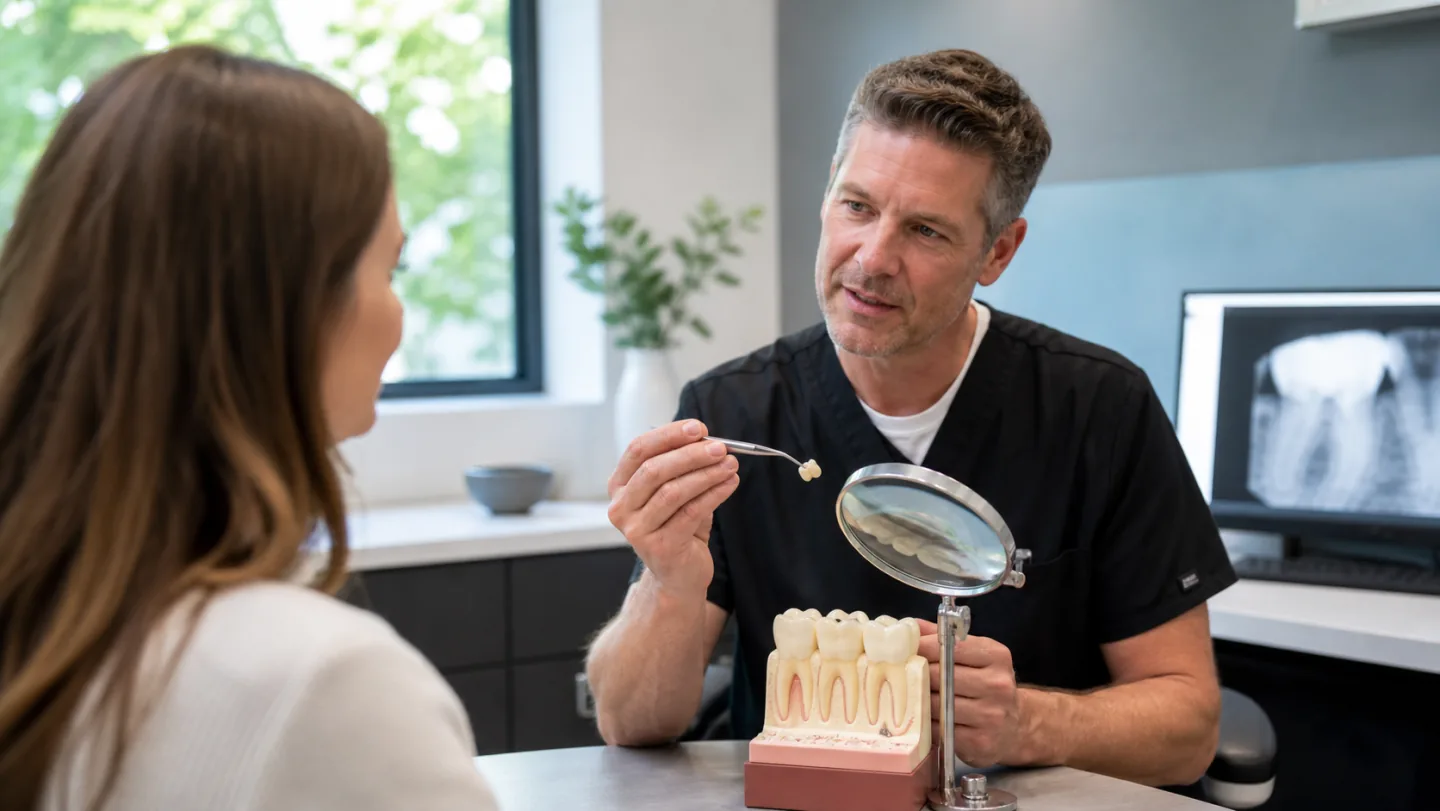
A dentist showing a small ceramic inlay beside a detailed tooth model
A twinge with every sweet bite

Inlays & Onlays for Whyte Ridge Residents

A sharp zing when chocolate or candy touches one back tooth can point to several things. Whyte Ridge residents can have it examined at our Winnipeg clinic to find out whether an inlay or onlay could be part of the answer.

Let's find a time

Request an appointment

We’ll call to confirm your appointment. For urgent care, please call us directly.

What sweetness can reveal

A Symptom Is a Clue, Not a Diagnosis

Sensitivity to sugar can come from decay, a leaking old filling, a crack or exposed tooth surfaces, among other causes. Only an examination can sort out which one applies to your tooth.

If decay or a failing restoration has left a sizeable area to rebuild, a custom inlay or onlay may be one of the options considered. Whyte Ridge is an area of Winnipeg, and people there can have the tooth checked at Winnipeg North Dental on McPhillips Street.

Explore inlays & onlays
Bright consultation office with a white table, black ergonomic chairs and a snake plant
A bright consultation office.

Find the cause

The dentist works out why the tooth reacts before suggesting any treatment.

Match the repair

A filling, an inlay, an onlay or a crown may fit, depending on what is found.

Keep sound tooth

Partial coverage aims to keep healthy walls and cusps that do not need covering.

If a custom piece is suitable

Two ways to rebuild a damaged chewing surface.

When the cause of sensitivity has left a larger area of damage, these designs may be considered. Which one depends on the cusps.

Inlay for central damage

If decay or an old filling occupied the middle of the tooth and the cusps are firm, an inlay can replace that area.

  • Rebuilds the space between the cusps.
  • Leaves strong cusps untouched.
  • Requires sound walls around the prepared area.

Onlay for weakened cusps

If the damage has reached a cusp, an onlay can cover it while keeping the other surfaces of the tooth natural.

  • Covers the cusps that need support.
  • Is less extensive than a crown.
  • Is designed around your bite.

A sweet-sensitive tooth may turn out to need something simpler, such as a filling, or a different treatment altogether. The examination decides.

From twinge to treatment

How the process usually unfolds.

These are the general steps for an inlay or onlay. A temporary may be placed if the restoration is made between appointments.

Request your visit
  1. 01

    Tracking down the source

    The dentist examines the tooth for decay, cracks, the state of old fillings, the walls that remain, your bite and root health.

  2. 02

    Removing the damage

    With the tooth numbed, decay or failing material is cleared and the area is shaped for a custom restoration.

  3. 03

    Recording the shape

    A scan or impression is taken of the prepared tooth, its contacts with neighbours and your bite, and a shade is chosen.

  4. 04

    Placing the restoration

    The piece is checked for fit and bite, adjusted as needed, then bonded securely and polished.

Before your visit

Keep track of when the tooth reacts.

A short record of what sets off the sensitivity can help the dentist narrow down the cause.

If the twinge turns into lasting pain, or the tooth swells or breaks, call the clinic rather than waiting for a scheduled visit.

Note down

  • Which foods or drinks trigger the zing.
  • Whether cold, heat or biting also cause a reaction.
  • How long the feeling lasts once it starts.
  • The medicines you use and any health conditions.
Blue-cushioned dental chair in a clean treatment room with a sink and a wall monitor
Waiting room with framed blue abstract art above a bench and white chairs by the window

A treatment chair and the waiting room.

Comfort during care

A sensitive tooth is numbed before work begins.

Local anesthetic is the usual approach during preparation. After treatment, some temporary sensitivity can occur, and it should improve.

Freezing first

The tooth is numbed so damaged areas can be removed with less discomfort.

Gentle with a temporary

If you have one, remember it is less durable than the finished restoration.

Settling afterward

A newly restored tooth can stay sensitive for a while before calming down.

After the restoration

Notice whether the sweet twinge has changed.

Some sensitivity after treatment is normal. If it is not getting better, or a new kind of discomfort appears, let the clinic know.

01

Clean the margins

Daily brushing and cleaning between teeth should reach the edges of the new restoration.

02

Watch the sensitivity

Call if the tooth stays sensitive and is not improving over time.

03

Other reasons to phone

A high bite, a restoration that seems to move or a rough edge should all be checked.

Fresh decay is one reason a restored tooth can start reacting to sugar again, and no one can promise how many years a restoration will give. The amount of tooth left, preparation, bonding in a dry field, your bite, grinding and cleaning all count too.

Talk with our team
Entrance to Winnipeg North Dental with its round logo and phone number on the building front

Winnipeg North Dental

Unit-5 2358 Mcphillips Street, Winnipeg, MB R2V 4J6
Get directions (opens in a new tab)
Getting the tooth checked

Examination and Treatment on McPhillips Street

A sweet-sensitive tooth belonging to a Whyte Ridge resident is examined at Winnipeg North Dental, Unit 5, 2358 McPhillips Street, Winnipeg. Use the directions link beside the address if helpful.

A request does not confirm a time. The office will reach out to arrange one, and severe or sudden pain should be phoned in.

Questions about coverage?

Talk with our team before your visit or learn about CDCP.

A little clarity before your visit

Your questions, answered.

Helpful details about inlays & onlays in Whyte Ridge.

Ask our team
Does sensitivity to sweets mean I have a cavity?

It can, but it may also come from a leaking filling, a crack or another cause. An examination is needed to know.

Would an inlay stop the sweet sensitivity?

If decay or a failing filling is behind it, restoring the tooth addresses that cause, but relief cannot be promised. Ask what the dentist expects for your tooth.

Could my old filling be causing the twinge?

An older filling with a gap at its edge can let sensitivity through. The dentist can check its condition during the examination.

Is it worth noting which sweets set it off?

Yes. Patterns such as sweet, cold or biting triggers help the dentist narrow down the cause.

Will the tooth be sensitive after the restoration is placed?

Brief sensitivity can occur and should improve. Call if it is not getting better.

My tooth reacts to sugar and I live in Whyte Ridge. How do I get it examined?

Describe the sugar twinge in the request form, or say it over the phone at (204) 338-3003. Once a time is confirmed, you will be seen at Unit 5, 2358 McPhillips Street, Winnipeg, MB R2V 4J6.

Find the cause

Have the sensitive tooth checked.

Ask for a visit at our Winnipeg clinic, and staff will contact you about a time. Call instead if the tooth is suddenly very painful.

Patient testimonials

Kind words from our patients

★★★★★ 5.0 from 440+ reviews on Google

Close to home

Areas we serve

Convenient dental care on McPhillips Street for families across northwest Winnipeg and nearby communities.

Explore all service areas

A healthier smile is one visit away

Ready for dental care that feels genuinely comfortable?

✓ New patients welcome ✓ Direct insurance billing ✓ Multilingual team

How can we help?

Our dental team is here for you.

Ready to book or have a question? Choose the option that works best for you.

For urgent dental concerns, please call us directly.

Send us a message

Our team will reply during clinic hours.



