Skip to content
Winnipeg North Dental
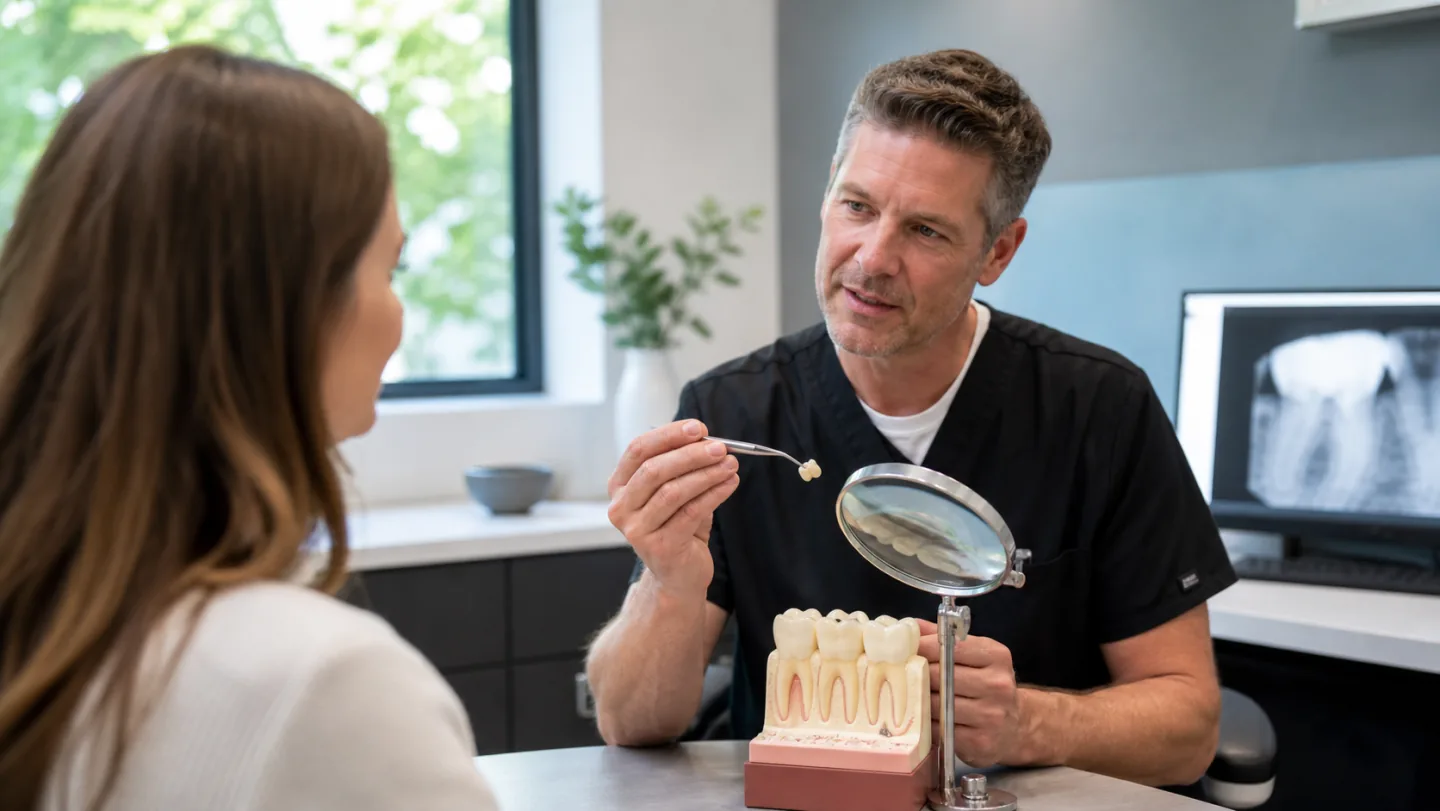
A dentist showing a small ceramic inlay beside a detailed tooth model
Snacking and sipping through the day

Inlays & Onlays for St. Boniface Residents

A custom restoration can rebuild a damaged back tooth, yet the enamel around its edges stays as open to decay as ever. People in St. Boniface who nibble or sip often can talk this through at our clinic in Winnipeg.

Let's find a time

Request an appointment

We’ll call to confirm your appointment. For urgent care, please call us directly.

The edge is the weak point

A Repair Does Not Change the Habits Around It

Inlays and onlays are made outside the mouth to replace a damaged section of a molar or premolar, leaving healthy walls and cusps in place. The restoration itself does not decay, but the natural tooth it is bonded to still can, especially along the seam where the two meet.

That is why new decay sits on the list of things that influence how a restoration performs, alongside bite, grinding, bonding and hygiene. St. Boniface is an area of Winnipeg, and residents who want to discuss their eating pattern before committing can do so at Winnipeg North Dental on McPhillips Street.

Explore inlays & onlays
Black office chairs around a white table under a framed seascape, with a plant by the window blinds
A consultation office with a white table and black chairs.

Sound tooth kept

Only the damaged area is replaced, so the walls that remain healthy are left alone.

Seams that need attention

Where the piece meets enamel is where careful daily cleaning matters most.

An honest conversation

Mentioning frequent snacks or sweet drinks helps the dentist understand your risk.

Two designs, one goal

Each type repairs a different amount of tooth.

Which one is suggested depends on where the damage lies and how much sound structure is left once it has been removed. A filling or a crown may be the better fit instead.

Rebuilding the centre

An inlay replaces the damaged middle of the chewing surface while the cusps around it, if they are strong enough, stay uncovered.

  • Suited to damage that sits between the cusps.
  • Relies on surrounding walls that remain sound.
  • Has a margin all the way round that must be kept clean.

Capping a weak cusp

An onlay reaches over one or more cusps that have been weakened, giving added coverage while other surfaces remain natural.

  • Covers only the cusps that need it.
  • Is less extensive than a full crown.
  • Must be designed around your bite.

No material can stop decay from starting in the natural tooth beside it. Ask the dentist what your own pattern of decay suggests for the restored tooth.

From damage to bonding

How a custom piece comes together.

The steps below are the general sequence. Some details, such as whether a temporary is worn, can vary from one tooth to the next.

Request your visit
  1. 01

    Looking at the whole tooth

    The dentist weighs any cracks, the remaining walls, decay, your bite and the health of the root before recommending a design.

  2. 02

    Clearing out the decay

    With the tooth numbed, softened and damaged material is removed and the space is shaped so the piece can be supported.

  3. 03

    Capturing the details

    A scan or impression records the prepared tooth, the contacts with its neighbours and how you bite, and a shade is picked.

  4. 04

    Fitting and securing it

    The finished piece is tried in, the fit and bite are checked and refined, and then it is bonded in place and polished.

Telling it like it is

Describe a normal day of eating and drinking.

Nobody is judging. A clear picture of when and what you eat and drink gives the dentist useful context for your restoration and the teeth around it.

If the tooth becomes painful or breaks further before your visit, call the clinic instead of waiting for the appointment.

Worth mentioning

  • Whether you sip sweetened coffee, tea, juice or pop across the day.
  • How often you snack between meals, and on what.
  • Any history of cavities appearing around older fillings.
  • Any prescriptions you take regularly, plus ongoing health issues.
Pale blue dental chair under an overhead light, with wooden cabinets and a wall monitor behind it
Blue upholstered bench, white chairs and a potted plant beside a window with blinds

A treatment room and a seating area at the clinic.

During the appointments

Numbing is the usual approach for preparation.

Local anesthetic is normally used while the tooth is being prepared. Once the freezing fades, some short-lived sensitivity can occur and is expected to settle.

Feeling the tooth react

Mild sensitivity after preparation or bonding can happen and should improve as days pass.

Wearing a temporary

If a temporary protects the tooth between visits, treat it gently, since that material is not as durable as the final piece.

Speaking up in the chair

You can tell the dentist if something is uncomfortable so it can be addressed.

Keeping the seams healthy

Daily care decides a great deal.

Once bonded, the restoration depends on the natural tooth staying healthy around it. Thorough cleaning at the margins helps protect that junction.

01

Brush and clean between

Give extra care to the line where the restoration meets enamel, including the sides that touch the next tooth.

02

Keep regular check-ups

Examinations give the dentist a chance to spot early changes along the edges of the restoration.

03

Call about changes

Phone if the bite feels high, sensitivity does not ease, the piece seems to move or an edge feels rough.

No lifespan can be promised for an inlay or onlay. The remaining tooth, preparation, bonding, moisture control, bite, grinding, hygiene and fresh decay all play a part.

Talk with our team
Front of the Winnipeg North Dental building with its name and phone number above the glass doors

Winnipeg North Dental

Unit-5 2358 Mcphillips Street, Winnipeg, MB R2V 4J6
Get directions (opens in a new tab)
Where the care takes place

Your Appointments Are on McPhillips Street

Anyone coming from St. Boniface is treated at Winnipeg North Dental, Unit 5, 2358 McPhillips Street, Winnipeg. For help finding the building, this section includes a directions link.

Sending a request does not hold an appointment slot. The office will contact you to arrange one, and a tooth that is suddenly painful is a reason to phone instead.

Questions about coverage?

Talk with our team before your visit or learn about CDCP.

A little clarity before your visit

Your questions, answered.

Helpful details about inlays & onlays in St. Boniface.

Ask our team
Does a custom restoration protect my tooth from sugar?

The piece itself does not decay, but the enamel bonded to it still can. Its edges are a spot where new decay may begin, so cleaning there remains important.

Should I tell the dentist how often I snack?

Yes, it is useful to know. Frequent snacking and sweet drinks can affect your risk of new decay, which is one factor in how a restoration holds up.

Would an inlay or an onlay suit me better if I get cavities easily?

That depends on the structure of the specific tooth rather than on cavity history alone. Your dentist looks at the walls, cusps, bite and root before suggesting either.

Is a crown a safer choice if decay keeps coming back?

Not automatically. A crown covers more of the tooth, but every restoration has margins that need care. Ask which option fits your tooth and why.

Can decay along an inlay edge be repaired?

What can be done depends on how much is affected and where. An examination is needed to judge it, so bring up any concern at your visit.

I snack a lot and live in St. Boniface. How do I have this tooth looked at?

Fill in the request on this page or phone (204) 338-3003. Once the office confirms a time, you will be seen at Unit 5, 2358 McPhillips Street, Winnipeg, MB R2V 4J6.

Start with a conversation

Ask how your habits affect a restoration.

Send a short request for a visit to our Winnipeg clinic, and staff will reply to arrange a time. If pain flares up before then, phone us.

Patient testimonials

Kind words from our patients

★★★★★ 5.0 from 440+ reviews on Google

Close to home

Areas we serve

Convenient dental care on McPhillips Street for families across northwest Winnipeg and nearby communities.

Explore all service areas

A healthier smile is one visit away

Ready for dental care that feels genuinely comfortable?

✓ New patients welcome ✓ Direct insurance billing ✓ Multilingual team

How can we help?

Our dental team is here for you.

Ready to book or have a question? Choose the option that works best for you.

For urgent dental concerns, please call us directly.

Send us a message

Our team will reply during clinic hours.



