Skip to content
Winnipeg North Dental
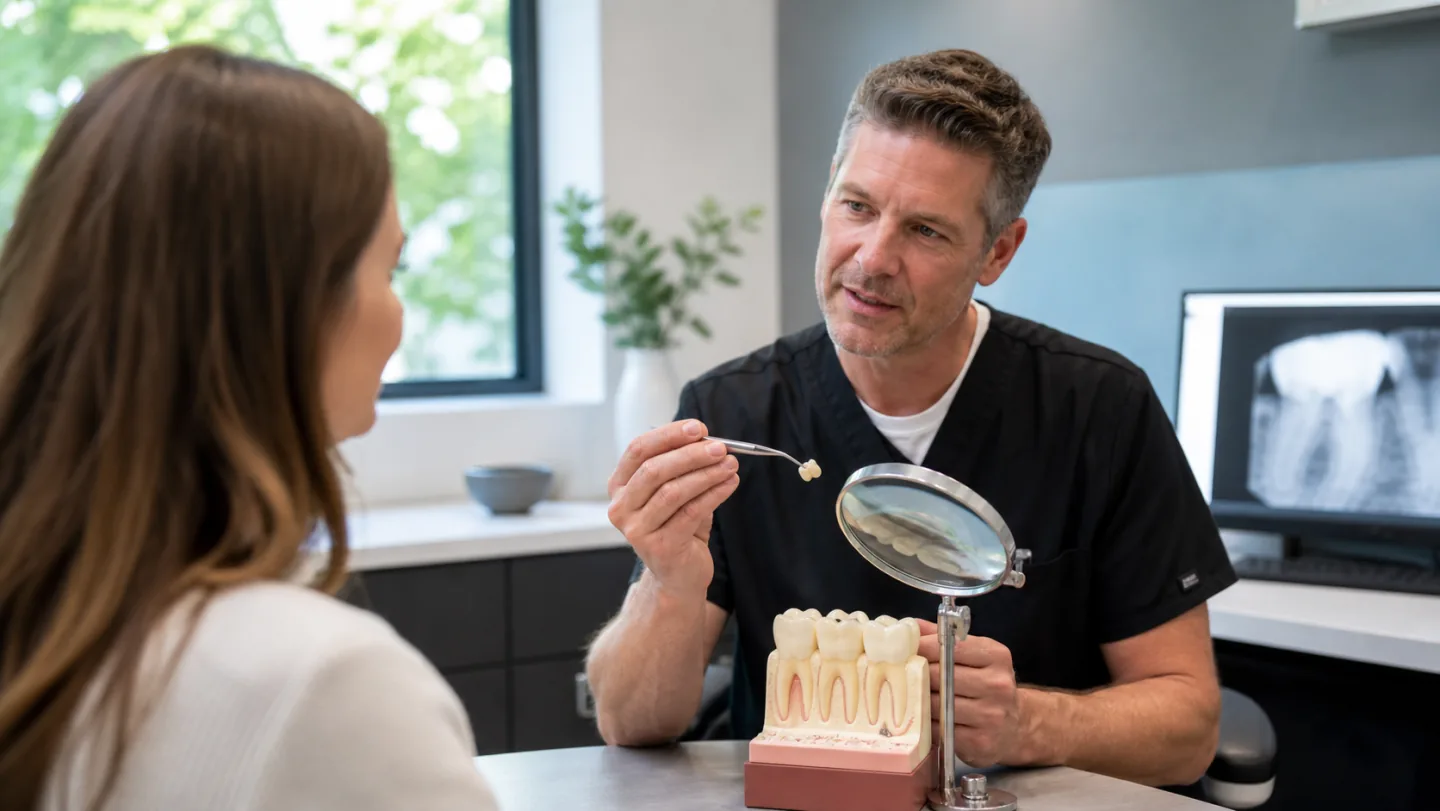
A dentist showing a small ceramic inlay beside a detailed tooth model
What holds it in place

Inlays & Onlays for Shaughnessy Park Residents

Curious how a separate piece becomes part of your tooth? Shaughnessy Park residents can get a clear account of bonding, and of whether it suits them, at our Winnipeg clinic.

Let's find a time

Request an appointment

We’ll call to confirm your appointment. For urgent care, please call us directly.

Fit first, then adhesive

How a Custom Piece Gets Secured to Your Natural Tooth

It is natural to picture an inlay or onlay as something that might simply drop out. In fact, the piece is made to match a specifically prepared space and is then joined to the tooth using dental adhesive, so shape and bonding work together.

Getting that right begins well before the final appointment, starting with whether the tooth has enough sound structure and whether the edges of the repair can be prepared properly. Patients from Shaughnessy Park, in Winnipeg, have those questions answered at Winnipeg North Dental on McPhillips Street.

Explore inlays & onlays
Dental operatory with instrument tray arm, faucet and pale wood storage behind a teal chair
An instrument arm and pale wood storage beside a teal dental chair.

A shape made to match

Your restoration begins with a precise record of the prepared area and how it meets other teeth.

An adhesive connection

The piece is bonded, not merely rested in place, after its fit has been carefully verified.

Ask how it is decided

You can find out why the dentist believes your tooth would or would not make a sound base.

A joint effort

Two ingredients behind a secure restoration.

Neither one is enough without the other. How the tooth is prepared affects how the piece sits, and how the bonding stage is carried out affects how well the two stay joined.

The prepared tooth

Damaged material comes out first, and what remains is shaped so that an inlay can sit within the cusps or an onlay can cover selected ones.

  • Removes unsound material that could not support the piece.
  • Creates margins suited to a precise edge.
  • Spares walls and cusps that do not need coverage.

The bonding stage

Before adhesive is used, fit and bite are verified with the finished piece. Keeping the working area free of moisture is a recognized part of doing this well.

  • Fit gets checked before anything is made permanent.
  • Moisture control supports the adhesive step.
  • A final polish smooths the completed surface.

A strong bond cannot compensate for a tooth lacking a stable foundation. If your remaining structure is limited, broader coverage may be discussed instead.

Building toward the bond

Everything that happens before the adhesive.

Bonding is the final stage in a sequence. Here is how the earlier work leads up to it when the dentist recommends this type of restoration.

Request your visit
  1. 01

    Test the foundation

    Remaining walls, any cracks or decay, your bite and root health are all evaluated to decide whether the tooth is a suitable base.

  2. 02

    Form the receiving space

    Local anesthetic is generally used while unsound material is taken out and the tooth is contoured to receive the new piece.

  3. 03

    Document how it all meets

    A scan or impression captures contacts and bite as well as the prepared shape. Your chosen shade goes in the same record.

  4. 04

    Verify, secure, polish

    Once fabricated, the piece is tried and adjusted as needed, then adhesively attached and polished. Temporary material may be used beforehand.

Questions for the technically minded

Things worth asking about your own tooth.

Some people are more comfortable when they understand how a repair works. If that describes you, write your questions down so you remember to raise them when the dentist has seen the tooth.

Any tooth that has become suddenly sore or feels unstable calls for a telephone conversation, without waiting on the online form.

Possible questions and details

  • How sound does the remaining structure look to you?
  • Which material is planned for this restoration, and why?
  • Would a temporary be needed, and what should I avoid while wearing it?
  • Have your health history, medications, and insurance or CDCP details on hand.
Teal treatment chair with a paper sheet on the seat in a room with wood cabinets
Reception counter with a white front and grey panel beside a glass partition

A treatment room and reception counter at our clinic.

Holding steady in the chair

Mention anything that makes staying open harder.

A dry working area is part of the bonding stage, so you may notice extra attention being paid to moisture. If you find that uncomfortable, or if your jaw tires easily, let the people treating you know.

Find out what each stage involves

It can help to hear beforehand what the instruments are for and what you may notice as work proceeds.

Numbness for tooth shaping

You can normally expect local anesthetic while the tooth is being prepared to receive the restoration.

Tell us about jaw fatigue

Holding your mouth open can be tiring, and it is useful for the dentist to know if this affects you.

Looking after the join

Why the edge deserves your attention.

The place where restoration meets natural tooth is the part you have the most influence over. Keep it clean and be alert to anything that feels different there.

01

Floss past the edge

Plaque along the margin can lead to new decay in the tooth surrounding your bonded piece.

02

Notice any movement

A piece that feels as if it shifts deserves a call to the clinic without delay, even if nothing hurts.

03

Keep tough objects away

A bond is not an invitation to use teeth as tools, so scissors are still the right choice for tape and packages.

Bonding is only one influence on longevity. Remaining tooth structure, preparation, bite, grinding and hygiene also affect how well the restoration performs.

Talk with our team
Clinic storefront showing the Winnipeg North Dental name, phone number and shaded front windows

Winnipeg North Dental

Unit-5 2358 Mcphillips Street, Winnipeg, MB R2V 4J6
Get directions (opens in a new tab)
Getting it checked in person

Have Your Tooth Evaluated on McPhillips Street

Shaughnessy Park residents are seen at Winnipeg North Dental, Unit 5, 2358 McPhillips Street, Winnipeg, for assessment and bonding alike. The directions link gives a route once you enter where you are leaving from.

Your form submission starts a conversation, not a reservation. The office contacts you with a possible time, and a phone call is wiser for anything urgent.

Questions about coverage?

Talk with our team before your visit or learn about CDCP.

A little clarity before your visit

Your questions, answered.

Helpful details about inlays & onlays in Shaughnessy Park.

Ask our team
Is it glued in, or simply pressed into place?

The piece is secured with dental adhesive after its fit and bite have been checked. Its shape also matters, since it is made to match the prepared space.

What causes a bond to fail?

Several factors can contribute, including the amount of tooth available, moisture during bonding, bite forces, grinding and new decay. Mention any looseness promptly.

Why does the area have to stay dry?

Moisture control is one of the factors that affects how a bonded restoration performs, so you may notice measures being taken to keep the site clear.

Is the temporary held on the same way as the final piece?

Temporary materials are less durable than the finished restoration, so follow the instructions provided and contact the clinic if one comes loose.

Can a bonded restoration ever be removed?

If it fails or new problems develop, the dentist can advise on what is possible for that tooth. Your options would depend on what the examination shows at that time.

Can I ask these questions before committing, if I live in Shaughnessy Park?

Yes. Request an assessment through this page or by phoning (204) 338-3003, and bring your questions to Unit 5, 2358 McPhillips Street, Winnipeg, MB R2V 4J6.

See if it suits your tooth

Find out if your tooth makes a sound base.

Use the form to request an assessment at our Winnipeg clinic. You will hear back from the office about timing, though pressing dental problems warrant a call.

Patient testimonials

Kind words from our patients

★★★★★ 5.0 from 440+ reviews on Google

Close to home

Areas we serve

Convenient dental care on McPhillips Street for families across northwest Winnipeg and nearby communities.

Explore all service areas

A healthier smile is one visit away

Ready for dental care that feels genuinely comfortable?

✓ New patients welcome ✓ Direct insurance billing ✓ Multilingual team

How can we help?

Our dental team is here for you.

Ready to book or have a question? Choose the option that works best for you.

For urgent dental concerns, please call us directly.

Send us a message

Our team will reply during clinic hours.


