Skip to content
Winnipeg North Dental
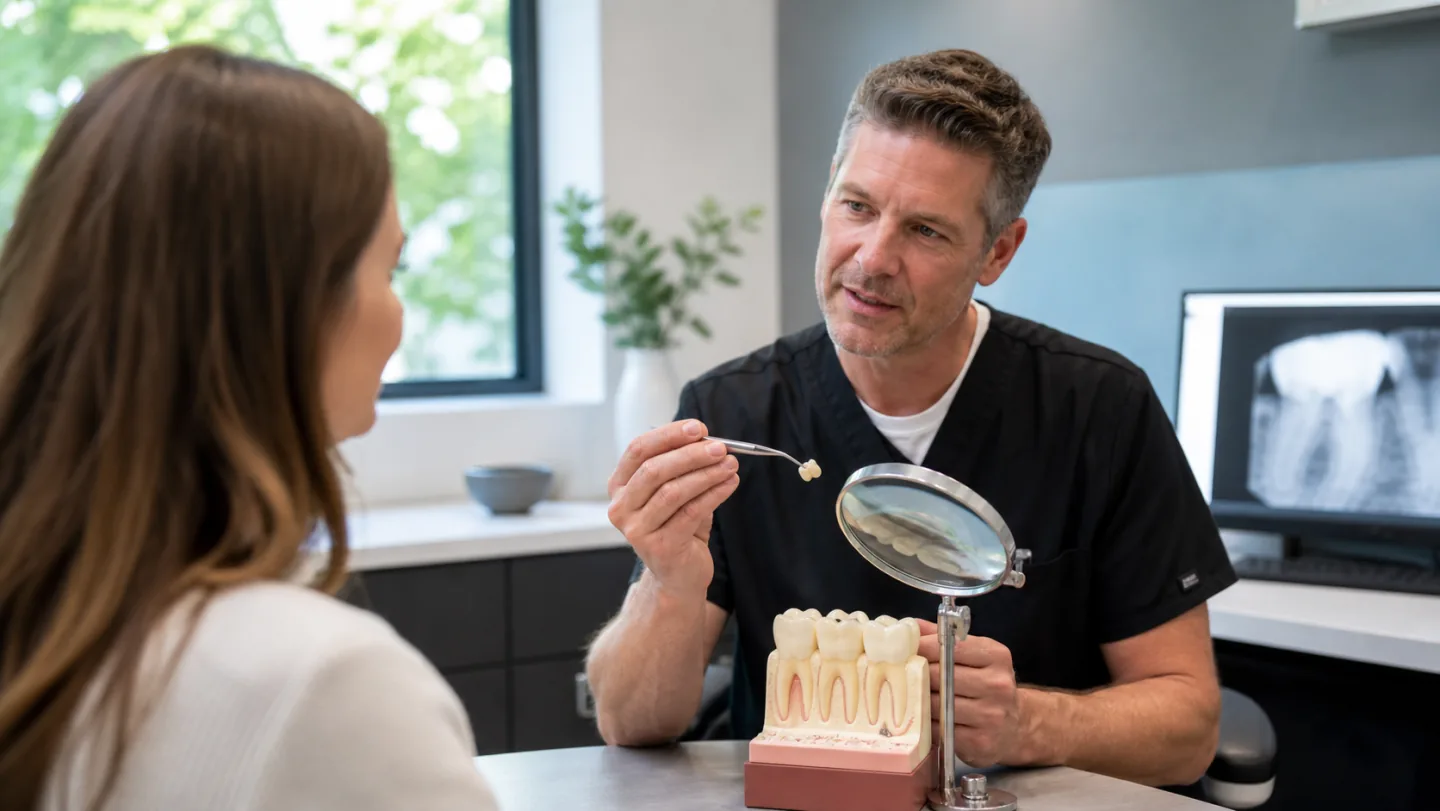
A dentist showing a small ceramic inlay beside a detailed tooth model
Normal, or worth a call?

Inlays & Onlays for Lockport Residents

Living in Lockport, outside the City of Winnipeg, you may want to know ahead of time what the weeks after bonding are like. Treatment happens at our McPhillips Street clinic, and most of the aftercare happens at home.

Let's find a time

Request an appointment

We’ll call to confirm your appointment. For urgent care, please call us directly.

Once you are back home

Telling an Ordinary Adjustment From a Real Change

A freshly bonded restoration can take a little getting used to, and that can leave you second-guessing every twinge. It helps to learn beforehand what tends to improve by itself and what ought to be reported, so you are not lying awake wondering.

Before you commit to treatment, ask what follow-up may involve and how a concern would be handled if you are not in the city. Lockport residents have this work done at Winnipeg North Dental on McPhillips Street in Winnipeg, where any review of the tooth would also take place.

Explore inlays & onlays
Dental treatment room with a pale blue chair, an overhead arm, a sink and glass-fronted upper cabinets
A treatment room with a pale blue chair and glass-fronted upper cabinets.

What may settle

Sensitivity for a short while can follow treatment, and you should notice it gradually improving.

What to report

A high bite, sensitivity that stops improving, movement or a rough edge all warrant contact with us.

What you can do

Careful margin cleaning and leaving tool-like jobs to actual tools are your two main responsibilities.

What you would be living with

Two kinds of restoration, and what each changes.

It is easier to notice meaningful changes when you know what was done. An inlay and an onlay differ in how far they reach, and that affects which edges you will need to look after.

Inlay edges

With this design, the margin runs around the central part of the chewing surface, inside the cusps. The surrounding walls remain your own natural tooth, and they need the same care as before.

  • Fills the central chewing area.
  • Surrounding tooth stays exposed.
  • Suitable when walls are sound.

Onlay edges

With this design, the piece goes over at least one weakened cusp, so its margin follows a longer path across the top of the tooth. Natural surfaces remain elsewhere and need daily cleaning.

  • Runs across the chosen cusps.
  • Covers less than a crown generally does.
  • Planned around your bite.

Which design you would have, if either, is settled at the assessment. Sometimes a direct filling or full crown is what the tooth actually calls for.

Before the home stretch

How you get to the bonded restoration.

A short summary of the clinical work may help you make sense of what you feel later. Each stage has a job in how the finished piece feels.

Request your visit
  1. 01

    Shaping the tooth

    Anesthetic generally comes first, and then the damaged material is removed. This leaves a clean form that the restoration can rest on.

  2. 02

    Capturing your bite

    Scan or impression, the record takes in the tooth, neighbouring contacts and how your teeth meet, as well as the shade you have chosen.

  3. 03

    Crafting the piece

    Fabrication is carried out in the planned material. A temporary may protect your tooth while this is going on, and it is less durable than the final piece.

  4. 04

    Final check and polish

    Your bite and the fit get verified before adhesive bonding, and a polish leaves the surface smooth for your tongue and cheek.

Ask this before bonding day

Getting your aftercare questions answered in advance.

It is much easier to get clear answers while you are sitting in the clinic than after you get home. Keep these in mind for the visit when your piece is placed.

Should severe pain or swelling appear at any point, do not wait and watch. Call the clinic and describe what you are experiencing.

Bring up

  • What sensations might be normal for this tooth at first.
  • How to reach the clinic if something changes.
  • Whether the piece’s edges need any special cleaning.
  • When your next examination should take place.
Small office with a white desk, black chairs, a window with striped blinds and a green potted plant
Waiting area with a blue bench and two abstract blue and black paintings on a white wall

An office with a white desk and black chairs, and a waiting area with a blue bench.

Keeping worry in proportion

Noticing a new restoration is common at first.

Your tongue is very good at finding anything new, and a small change can seem larger than it is. Paying attention is reasonable, and asking a question about it is never a bother.

Freezing wears off

Your mouth may feel different at first as the local anesthetic used for preparation fades away.

Tracking a twinge

If something is sensitive, note whether it is improving over the days. That detail is useful when you call.

Questions are welcome

A quick call to ask whether something is expected can spare you a lot of worrying at home.

Over the following weeks

A simple watch list for life at home.

Most days the restored tooth should not demand much attention. Use this list as a guide, and let the clinic decide whether something needs to be seen.

01

A bite that feels high

If your teeth seem to meet on this tooth first, mention it, since that is a reason to get in touch.

02

Sensitivity not fading

A twinge that stays the same or grows stronger differs from one that eases off, so report that pattern.

03

Movement or roughness

A piece that seems to shift, or an edge catching on your floss or tongue, should also be raised.

No lifespan can be promised. Tooth structure, bonding quality, moisture control, your bite, grinding, hygiene and new decay all influence how a restoration holds up.

Talk with our team
Front of the clinic with glass entrance doors, frosted windows and the phone number on the sign

Winnipeg North Dental

Unit-5 2358 Mcphillips Street, Winnipeg, MB R2V 4J6
Get directions (opens in a new tab)
If something needs a look

Treatment and Reviews at Our McPhillips Street Clinic

People from Lockport come into Winnipeg to Winnipeg North Dental, Unit 5, 2358 McPhillips Street, for treatment. Should the tooth need a review afterward, that is where it would be examined.

A form request does not reserve a time; the office responds to set one up. When something is urgent, ring the clinic rather than filling in the form.

Questions about coverage?

Talk with our team before your visit or learn about CDCP.

A little clarity before your visit

Your questions, answered.

Helpful details about inlays & onlays in Lockport.

Ask our team
How long is it normal for the tooth to feel sensitive?

No fixed number applies to everyone. Temporary sensitivity should get better, so the trend matters. If it is not improving, phone the clinic and describe it.

Will I have to come back to have the bite adjusted?

The bite is verified before the piece is bonded, but a tooth can feel different once you are chewing normally. If it seems high after that, let the office know.

Can you help me decide over the phone if it needs a visit?

The office can hear your description and advise on the next step, although a physical change to a restoration usually has to be seen in person to be properly judged.

What if a piece feels loose but has not come off?

Movement is one of the changes to report, even when nothing has fallen out yet. Call and explain what you have noticed, and avoid guessing at a fix on your own.

Does a restored tooth still need regular examinations?

Yes, a restored tooth can still develop problems, particularly new decay around its edges. Ask how often you should return, given your own mouth and history.

How do Lockport residents begin if they want to go ahead?

Use this page’s form or call (204) 338-3003 to ask for an assessment. Care takes place at Unit 5, 2358 McPhillips Street, Winnipeg, MB R2V 4J6, once a time is confirmed.

Plan the whole picture

Ask about treatment and what comes after.

Your request for an assessment at our McPhillips Street clinic in Winnipeg goes to the office, which replies about timing. If you are in pain, please call instead.

Patient testimonials

Kind words from our patients

★★★★★ 5.0 from 440+ reviews on Google

Close to home

Areas we serve

Convenient dental care on McPhillips Street for families across northwest Winnipeg and nearby communities.

Explore all service areas

A healthier smile is one visit away

Ready for dental care that feels genuinely comfortable?

✓ New patients welcome ✓ Direct insurance billing ✓ Multilingual team

How can we help?

Our dental team is here for you.

Ready to book or have a question? Choose the option that works best for you.

For urgent dental concerns, please call us directly.

Send us a message

Our team will reply during clinic hours.



