Skip to content
Winnipeg North Dental
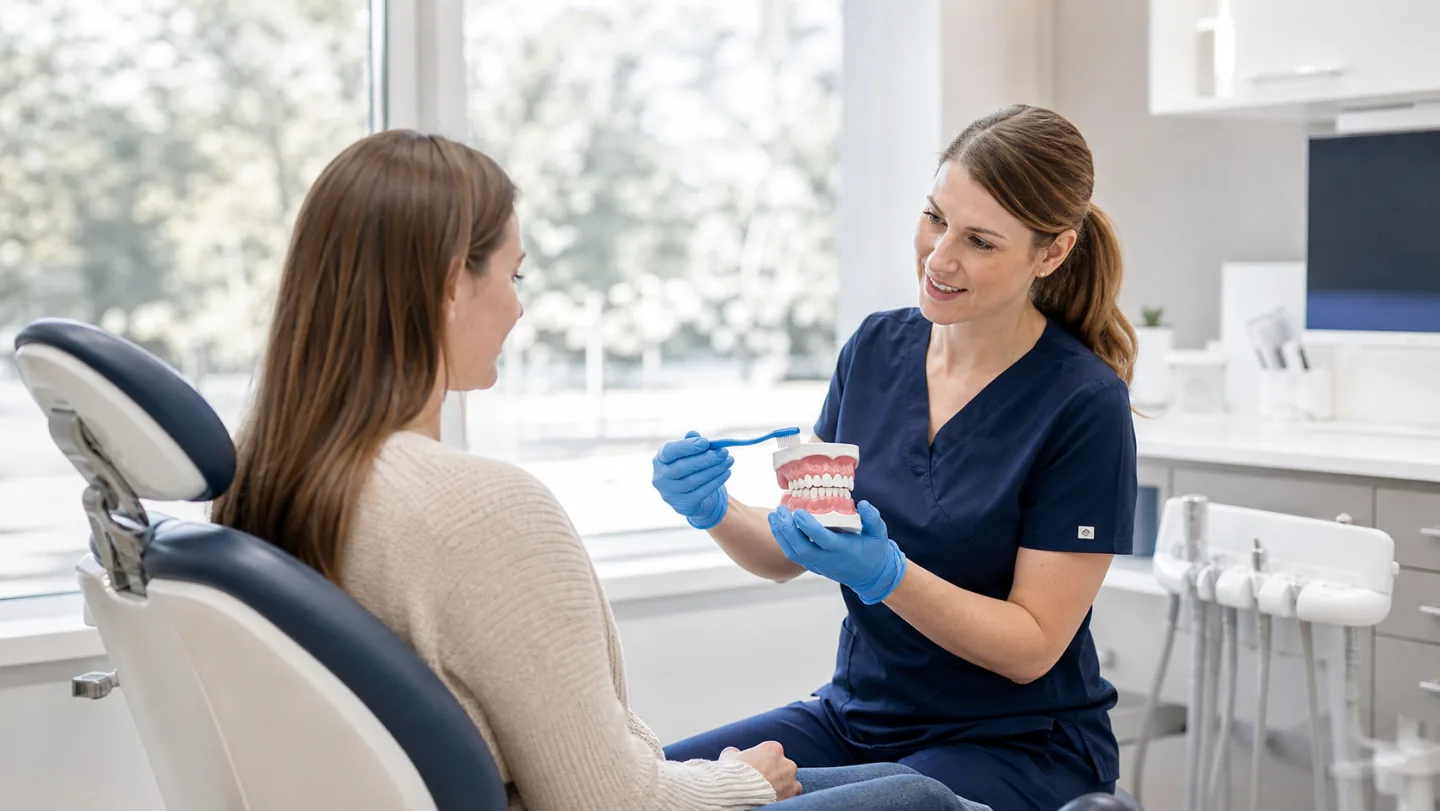
A dental hygienist explaining gum health and home care with a model
Translating the gum vocabulary

Gum Disease Treatment for Waterford Green Residents

Pockets, attachment, calculus, recall: periodontal care comes with its own language. This page puts those words into everyday terms for Waterford Green residents, whose care takes place at our clinic on McPhillips Street in Winnipeg.

Let's find a time

Request an appointment

We’ll call to confirm your appointment. For urgent care, please call us directly.

When the terms get in the way

Understanding the Words Used About Your Gums

Hearing numbers called out during an exam, then seeing unfamiliar terms on a treatment suggestion, can leave you nodding along without really following. That is a poor way to make a decision about your own mouth, and asking what a word means is always reasonable.

Most of the vocabulary describes one idea: how well the tissue and bone around each tooth are holding up. Gingivitis names inflammation that has not cost any support. Periodontitis means attachment, bone or both have been lost. At Winnipeg North Dental, findings get connected and explained in clear language, so the terms below are a head start and not homework.

Explore gum disease treatment
Winnipeg North Dental consultation room with a white desk, black leather chairs and an abstract landscape painting
A white desk with a keyboard and black chairs on both sides, in front of a window with striped blinds.

Pocket

The small space between gum and tooth, which can deepen when the tissue pulls away.

Calculus

Plaque that has hardened onto a tooth. Brushing at home is unable to shift it.

Recall interval

How much time passes between your maintenance appointments, set according to your own risk.

Two lists of terms

What you may hear, and what may be suggested.

One set of words describes what is found in your mouth. The other describes what could be done about it. Keeping them separate makes a treatment conversation much easier to follow.

Words that describe findings

These come up while the supporting tissues are being examined and recorded on your chart.

  • Recession: the gum edge has moved, leaving a tooth looking longer.
  • Attachment loss: the fibres connecting gum to tooth have been affected.
  • Mobility: a tooth moves more than it should when checked.
  • Bleeding on probing: a measured site bled when it was gently touched.

Words that describe care

Each of these names a possible step. Which ones apply to you rests entirely on what was found.

  • Interdental cleaning: clearing plaque from the spaces between your teeth.
  • Scaling and root planing: deep cleaning below the gums, on root surfaces.
  • Reassessment: repeating measurements to learn how the tissue healed.
  • Periodontal maintenance: scheduled care that disrupts new buildup and monitors change.

Heard something that is not on this page? Ask for it to be explained, then ask how it relates to your own teeth.

The appointment, term by term

Where each word shows up during an assessment.

Attaching the vocabulary to the moments of a visit tends to make it stick. Here is how a periodontal assessment normally moves along, and the language you may notice at each stage.

Request your visit
  1. 01

    History

    This part covers what has changed for you, including bleeding, discomfort, medical conditions, medications, tobacco, relatives with gum trouble and earlier dental care.

  2. 02

    Charting

    A series of light measurements goes around each tooth. The numbers you may overhear are pocket depths, recorded with notes on bleeding, recession and attachment.

  3. 03

    Evaluation of support

    Looser teeth, how you bite, deposits and any suitable dental images all feed into a picture of tooth support and spots that are tricky to keep clean.

  4. 04

    Explanation

    Everything is pulled together into a pattern, with active areas identified and a proposed course of treatment and maintenance put into ordinary words.

Getting ready to follow along

Come with the words that confused you.

If an earlier appointment left you puzzled, that puzzle is useful to bring. You do not need to study anything first or learn the terms correctly. Describing it badly is perfectly fine.

Cost and appointment length are fair things to raise when you make contact. What your plan pays is decided by the plan itself.

Worth bringing along

  • Any paperwork from past dental care that used terms you did not understand.
  • A written list of medications and supplements.
  • CDCP or dental insurance details, if you have them.
  • A phone note with questions, so they do not slip your mind in the chair.
Pale blue dental chair with wood-look cabinets and a wall monitor in a Winnipeg North Dental treatment room
White and grey front counter at Winnipeg North Dental with plants and a navy bench

A pale blue dental chair beside wood-look cabinets and a small wall monitor.

Asking without embarrassment

You never have to pretend you followed.

Clinical language can make anyone feel as though they ought to know already. Nobody expects you to. Stopping the conversation to ask is part of giving your care proper thought.

Ask for it again

A second explanation in different words is a completely normal request.

Ask to be shown

It can be easier to grasp a finding when you can see where in your mouth it applies.

Ask what it means for you

A definition tells you what a word means. Your own findings tell you whether it matters.

Words you will keep hearing

The language of staying on top of it.

Management is the key word after treatment, because periodontitis is generally controlled over time and not thought of as permanently cured. A few other terms tend to follow you from this point on.

01

Stability

Your gums are holding steady from one set of measurements to the next, which helps shape your schedule.

02

Personalized interval

Your disease history, current condition and risk set the timing, so yours may not match anybody else’s.

03

Plaque control

This is simply a clinical way of describing how effectively your everyday cleaning is removing soft buildup.

Tell the clinic if your medications or health conditions change, because either can influence how your gums respond.

Talk with our team
Winnipeg North Dental storefront with grey siding, large frosted windows and the phone number on its sign

Winnipeg North Dental

Unit-5 2358 Mcphillips Street, Winnipeg, MB R2V 4J6
Get directions (opens in a new tab)
A plain-language address

Where Those Conversations Take Place

Waterford Green is in Winnipeg, and care for its residents is provided at Winnipeg North Dental, Unit 5, 2358 McPhillips Street, Winnipeg. The directions link on this card opens a map.

Your form goes to the clinic as a request and holds no appointment time until staff respond. Anything urgent is better handled by phoning.

Questions about coverage?

Talk with our team before your visit or learn about CDCP.

A little clarity before your visit

Your questions, answered.

Helpful details about gum disease treatment in Waterford Green.

Ask our team
What does the word pocket actually refer to?

Gum tissue forms a shallow collar around each tooth. When inflammation damages the attachment, that space can deepen, making plaque harder to reach and giving your dentist something to measure and monitor.

Are plaque and calculus two names for one thing?

They are related but different. Plaque is a soft film you can clean away at home. Calculus is hardened buildup, and removing it requires professional care.

What is the difference between a gum diagnosis and a treatment plan?

A diagnosis names the condition, such as gingivitis or periodontitis. A plan sets out the steps recommended for it, which is why the diagnosis has to come first.

What does non-surgical mean when people describe a deep cleaning?

Scaling and root planing cleans pockets and root surfaces below the gumline without surgical access. Should deep pockets persist, your findings will guide what is discussed next.

Can I ask for my gum numbers to be explained?

Certainly. Asking how a reading compares with a healthy one, and which teeth concern the dentist, is a sensible way to make the chart meaningful to you.

If I live in Waterford Green, how do I request a gum assessment?

Send the form below or call (204) 338-3003. Your assessment takes place on McPhillips Street, and the clinic gets back to you to settle the date.

No vocabulary test

Request an assessment and bring your questions.

Waterford Green residents are welcome to use this form to request a gum assessment at our Winnipeg clinic, and to mention any term that has been bothering them.

Patient testimonials

Kind words from our patients

★★★★★ 5.0 from 440+ reviews on Google

Close to home

Areas we serve

Convenient dental care on McPhillips Street for families across northwest Winnipeg and nearby communities.

Explore all service areas

A healthier smile is one visit away

Ready for dental care that feels genuinely comfortable?

✓ New patients welcome ✓ Direct insurance billing ✓ Multilingual team

How can we help?

Our dental team is here for you.

Ready to book or have a question? Choose the option that works best for you.

For urgent dental concerns, please call us directly.

Send us a message

Our team will reply during clinic hours.



