Skip to content
Winnipeg North Dental
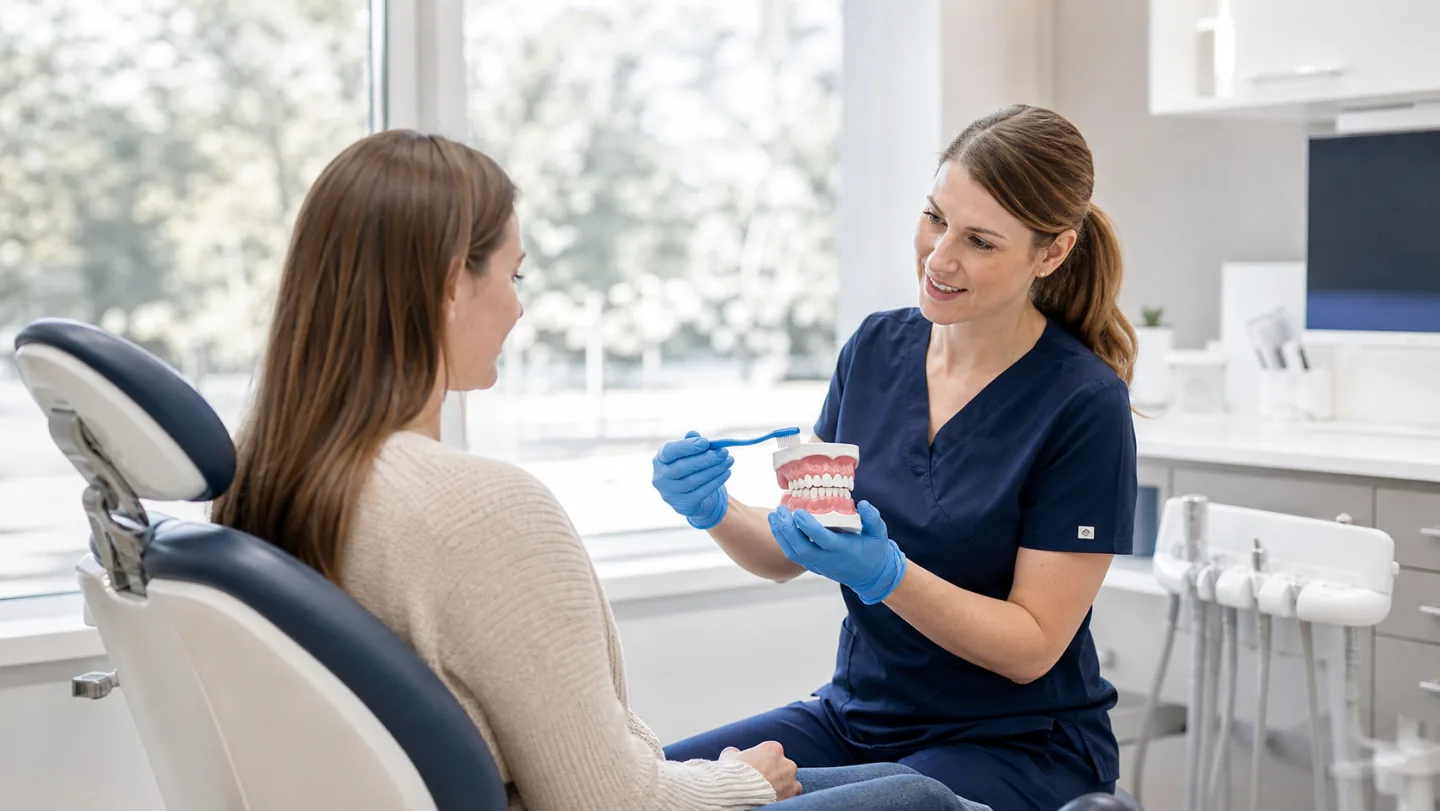
A dental hygienist explaining gum health and home care with a model
When a tooth wobbles as you chew

Gum Disease Treatment for St. James Residents

Feeling a tooth flex under your tongue or shift slightly as you bite is easy to worry about and hard to judge alone. If you live in St. James, you can request a periodontal assessment at our McPhillips Street clinic in Winnipeg to learn how much support that tooth still has.

Let's find a time

Request an appointment

We’ll call to confirm your appointment. For urgent care, please call us directly.

What looseness can point to

Why an Adult Tooth Starts to Feel Loose

Adult teeth are meant to sit firmly. When one starts to feel loose, a common reason is that periodontitis has worn away part of the gum attachment and bone that anchor it. Because this can happen without much pain, looseness is sometimes the first thing a person actually notices.

Other causes exist as well, such as heavy biting forces or an injury, and a tooth can feel looser while the gum around it is inflamed. Pressing or rocking it to check does not help. Measuring the gums, testing mobility carefully and reviewing suitable images gives a far clearer answer about what is going on and what the outlook might be.

Explore gum disease treatment
Winnipeg North Dental treatment room with a light blue dental chair, an instrument tray on a white arm and a wall-mounted monitor
A dental chair with a light blue cushion and a monitor on the far wall.

How firm is it?

Mobility is graded gently so it can be tracked against later visits.

What holds it?

Attachment readings and images show how much gum and bone support remains.

What are the options?

You hear what treatment could aim for and what remains uncertain about that tooth.

Caring for a loose tooth

Calm the inflammation, then judge the support.

Inflamed tissue around a root can add to how loose a tooth feels. Treating that inflammation first lets the remaining support be judged more fairly.

Findings that shape the outlook

Several measurements are considered together, never just one.

  • The degree of movement when the tooth is tested.
  • How deep the pockets run and how much attachment is gone.
  • The bone level shown on appropriate dental images.
  • Whether your bite places extra load on that tooth.

Treatment that may be suggested

The goal is to control disease and keep as much support as possible.

  • A gentle cleaning technique you can use around a tooth that moves.
  • Removal of calculus clinging to the root and crown of the affected tooth.
  • Root planing below the gum if a deep pocket surrounds it.
  • Reassessment after healing to see whether mobility and readings have improved.

Sometimes a tooth firms up somewhat once inflammation is controlled, and sometimes it does not. The reassessment is where that becomes clearer, so outlooks are discussed honestly rather than promised.

At your appointment

Measuring support without guessing.

The loose tooth gets careful attention, though every tooth is examined because periodontitis rarely affects just one.

Request your visit
  1. 01

    Tell us when it started

    Mention how long the tooth has felt loose, whether it is sore to bite on and whether the gum bleeds. We also review your health, medications, tobacco use and any family history of tooth loss.

  2. 02

    Probe each tooth gently

    Readings around all your teeth capture pocket depth, recession, bleeding and attachment, so the loose tooth can be seen in context.

  3. 03

    Test movement and bite

    Mobility is assessed with care, your bite is checked, and suitable images help show the bone level around the root.

  4. 04

    Discuss what it means

    The findings are explained in clear terms, including which areas are active and how treatment and maintenance could be arranged.

In the meantime

Protect the tooth until you are seen.

No special preparation is required. A few simple habits can keep the area from being irritated further before your appointment.

When booking, it is fine to ask roughly how long the first visit lasts and what fees might apply. Benefits are set by your plan, so check with your provider.

Helpful in the days before

  • Avoid wiggling or pressing the tooth to see whether it has changed.
  • Keep brushing gently around it instead of skipping the area.
  • Write down whether the looseness came on suddenly or slowly.
  • Have your medication list and insurance details ready for the visit.
Winnipeg North Dental consultation room with ergonomic chairs, a keyboard on a white table and a tall potted plant
Winnipeg North Dental waiting area with a yellow-edged plant, small white side tables and framed blue artwork

A consultation room with a white desk, office chairs and a window blind.

Facing the worry

It is natural to fear losing a tooth.

A loose tooth often brings the question of whether it can be saved. You can ask that directly, and the answer will be based on your findings rather than reassurance alone.

Ask the hard question

If you want to know the chances for the tooth, ask, and you will hear what the findings suggest.

Go gently on the tooth

Let the team know the tooth is loose so they can take extra care while examining it.

Hear it in plain words

Mobility and attachment can be explained simply if the terms are unfamiliar.

Watching that tooth

Mobility is tracked from visit to visit.

Once treatment is done, the loose tooth becomes one of the clearest ways to see whether your gums are stable.

01

A recorded starting point

How much the tooth moved at your first visit becomes the comparison for each check that follows.

02

Maintenance that suits you

The timing of upkeep visits depends on your disease history, current stability and individual risk.

03

Gentle cleaning at home

Keeping plaque down around the tooth supports healing, so ask if brushing it feels awkward.

If the tooth suddenly becomes much looser, painful or swollen, phone the clinic instead of waiting for your recall.

Talk with our team
Winnipeg North Dental front entrance with the clinic name in raised letters above tinted glass doors and a handrail

Winnipeg North Dental

Unit-5 2358 Mcphillips Street, Winnipeg, MB R2V 4J6
Get directions (opens in a new tab)
For St. James patients

Where the Loose Tooth Is Examined

St. James is in Winnipeg. Residents who come to us with a tooth that has started to move are assessed and treated at Winnipeg North Dental, Unit 5, 2358 McPhillips Street, and the map link on this card gives you directions.

Using the form puts in a request; a time is set only once the clinic contacts you. A tooth that is very loose, sore or swollen is a reason to phone.

Questions about coverage?

Talk with our team before your visit or learn about CDCP.

A little clarity before your visit

Your questions, answered.

Helpful details about gum disease treatment in St. James.

Ask our team
Is a loose adult tooth always caused by gum disease?

No, though it is a common reason. Lost gum and bone support from periodontitis can make teeth mobile, and bite forces or injury can also play a part. An examination sorts out which applies.

Once my gums are treated, might the wobbly tooth settle down?

In some cases a tooth feels firmer once inflammation is controlled. That depends on how much support remains, and reassessment after healing gives a clearer picture.

Should I stop chewing on that side?

Being gentle with the tooth until it is examined is sensible. If it hurts to bite on or is getting worse, call the clinic so it can be looked at sooner.

Will the tooth need to come out?

That cannot be judged without measurements and images. Some loss of support does not automatically mean losing the tooth, and the options for yours are explained once the findings are in.

Can lost bone around the tooth be rebuilt?

Treatment mainly aims to preserve the support that remains. Regenerative procedures may be considered for certain defects, but they are not suitable or predictable for every situation.

How do St. James residents ask about a loose tooth?

Call (204) 338-3003 if the tooth is painful or getting looser quickly. Otherwise, use the form on this page and the clinic will reply about a time.

Get an answer about that tooth

Have the support around it measured.

Request a gum assessment from St. James and the clinic will get back to you with a time at its McPhillips Street location.

Patient testimonials

Kind words from our patients

★★★★★ 5.0 from 440+ reviews on Google

Close to home

Areas we serve

Convenient dental care on McPhillips Street for families across northwest Winnipeg and nearby communities.

Explore all service areas

A healthier smile is one visit away

Ready for dental care that feels genuinely comfortable?

✓ New patients welcome ✓ Direct insurance billing ✓ Multilingual team

How can we help?

Our dental team is here for you.

Ready to book or have a question? Choose the option that works best for you.

For urgent dental concerns, please call us directly.

Send us a message

Our team will reply during clinic hours.



