Skip to content
Winnipeg North Dental
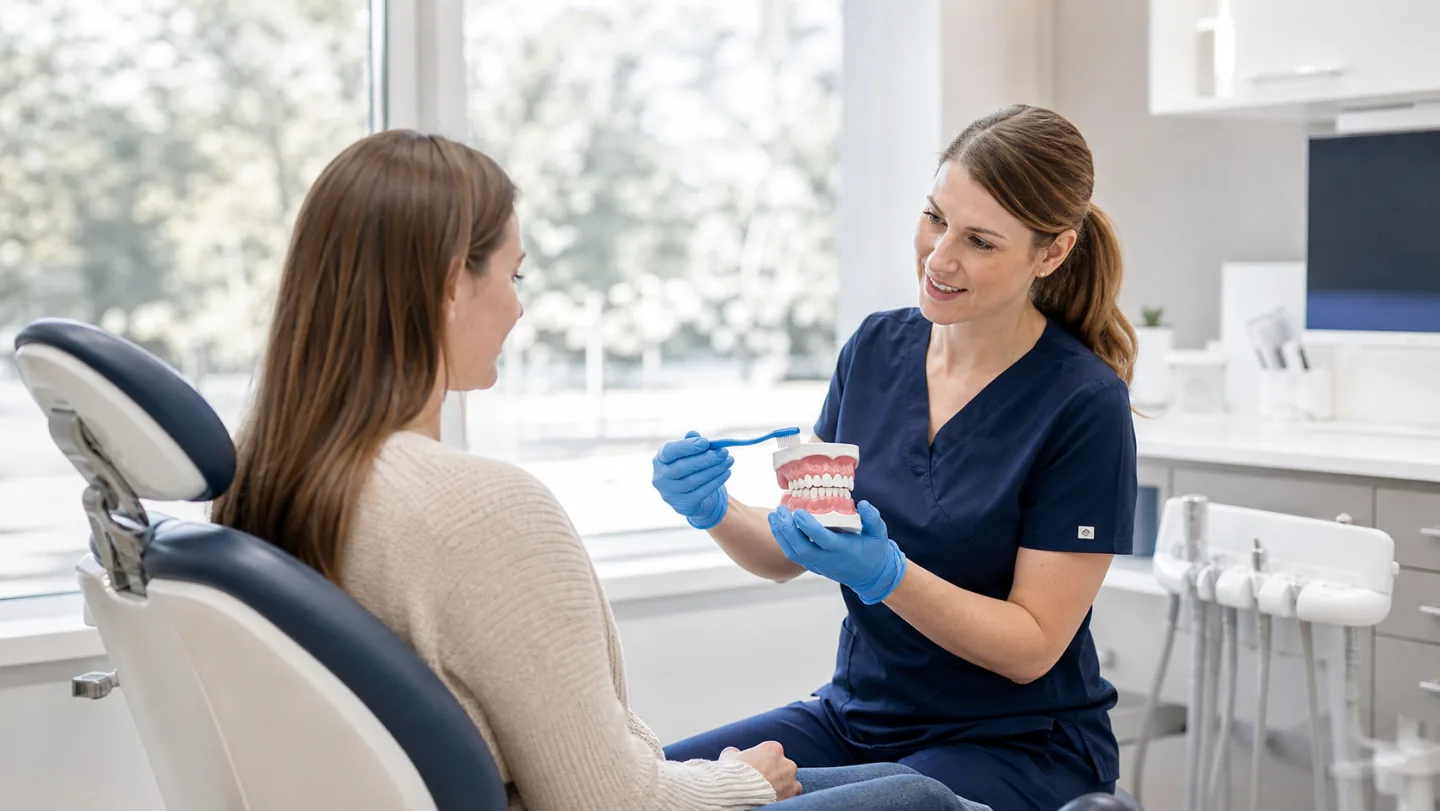
A dental hygienist explaining gum health and home care with a model
Between dental offices right now?

Gum Disease Treatment for St. Andrews Residents

Having no regular dentist makes sore or bleeding gums harder to act on, because there is nobody obvious to ask. St. Andrews is outside the City of Winnipeg, and residents who choose our clinic come in to McPhillips Street for their care.

Let's find a time

Request an appointment

We’ll call to confirm your appointment. For urgent care, please call us directly.

Starting without a dental home

You Can Raise a Gum Concern Before You Have a Regular Dentist

Perhaps your last office closed its file on you years ago, or you simply never replaced the one you left. Meanwhile your gums have started doing something new. Not having a dental home is no reason to sit on that, and you do not need to sort out the whole of your dental life before asking about one part of it.

At Winnipeg North Dental, the starting point is a periodontal assessment, which sorts out whether your tissues look healthy, show gingivitis, or show the attachment and bone changes of periodontitis. Everything that follows comes from those findings, so a blank dental history is simply where the conversation begins.

Explore gum disease treatment
Winnipeg North Dental reception area with a white and grey counter, a navy bench, a tall snake plant and a patterned rug
A tall snake plant on the floor at the end of the reception counter.

No file needed to begin

Tell us what you remember about past care, even when that is not very much.

A baseline of your own

Measurements taken now give every later visit something to be compared against.

A clearer sense of direction

Findings explained in everyday words help you decide what to do about them.

Where a new patient may be heading

Your findings sort the care into two broad paths.

Newcomers often assume the outcome will be either nothing at all or something drastic. Most of what is actually done sits between those extremes, and the choice follows what is measured.

If inflammation sits at the gums

Gingivitis means bleeding and inflammation without any lost attachment, and it often improves with steady plaque control and professional care.

  • Coaching on brushing and cleaning between your teeth, sized to your mouth.
  • Professional removal of calculus, the hardened buildup home care leaves behind.
  • A return visit to see how the tissue has responded.
  • A plan for keeping up with cleanings from here on.

If support has been affected

Periodontitis involves lost attachment, lost bone, or both, so care usually reaches beneath the gumline and carries on afterward.

  • Scaling and root planing where periodontal pockets have formed.
  • Healing measurements taken later, to judge the response.
  • A maintenance recall set around your own risk.
  • More advanced care or referral, when the readings call for it.

Which path applies, if either, cannot be known until you have been examined. Periodontitis is generally managed over time rather than considered permanently cured.

Meeting the clinic for the first time

An unfamiliar office, step by step.

Walking into a new dental office is easier when you know the order of things. A gum assessment generally moves through these stages.

Request your visit
  1. 01

    Fill in the blanks together

    Expect questions about bleeding, sensitivity, medical conditions, medications, tobacco, relatives with gum trouble, and whatever care you can recall having.

  2. 02

    Have your gums charted

    A gentle probe goes around every tooth, noting pocket depth, bleeding, recession and attachment so the clinic has a first record of each area.

  3. 03

    See the bigger structure

    Your bite, any looseness, deposits and suitable dental images all help show how well your teeth are supported and which spots are hard to keep clean.

  4. 04

    Talk through what it means

    The pattern is laid out in clear language, including where disease is active and what a treatment and maintenance plan could involve for you.

Gathering what you can

Scattered records are fine. Bring what you have.

You may have no chart in hand and only a rough memory of your last cleaning. That is enough to begin, though a few details can make your first appointment more useful.

Because you are coming into the city, ask how long to allow when the clinic replies to you. A form request does not hold a time until it has been confirmed.

Worth finding if you can

  • The name of your last dental office, even if you saw them long ago.
  • An up-to-date list of medications and any recent health changes.
  • Any coverage you hold, whether through an insurer or CDCP.
  • A rough note of when your gum symptoms first caught your attention.
Winnipeg North Dental consultation room with a white desk, black chairs and a landscape painting on the wall
Winnipeg North Dental treatment room with a reclined pale blue dental chair and frosted cabinets

Black chairs on either side of a white desk, near a tall window.

New faces, new room

Nobody expects you to already know how this works.

Being unfamiliar with a place can make anyone quieter than they mean to be. Please ask whatever comes to mind, including questions that feel basic.

Say it is your first time here

Letting the team know you are new gives them a reason to explain each stage as it comes.

Ask what the probe is doing

If you have never had your gums measured, ask to hear what is happening before it starts.

Mention any tender places

Point out where your gums feel sore so that you can talk about comfort before work begins there.

Staying connected after that first visit

Gum care works better with someone keeping track.

One reason to settle on a dental office is continuity. Pocket readings mean most when they can be set beside earlier ones, and that is much easier once a record exists.

01

A record that builds

Each set of measurements adds to the last, so gradual change has a chance of being noticed early.

02

A recall that belongs to you

Your interval reflects disease history, current stability and risk, and it is recommended after reassessment.

03

A number to call

Having a dental office you can phone means a new concern has somewhere to go between visits.

Planning repeat trips? Ask what the first few months of care could look like once your findings are known.

Talk with our team
Front of Winnipeg North Dental with a white sign band above glass doors and blue siding on either side

Winnipeg North Dental

Unit-5 2358 Mcphillips Street, Winnipeg, MB R2V 4J6
Get directions (opens in a new tab)
A St. Andrews patient’s destination

A Place to Begin in Winnipeg

Gum care for St. Andrews residents is provided at Winnipeg North Dental, Unit 5, 2358 McPhillips Street, Winnipeg, MB R2V 4J6. The directions link on this card can help with planning.

Something feels urgent? Skip the form and telephone the clinic, so you can describe the problem and ask what should happen next.

Questions about coverage?

Talk with our team before your visit or learn about CDCP.

A little clarity before your visit

Your questions, answered.

Helpful details about gum disease treatment in St. Andrews.

Ask our team
Can I ask for a gum assessment if I have no current dentist?

Yes, you can request one on this page or by phone. Mention that you have no current dental office, and explain what has been bothering you about your gums.

My last dental office is long gone. Is that a problem?

Missing history makes comparison harder, but it does not stop an assessment. Today’s measurements become the reference point for whatever is recorded later.

Would a gum assessment cover my teeth as well?

It reviews tooth support, looseness, your bite and deposits. If you also want a general check-up, say so when you get in touch and ask how those appointments would be organized.

How many trips into Winnipeg should someone new expect?

Nobody can give an honest count before the exam. Gingivitis and periodontitis call for different amounts of care, so raise this again once your findings have been explained.

Do I have to commit to the clinic after one assessment?

An assessment is a way to find out what is happening. You can take time to think about the recommendations and bring any questions back before agreeing to treatment.

Is the care for St. Andrews patients provided in St. Andrews?

No. Your appointments would be at our McPhillips Street clinic in Winnipeg. You can send a request through this page or phone (204) 338-3003, and the clinic will confirm any time with you.

Your first step with us

Tell us what your gums have been doing.

St. Andrews residents without a regular dentist can request a gum assessment here. The clinic will reply to arrange a time with you.

Patient testimonials

Kind words from our patients

★★★★★ 5.0 from 440+ reviews on Google

Close to home

Areas we serve

Convenient dental care on McPhillips Street for families across northwest Winnipeg and nearby communities.

Explore all service areas

A healthier smile is one visit away

Ready for dental care that feels genuinely comfortable?

✓ New patients welcome ✓ Direct insurance billing ✓ Multilingual team

How can we help?

Our dental team is here for you.

Ready to book or have a question? Choose the option that works best for you.

For urgent dental concerns, please call us directly.

Send us a message

Our team will reply during clinic hours.



