Skip to content
Winnipeg North Dental
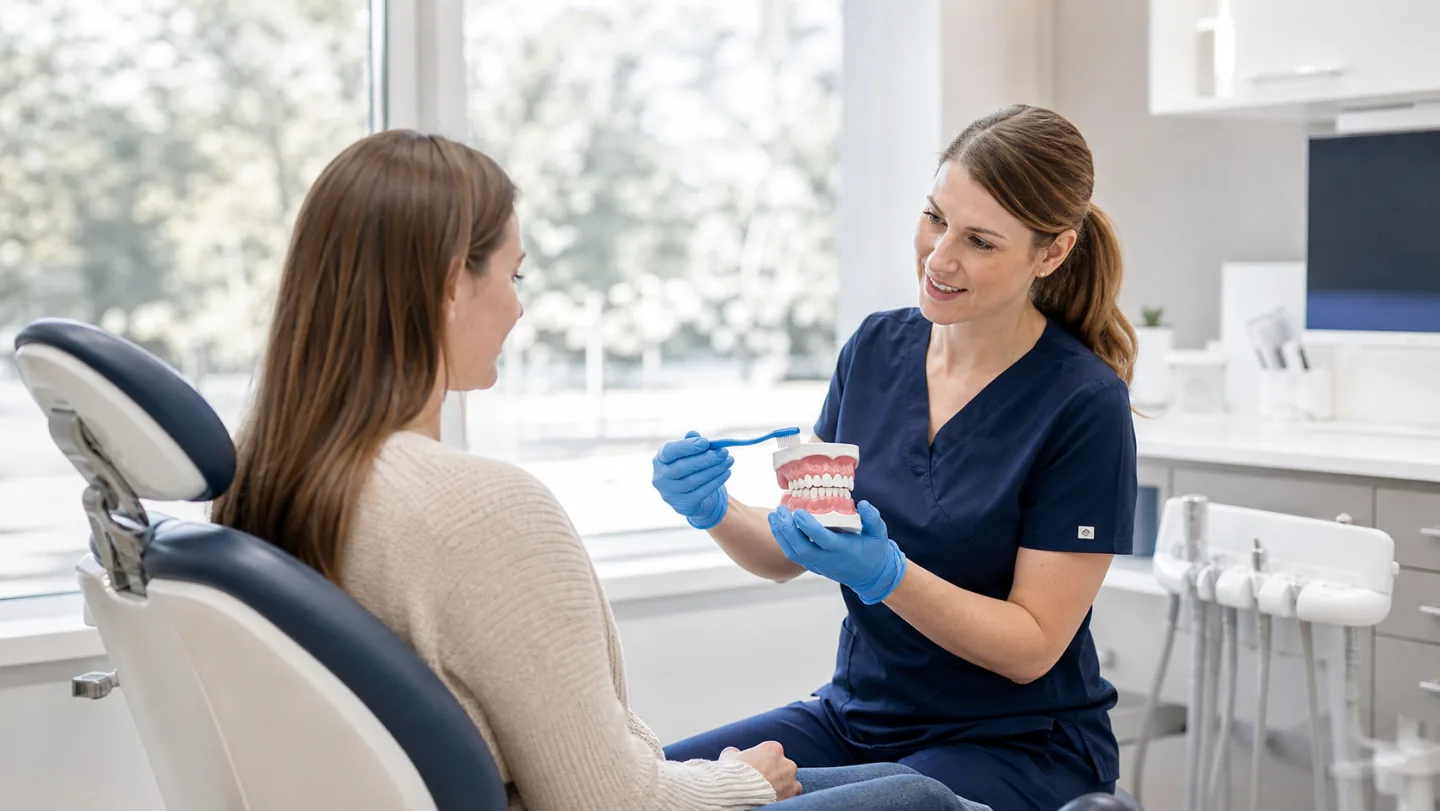
A dental hygienist explaining gum health and home care with a model
Your gum history, in one place

Gum Disease Treatment for East St. Paul Residents

Years of dental visits can leave your gum history scattered across old charts and offices. If you live in East St. Paul, outside the City of Winnipeg, ask how those records could help at our McPhillips Street clinic.

Let's find a time

Request an appointment

We’ll call to confirm your appointment. For urgent care, please call us directly.

Why older information helps

Tracking Your Gum Health Over Time

One set of gum measurements tells you where things stand today. It cannot, on its own, show how quickly they got there. A previous chart or older dental image may add that missing dimension, which is why it is worth finding out what exists before your first assessment.

None of this is required, and having no records is no obstacle. Anyone coming into Winnipeg for care can simply start fresh at Winnipeg North Dental, with new readings becoming the reference for future comparison. If earlier records do exist, ask how they could be requested and whether they would add anything useful to your case.

Explore gum disease treatment
Winnipeg North Dental reception desk and counter with a stainless appliance and a frosted glass door to one side
A reception counter with a side work surface, across from a frosted glass door.

Earlier readings

Older measurements, if available, may help reveal whether things have stayed steady or changed.

Past images

Ask whether recent dental images held elsewhere can be useful to your assessment.

A fresh baseline

New charting provides a starting point for your care, with or without old files.

From paperwork to a plan

Old records inform the plan, and today’s findings decide it.

Past information is useful context, but your gums may have changed since it was recorded. The plan is shaped by what is found now, with any earlier records adding background.

What past records may show

If they can be obtained, older files could help fill in a few missing pieces.

  • Whether readings at certain teeth appear to have shifted over time.
  • How bone levels compare between older and newer images.
  • What gum treatment you have already received, and when.
  • Restorations placed since then, which can affect how easily you clean.

What today’s findings decide

Current measurements point to the appropriate level of care and identify the areas that need it.

  • Plaque control coaching chosen to suit your hands and your mouth.
  • Professional cleaning for calculus, as necessary.
  • Root surface treatment below the gums, if pockets are present.
  • A follow-up to review healing and determine your next step.

Records from different offices are not always directly comparable. Ask how your dentist would interpret any older information you are able to provide.

Making the trip count

What your first assessment adds to the file.

When you come into Winnipeg for your first visit, the assessment creates a current record of your gums. Any older details you bring can be discussed along the way.

Request your visit
  1. 01

    Hand over what you know

    Share past diagnoses, treatments and dates as well as your current concerns, conditions, medications, tobacco use and any relatives with gum disease.

  2. 02

    Start a new chart

    Careful readings around each tooth document pockets, bleeding, recession and attachment, creating figures that later visits can be compared against.

  3. 03

    Add teeth, bite and images

    Mobility, deposits, how you bite and appropriate images complete your record of tooth support and of areas that take more effort to maintain.

  4. 04

    See how the pieces connect

    Your dentist goes through what is currently active, how it relates to your history where possible, and which care they recommend.

Tracking things down

A little digging before your visit.

You might not need to contact every office you have ever visited. Your most recent one is usually the sensible place to start, and you can ask the clinic what would be useful before requesting anything.

Ask when you make contact whether records should be arranged ahead of time, and how much time and possible cost you should plan for.

Details to look up

  • The name and contact details for your most recent dental office.
  • Approximately when your last X-rays or gum measurements were taken.
  • Any treatment letters or estimates you have kept at home.
  • Your medication list, along with CDCP or insurance information.
Winnipeg North Dental consultation room showing a white desk, a keyboard and a potted plant under a bright window
Winnipeg North Dental waiting area with white chairs, potted plants and a large window with blinds

A white desk with a keyboard, and a potted plant beneath a bright window.

If your history feels messy

Gaps in your file are no problem.

Missed years, lost paperwork or a string of different offices are all common. There is no need to feel awkward about any of it, or to have your dental story neatly organized.

Rough dates will do

An estimate like a few years ago still gives your dentist something useful to work with.

Say what you don’t recall

If you were told something long ago and cannot remember it fully, simply say that.

Explain why you switched

If something about earlier care left you uneasy, you can mention it when you feel ready.

Keeping the record going

Each future visit adds a new page.

From this point, your readings can be followed over time. If you have periodontitis, ongoing monitoring is especially useful, since the condition tends to be managed long term and not regarded as permanently cured.

01

Compare at reassessment

Healing measurements can be set against your baseline to show how your gums have responded.

02

Plan for return trips

Your maintenance interval depends on your history and risk, so ask about it when you can.

03

Keep your own short notes

A list of dates and treatments at home makes your history easier to share in future.

If you see another dental office as well, ask how information might be shared between it and the clinic.

Talk with our team
Winnipeg North Dental storefront with its round tooth logo and name raised above a black-framed entrance

Winnipeg North Dental

Unit-5 2358 Mcphillips Street, Winnipeg, MB R2V 4J6
Get directions (opens in a new tab)
For East St. Paul record keepers

Where Your Records and Readings Come Together

East St. Paul is outside the City of Winnipeg, and residents come into the city for care at Winnipeg North Dental, Unit 5, 2358 McPhillips Street, Winnipeg. Tap the directions link to see the location.

Please wait to plan around a date until the clinic has replied, as the form does not set one. Anything urgent calls for a phone call, not the form.

Questions about coverage?

Talk with our team before your visit or learn about CDCP.

A little clarity before your visit

Your questions, answered.

Helpful details about gum disease treatment in East St. Paul.

Ask our team
Do I need my old dental records before coming in?

They are not a requirement for asking about an assessment. New measurements can establish where you stand now, and you can ask whether older records would add anything.

How do I go about requesting my records from another office?

Ask the clinic what would be helpful, then check with your previous office about how it handles such requests. Each dental office may have its own process.

Are X-rays from a few years ago still useful?

They may give helpful context, though they cannot show your present condition. Your dentist can decide what new images, if any, would be appropriate.

Can my new readings be compared with those from another office?

Ask your dentist how they would use them. Older numbers may offer a rough sense of change, while your new chart becomes the record for measuring your response to treatment.

What if I can’t remember what was done to my gums before?

Share what you recall, even if it is vague, and name the office if you can. Your current exam will still show what your gums need.

What should East St. Paul residents plan for when coming into Winnipeg?

Call (204) 338-3003 or use the form, and ask about visit length and what to bring. Appointments take place on McPhillips Street, and details come in the clinic’s reply.

Whatever you have is enough

Start your record with a gum assessment.

East St. Paul residents can ask for an assessment at our Winnipeg clinic using this form. Mention any past gum care or records you know about.

Patient testimonials

Kind words from our patients

★★★★★ 5.0 from 440+ reviews on Google

Close to home

Areas we serve

Convenient dental care on McPhillips Street for families across northwest Winnipeg and nearby communities.

Explore all service areas

A healthier smile is one visit away

Ready for dental care that feels genuinely comfortable?

✓ New patients welcome ✓ Direct insurance billing ✓ Multilingual team

How can we help?

Our dental team is here for you.

Ready to book or have a question? Choose the option that works best for you.

For urgent dental concerns, please call us directly.

Send us a message

Our team will reply during clinic hours.



