Skip to content
Winnipeg North Dental
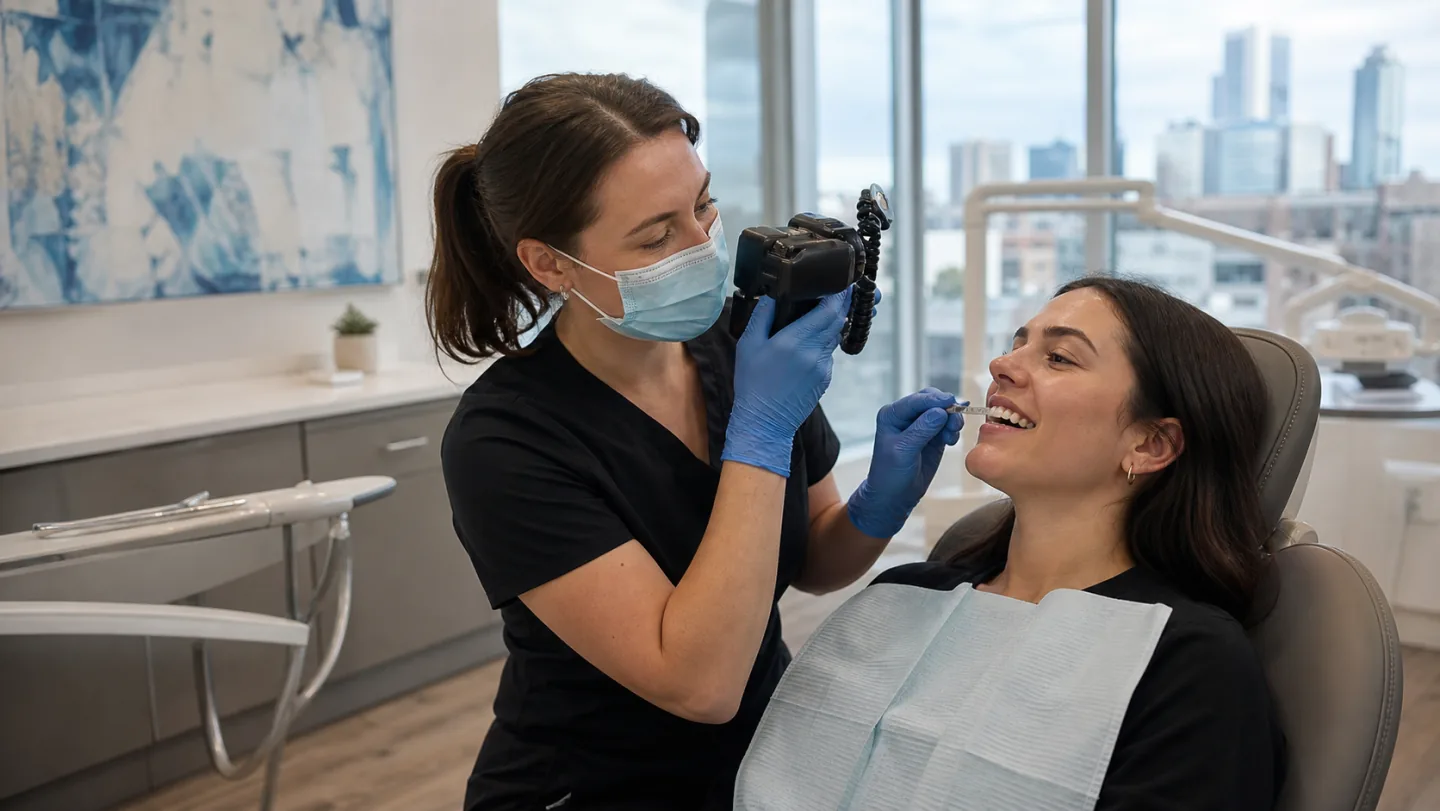
A cosmetic dentist photographing and measuring a patient’s gumline
Thin gums or thick: does it matter?

Gum Contouring for River Heights Residents

Two people can want the same change in their gumline and still need different plans, partly because gum tissue isn’t equally thick in every mouth. River Heights residents curious about how their own tissue type fits in can have it looked at by the dentist at our McPhillips Street clinic in Winnipeg.

Let's find a time

Request an appointment

We’ll call to confirm your appointment. For urgent care, please call us directly.

The tissue itself

Gum Thickness Changes How Reshaping Is Approached

Thin and thick gum respond in their own ways to being cut, repositioned and left to heal. That is one reason the dentist records tissue thickness alongside tooth proportions and the level of the bone before suggesting any new margin.

River Heights is in Winnipeg, and people from the area are seen at our clinic on McPhillips Street. You don’t need to know your tissue type beforehand. Finding it out is part of what the assessment is for.

Explore gum contouring
Winnipeg North Dental consultation room with black office chairs, a white table and a seascape painting
Black office chairs gathered around a white table below a seascape painting.

Each mouth differs

Tissue thickness is measured, not assumed from how your gums look in a mirror.

It affects healing

How the gum settles after reshaping depends in part on what kind of tissue it is.

Bone still leads

Thickness matters, yet the position of the bone underneath often decides the approach.

Matching method to tissue

Tissue and bone together point to the option.

Thickness, access and the distance to supporting bone all feed into which approach would suit, and which instrument would be sensible.

Reshaping the gum alone

Some mouths have enough room between bone and the hoped-for edge that only gum needs trimming. In that case a laser or another fine tool may be used on the tissue alone.

  • Fits limited, soft-tissue changes.
  • Instrument chosen with tissue type in mind.
  • Relies on anatomy that supports healing.

Crown lengthening with bone adjustment

Other mouths have bone crowding the line you are hoping for. Then the dentist reaches it surgically, may reshape a little of it, and stitches the gum into its planned place.

  • Used when more natural tooth must show.
  • Protects a cleanable tissue relationship.
  • Involves both gum and bone.

Ask the dentist whether your tissue is on the thinner or thicker side, and how that is shaping what they recommend.

How it is measured

What the dentist records about your gums.

A thorough look at the tissue sits alongside photos of the smile and checks on the teeth, so the plan reflects the whole picture.

Request your visit
  1. 01

    Compare the margins

    Your gum heights are set side by side, then judged against how wide each tooth is and where your centre line falls.

  2. 02

    Find the crown’s edge

    Hidden under the gum is the point where enamel gives way to root, and its depth tells the dentist a lot.

  3. 03

    Gauge the tissue

    For every tooth in question, the dentist notes whether the gum is fine or more robust, because that guides both method and healing.

  4. 04

    Check bone space

    If the bone’s level can’t be judged by eye, the dentist may sound it gently or take a suitable image.

Ahead of the measuring

Bring a sense of what you’d change.

The tissue details come from the assessment, but your own goals give them meaning. Knowing which teeth catch your eye helps the dentist explain how your tissue type affects each one.

Mention gums that bleed, feel sore or look swollen. A health concern would be dealt with before contouring is considered.

Helpful to prepare

  • The teeth whose gumline bothers you most.
  • Whether the concern shows at rest, when talking or in a full smile.
  • Any gum treatment you have had in the past.
  • A list of what you take daily, and any conditions you manage.
Winnipeg North Dental treatment room with a light blue dental chair and wood-grain cabinets
Winnipeg North Dental waiting area with white chairs, a blue bench and abstract blue artwork

A reclined blue dental chair, and white chairs beside a blue bench under abstract art.

During and after

Numbing first, and recovery that varies.

You’re numbed with local anaesthetic before the gum is touched. Later soreness has more to do with the size of the treated area, and with any bone work, than with anything you did wrong.

Comfortable while working

The site is numbed before any reshaping starts, whichever instrument is used.

Tissue type plays a part

Thin and thick gum can look and feel different as they heal, so ask what to expect for yours.

Personal directions

You go home with care instructions and comfort measures suited to what was done.

Watching it heal

The new margin needs time to mature.

A fresh gum edge rarely looks tidy straight away; it can be pink, puffy and a bit jagged. Thin and thick tissue each move through that stage in their own fashion, so wait for the settled shape.

01

Gentle routine

Your written directions on brushing, rinsing, meals and medicine are the guide, and the healing edge should be left alone.

02

Follow-up check

At this visit the dentist sees whether the gum has closed well and whether plaque is being kept down, and takes out any stitches.

03

Hold off on new restorations

Veneers or crowns may need to wait until the margin has matured.

If the area worries you as it heals, phone (204) 338-3003 rather than using the form.

Talk with our team
Winnipeg North Dental building front with white sign band, phone number and entry stairs railing

Winnipeg North Dental

Unit-5 2358 Mcphillips Street, Winnipeg, MB R2V 4J6
Get directions (opens in a new tab)
Where tissue gets checked

River Heights Patients Are Seen on McPhillips Street

Your assessment and any contouring are carried out at Winnipeg North Dental, Unit 5, 2358 McPhillips Street, Winnipeg.

Filling in the form starts things off, but the time itself is fixed only after the clinic reaches you.

Questions about coverage?

Talk with our team before your visit or learn about CDCP.

A little clarity before your visit

Your questions, answered.

Helpful details about gum contouring in River Heights.

Ask our team
How would I know whether my gum tissue is thin?

You usually can’t tell reliably from the mirror. The dentist assesses it at the appointment as part of measuring the teeth you want changed.

Does thin tissue make contouring a bad idea?

Not necessarily. It is one factor among several, and it can influence how reshaping is done and how the area is expected to heal.

Could thick gum make my teeth look short?

The look of a short tooth can come from several causes, including gum still covering part of the crown or wear on the tooth. Measurement shows which applies.

Does tissue type decide whether a laser is used?

It can be part of the decision. Access, thickness and whether bone needs adjusting all affect which instrument or technique makes sense.

When can veneers go on after contouring?

There’s no single answer. A front tooth with a small change and a larger area with bone work heal on different timelines, so the dentist decides when the edge is mature enough for final records.

Where would a River Heights resident have their tissue assessed?

Tissue checks happen during an assessment at Winnipeg North Dental on McPhillips Street in Winnipeg. Call (204) 338-3003 or send the form to ask for a time.

Learn your tissue type

Have your gums measured before you plan.

Send a request to Winnipeg North Dental and say you’d like to understand your own gum tissue. The clinic will reply to agree a time with you.

Patient testimonials

Kind words from our patients

★★★★★ 5.0 from 440+ reviews on Google

Close to home

Areas we serve

Convenient dental care on McPhillips Street for families across northwest Winnipeg and nearby communities.

Explore all service areas

A healthier smile is one visit away

Ready for dental care that feels genuinely comfortable?

✓ New patients welcome ✓ Direct insurance billing ✓ Multilingual team

How can we help?

Our dental team is here for you.

Ready to book or have a question? Choose the option that works best for you.

For urgent dental concerns, please call us directly.

Send us a message

Our team will reply during clinic hours.



