Skip to content
Winnipeg North Dental
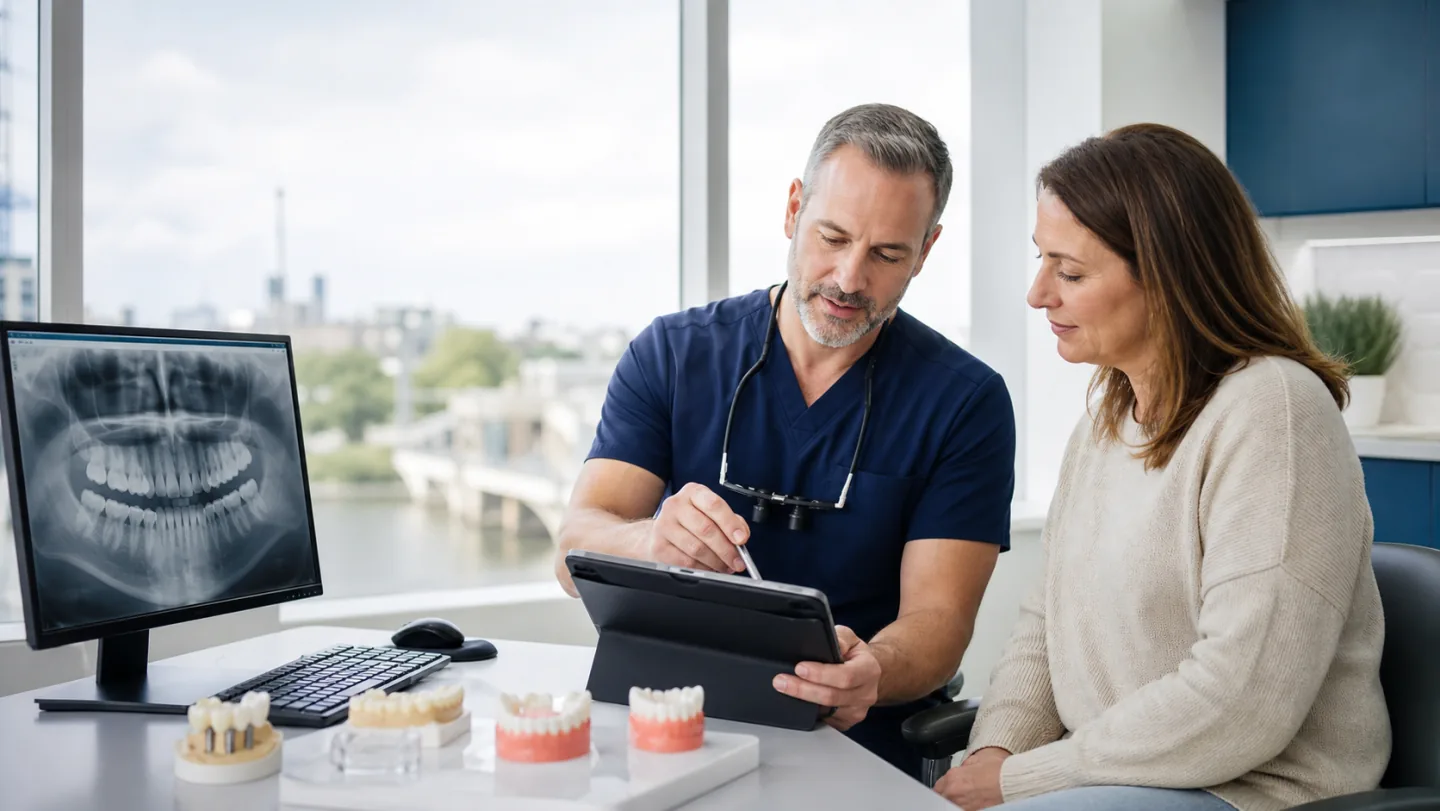
A dentist and patient reviewing a comprehensive restorative treatment plan
When mealtimes have become work

Full-mouth Reconstruction for Margaret Park Residents

Cutting food into tiny pieces, chewing on one side, skipping what you used to enjoy. For Margaret Park residents in that position, a broader look at the bite may be worth having.

Let's find a time

Request an appointment

We’ll call to confirm your appointment. For urgent care, please call us directly.

Function comes into focus

When Chewing Problems Point to More Than One Tooth

Eating difficulties rarely trace back to a single cause once several teeth are involved. Spaces can alter how you chew and what the other teeth have to support, while wear, fractures and failing restorations each add to the problem. Fixing one spot may simply move the difficulty somewhere else.

Full-mouth reconstruction brings these issues together into one coordinated order of care, with better bite balance and chewing function among its aims. People from Margaret Park, an area of Winnipeg, are assessed at our McPhillips Street clinic, and suitability is decided there with the dentist.

Explore full-mouth reconstruction
Waiting area with a blue bench and white chairs at Winnipeg North Dental
A blue bench and white chairs in our waiting area on McPhillips Street.

Your meals as a clue

The foods you now avoid can tell the dentist something useful about where your bite is struggling.

The bite as one system

Teeth on each side and in each jaw share the load, so they are studied together.

Stable before final

Decay and gum disease are dealt with ahead of the restorations meant to restore chewing.

Why eating gets harder

How problems in one area spread to another.

It can help to separate what makes chewing uncomfortable from what can be done about it. Either list may or may not describe you, and only an examination can show which items do.

Common sources of difficulty

These tend to overlap, which is partly why a coordinated view can be more useful than a series of separate repairs.

  • Missing teeth that shift chewing onto whatever remains.
  • Worn teeth that have lost height and changed how the jaws meet.
  • Cracks, decay or large restorations that make biting down uncomfortable.
  • Gum and bone concerns that leave teeth with weakened support.

Treatments that may play a part

A combination is selected for each person. Having a reconstruction does not mean all of these will be required.

  • Crowns and onlays that rebuild weakened teeth and planned chewing surfaces.
  • Restorations carried by implants, in chosen places where teeth are gone.
  • Bridges or dentures, which offer fixed or removable ways to fill spaces.
  • Periodontal care that strengthens the foundation around teeth and implants.

Improved chewing is a goal of planning and not a promise. Ask what each option could realistically mean for the foods that matter to you.

From the dinner table to a sequence

Function is rebuilt in a sensible order.

Final chewing surfaces are not usually where treatment starts. Here is the general shape of how a plan aimed at function comes together.

Request your visit
  1. 01

    Describe how you eat now

    Which foods have you given up, and which side do you favour? That detail joins your health history and symptoms at the outset.

  2. 02

    Study the bite in detail

    Bite analysis, scans, imaging and a gum evaluation help show where forces land and which teeth can be relied on.

  3. 03

    Settle health problems

    Pain and infection are addressed, followed by decay and gum disease, so later work has dependable conditions to rest on.

  4. 04

    Test, then finish

    Provisional care may be used to evaluate how a bite feels in use before definitive treatment is completed in stages.

Keep a short food diary

A week of meals can say a lot.

You do not need medical language to explain a chewing problem. A few notes on what you eat, what you skip and what hurts can make your description much more exact.

If you use a partial denture or other appliance, bring it, including any you have stopped wearing, and mention why it was set aside.

Helpful notes to make

  • Foods you now avoid, or prepare differently because of your teeth.
  • The side you chew on, and places where food tends to catch.
  • Any soreness when biting, along with where you feel it.
  • Your current medications and relevant medical history.
Reception desk at Winnipeg North Dental
Consultation room with a white desk and dark chairs at Winnipeg North Dental

The reception desk and a consultation room at Winnipeg North Dental.

Eating is personal

Tell us what you miss being able to eat.

Changing how you eat can be frustrating and sometimes isolating, particularly when meals are shared. Saying what you would most like to get back helps keep planning focused on your daily life.

Name the food you miss

A specific goal is easier to discuss than a general wish to chew more comfortably.

Ask about eating during treatment

Find out what each stage might mean for your meals before it begins.

Report how things feel

When provisional care is in use, your experience of it at mealtimes is valuable information.

Chewing well, going forward

Looking after a bite that works.

A rebuilt bite still carries daily forces. Ongoing attention helps protect restorations and supporting tissues so that they can keep doing their job.

01

Rechecking how teeth meet

Bite reviews can pick up changes that you might not notice from one meal to the next.

02

Protection at night

A night guard may be suggested for some patients. Ask if yours is a mouth that would benefit.

03

Cleaning around new work

Hygiene visits and suitable tools at home help keep the areas around restorations and implants healthy.

Is something suddenly hard to chew after treatment? Contact the clinic by phone.

Talk with our team
Exterior of the Winnipeg North Dental clinic on McPhillips Street

Winnipeg North Dental

Unit-5 2358 Mcphillips Street, Winnipeg, MB R2V 4J6
Get directions (opens in a new tab)
Margaret Park visits

Have Your Bite Assessed on McPhillips Street

Chewing concerns raised by Margaret Park residents are examined at Winnipeg North Dental, Unit 5, 2358 McPhillips Street, Winnipeg. Open the directions link to plan how you will get here.

The form starts a request, and our staff respond about scheduling, so no time is held until then. For pain or swelling that will not wait, skip the form and dial (204) 338-3003.

Questions about coverage?

Talk with our team before your visit or learn about CDCP.

A little clarity before your visit

Your questions, answered.

Helpful details about full-mouth reconstruction in Margaret Park.

Ask our team
Is one sore tooth enough to need all of this?

Often not. One problem tooth may only need treatment of its own. A coordinated plan becomes more relevant when damage, spaces or bite concerns reach across much of the mouth.

Will I be able to eat normally during treatment?

It depends on the stage and on what is being done. Before each phase, ask what eating is likely to involve, including during any healing or provisional period.

Why does chewing on one side matter?

Favouring one side changes where forces go, and spaces can alter chewing patterns over time. Mention the habit, since it can help the dentist understand how your bite is working.

Can you promise I will eat steak or apples again?

No outcome can be promised, because so much depends on your teeth, gums and the options chosen. Name the foods you care about and ask how realistic each one is.

My partial denture sits in a drawer. Should I still mention it?

Yes. Knowing what has and has not worked for you, including why you stopped using it, is part of understanding your previous experiences and planning from there.

Living in Margaret Park, how do I arrange a bite assessment?

Complete the form here or call (204) 338-3003. Someone at the clinic will respond, and your appointment takes place at the McPhillips Street office in Winnipeg.

Back to the table

Have the reasons behind your chewing trouble looked at.

Request a bite and full-mouth assessment at our Winnipeg clinic. The office will follow up to organize a time.

Patient testimonials

Kind words from our patients

★★★★★ 5.0 from 440+ reviews on Google

Close to home

Areas we serve

Convenient dental care on McPhillips Street for families across northwest Winnipeg and nearby communities.

Explore all service areas

A healthier smile is one visit away

Ready for dental care that feels genuinely comfortable?

✓ New patients welcome ✓ Direct insurance billing ✓ Multilingual team

How can we help?

Our dental team is here for you.

Ready to book or have a question? Choose the option that works best for you.

For urgent dental concerns, please call us directly.

Send us a message

Our team will reply during clinic hours.



