Skip to content
Winnipeg North Dental
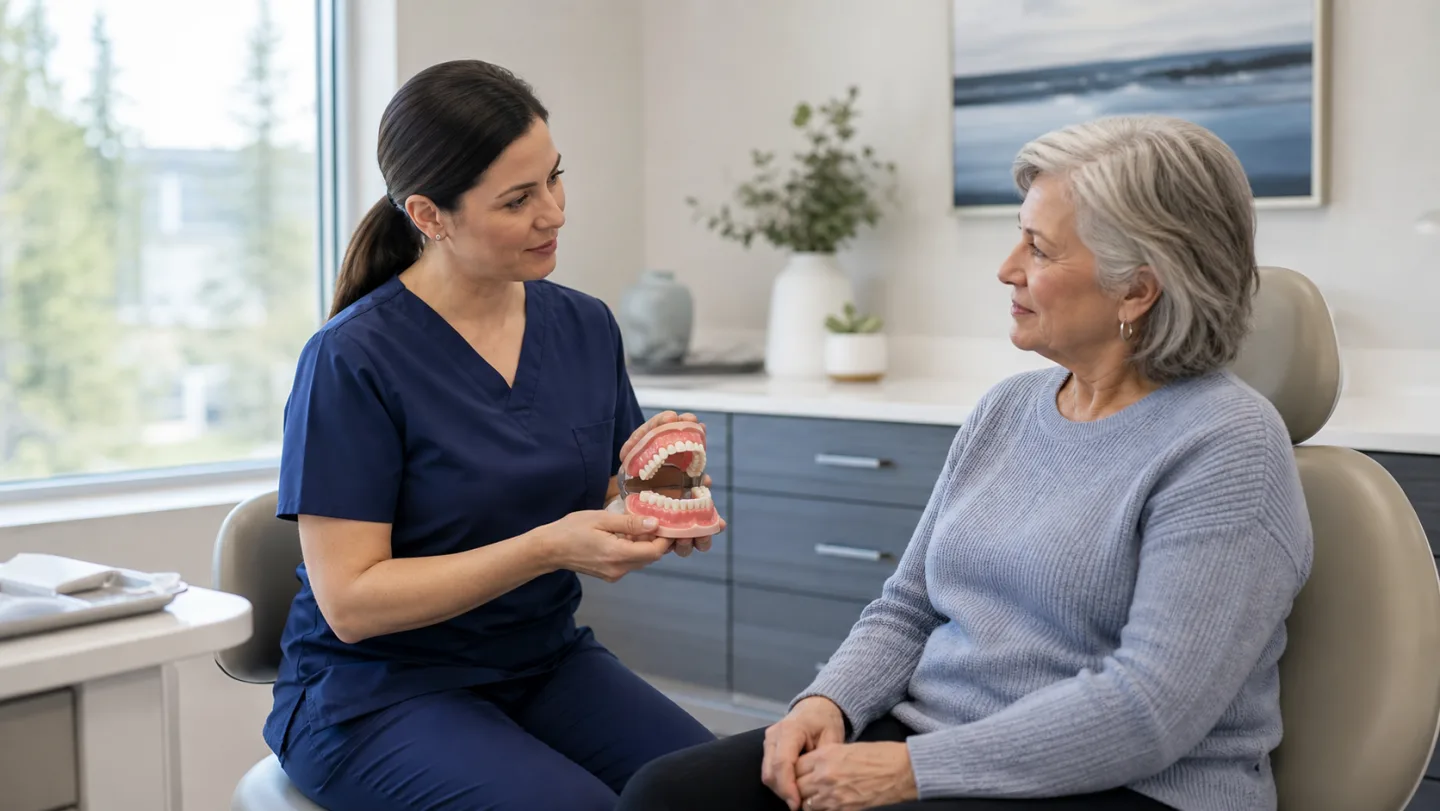
A dentist explaining a complete denture to a mature patient
Hearing a click every time you speak?

Dentures for St. Vital Residents

A clicking or clattering denture can make conversation feel like a performance. Here’s why it can happen, and what the dentist looks at when you bring it to our McPhillips Street clinic.

Let's find a time

Request an appointment

We’ll call to confirm your appointment. For urgent care, please call us directly.

A noise worth mentioning

When a Denture Clicks or Lifts, for St. Vital Residents

You might hear it on hard consonants, feel the upper plate drop slightly as you laugh, or notice the lower one rising when you open wide. Most people find it more embarrassing than painful, which is exactly why they put off raising it.

A noisy denture is information. Early on, it may simply reflect a tongue and lips still learning the new shapes. Later, it can point to changes in the tissues, wear or the bite. The dentist can tell which by looking at you and the appliance together.

Explore dentures
A dental professional holding a model of complete dentures while talking with an older woman in a treatment chair
A dental professional in navy scrubs holds up a denture model for a seated patient.

Notice the moment

Pay attention to which words, movements or meals bring on the sound.

Early or late

A click in the first weeks often means something different from one that appears years later.

Let it be examined

Movement can have several causes, and an assessment is how the right one is found.

Why each type might move

Different dentures, different sources of noise.

Retention works differently for a full denture and a partial one, so the reasons each might shift or click are not identical.

A complete denture that clicks

This appliance depends on the tissues and jaw shape under it. As those tissues change, contact can loosen and the denture may begin to move during speech.

  • A top plate and a bottom plate hold on in their own ways.
  • Tongue activity during speech can unsettle the lower one more.
  • Changes to the ridge underneath can reduce how closely it sits.

A partial denture that clicks

A partial is held partly by your remaining teeth and tissues. Noise may come from how it seats against those teeth, or from a change in the teeth themselves.

  • Bent or damaged parts can alter how it sits.
  • Shifts in the supporting teeth can affect the fit.
  • Please don’t try reshaping it to quiet the sound.

Clicking alone doesn’t identify the cause. The dentist assesses the appliance, your tissues and your bite before suggesting anything.

When quieting it means starting over

From first look to quiet wear.

Sometimes adjustment or relining is enough, and sometimes a new denture is recommended. When one is made, more than one appointment is normally needed.

Request your visit
  1. 01

    Looking and listening

    The dentist examines your tissues, remaining teeth and jaw relationship, and listens to how the current denture behaves while you talk.

  2. 02

    Recording your mouth

    A fresh copy of your gums and teeth is made by impression or scan, so the new appliance matches the mouth you have today, along with notes on how you close.

  3. 03

    Speaking during the trial

    With the trial arrangement in place, you can say a few test phrases so tooth position and speech are checked alongside your smile and bite.

  4. 04

    Delivery and adjustment

    On delivery, the dentist tests whether it stays put when you talk, where it presses and how it works, then sets up follow-up for the adjustment period.

Collect some evidence

Pin down when the noise happens.

A vague report of clicking is harder to work with than a specific one. Listening for the sound over several conversations turns it into something the dentist can test.

Wear your denture to the appointment rather than bringing it in a case, so the dentist can see and hear how it behaves in your mouth.

Try to note

  • Words or sounds that seem to set it off, such as s, t or f.
  • Whether it’s the upper, the lower or both.
  • If it happens more while eating, laughing or yawning.
  • Whether you’ve begun using more adhesive to keep it quiet.
Winnipeg North Dental consultation room with a white desk facing a window with striped blinds
Winnipeg North Dental waiting area with a navy upholstered bench and two blue abstract artworks

Chairs gathered around a white desk, and a navy bench below two framed abstract prints.

Talking with more ease

Practise without an audience.

While you wait for an assessment, a few gentle habits can make conversation feel less fraught. They don’t fix fit, but they give your mouth useful practice.

Read out loud

Reading a page aloud each day helps your tongue adjust to the denture’s contours and shows you which sounds still catch.

Slow the pace

Speaking a little more slowly while you adapt can reduce how often a new denture shifts mid-sentence.

Report soreness too

A denture that moves can also rub. Sore spots are meant to be adjusted by the dentist, not tolerated.

Keeping it quiet

A settled denture can still change.

Jaw and gum tissues keep changing after teeth are lost. A denture that sits silently now may start to move again one day, and that’s a cue for review.

01

Clean so it seats well

Brush the denture with a suitable brush and cleanser, and clean your gums, tongue and any remaining teeth so nothing interferes with how it sits.

02

Rest the tissues

Gums under a denture benefit from regular time uncovered, and most wearers are told to take it out for a stretch each day on a schedule set by the dentist.

03

Return when it starts again

New movement, trapped food or sore spots can mean the fit has changed. An assessment decides whether adjustment, reline or replacement makes sense.

If your denture breaks or suddenly causes pain, call the clinic rather than waiting.

Talk with our team
Winnipeg North Dental exterior showing the clinic sign, phone number and covered windows beside the glass door

Winnipeg North Dental

Unit-5 2358 Mcphillips Street, Winnipeg, MB R2V 4J6
Get directions (opens in a new tab)
Where to have it listened to

Where St. Vital Residents Have a Noisy Denture Checked

St. Vital is an area in Winnipeg, and residents who want a clicking or loose denture looked at are seen at Winnipeg North Dental, Unit 5, 2358 McPhillips Street.

Describe the noise in your request or on the phone. The clinic follows up to confirm when you’ll be seen.

Questions about coverage?

Talk with our team before your visit or learn about CDCP.

A little clarity before your visit

Your questions, answered.

Helpful details about dentures in St. Vital.

Ask our team
Why does my denture click when I talk?

Early on, the tongue and lips may still be adapting. Later, tissue changes, wear, a shifted bite or damage can affect how well it stays in place. An assessment identifies the cause.

Is a clicking denture a sign it needs replacing?

Not necessarily. Depending on what the dentist finds, an adjustment or reline may be enough, or a replacement may be suggested.

Why does my lower denture move more than my upper?

The two arches are shaped differently and move differently, and the tongue sits right beside the lower one, so retention is rarely equal. Mention which one clicks.

Can I fix the noise with more adhesive?

Needing more and more to stop movement is worth mentioning to the dentist, since it may mean the fit has changed.

Will a new denture click at first?

Speech often feels different while you adapt, and some sounds take practice. Tell the dentist at your follow-up if movement continues.

How do St. Vital residents ask for a denture check?

Call (204) 338-3003 or fill in the request form, mentioning the clicking. You’ll be seen at our McPhillips Street clinic in Winnipeg once the clinic confirms a time.


Tired of the click?

Have the movement assessed.

St. Vital residents can send a request for a denture appointment in Winnipeg, and the clinic will reply to arrange it.

Patient testimonials

Kind words from our patients

★★★★★ 5.0 from 440+ reviews on Google

Close to home

Areas we serve

Convenient dental care on McPhillips Street for families across northwest Winnipeg and nearby communities.

Explore all service areas

A healthier smile is one visit away

Ready for dental care that feels genuinely comfortable?

✓ New patients welcome ✓ Direct insurance billing ✓ Multilingual team

How can we help?

Our dental team is here for you.

Ready to book or have a question? Choose the option that works best for you.

For urgent dental concerns, please call us directly.

Send us a message

Our team will reply during clinic hours.