Skip to content
Winnipeg North Dental
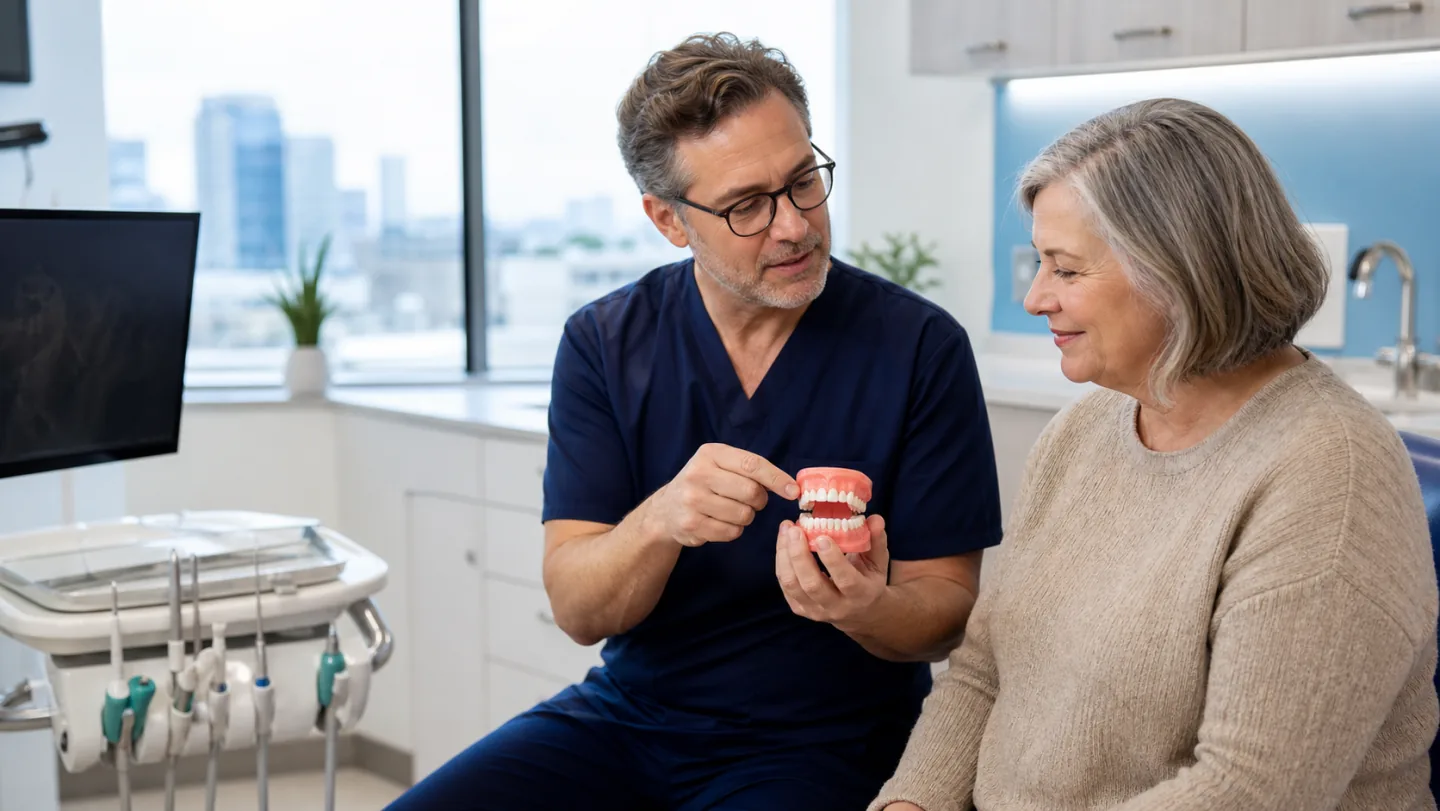
A dentist explaining a complete denture to a mature patient
Always chewing on the same side?

Dentures for St. Boniface Residents

Missing teeth often push meals over to whichever side still works. If that has become your habit, here is how a denture is planned to share the work again, at our McPhillips Street clinic.

Let's find a time

Request an appointment

We’ll call to confirm your appointment. For urgent care, please call us directly.

A habit built around a gap

One-Sided Chewing and Dentures, for St. Boniface Residents

When a few teeth go missing on the left or the right, most people quietly move their food to the other side. It works well enough that the habit can last for years without anyone mentioning it.

A denture changes the arithmetic. Whether it replaces a whole arch or just selected teeth, it tends to stay steadier when pressure arrives from both sides at once. That is why the dentist pays close attention to how your jaws meet, and why relearning an even chew is part of settling in.

Explore dentures
Winnipeg North Dental consultation room with a white desk, black office chairs and a window with striped blinds
A white desk with black chairs on either side, a seascape painting and a snake plant by the window.

Even pressure

Spreading each bite across both sides can help a removable appliance stay put while you eat.

Bite on record

The way your upper and lower jaws come together is captured before any denture is built.

Habits can shift

Years of favouring one side don’t have to be permanent, though changing them takes some practice.

Which design spreads the load

Balance looks different with each kind of denture.

A complete denture and a partial denture are held in place by different things, so the reasons an even chew matters are a little different for each.

For a full arch

A complete denture rests on the gums and the shape of the jaw beneath them. Heavy pressure on one edge alone can tip it, so a balanced bite is part of the plan.

  • Stands in for all the teeth of one arch, top or bottom.
  • Draws its support from the underlying tissues.
  • Tends to feel more settled when both sides chew together.

For a handful of gaps

A partial denture fills in chosen spaces and leans on your remaining teeth and oral tissues for support and retention. Restoring the missing side can give you somewhere to chew again.

  • Fills only the spaces that need it.
  • Works alongside the natural teeth you still have.
  • Its design follows which teeth remain and where.

Which design suits you, and how your bite should come together, is settled through an examination with the dentist.

How the bite gets built in

Four stages, each one checking the bite.

Fit, appearance and the way your teeth meet are developed gradually, so making a denture normally takes more than one appointment.

Request your visit
  1. 01

    A look at your mouth as it is

    Before anything is designed, the dentist studies which side you favour, the condition of your gums and remaining teeth, and whatever appliance you wear now.

  2. 02

    Measuring where the jaws meet

    This is where an even chew is designed in: alongside the impression or scan, the dentist captures exactly how your top and bottom jaws close on each side.

  3. 03

    Testing the arrangement

    Wearing a trial version, you can close together and feel whether both sides touch evenly, while your smile and speech are judged too.

  4. 04

    Handing over and refining

    When the finished appliance goes in, you’ll bite and chew on both sides while the dentist looks for pressure points and checks its hold, with return visits booked to fine-tune it.

Notice your own pattern

Pay attention to how you eat right now.

You probably chew the way you do without thinking about it. Watching your own meals for a week turns an unconscious habit into something you can describe.

Bring any denture or partial you already have, even if it rarely leaves the drawer, so it can be looked at during the examination.

Things worth jotting down

  • Which side you tend to chew on, and for how long that has been true.
  • Foods you now cut small, avoid or swallow without much chewing.
  • Any tooth that feels sore or loose when you bite.
  • Your list of current prescriptions, plus any health news since your last dental visit.
Winnipeg North Dental treatment room with a light blue dental chair, wood cabinets and a wall-mounted monitor
Winnipeg North Dental waiting area with white chairs by a window and a navy bench under blue abstract art

A pale blue chair under an overhead light, and a navy bench along a waiting-room wall.

Retraining an old routine

Learning to chew evenly again.

A new denture asks your mouth to relearn several things at once. Speech, saliva and chewing often feel different at first, and these changes are usually temporary.

Halve the bite

Cut food into smaller pieces and place some on each side, so neither half of the denture carries the meal alone.

Begin with easy textures

Choose foods that need little effort while you get used to the feel, then work toward firmer ones.

Report rubbing early

A sore spot is a reason to have the denture adjusted, not something to put up with or file down at home.

After the old habit fades

Keeping the bite even over time.

The gums and bone under a denture keep changing after teeth are lost. A bite that feels balanced today can drift, so regular reviews still matter.

01

Watch for a return to one side

If you notice yourself favouring one side again, mention it. Loosening, wear or a changed bite could be the reason, and only an assessment can tell.

02

Clean both surfaces

Brush the denture with a suitable brush and cleanser, then clean your gums, tongue and any remaining teeth while it is out.

03

Keep your review visits

Even without natural teeth, the tissues, the fit and the function of the appliance need checking. Partial wearers also need care for the teeth they still have.

If a denture cracks or starts causing real discomfort, call the clinic rather than waiting for a routine visit.

Talk with our team
Winnipeg North Dental storefront with a large sign, phone number and glass entry doors

Winnipeg North Dental

Unit-5 2358 Mcphillips Street, Winnipeg, MB R2V 4J6
Get directions (opens in a new tab)
Where the work happens

Where St. Boniface Residents Are Fitted for Dentures

For St. Boniface residents, an area in Winnipeg, every examination, try-in and adjustment takes place at Winnipeg North Dental, Unit 5, 2358 McPhillips Street.

Send a request through the form or phone the clinic. The form doesn’t hold a time, and the clinic gets back to you to confirm one.

Questions about coverage?

Talk with our team before your visit or learn about CDCP.

A little clarity before your visit

Your questions, answered.

Helpful details about dentures in St. Boniface.

Ask our team
Is chewing on one side bad for a denture?

It can make a removable appliance less stable. Many wearers find that smaller bites split across both sides help it stay in place, and the dentist can explain what applies to your bite.

Will a partial let me use my weak side again?

That is often part of the reason for one. A partial replaces selected teeth and relies on the ones you have for support, and whether it suits your mouth is decided at an assessment.

Why does the dentist record my bite?

A denture has to fit how your jaws actually come together. Capturing that relationship early helps the teeth meet properly when the appliance is finished.

Can I eat what I used to with a denture?

Dentures can improve chewing, but they don’t behave exactly like natural teeth. Food choices and technique usually get easier with practice and any adjustments you need.

My denture shifts when I bite on one side. What now?

Make a note of when it happens and bring it up with the dentist. Tissue changes, wear or a shifted bite can each affect retention, and an assessment points to the right fix.

How do St. Boniface residents book a denture visit?

Phone (204) 338-3003, or fill in the form further down and mention that one-sided chewing is the concern. Appointments take place at our McPhillips Street clinic in Winnipeg, and the clinic confirms the time with you.

Ready to share the load?

Ask about a denture assessment.

If one side of your mouth has been doing all the chewing, St. Boniface residents are welcome to send a request to our Winnipeg clinic, which replies to settle a time.

Patient testimonials

Kind words from our patients

★★★★★ 5.0 from 440+ reviews on Google

Close to home

Areas we serve

Convenient dental care on McPhillips Street for families across northwest Winnipeg and nearby communities.

Explore all service areas

A healthier smile is one visit away

Ready for dental care that feels genuinely comfortable?

✓ New patients welcome ✓ Direct insurance billing ✓ Multilingual team

How can we help?

Our dental team is here for you.

Ready to book or have a question? Choose the option that works best for you.

For urgent dental concerns, please call us directly.

Send us a message

Our team will reply during clinic hours.



