Skip to content
Winnipeg North Dental
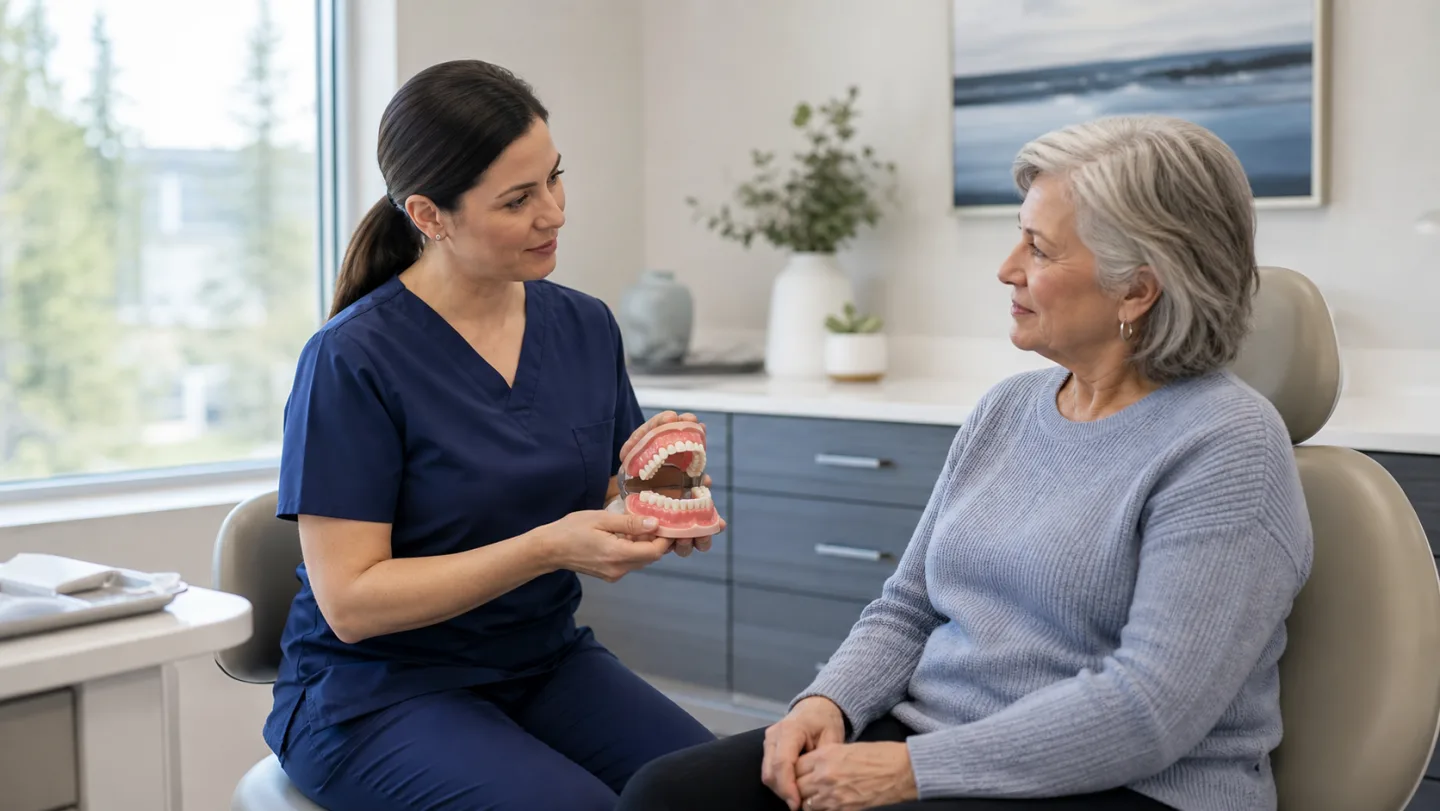
A dentist explaining a complete denture to a mature patient
For people who are always talking

Dentures for Seven Oaks Residents

Chatting with friends, speaking at work or reading to a grandchild: if you live in Seven Oaks and your voice matters to you, ask at our McPhillips Street clinic how dentures affect speech.

Let's find a time

Request an appointment

We’ll call to confirm your appointment. For urgent care, please call us directly.

Sounding like yourself

Speaking Comfortably With Dentures, for Seven Oaks Residents

Missing teeth can change how some words sound, and so can the denture replacing them. It’s a natural thing to worry about if conversation is a big part of your life, particularly when you’re picturing a lisp or a slip in the middle of a sentence.

Your tongue relies on the shape of your teeth and palate to form certain sounds, and new contours take some getting used to. That is why speech gets reviewed at the try-in stage at our Winnipeg clinic, before your denture is processed, and why practising at home is encouraged later.

Explore dentures
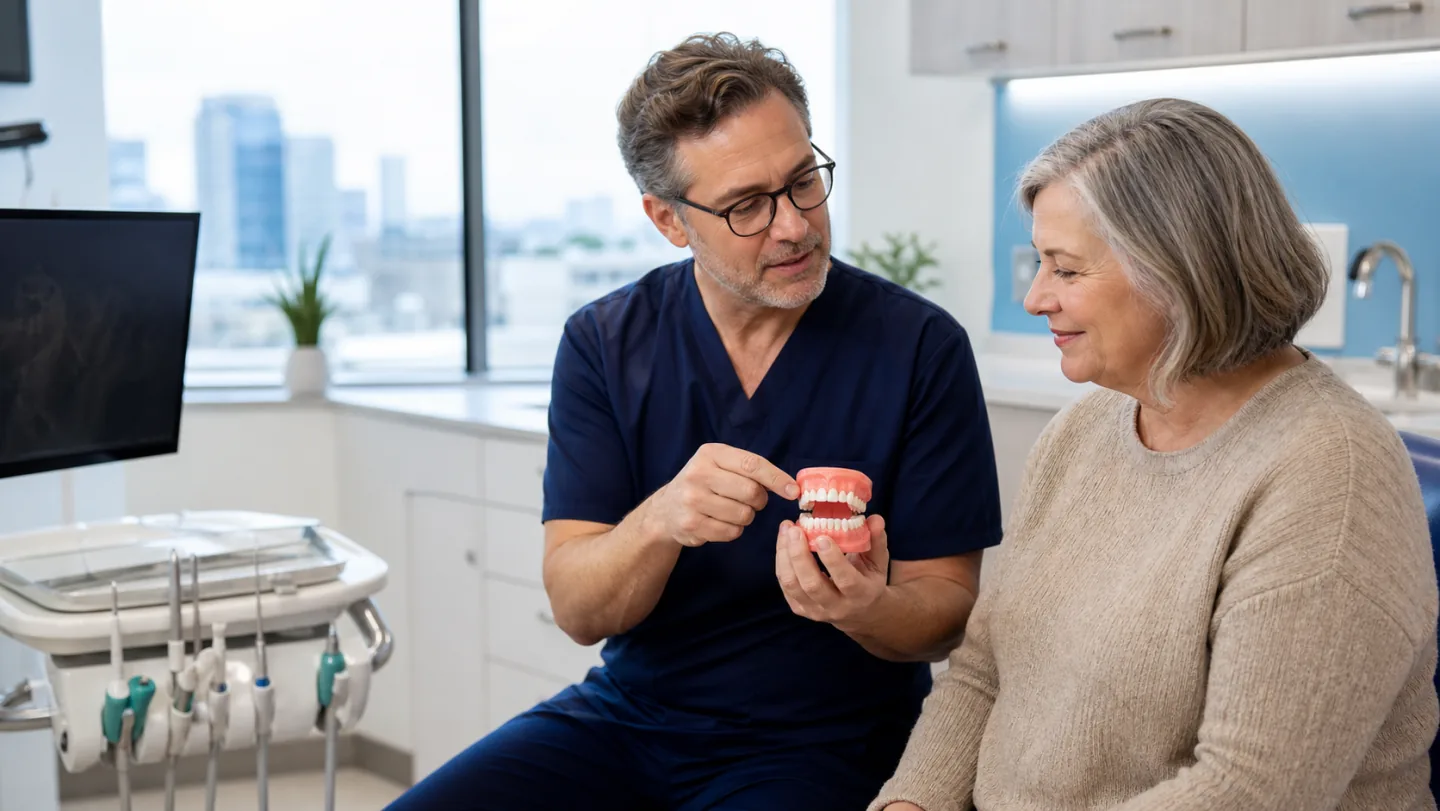
Dental professional explaining denture options
Stock image: a dental professional and patient reviewing a denture model.

Speech is on the checklist

Try-in appointments look at how you sound as well as how your smile looks and how your bite feels.

Your tongue is learning

Difficult sounds typically take practice while your tongue gets familiar with an unfamiliar shape.

Retention affects confidence

If your denture shifts when you talk, mention it, because retention can be checked and discussed.

Removable designs and your voice

Full or partial, your speech is part of the plan.

Every denture has to fit around the moving parts of your mouth. Whichever type suits you, the lips, cheeks and tongue need room to work while you’re speaking.

Speaking with a full denture

Replacing all the teeth of an upper or lower arch, this denture is held up by tissues and the contour of the jaw rather than by natural teeth.

  • Tooth position can influence how particular sounds are formed.
  • Any movement while talking is worth reporting during follow-up.
  • Upper and lower appliances each have their own anatomy to contend with.

Speaking with a partial

For a mouth that still has some natural teeth, a partial replaces selected ones and shares its support among those teeth and the tissues.

  • Filling gaps can change where your tongue lands for some words.
  • Your natural teeth continue to play their usual part in speech.
  • Those same teeth contribute retention, so their health stays important.

Speech changes are often temporary, but everyone’s mouth differs, so ask what might be expected in your own case.

When speech comes up

Listening at each stage of the process.

Your denture is developed over multiple appointments. Each one is an opportunity to mention how talking feels, and the try-in is especially useful.

Request your visit
  1. 01

    Explain why your voice matters

    While your tissues, jaw relationship, teeth and any current appliance are being assessed, tell the dentist how much talking your day involves.

  2. 02

    Impressions and jaw records

    Scans or impressions capture your mouth’s form, and a record of how your jaws meet gives the appliance a reference point.

  3. 03

    Say a few sentences at the try-in

    This is the time to talk, count or read out loud. Tooth position, smile and bite get reviewed too, ahead of processing.

  4. 04

    Fine-tune once you’re wearing it

    At delivery, retention and pressure areas are examined along with function, and follow-up gives you a place to report speech difficulties that linger.

Ahead of your exam

Which words give you trouble?

If particular sounds already feel hard because of missing teeth or an old denture, note them down. Saying them at your appointment gives your dentist something specific to hear.

Tell us about any big speaking commitments coming up so you can ask how they might fit around your appointments.

A short checklist

  • Any words or sounds that give you difficulty now.
  • Your present denture, if you wear one, even if it’s the cause.
  • Everything you take regularly, written out, with any health news since your last dental visit.
  • Plan numbers for CDCP or private dental benefits, as applicable.
Consultation room with a view of window blinds at Winnipeg North Dental
Reception counter at Winnipeg North Dental

Two rooms you may see during denture visits.

Finding your voice again

A little practice, every day.

Many new wearers notice speech changes straight away, and it can be frustrating. Regular practice in a relaxed setting tends to be more helpful than worrying about each word in public.

Read out loud

A newspaper article or a chapter of a book gives your tongue plenty of repetition with the new contours.

Slow down at first

Taking your time with tricky sounds can make them easier, while your mouth works out its new habits.

Notice extra saliva

Saliva can change for a time with a new denture, and it may temporarily affect how speaking feels.

If speech stays difficult

Don’t just assume it’s permanent.

Lingering trouble is something to bring back to your dentist. Changes in fit over the years can also affect how you speak, long after you’ve adapted.

01

Report lingering sounds

Mention words that remain hard after practising, so your dentist can examine whether something about the denture is involved.

02

Watch for a new looseness

Your tissues change gradually, so an appliance that starts to shift while you talk may need adjusting, relining or eventually replacing.

03

Follow your cleaning routine

Daily brushing with a suitable product keeps the denture clean, and your gums and tongue should get a gentle clean too.

Have a concern between appointments? You can always call the clinic and ask.

Talk with our team
Winnipeg North Dental’s clinic front on McPhillips Street

Winnipeg North Dental

Unit-5 2358 Mcphillips Street, Winnipeg, MB R2V 4J6
Get directions (opens in a new tab)
Where to find us

Seven Oaks Residents Are Seen on McPhillips Street

Coming from Seven Oaks, in the north of the city, your denture and speech appointments take place at Winnipeg North Dental, Unit 5, 2358 McPhillips Street. Look it up with the directions link.

If you’d rather not use the form, phoning works too. Requests sent online aren’t final until the clinic has come back to you with a confirmed time.

Questions about coverage?

Talk with our team before your visit or learn about CDCP.

A little clarity before your visit

Your questions, answered.

Helpful details about dentures in Seven Oaks.

Ask our team
Will dentures give me a lisp?

Certain sounds might take practice while your tongue adapts, so some early difficulty wouldn’t be unusual. Speech is looked at during the trial stage, and reading aloud can help.

How can I practise speaking with a new denture?

Reading aloud is the simple exercise most often suggested. Choose a few minutes in a comfortable setting, and take note of any words that keep tripping you up.

Why does my denture move when I talk?

Movements of the lips, cheeks and tongue can all influence retention, and tissue changes or wear can also play a part. Ask for an assessment if the denture is moving when you speak.

Can I test how I’ll sound before my denture is finished?

Yes, the try-in exists partly for this. Speak during that appointment and share anything that sounds or feels wrong while there’s still room for changes.

What if I have a denture problem right before an important event?

Please phone the clinic at (204) 338-3003 and explain the situation, instead of submitting the form. Let the clinic know how soon the event is.

Where would someone from Seven Oaks go for these appointments?

To our McPhillips Street clinic in Winnipeg, for every stage from the first exam to later adjustments. Booking starts with the form above or a phone call.

Let’s talk about talking

Bring your speech concerns to us.

Seven Oaks residents can ask for a denture appointment at our Winnipeg clinic, and we’ll be in touch about available times.

Patient testimonials

Kind words from our patients

★★★★★ 5.0 from 440+ reviews on Google

Close to home

Areas we serve

Convenient dental care on McPhillips Street for families across northwest Winnipeg and nearby communities.

Explore all service areas

A healthier smile is one visit away

Ready for dental care that feels genuinely comfortable?

✓ New patients welcome ✓ Direct insurance billing ✓ Multilingual team

How can we help?

Our dental team is here for you.

Ready to book or have a question? Choose the option that works best for you.

For urgent dental concerns, please call us directly.

Send us a message

Our team will reply during clinic hours.