Skip to content
Winnipeg North Dental
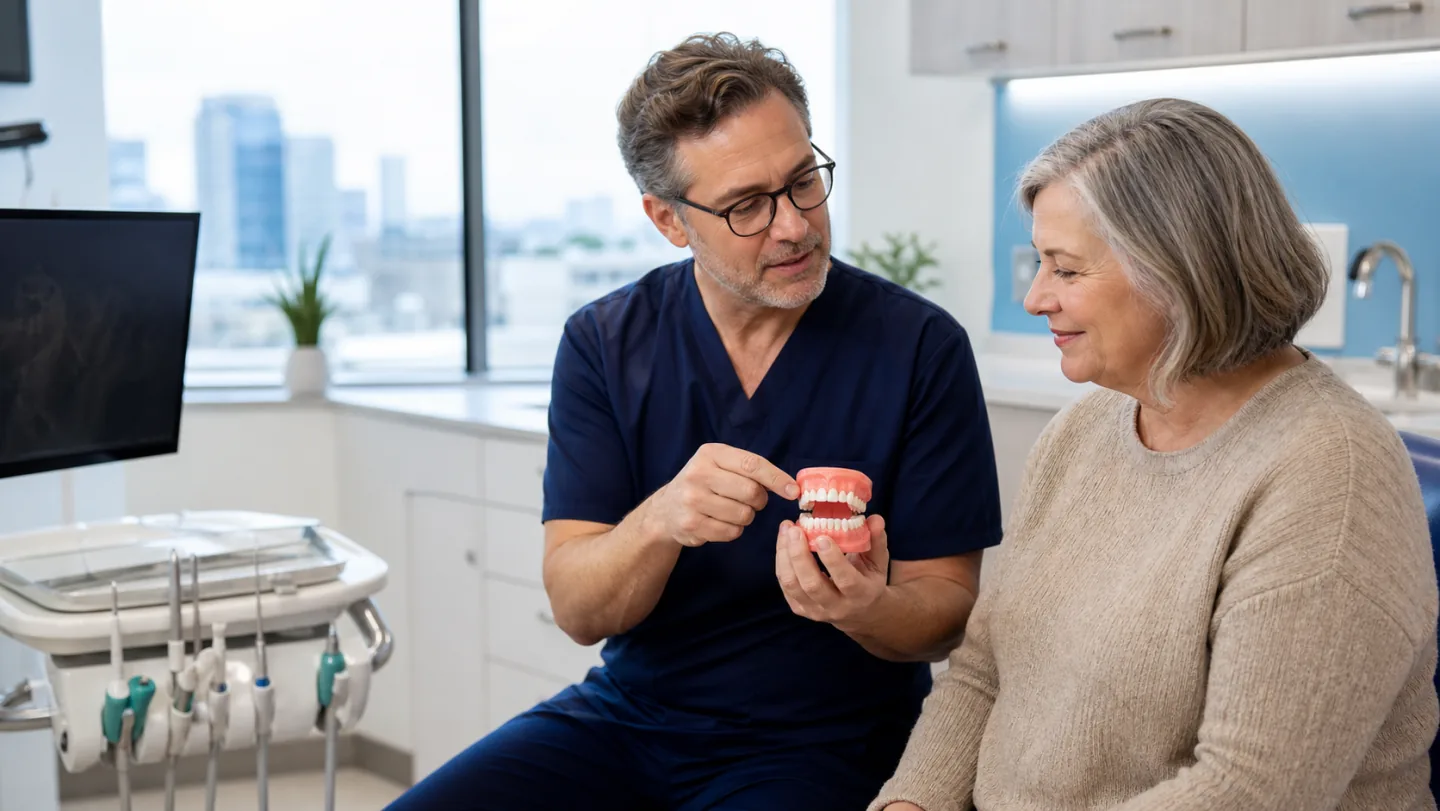
A dentist explaining a complete denture to a mature patient
Using more adhesive than you used to?

Dentures for Parkview Pointe Residents

If a dab has turned into a generous line, and you’re still not sure your denture will stay put, something may have changed. Learn why retention can fade, what might be done, and how to have yours checked at our McPhillips Street clinic.

Let's find a time

Request an appointment

We’ll call to confirm your appointment. For urgent care, please call us directly.

A tube that empties faster

Relying on Denture Adhesive, for Parkview Pointe Residents

Adhesive is a common part of many wearers’ routines, so its use often creeps up without much thought. You add a bit more each month, then carry the tube with you, and eventually you’re planning your day around whether your teeth will hold. That’s a lot of mental effort for something you’d rather not think about.

Tissue changes, wear, bite changes and damage can each affect how well a denture stays in place. Needing more help than before is a good reason to have things looked at. An assessment determines whether an adjustment, a reline or a replacement is appropriate, and you can ask how adhesive fits into your own situation.

Explore dentures
Winnipeg North Dental consultation room with a white desk, black chairs and a plant by the window
A consultation room with a white desk and a plant by the window.

Treat it as information

A growing need for adhesive may reflect changes in your mouth or your denture that deserve an assessment.

Look for the cause

Tissue, wear, bite and damage are all possible reasons, and each can lead to a different solution.

Ask about your use

It’s fine to ask whether adhesive makes sense for your denture, and how to clean it away.

What is holding it in

Retention comes from different places.

To understand why a denture has started to slip, it helps to know what was keeping it steady to begin with. That depends on your design.

Complete dentures and retention

Replacing a whole arch means leaning on tissues and jaw shape alone for support. As they change, the once-close match between them and the appliance can loosen.

  • Uppers and lowers don’t behave alike, owing to anatomy and movement.
  • Lip, cheek and tongue movement all come into play.
  • Relining or replacing may come up when the fit has drifted.

Partial dentures and retention

A partial draws on your remaining teeth as well as your tissues for planned retention. When something changes with those teeth, the way it holds can change too.

  • Have the teeth it relies on checked, not only the appliance.
  • Lost or moved teeth may affect how it sits.
  • Damage to the appliance can also reduce its hold.

If you’d like a more secure option than a conventional denture, ask about it. Suitability depends on your assessment.

Finding out why it slips

A step-by-step look at retention.

Here’s what might happen when you come in about a denture that won’t stay in place. Your visit will depend on what the dentist finds.

Request your visit
  1. 01

    Tell the story of the slipping

    Explain how long it’s been going on, when it’s worst, and how much adhesive you tend to use on an average day.

  2. 02

    Assess mouth and appliance

    The soft tissues, any remaining teeth, your jaw relationship and the denture you’re wearing are all reviewed as part of the exam.

  3. 03

    Match the fix to the cause

    You’ll hear what seems to be driving the problem. An adjustment, relining or replacement could be discussed, depending on those findings.

  4. 04

    Make sure it’s working

    Retention, function and any pressure areas get another look following treatment, and follow-up can be planned if your mouth needs time.

An honest inventory

Count up what you’re really using.

No one needs an exact number, but a rough sense of how often you apply adhesive, and how much, is useful. It may also help to wear your denture as you normally would for your visit.

If the visit may lead to further treatment, ask about estimates and scheduling so you can weigh your choices with enough information.

Details to pass along

  • The adhesive you use, and how it has changed over time.
  • Situations where the denture slips, such as eating or speaking.
  • Sore areas, or any damage you’ve noticed on the appliance.
  • Your health history, plus any insurance or CDCP details.
Front desk with a clear panel, flowers and potted plants at Winnipeg North Dental
White chairs and small plants in front of window blinds in the Winnipeg North Dental waiting area

The front desk, and seating in the waiting room.

Confidence is the real issue

Worrying about slipping wears you down.

Staying on guard during every conversation and every meal is tiring. You’re welcome to explain the moments when you feel least secure, so you can ask about those directly.

Steadier meals for now

Taking smaller bites and chewing evenly on both sides can improve stability while your fit question gets sorted out.

Speak without bracing

If you’ve learned to hold your denture in place with your tongue or lips, it’s worth mentioning that habit.

Sore and slipping together

Movement and rubbing often go together. A sore spot should be brought in for adjustment rather than padded with extra product.

Cleaner, simpler routines

Don’t leave residue on denture or gums.

If you’re wearing adhesive, cleaning off what’s left behind becomes part of the daily job. Your clinic can explain what’s recommended for your denture and tissues.

01

Clear the appliance

Remove your denture, then brush it thoroughly with a suitable brush and a cleanser recommended for its materials.

02

Clear your mouth

Give your gums, your tongue and any natural teeth a proper clean, so that nothing lingers on the tissues.

03

Recheck as things change

Even after a fit is improved, tissues continue to change. Keep up your reviews so that any slipping gets noticed early.

A denture that’s suddenly loose after damage, or a mouth that’s become painful, is a reason to phone the clinic.

Talk with our team
Blue-sided commercial unit with the Winnipeg North Dental sign and the phone number above the entrance

Winnipeg North Dental

Unit-5 2358 Mcphillips Street, Winnipeg, MB R2V 4J6
Get directions (opens in a new tab)
Getting your fit checked

Denture Retention Checks for Parkview Pointe Residents

Parkview Pointe residents can have this looked at in our clinic on McPhillips Street in Winnipeg. You’ll find Winnipeg North Dental at Unit 5, 2358 McPhillips Street; a link for directions accompanies this section.

Reach out by telephone or through the form. Sending the form doesn’t lock in a time, as the clinic replies with confirmation of the details.

Questions about coverage?

Talk with our team before your visit or learn about CDCP.

A little clarity before your visit

Your questions, answered.

Helpful details about dentures in Parkview Pointe.

Ask our team
How much adhesive is too much?

The answer depends on your particular denture, so ask at your visit. If you find you need more than before, treat it as a reason to have the fit assessed.

Is it wrong that I use adhesive at all?

No one will criticize you for using it. Please mention it, and ask whether it’s appropriate for your denture and how the dentist would suggest using it.

Why would a denture lose its hold after years of being fine?

Jaw and gum tissues continue to change after teeth are lost. Wear on the appliance and changes to your bite can also make a difference to how it stays in place.

Can a reline mean I won’t need adhesive?

No one can promise that ahead of time. A reline may be an option if your assessment points to it, and you can ask what difference it might make for you.

What are my choices if a conventional denture won’t stay put?

You can ask about snap-in dentures, which are removable dentures retained by implants, along with other options. Suitability depends on an assessment of your mouth.

Is the adhesive hiding a problem I should know about?

It could be masking a change in fit, which is why having it looked at makes sense. An exam also covers your oral tissues and any remaining teeth.

How do Parkview Pointe residents request a fit check?

Use the form on this page, or dial (204) 338-3003 to discuss a visit to Unit 5, 2358 McPhillips Street. The clinic will follow up to settle on a time.

Stop second-guessing your denture

Find out why it needs so much help.

Parkview Pointe residents can ask our Winnipeg clinic for a denture fit check. We’ll write or call back to arrange a time.

Patient testimonials

Kind words from our patients

★★★★★ 5.0 from 440+ reviews on Google

Close to home

Areas we serve

Convenient dental care on McPhillips Street for families across northwest Winnipeg and nearby communities.

Explore all service areas

A healthier smile is one visit away

Ready for dental care that feels genuinely comfortable?

✓ New patients welcome ✓ Direct insurance billing ✓ Multilingual team

How can we help?

Our dental team is here for you.

Ready to book or have a question? Choose the option that works best for you.

For urgent dental concerns, please call us directly.

Send us a message

Our team will reply during clinic hours.



