Skip to content
Winnipeg North Dental
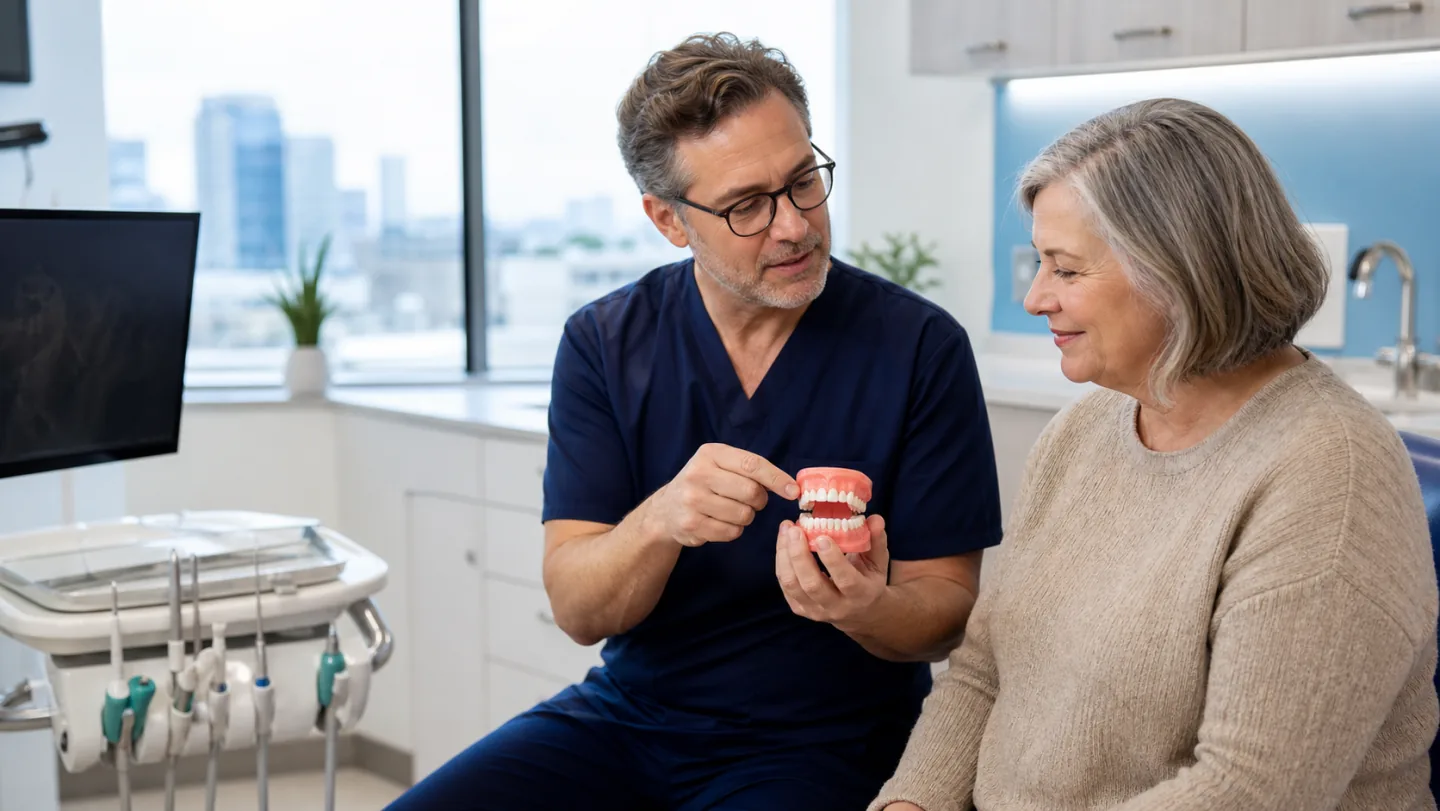
A dentist explaining a complete denture to a mature patient
Eating well with removable teeth

Dentures for Leila North Residents

Struggling with meals because of missing teeth? Leila North residents can visit our McPhillips Street clinic to find out how a denture may help with chewing, and what its limits are.

Let's find a time

Request an appointment

We’ll call to confirm your appointment. For urgent care, please call us directly.

Back to the dinner table

Chewing and Mealtimes With Dentures: A Guide for Leila North Residents

When chewing has become difficult, food starts to dictate your day. You skip things you enjoy, you cut everything small, or you only eat comfortably on one side. A denture can improve your ability to chew, which is often the reason people first ask about one.

An honest expectation helps, though: removable teeth don’t work exactly as natural ones do. Getting comfortable with meals takes technique, practice and sometimes adjustment. Your dentist at our Winnipeg clinic can examine your mouth and talk through what chewing may realistically look like for you.

Explore dentures
Dental treatment room with a patient chair at Winnipeg North Dental
Bite and fit get checked in chairs like this one, at our clinic.

Realistic about food

Expect better chewing than with gaps, without assuming a denture performs like the teeth you had.

A bite that’s recorded

How your jaws meet is captured and later tried out, since an even bite matters for everyday eating.

Practice pays off

Choosing foods carefully and chewing in a steady way often gets easier the longer you wear it.

Chewing with each type

Why stability differs from denture to denture.

How firmly a denture stays put during a meal has much to do with what is supporting it. Your own anatomy plays a large role, whichever design you end up with.

Eating with a complete denture

A full upper or lower denture has no natural teeth to hold on to, so it depends on underlying tissue and jaw form for stability.

  • Uppers and lowers don’t behave alike when you chew, owing to anatomy and movement.
  • Spreading food across both sides can help steady the appliance.
  • Cheeks, lips and tongue all affect how it moves during a meal.

Eating with a partial denture

With natural teeth still present, a partial replaces selected gaps and shares the load between those teeth and your oral tissues.

  • Filling gaps may open up areas of your mouth you’ve been avoiding for chewing.
  • The planned retention involves teeth that must be kept healthy.
  • Trapped food is something to clean away and mention if it persists.

How well you chew depends on your mouth and how your denture fits, so an assessment is the only sensible place to begin that conversation.

From first exam to first meal

Function gets tested along the way.

Fit and bite are refined over more than one appointment. Chewing and speaking concerns can be raised at any of them.

Request your visit
  1. 01

    Telling us what’s hard to eat

    Your examination covers tissues, remaining teeth, jaw relationship and current appliances, and your description of troublesome foods adds useful context.

  2. 02

    Recording your bite

    Beyond capturing your mouth’s shape through impressions or scans, the dentist records how your jaws come together when you close.

  3. 03

    Checking the trial bite

    Before processing, the trial denture lets you feel how your teeth meet, while position, smile and speech are also reviewed.

  4. 04

    Starting to eat with it

    At delivery, retention, function and pressure areas get checked. You’ll return for adjustments as chewing teaches your mouth where the denture sits.

Something to think about first

Write down the foods you miss.

A short list of the meals you’ve been avoiding makes your goals concrete. It also gives your dentist a clearer sense of what you’re struggling with day to day.

Ask about estimated costs and appointment length at booking so you can plan ahead.

What to bring to the appointment

  • Your list of foods that have become difficult.
  • An up-to-date record of your prescriptions and health conditions.
  • Any existing denture you use for eating, or have given up on.
  • Insurance or CDCP coverage details, if you have them.
Reception desk and seating at Winnipeg North Dental
Waiting room seating at Winnipeg North Dental

Where you’ll check in for your appointments.

The first few weeks of meals

Start small and work your way up.

Your first meals with a new denture are usually the hardest. It’s normal for chewing to feel awkward at first, and saliva can also change for a while as your mouth responds to something new.

Begin with manageable foods

Choose things that are easy to handle at first, and move on as your confidence builds.

Keep bites small and even

Little mouthfuls, chewed on both sides at once, can reduce the tipping that one-sided chewing tends to cause.

Report sore places after meals

Eating can reveal pressure spots quickly. Rather than eating around them for weeks, ask to have them adjusted.

After mealtimes settle down

Keeping your denture ready to eat with.

Long-term chewing depends on fit, and fit can change. Cleaning after meals and staying alert to changes both help you stay on top of things.

01

When food gets trapped

A denture that begins catching food more than it used to may no longer fit as it did, which is worth an assessment.

02

Clean away the day’s meals

Take your denture out and brush it using the right cleanser, then give your gums, tongue and any remaining teeth attention as well.

03

When chewing gets harder

Tissue change, wear or bite shifts can all affect how well your denture performs, and your dentist can look into which applies.

Chewing suddenly harder than usual? Contact the clinic to describe the change.

Talk with our team
View of the Winnipeg North Dental entrance from the walkway

Winnipeg North Dental

Unit-5 2358 Mcphillips Street, Winnipeg, MB R2V 4J6
Get directions (opens in a new tab)
Arranging your visit

Denture Appointments for Leila North Residents

Anyone from Leila North, in north Winnipeg, who wants help with chewing and dentures is seen at Unit 5, 2358 McPhillips Street. The directions link can show you how to get there.

Your form submission lets us know you’d like an appointment, and the actual time is settled once the clinic gets back to you. A phone call works just as well.

Questions about coverage?

Talk with our team before your visit or learn about CDCP.

A little clarity before your visit

Your questions, answered.

Helpful details about dentures in Leila North.

Ask our team
What should I eat first with new dentures?

Foods that are simple to manage and easy to bite into small pieces are a sensible start. You’ll get instructions suited to your situation, and more becomes possible with practice and adjustment.

Why does my lower denture seem to move more when I eat?

Upper and lower dentures don’t behave identically, because anatomy and movement differ between the jaws. If movement troubles you, the fit and bite can be assessed.

Will I chew as well as I did with my own teeth?

A denture won’t exactly match natural teeth, even though it can improve chewing. Many people find that technique and adjustments make meals easier over time.

Why does chewing on both sides matter?

Balancing food between both sides, in smaller bites, tends to help a denture remain stable while you eat.

My denture has started catching food. What’s going on?

Gum and jaw tissues keep changing after tooth loss, which can alter the fit. Have it checked, since an adjustment, reline or replacement may need to be considered.

Is your clinic in Leila North?

Our clinic address is Unit 5, 2358 McPhillips Street, Winnipeg, MB R2V 4J6, and that’s where your denture care takes place. To request a time, use this page or phone (204) 338-3003.

Enjoying meals matters

Ask how a denture could help you chew.

Leila North residents can send a request for a visit at our McPhillips Street clinic in Winnipeg, and the clinic will respond to set a time.

Patient testimonials

Kind words from our patients

★★★★★ 5.0 from 440+ reviews on Google

Close to home

Areas we serve

Convenient dental care on McPhillips Street for families across northwest Winnipeg and nearby communities.

Explore all service areas

A healthier smile is one visit away

Ready for dental care that feels genuinely comfortable?

✓ New patients welcome ✓ Direct insurance billing ✓ Multilingual team

How can we help?

Our dental team is here for you.

Ready to book or have a question? Choose the option that works best for you.

For urgent dental concerns, please call us directly.

Send us a message

Our team will reply during clinic hours.



