
Selected discolouration that does not respond predictably to whitening.
Winnipeg North Dental Family Dentistry
Dental Veneers
Refine the shape, colour, and balance of your smile with custom veneers.
Let's find a time
Request an appointment
Personalized smile design
Refinement should still look like you.
Dental veneers are thin custom restorations bonded to the front of selected teeth. They may change colour, proportion, edge position or spacing while preserving a natural relationship with the lips, gums and surrounding teeth.
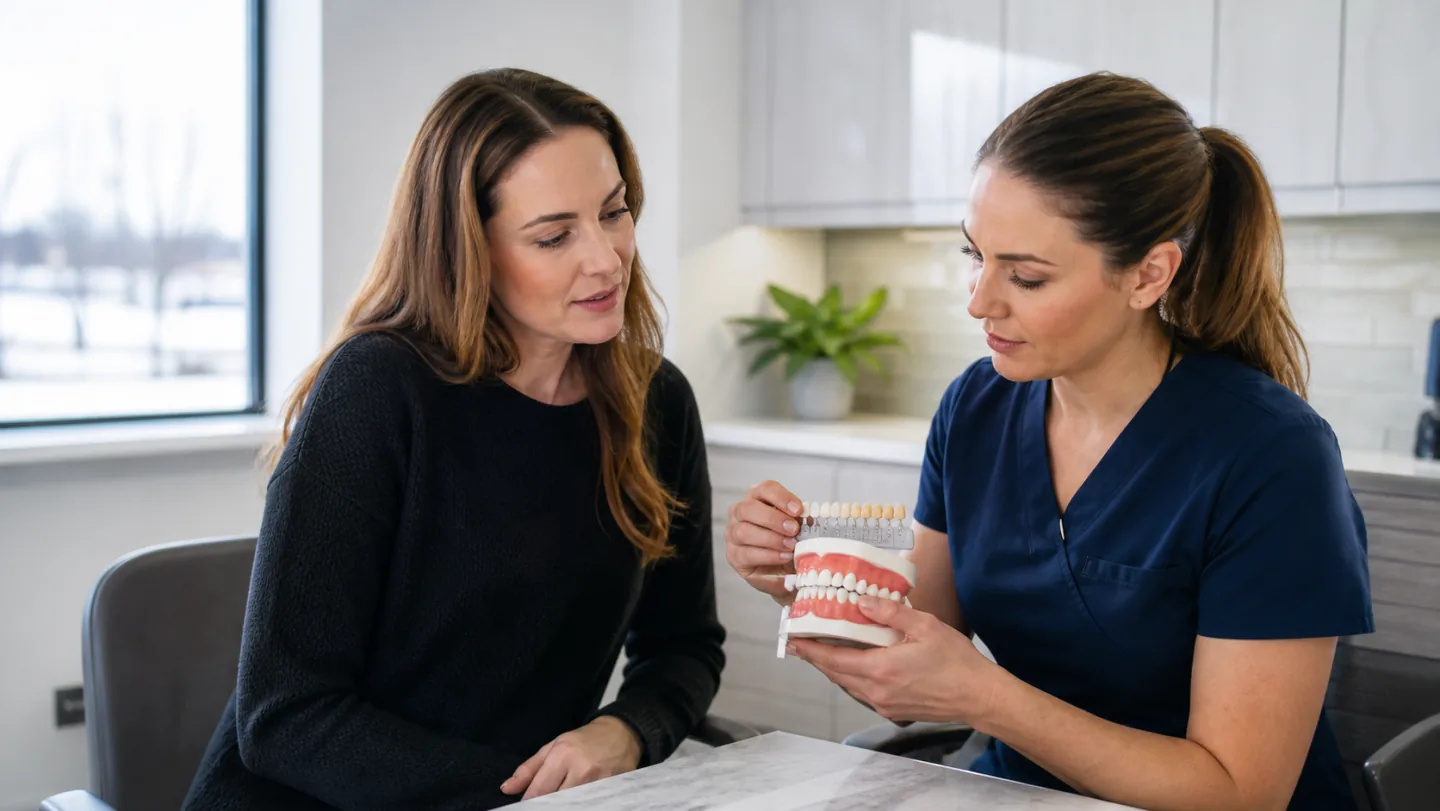
Planning begins with what you want to change—and what should remain untouched. Photographs, scans and a careful examination help determine whether veneers are suitable or whether whitening, bonding, orthodontics or another approach may better fit the goal.
Goals veneers may address
Shape, shade and balance—planned together.
Teeth that appear short, narrow, uneven or differently shaped.
Small spaces that can be closed without creating unnatural width.
Minor wear or chips affecting symmetry across the smile line.
Before designing veneers
The foundation must be healthy and the goal realistic.
Active decay, gum inflammation, significant grinding or an unstable bite may need attention first. Veneers do not strengthen every damaged tooth and cannot correct every alignment concern.
Gums
Healthy, stable gum contours frame the final result and support predictable margins.
Enamel
Adequate enamel supports reliable bonding and conservative preparation.
Bite
Heavy contacts and grinding can place thin restorations under damaging force.
Expectations
Shape, shade, texture and the number of teeth treated are agreed upon before fabrication.
The design sequence
Preview, prepare, create and place.
The process is deliberately visual. It gives you and your dentist opportunities to evaluate the direction before the final veneers are bonded.
Plan
Photographs, scans, shade and smile goals define the proposed result.
Preview
A digital or physical preview may help assess proportion and planned changes.
Prepare
Enamel is conservatively shaped when required and detailed records are taken.
Bond
Each veneer is tried in, evaluated and bonded after fit and appearance are approved.
After placement
Beautiful work still needs ordinary daily care.
Brush and clean between veneered teeth normally, protect them from biting hard objects and discuss a night guard if you clench or grind. The natural tooth at the margin can still develop decay or gum changes.
Veneers are not reversible like whitening.
When enamel is prepared, the tooth will continue to need a restoration. Veneers can chip, debond or require replacement over time, so long-term maintenance belongs in the original decision.
Dental veneer FAQs
Questions before changing a smile.
Do veneers require shaving the teeth?+
Preparation varies with tooth position, colour and the planned result. Some enamel removal is often required, while certain cases can be more conservative.
How many veneers do I need?+
The visible smile, symmetry, colour transitions and your goals determine the number. Treating more teeth is not automatically better.
Can veneers fix crooked teeth?+
They can disguise minor alignment differences, but orthodontics may be healthier or more conservative when movement is significant.
Do veneers stain?+
Ceramic veneers resist many stains, but natural teeth and bonding margins can change. Coffee, tobacco and hygiene still affect the overall smile.
How long do veneers last?+
There is no guaranteed lifespan. Bite, grinding, preparation, bonding, hygiene and trauma all influence longevity.