Skip to content
Winnipeg North Dental
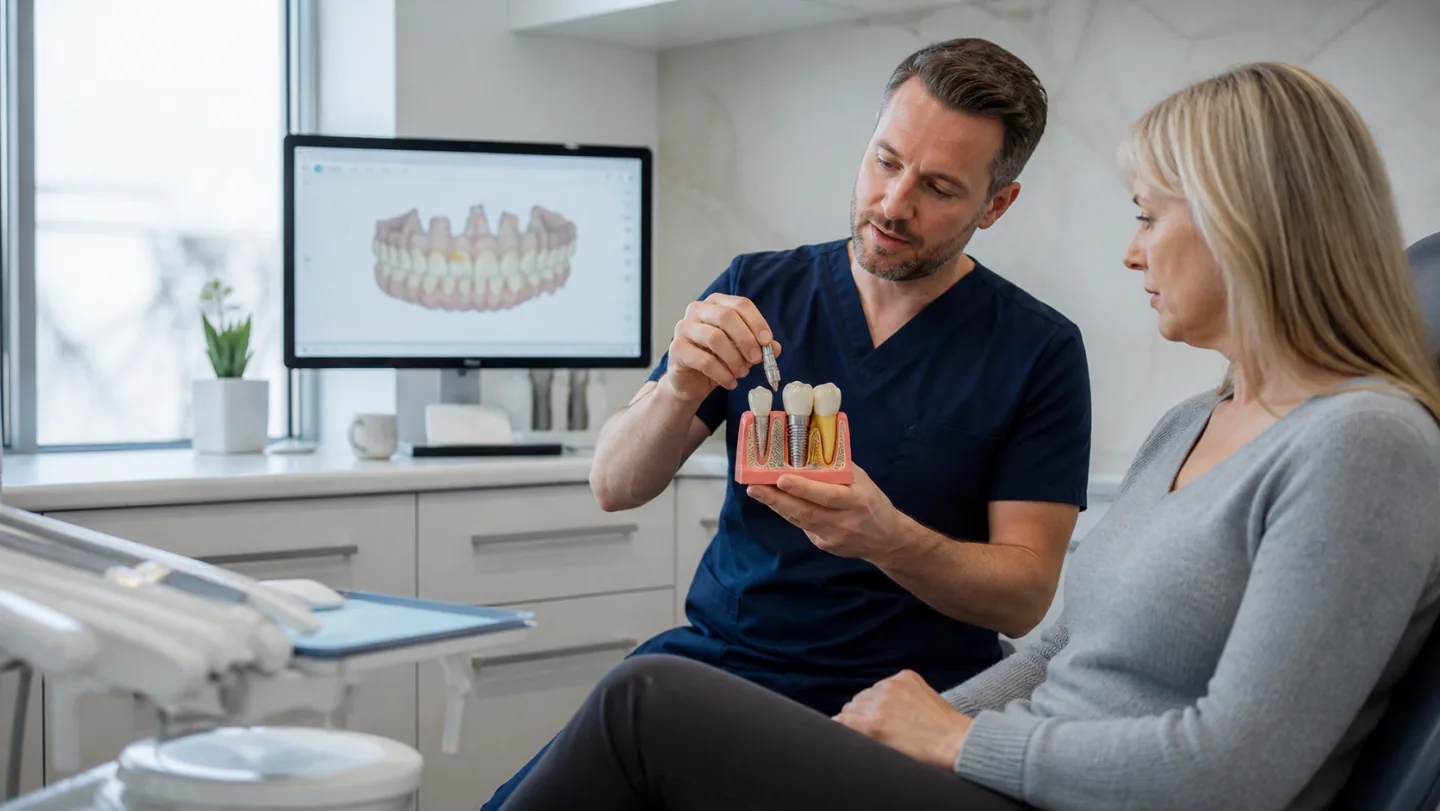
A dentist explaining a single dental implant with a jaw model and scan
Wary of the word surgery

Dental Implants for West Kildonan Residents

You like the idea of an implant, but the thought of the operation keeps stopping you. If you live in West Kildonan, you can start with a talk at our McPhillips Street clinic and commit to nothing.

Let's find a time

Request an appointment

We’ll call to confirm your appointment. For urgent care, please call us directly.

When the procedure is the sticking point

Hesitating Over Implant Surgery Is Understandable

Placing an implant does involve a surgical step, and nobody should pretend otherwise. Plenty of people put off the decision for exactly that reason, sometimes while a gap goes on bothering them. Fear of the unknown tends to fill in details that nobody has actually explained.

A consultation is a way to swap those guesses for information. West Kildonan residents who visit our Winnipeg clinic can hear what placement would mean in their own mouth, say plainly what worries them, and take their time. Saying no, or not yet, remains a perfectly acceptable outcome.

Explore dental implants
A patient in a dental chair talking with her hands while a clinician in navy scrubs listens
Illustrative photo of a patient and clinician in conversation.

Talking comes first

Examination and imaging happen long before any implant is placed, so the opening visits involve no surgery.

Your fears are useful

Knowing what troubles you most helps shape what gets explained and how the discussion is handled.

Other routes exist

A bridge or denture may also replace missing teeth, and hearing about them is part of a fair decision.

Taking the mystery out

What surgery does, and what it doesn’t.

Much of the dread disappears once the operation is separated from everything around it. Only one of the implant’s three components goes in surgically.

The surgical part

During this step the implant itself is inserted into the jaw, in a position that was worked out ahead of time.

  • Placement follows a plan built from your records and imaging.
  • A bone graft is added only if your plan calls for one.
  • Bone then heals around the implant over a period that varies.
  • The area is protected and monitored throughout that healing.

The parts that aren’t surgery

Most of the journey consists of examining, planning, fitting and reviewing, with the surgical moment as one stage among several.

  • An examination and three-dimensional imaging open the process.
  • Your health and medications are reviewed for possible risks.
  • An abutment and a custom restoration are fitted after healing.
  • Hygiene and bite reviews carry on after the tooth is finished.

Nothing here makes surgery risk-free, and those risks deserve their own conversation. Knowing how the stages divide simply makes the whole thing easier to think about.

A pace you can follow

No step arrives as a surprise.

Each stage leads into the next, and every one gives you a chance to ask what is coming. This is the usual shape of implant care.

Request your visit
  1. 01

    Say what scares you

    Your first conversation covers your health, your missing tooth and what puts you off. Mention anything from a past appointment that still bothers you.

  2. 02

    See the plan

    Records and imaging reveal your anatomy and where the final tooth should sit. Request an explanation of what you are looking at.

  3. 03

    Decide about placement

    If you go ahead and implant treatment suits you, the implant is placed surgically. Use the days beforehand to raise any leftover questions.

  4. 04

    Heal, then restore

    Bone integrates with the implant before the abutment and restoration are added. Your hygiene and bite are then reviewed.

Getting your thoughts in order

Write the worry down before you forget it.

Nervous people often leave an appointment remembering the one thing they meant to ask. A short note in your pocket solves that problem, and no question is too small to bring up.

If talking about needles, sounds or numbness feels hard, mention that when you request your visit. The clinic can then know about it before you arrive.

Worth jotting down

  • The specific part of surgery that worries you the most.
  • Any earlier dental experience that left you uneasy.
  • Whatever you take regularly, plus any new diagnosis since your last dental visit.
  • What you hope a replaced tooth would let you do again.
A consultation room at the clinic with a white table, black leather chairs and striped window blinds
White chairs and a navy bench beneath abstract paintings in the clinic’s waiting area

Desk and chairs in a clinic consultation room.

On your side of the chair

Being afraid doesn’t count against you.

Nobody expects you to arrive feeling brave. What helps is being honest about your nerves, so the conversation can turn to the things that would make treatment feel more manageable.

Ask how numbing works

Find out how the area would be numbed and what you might be aware of while the implant is going in.

Ask about comfort options

It is reasonable to ask which ways of managing anxiety could be available for a surgical appointment like yours.

Ask what comes afterward

Knowing what to expect in the days following placement can take some of the weight off the decision.

Once the nerve-racking part is over

Stay in touch while things heal.

Monitoring continues after placement, which means you aren’t left to judge every sensation alone. An implant that has settled in still relies on plaque control to protect the gum and bone holding it.

01

Checks during healing

The site is followed while integration takes place, giving you regular chances to mention anything that seems off.

02

What to report

Let us know about swelling, drainage, bleeding, a lingering bad taste, or pressure that causes discomfort.

03

A routine for later

Daily cleaning and professional maintenance become a long-term habit once your new tooth is in use.

Anything that feels urgent calls for a phone call to (204) 338-3003 and not the online form.

Talk with our team
Navy and white exterior of the clinic, with its name and phone number over the entrance

Winnipeg North Dental

Unit-5 2358 Mcphillips Street, Winnipeg, MB R2V 4J6
Get directions (opens in a new tab)
Where the conversation happens

West Kildonan Residents Are Seen at Our Winnipeg Clinic

Consultations, surgery and follow-up all happen at Winnipeg North Dental, Unit 5, 2358 McPhillips Street. The directions link will help you work out how to reach us.

Send a request through the form, or phone if you would like to voice a concern first. Someone from the clinic gets back to you, as a form request doesn’t hold a time.

Questions about coverage?

Talk with our team before your visit or learn about CDCP.

A little clarity before your visit

Your questions, answered.

Helpful details about dental implants in West Kildonan.

Ask our team
I live in West Kildonan. Can I just come in and talk about it?

Yes, you can request a consultation at Unit 5, 2358 McPhillips Street, Winnipeg, through this page or by calling (204) 338-3003. An assessment is the opening step, and treatment isn’t decided at the door.

Will implant surgery hurt?

People differ, so no one can tell you exactly how it will feel for you. Ask how numbing is handled, what you may sense during placement, and what discomfort might follow, so you can judge with real details.

Can I be sedated for the procedure?

That is a question for your consultation. Suitability would depend on your health and treatment plan, so raise it directly and find out what could apply in your case.

What if I back out after the assessment?

The assessment exists to help you decide, and deciding against treatment is your right. You can ask about other tooth replacements or simply take more time to think.

Is the risk of surgery worth it for one tooth?

Only you can weigh that, with accurate information about your own mouth. Risks and alternatives should be reviewed before any treatment, and a single crown is just one of the ways to fill a space.

Are there ways to replace a tooth without surgery?

Yes. Bridges and removable dentures don’t need an implant placed, although each brings its own trade-offs. An examination can show which of them would suit your situation.

A talk commits you to nothing

Bring your doubts along with you.

If you live in West Kildonan, send us a note asking to sit down and talk at our Winnipeg clinic. Once your request comes in, the clinic follows up about a time.

Patient testimonials

Kind words from our patients

★★★★★ 5.0 from 440+ reviews on Google

Close to home

Areas we serve

Convenient dental care on McPhillips Street for families across northwest Winnipeg and nearby communities.

Explore all service areas

A healthier smile is one visit away

Ready for dental care that feels genuinely comfortable?

✓ New patients welcome ✓ Direct insurance billing ✓ Multilingual team

How can we help?

Our dental team is here for you.

Ready to book or have a question? Choose the option that works best for you.

For urgent dental concerns, please call us directly.

Send us a message

Our team will reply during clinic hours.