Skip to content
Winnipeg North Dental
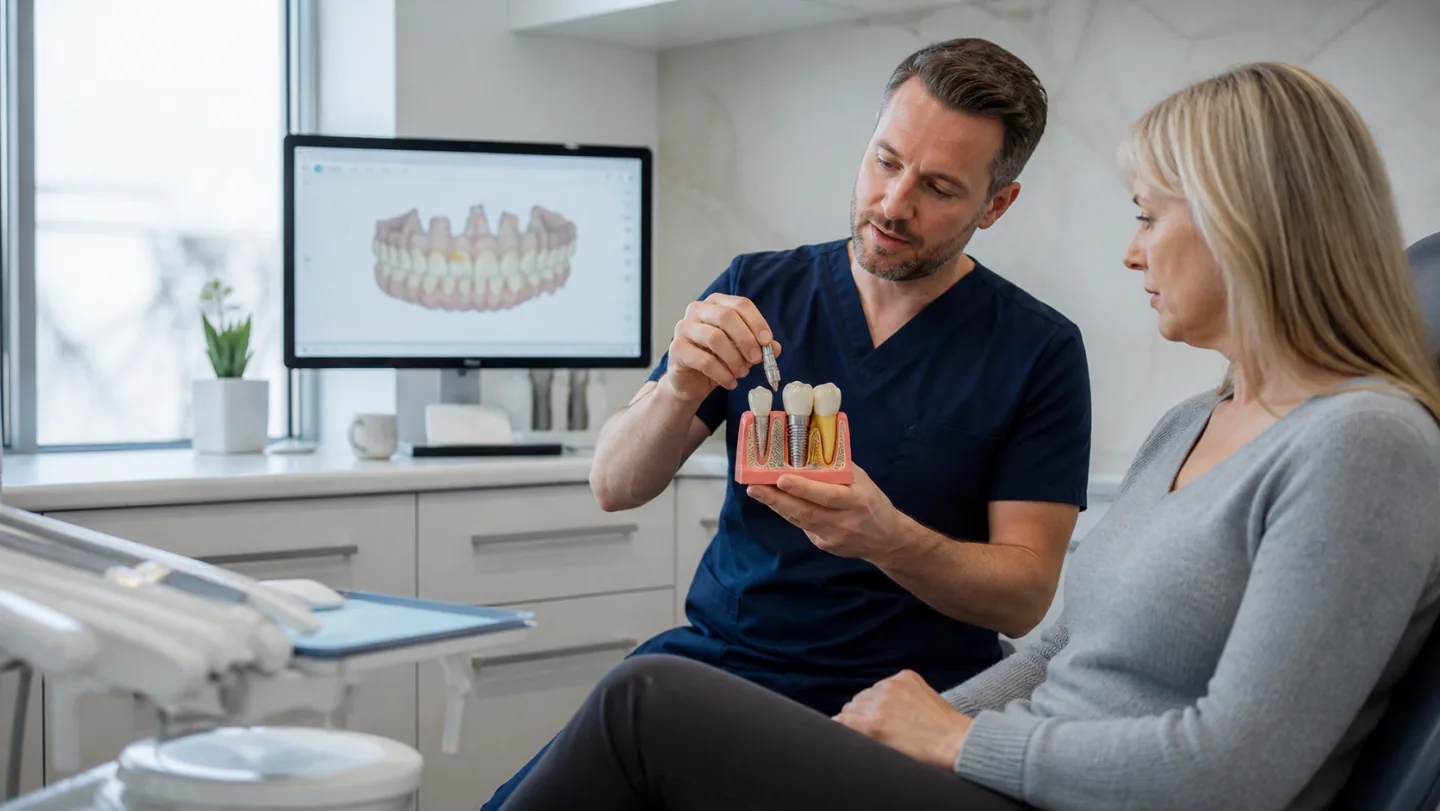
A dentist explaining a single dental implant with a jaw model and scan
A realistic look ahead

Dental Implants for Riverbend Residents

Before spending time and money, you want to know how long implants last and what can go wrong. Riverbend residents can start with frank answers from our McPhillips Street clinic.

Let's find a time

Request an appointment

We’ll call to confirm your appointment. For urgent care, please call us directly.

For the careful researcher

What Keeps an Implant Working Over the Years

You may have read glowing claims about implants lasting a lifetime and found yourself skeptical. Good. No lifespan can honestly be promised, because success rests on healing, health, smoking, infection, bite forces, positioning and how well the area is maintained.

What can be said is that those factors are often known and discussed in advance. If you live in Riverbend and prefer facts to enthusiasm, our dentist at the Winnipeg clinic can examine your situation, review the risks and alternatives, and help you judge whether the commitment makes sense.

Explore dental implants
A woman smiling in a bathroom mirror as she uses a small interdental brush
Illustrative photo: home cleaning plays a daily part in implant upkeep.

No fixed expiry date

An implant’s service life cannot be stated in advance, and its separate parts may not share the same timeline.

Known risk factors

Several influences on success can be identified early, and a number of them are within your power to manage.

Upkeep is the deal

Daily home care and professional appointments are an ongoing part of having an implant at all.

Risk and durability

What can affect how things turn out.

It is reasonable to ask what might go wrong before agreeing to surgery. Broadly speaking, the answers fall into two groups.

Biological factors

Living tissue must heal and then stay healthy, and that part of treatment is not fully within anyone’s control.

  • How bone heals around the implant during integration.
  • Infection or inflammation in the gum tissue around it.
  • General health, medications and smoking.
  • Plaque buildup that may lead to a loss of supporting bone.

Mechanical factors

Implant systems are made of components under daily chewing load, and each one may need attention at some point.

  • Forces from your bite on the restoration and implant.
  • How the implant is positioned relative to the final tooth.
  • Wear or loosening among abutment and restoration parts.
  • A crown, bridge or denture design that either eases or hampers cleaning.

Understanding these risks is not a reason for alarm. It simply means you are making your decision with accurate information.

Where risk gets managed

Each stage has its own job to do.

A staged approach exists partly to manage risk. Look at each of these phases as a chance to check that the plan is still appropriate for you.

Request your visit
  1. 01

    Thorough planning

    Your restorative and surgical plans need to agree before placement. Imaging and records provide the basis for this.

  2. 02

    Careful placement

    The implant is inserted during surgery in the position worked out earlier, along with grafting if your plan specifies it.

  3. 03

    Monitored integration

    While the bone heals against the implant, the area is protected and followed, because timing cannot be set in advance.

  4. 04

    Restoration and review

    After the abutment and restoration go in, we assess your bite and hygiene access, and maintenance visits carry on from there.

Questions to walk in with

Come prepared to interview us.

A thoughtful list of questions is welcome here. The more specifically you ask about risks, alternatives and maintenance, the more useful the conversation tends to be.

It is sensible to ask for an estimate covering each phase and to find out how future repairs or part replacement might be handled. Coverage is determined by your plan.

Some questions to consider

  • What specific risks apply to my health and my mouth?
  • What are my alternatives, and how do their demands differ?
  • What will upkeep look like for this particular restoration?
  • Which medications or habits of mine could affect the result?
The clinic’s reception area, with a wood-look floor and frosted glass doors
Treatment chair and dental unit in a Winnipeg North Dental operatory

A first look at our clinic on McPhillips Street.

Clarity brings comfort

Straight answers are easier to live with.

For some people, peace of mind comes from knowing exactly what they are getting into. Ask anything you like, including questions you worry may sound blunt or skeptical.

Ask for the downside

We would rather you hear about possible complications before treatment than be surprised by them afterward.

Understand the surgery

Find out what placement involves and how comfort is approached, if that is one of the things you are still weighing.

Compare fairly

Set the implant next to other tooth replacements, thinking about your goals as well as your tolerance for risk.

The part that never ends

Staying well is an ongoing project.

A cavity won’t form in the implant, but that shouldn’t lull anyone into neglecting it. Gums and bone respond to plaque around an implant, and ignored inflammation can undermine its support.

01

Plan for repairs

Any component could eventually need maintenance or replacing. Asking about this early helps set accurate expectations for the long term.

02

Control your risk factors

Daily cleaning and managing issues such as smoking remain worthwhile long after your restoration has been completed.

03

Catch problems small

Report drainage, swelling, bleeding, a stubborn bad taste, bite changes, or trouble cleaning beneath your restoration.

When a symptom seems pressing, a call to (204) 338-3003 is the right move, not a web form.

Talk with our team
The clinic’s exterior, showing its name and telephone number above the door

Winnipeg North Dental

Unit-5 2358 Mcphillips Street, Winnipeg, MB R2V 4J6
Get directions (opens in a new tab)
When you’re ready to talk

Riverbend Patients Meet Us at Our Winnipeg Clinic

Consultations and treatment for Riverbend residents are carried out at Winnipeg North Dental, Unit 5, 2358 McPhillips Street. You can use the directions link to plan how to get here.

Your online request gets the conversation going, and the clinic follows up to finalize a time. Phoning is also fine if you want to ask something first.

Questions about coverage?

Talk with our team before your visit or learn about CDCP.

A little clarity before your visit

Your questions, answered.

Helpful details about dental implants in Riverbend.

Ask our team
How can I arrange an implant consultation from Riverbend?

Telephone (204) 338-3003 or complete the form here. Your appointment would take place at our clinic, Unit 5, 2358 McPhillips Street, Winnipeg, and a time is settled once the clinic has replied.

Will a dental implant last the rest of my life?

We cannot say that it will, as no lifespan is assured. Your implant, abutment and restoration may each have their own maintenance or replacement needs over the years.

What are the signs of a problem with an implant?

Watch for bleeding, swelling, drainage, an ongoing bad taste, a restoration that moves, or bite changes and pressure discomfort. Contact the clinic if you notice any of them.

If an implant can’t get cavities, why is cleaning so important?

Because the tissue around it can still become diseased. Plaque can inflame the gums and contribute to bone loss, and that bone is what holds your implant in place.

What happens if an implant doesn’t heal properly?

Healing is one of the variables that cannot be fully predicted. Ask us how this situation would be handled, and what options might follow, as part of reviewing the risks before treatment.

Are there alternatives with less upkeep?

Every form of tooth replacement requires some ongoing care, though the demands differ. A bridge or denture can be compared with an implant during your assessment.

Ask the hard questions

Decide with the risks fully in view.

Riverbend residents can request a consultation at our Winnipeg clinic. Bring your toughest questions, and we will be in touch about scheduling.

Patient testimonials

Kind words from our patients

★★★★★ 5.0 from 440+ reviews on Google

Close to home

Areas we serve

Convenient dental care on McPhillips Street for families across northwest Winnipeg and nearby communities.

Explore all service areas

A healthier smile is one visit away

Ready for dental care that feels genuinely comfortable?

✓ New patients welcome ✓ Direct insurance billing ✓ Multilingual team

How can we help?

Our dental team is here for you.

Ready to book or have a question? Choose the option that works best for you.

For urgent dental concerns, please call us directly.

Send us a message

Our team will reply during clinic hours.