Skip to content
Winnipeg North Dental
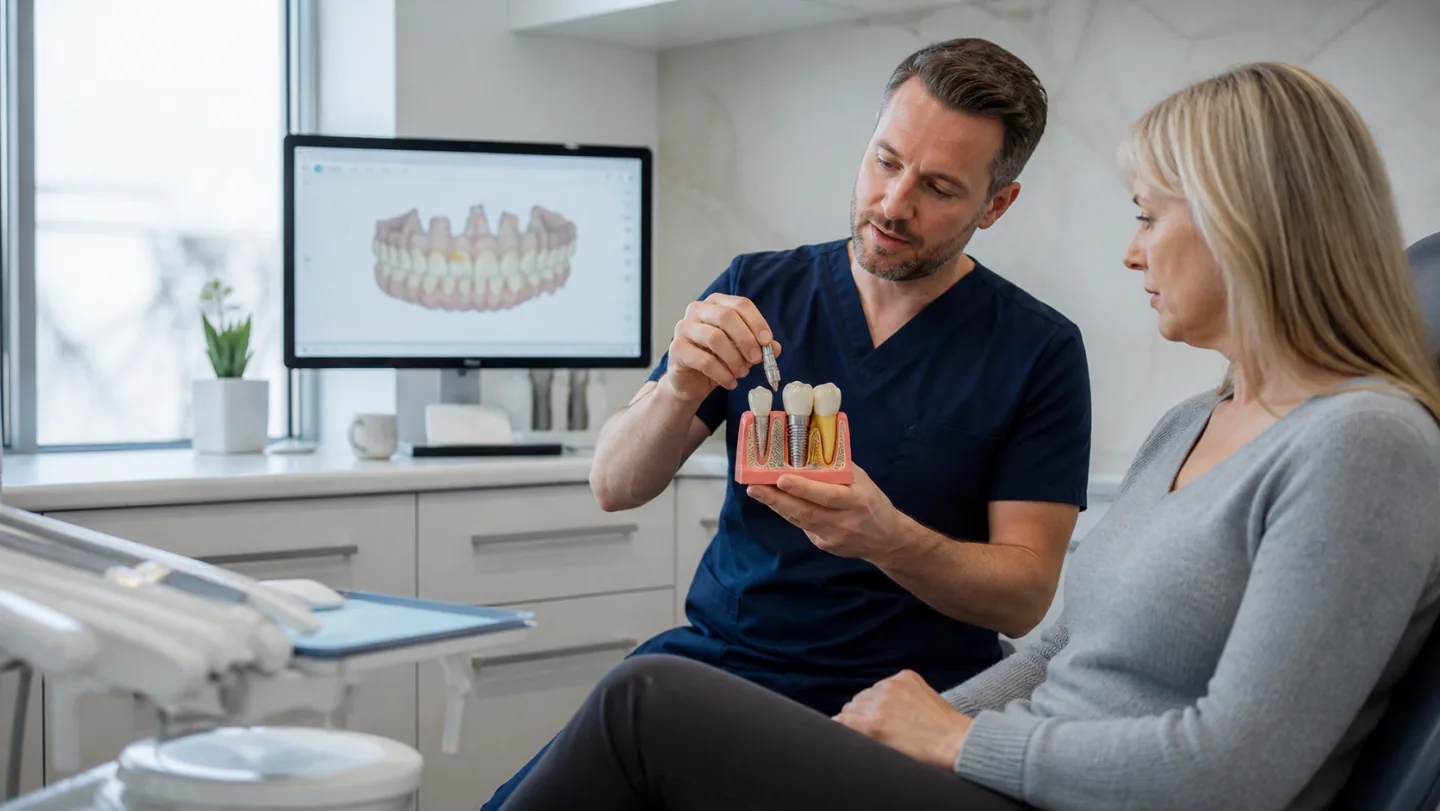
A dentist explaining a single dental implant with a jaw model and scan
The risks, spelled out

Dental Implants for Polo Park Residents

Plenty of what you read about implants leans toward the upside. If you live in Polo Park and would rather start with what can go wrong, this page does that, and McPhillips Street is where to discuss your own risk.

Let's find a time

Request an appointment

We’ll call to confirm your appointment. For urgent care, please call us directly.

A cautious way to begin

What Could Go Wrong With a Dental Implant?

Implant treatment involves surgery, a healing period and a restoration that has to cope with daily use, so problems can arise at more than one point. Healing may not go to plan, infection can develop, chewing forces can cause trouble, and the tissue around a finished implant can become diseased. None of that makes implants a poor choice, but it does make them a real decision.

Your own level of risk depends on your health, medications, smoking, gums, bone, bite and the way you maintain the result. Polo Park is an area in Winnipeg, and if you’re based there, a frank review of those factors can happen at our clinic on McPhillips Street, along with a look at alternatives.

Explore dental implants
A turquoise treatment chair with an overhead arm and a small monitor in a Winnipeg North Dental operatory
Operatory with a turquoise chair and a white overhead arm.

No promised outcome

Success depends on many factors, and some of them lie beyond anyone’s complete control.

Some risks are modifiable

Gum health, smoking and daily cleaning are places where action can shift the odds.

Alternatives belong here

An honest risk conversation includes what else could be done, including doing nothing yet.

Where trouble can come from

Sorting risks by when they appear.

It can help to separate what might arise around surgery and healing from what might appear years down the line.

Early on

These are the concerns tied to placement and integration, when the implant is becoming established in bone.

  • Infection around the surgical area.
  • An implant that fails to integrate as intended.
  • Surrounding anatomy, which is why imaging comes first.
  • Slower healing related to health or smoking.

Later on

A finished implant still lives in a busy environment and faces ongoing biological and mechanical demands.

  • Plaque-related gum inflammation and bone loss.
  • A crown, bridge or denture part that loosens.
  • Forces from your bite on the restoration.
  • Components needing maintenance or replacing.

A list like this can’t tell you your personal odds. What it can do is help you ask which of these items applies most to your mouth and your health.

Where each safeguard sits

How the process tries to lower risk.

Planning and follow-up aren’t just formalities. If you’re found suitable and choose treatment, each stage has a part to play in catching problems or preventing them, though timing and outcomes vary.

Request your visit
  1. 01

    Careful groundwork

    Imaging and records reveal anatomy and establish the tooth’s final position, so that the implant goes in somewhere workable.

  2. 02

    Controlled placement

    An implant is surgically set according to plan, with grafting added if bone at that site requires it.

  3. 03

    Watched healing

    As bone forms around the implant, the area is protected and monitored, giving a chance to notice concerns.

  4. 04

    Tested in function

    After the abutment and restoration are fitted, reviews of bite and hygiene help keep forces and plaque in check.

Be frank with yourself

Your risk review depends on complete answers.

It’s tempting to leave out the occasional cigarette or that prescription you’ve been on for years. Please don’t. Those details are precisely what a fair risk discussion needs.

Nothing you share needs to be polished or perfect. An accurate picture simply lets the advice fit you and not some imagined average patient.

Be ready to discuss

  • Smoking or vaping, including how much and how often.
  • Every medication, supplement and long-term condition.
  • Past gum problems or teeth lost to infection.
  • Clenching, grinding or a sore jaw on waking.
A window with light blinds, two white chairs and a small child’s chair in the clinic’s waiting area
A white and grey reception desk with plants and orchids, beside a navy bench and patterned rug

Abstract blue artwork above a bench in the waiting area.

Caution is reasonable

Being sceptical isn’t being difficult.

You won’t be the first person to ask what could go wrong before asking anything else. Those questions help everyone, and a careful decision tends to sit better with you later, whatever you choose.

Ask what applies to you

General statistics say little about your own mouth, so ask which concerns matter most in your case.

Ask what happens if it fails

It’s fair to find out what the next steps could be if integration doesn’t succeed.

Compare the other risks

A bridge, a denture and an untreated gap each carry their own tradeoffs, so weigh them side by side.

Risk doesn’t stop at the crown

The long-term threat is mostly plaque.

Although an implant can’t get a cavity, its neighbouring gum and bone can still become diseased when plaque builds up. Controlling risk factors, cleaning daily and attending professional maintenance are the main defences you have once treatment ends.

01

Early warning signs

Bleeding, puffiness or a taste that lingers can all point to trouble worth having checked out.

02

Mechanical warning signs

A wobble in the restoration, or discomfort when you bite, suggests something needs a closer look.

03

Risk factors over time

Tell the clinic about changes in health or medication, since they may affect how your implant is monitored.

When a warning sign appears, phone (204) 338-3003 and explain what you’re noticing, particularly if there’s swelling or drainage.

Talk with our team
Blue-grey siding and a white sign panel on the front of Winnipeg North Dental

Winnipeg North Dental

Unit-5 2358 Mcphillips Street, Winnipeg, MB R2V 4J6
Get directions (opens in a new tab)
Talk through your own risk

Implant Risk Discussions for Polo Park Residents

Any examination or treatment would take place at Winnipeg North Dental, Unit 5, 2358 McPhillips Street, Winnipeg. Should you want a map, follow the directions link on this page.

Your form submission lets the clinic know you’re interested, but no time is reserved until they have confirmed it with you.

Questions about coverage?

Talk with our team before your visit or learn about CDCP.

A little clarity before your visit

Your questions, answered.

Helpful details about dental implants in Polo Park.

Ask our team
Where can Polo Park residents discuss implant risks in person?

That conversation happens in Unit 5 of 2358 McPhillips Street, at Winnipeg North Dental. Use the form or dial (204) 338-3003, and feel free to say you’d mainly like to understand the risks first.

How often do dental implants fail?

No single figure applies to everybody, because your health, smoking, infection, forces, position and maintenance all change the picture. Ask how those factors look in your particular case.

What are the most serious risks?

Implant surgery carries risks related to infection and the anatomy near the site, and integration can fail. Your imaging and history guide which concerns are most relevant to you.

Can I lower my risk?

Some factors are within your influence, such as smoking, gum health and daily cleaning. Others aren’t, which is why treatment can reduce risk without removing it completely.

Is a bridge or denture less risky?

They avoid implant surgery but bring tradeoffs of their own. A bridge relies on the neighbouring teeth, and a removable denture may feel less secure, so compare them for your mouth.

Do warning signs always mean the implant is failing?

Not always, but they shouldn’t be ignored. Bleeding or tenderness could have various causes, and an examination is how you learn whether anything serious is happening.

Decide with the facts

Ask your hardest questions first.

If you’re a Polo Park resident, send your request here and the clinic will respond to arrange a conversation.

Patient testimonials

Kind words from our patients

★★★★★ 5.0 from 440+ reviews on Google

Close to home

Areas we serve

Convenient dental care on McPhillips Street for families across northwest Winnipeg and nearby communities.

Explore all service areas

A healthier smile is one visit away

Ready for dental care that feels genuinely comfortable?

✓ New patients welcome ✓ Direct insurance billing ✓ Multilingual team

How can we help?

Our dental team is here for you.

Ready to book or have a question? Choose the option that works best for you.

For urgent dental concerns, please call us directly.

Send us a message

Our team will reply during clinic hours.



