Skip to content
Winnipeg North Dental
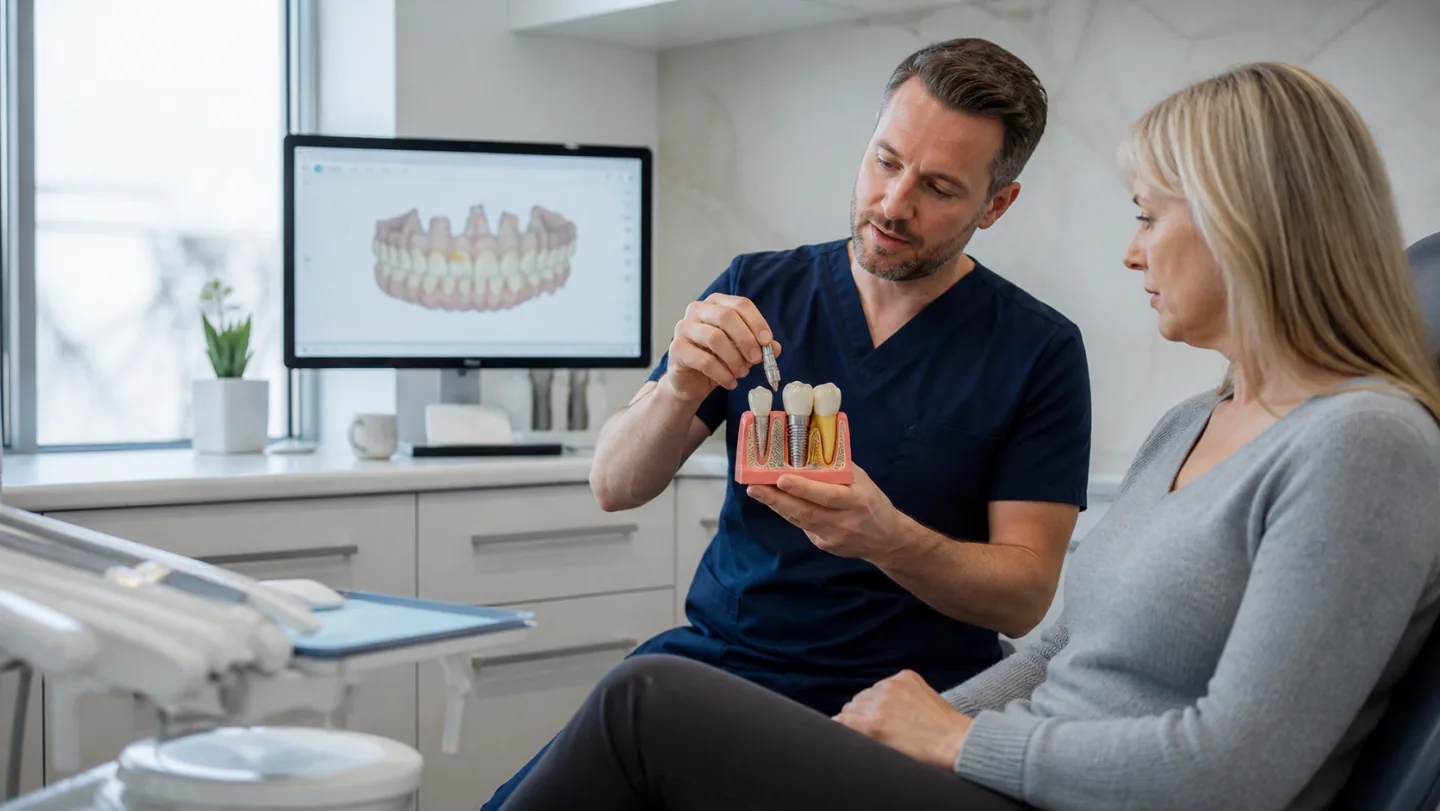
A dentist explaining a single dental implant with a jaw model and scan
Since the tooth went, your bite feels off

Dental Implants for Linden Woods Residents

When a tooth goes missing, the way your upper and lower teeth come together can start to feel unfamiliar. For Linden Woods residents noticing that, this page explains why an implant plan pays close attention to how you bite, before, during and after treatment.

Let's find a time

Request an appointment

We’ll call to confirm your appointment. For urgent care, please call us directly.

How your teeth meet

Bite and Balance After a Missing Tooth

Teeth work as a team. Once one is gone, chewing forces get redistributed, and the tooth that used to meet it from the opposite jaw has nothing to press against. People often describe the change as one side doing more work, or teeth touching in a way they didn’t before.

An implant restoration is designed for appearance, cleaning and bite all at once, and its position is chosen so the new tooth can meet its partner properly. Linden Woods is an area in Winnipeg, and a dentist at Winnipeg North Dental on McPhillips Street would examine how your teeth meet as part of the assessment.

Explore dental implants
A reclined light blue dental chair with an instrument tray arm and cabinets along the back wall
A reclined treatment chair beside a small sink in an operatory.

Bite shapes the design

The visible tooth is planned so it shares chewing forces sensibly with the rest of your teeth.

Forces affect success

Heavy loading and grinding are among the factors that influence how an implant fares.

Checked after fitting

A bite review follows the restoration, and later changes are worth reporting.

Planning around your bite

What the dentist looks at.

Assessing the bite is about more than the empty space. Opposing teeth, wear patterns and habits all feed into the design.

The teeth around the space

The dentist checks whether adjoining or opposite teeth have shifted and whether there’s still room for a tooth of useful size.

  • Room for a crown that can do real work.
  • Whether the opposing tooth has drifted toward the gap.
  • How the jaws come together when you close.
  • Signs of wear from uneven chewing.

Forces and habits

Clenching or grinding can put extra strain on any restoration, so it’s considered when planning an implant.

  • Tell the dentist if you wake with a sore jaw.
  • Worn or chipped teeth may hint at grinding.
  • Position is planned with chewing load in mind.
  • Protective measures may be discussed if relevant.

Bite factors sit alongside bone, gum health, medical history and hygiene when suitability is decided. No single factor settles it.

Where the bite is checked

A treatment path with bite built in.

Attention to how your teeth meet runs from the first records to the final appointment. Each phase moves at a pace dictated mostly by healing.

Request your visit
  1. 01

    Recording how you bite

    Imaging and bite records help settle where the new tooth should sit, and the implant position follows from that.

  2. 02

    Implant placement

    The implant is set surgically into the jaw, and a planned graft would be done during that procedure.

  3. 03

    Integration while protected

    Bone knits to the implant over a variable stretch, so the area is shielded from heavy chewing and reviewed.

  4. 04

    Fitting and adjusting

    The abutment and restoration are placed, then your bite is reviewed and maintenance care is scheduled.

Noticing your own bite

Pay attention to how you chew.

In the days before your visit, notice which side you favour, whether any teeth feel tender, and whether your jaw aches in the morning. Small observations like these are useful.

Mention any night guard, past orthodontic treatment or jaw discomfort. Each can be relevant when planning a tooth that has to handle chewing.

Questions about your bite

  • Have my other teeth moved since I lost this one?
  • Is there still enough room for a full-size tooth?
  • Does my grinding change what you’d recommend?
  • How will you check the new tooth meets its partner?
The reception area’s white counter and blue accent wall, with a navy bench and rug to one side
A white desk under a coastal painting with a black chair and a computer keyboard

A blue accent wall behind the reception counter.

Small changes count

A bite that feels wrong is worth mentioning.

Some people dismiss an odd bite as something to get used to. It’s worth describing what you notice, because details about how your teeth meet help with planning.

Describe it your way

There’s no wrong way to explain that something feels uneven or different.

Ask about other options

A bridge or denture also has to suit your bite, and comparing them is reasonable.

Share any discomfort

Jaw aches or tender teeth are worth raising, even if they seem minor.

Keeping things balanced

Bite and gum care after treatment.

The implant itself won’t decay, though the gum and bone holding it can break down if plaque is neglected. Alongside cleaning, regular visits give the chance to check that your bite is still landing well on the new tooth.

01

Report a bite change

If the new tooth starts to feel high or chewing becomes uncomfortable, call the clinic.

02

Keep maintenance visits

Hygiene care and periodic bite reviews are part of looking after an implant.

03

Watch for movement

Any looseness in the crown, bridge or denture part should be checked.

If you have bleeding, swelling, drainage or an unpleasant taste that sticks around near an implant, ring the clinic at (204) 338-3003.

Talk with our team
The street-facing front of Winnipeg North Dental with a white sign panel and a double glass door

Winnipeg North Dental

Unit-5 2358 Mcphillips Street, Winnipeg, MB R2V 4J6
Get directions (opens in a new tab)
Your bite assessment

Implant and Bite Planning for Linden Woods Residents

Assessments happen at Winnipeg North Dental, Unit 5, 2358 McPhillips Street, Winnipeg. Directions to the clinic are a click away through the link here.

This request isn’t a scheduled appointment. The clinic will contact you so a visit can be arranged.

Questions about coverage?

Talk with our team before your visit or learn about CDCP.

A little clarity before your visit

Your questions, answered.

Helpful details about dental implants in Linden Woods.

Ask our team
How does a Linden Woods resident have their bite and gap assessed?

Request an appointment on this page or call (204) 338-3003. The examination is done at our clinic on McPhillips Street in Winnipeg.

Why would my bite feel different after losing one tooth?

Chewing forces shift to other teeth, and teeth next to or opposite the gap can move over time. Both can change how your teeth come together.

Can an implant tooth be shaped to fit my bite?

The restoration is custom designed with your bite, appearance and cleaning access in mind, and the bite is reviewed after it’s fitted.

Could grinding damage an implant restoration?

Heavy forces are one of the factors that can affect implant success. Mention any grinding so it can be considered in planning.

What if my opposite tooth has dropped into the space?

That can reduce the room available for a new tooth. The examination shows how much space remains and what that means for your options.

What should I do if my implant tooth feels high later on?

A change in bite or discomfort when you press down is worth a call to the clinic so it can be checked.

Start with how you bite

Have your bite looked at.

Linden Woods residents can request an assessment from this page, and the clinic will reach out to schedule it.

Patient testimonials

Kind words from our patients

★★★★★ 5.0 from 440+ reviews on Google

Close to home

Areas we serve

Convenient dental care on McPhillips Street for families across northwest Winnipeg and nearby communities.

Explore all service areas

A healthier smile is one visit away

Ready for dental care that feels genuinely comfortable?

✓ New patients welcome ✓ Direct insurance billing ✓ Multilingual team

How can we help?

Our dental team is here for you.

Ready to book or have a question? Choose the option that works best for you.

For urgent dental concerns, please call us directly.

Send us a message

Our team will reply during clinic hours.



