Skip to content
Winnipeg North Dental
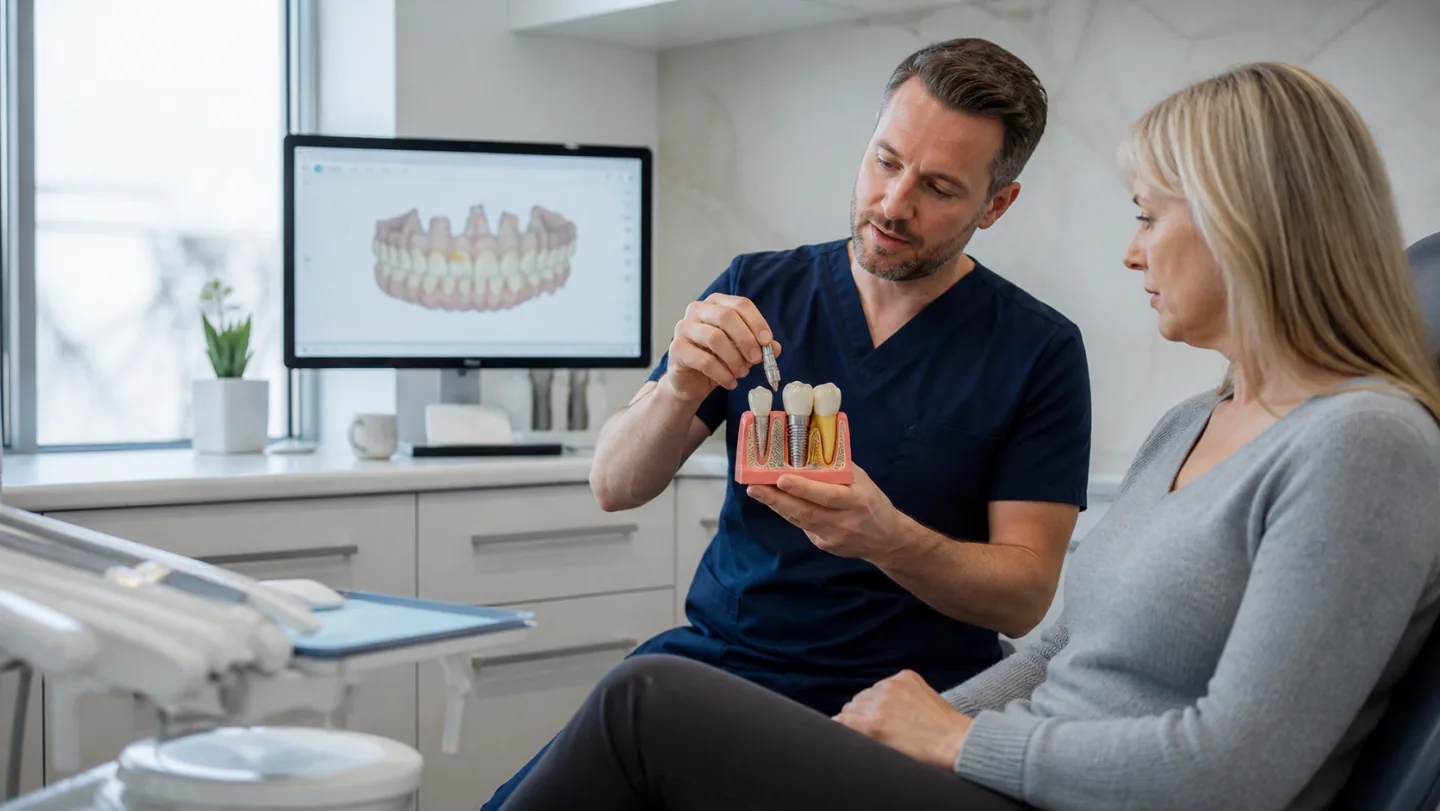
A dentist explaining a single dental implant with a jaw model and scan
When decay took the tooth

Dental Implants for Bridgwater Residents

Losing a tooth to a cavity that went too far often leaves people uneasy about the teeth still standing. If you’re a Bridgwater resident in that situation, this page looks at what an implant can replace and what it leaves to you and your hygiene routine.

Let's find a time

Request an appointment

We’ll call to confirm your appointment. For urgent care, please call us directly.

Replacing one, protecting the others

An Implant Can’t Decay, but Your Other Teeth Still Can

The material of an implant isn’t vulnerable to cavities, which some people find reassuring after losing a tooth that way. What it can still suffer from is disease in the surrounding gum and bone, if plaque is allowed to sit around it. And the natural teeth beside it remain as prone to decay as before.

So a sensible plan looks at both the missing tooth and the habits or risks that led to its loss. Bridgwater is an area in Winnipeg, and the examination that pulls those threads together would take place at Winnipeg North Dental on McPhillips Street.

Explore dental implants
A spacious treatment room with a light blue dental chair, a sink and a white overhead light arm
A paper bib laid on a pale blue chair in the operatory.

No cavities, still care

Implants resist decay, but the gum and bone around them need protection from plaque.

Neighbours need attention

Teeth on either side keep their own decay risk and benefit from the same steady cleaning.

Prevention in the plan

Understanding why the tooth was lost helps make the replacement and the rest of your mouth last.

Planning after decay

Fix the gap and lower the risk.

An assessment after decay-related loss usually covers two questions: whether an implant suits the space, and what can reduce the chance of losing another tooth.

Assessing the gap

The site is examined and imaged to judge whether there’s room and bone for an implant that supports a useful tooth.

  • Scans reveal how the jaw has changed since the extraction.
  • Lingering infection at the site affects when surgery can happen.
  • Thin or shrunken bone may call for a graft.
  • The shape of the future crown decides the implant’s angle.

Looking at the rest of the mouth

Other teeth are checked so that any early decay can be dealt with and your routine can be reviewed.

  • Existing fillings and crowns are examined.
  • Areas that are hard to clean are pointed out.
  • Diet and dry mouth questions may come up.
  • Regular check-ups help catch problems early.

Whether an implant suits you is decided at the assessment. A bridge or denture may also be discussed, each with its own effect on the remaining teeth.

How the implant comes together

Four stages, from planning to crown.

Treatment is spread across phases because healing has to happen between surgery and restoration. Timing differs from person to person.

Request your visit
  1. 01

    Plan around the final crown

    Records and imaging fix the position of the replacement tooth, and the implant is planned to match.

  2. 02

    Surgical placement

    In a surgical visit the post is set into the jawbone where the old root used to be, with bone added if your plan needs it.

  3. 03

    Integration

    Bone grows around the implant while you protect the site and attend checks; how long this takes varies.

  4. 04

    Crown and maintenance

    The abutment and crown are fitted, the bite is reviewed, and maintenance care begins.

Before you come

Think about what led to the loss.

If you know why the tooth decayed so badly, such as missed visits, a hard-to-clean spot or a sugary habit, it’s helpful to share that. Nobody expects a perfect history.

Mention any other teeth that have been sensitive or painful recently. They may be worth checking at the same visit.

Bring these questions

  • Is there enough bone left where the tooth came out?
  • Are any of my other teeth showing early decay?
  • How would I clean between the implant and my own teeth?
  • What can I change to lower my decay risk?
A waiting room corner with a large potted snake plant, white chairs and a patterned rug
A consultation desk with leather chairs and a framed landscape print on a white wall

A potted snake plant beside white chairs in the waiting area.

Moving forward

No lectures, just a plan.

Feeling embarrassed about decay is common and understandable. The visit is about where you go from here, and you can ask questions at whatever level of detail you like.

Ask openly

Questions about decay, diet or cleaning are welcome at any point.

Raise worries about surgery

If the implant procedure makes you nervous, say so early.

Take your time

You can go home and think before choosing a replacement.

Keeping it all healthy

Daily care for implant and teeth alike.

The bacterial film that causes cavities in natural teeth does different harm at an implant, irritating the gum and threatening the bone beneath. One thorough routine, backed by regular maintenance, deals with both problems at once.

01

Hygiene visits

Professional maintenance and check-ups look after the implant and the teeth around it.

02

Clean the edges

Pay attention to where the implant crown meets the gum and the teeth beside it.

03

Call about changes

Movement in the crown, a bite change or pain on pressure should be reported.

Bleeding, swelling, drainage or a bad taste that persists around an implant warrants a phone call to the clinic at (204) 338-3003.

Talk with our team
The facade of Winnipeg North Dental with a round logo, bold lettering and blinds in the windows

Winnipeg North Dental

Unit-5 2358 Mcphillips Street, Winnipeg, MB R2V 4J6
Get directions (opens in a new tab)
The McPhillips Street clinic

Tooth Replacement Planning for Bridgwater Residents

You’d be examined at Winnipeg North Dental, Unit 5, 2358 McPhillips Street, Winnipeg. A directions link is placed beside this address.

The form passes on your request without confirming a slot. The clinic then reaches out to arrange your visit.

Questions about coverage?

Talk with our team before your visit or learn about CDCP.

A little clarity before your visit

Your questions, answered.

Helpful details about dental implants in Bridgwater.

Ask our team
How does a Bridgwater resident book an implant assessment after an extraction?

Use this page or phone (204) 338-3003 to request a visit. The examination is carried out at our McPhillips Street clinic in Winnipeg.

Can an implant get a cavity?

Cavities aren’t possible in an implant. Infection and inflammation of the tissue around it are, which is why brushing and cleaning beside it still matter.

Will an implant protect my other teeth from decay?

Not on its own. Your natural teeth keep their own risk, which depends on cleaning, diet and regular care.

Does it matter how long ago the tooth was taken out?

Bone can change after a tooth is removed. Imaging shows whether there’s enough for an implant or whether grafting might be considered.

Could a bridge be an option instead?

Possibly. A bridge usually relies on the teeth beside the gap, so their condition and decay risk matter when comparing options.

Is the implant crown made to look like my other teeth?

The restoration is designed with appearance, bite and cleaning in mind, and those details are discussed during planning.

A fresh start

Plan the replacement and the prevention.

If you live in Bridgwater, request an assessment here and the clinic will contact you to schedule it.

Patient testimonials

Kind words from our patients

★★★★★ 5.0 from 440+ reviews on Google

Close to home

Areas we serve

Convenient dental care on McPhillips Street for families across northwest Winnipeg and nearby communities.

Explore all service areas

A healthier smile is one visit away

Ready for dental care that feels genuinely comfortable?

✓ New patients welcome ✓ Direct insurance billing ✓ Multilingual team

How can we help?

Our dental team is here for you.

Ready to book or have a question? Choose the option that works best for you.

For urgent dental concerns, please call us directly.

Send us a message

Our team will reply during clinic hours.



