Skip to content
Winnipeg North Dental
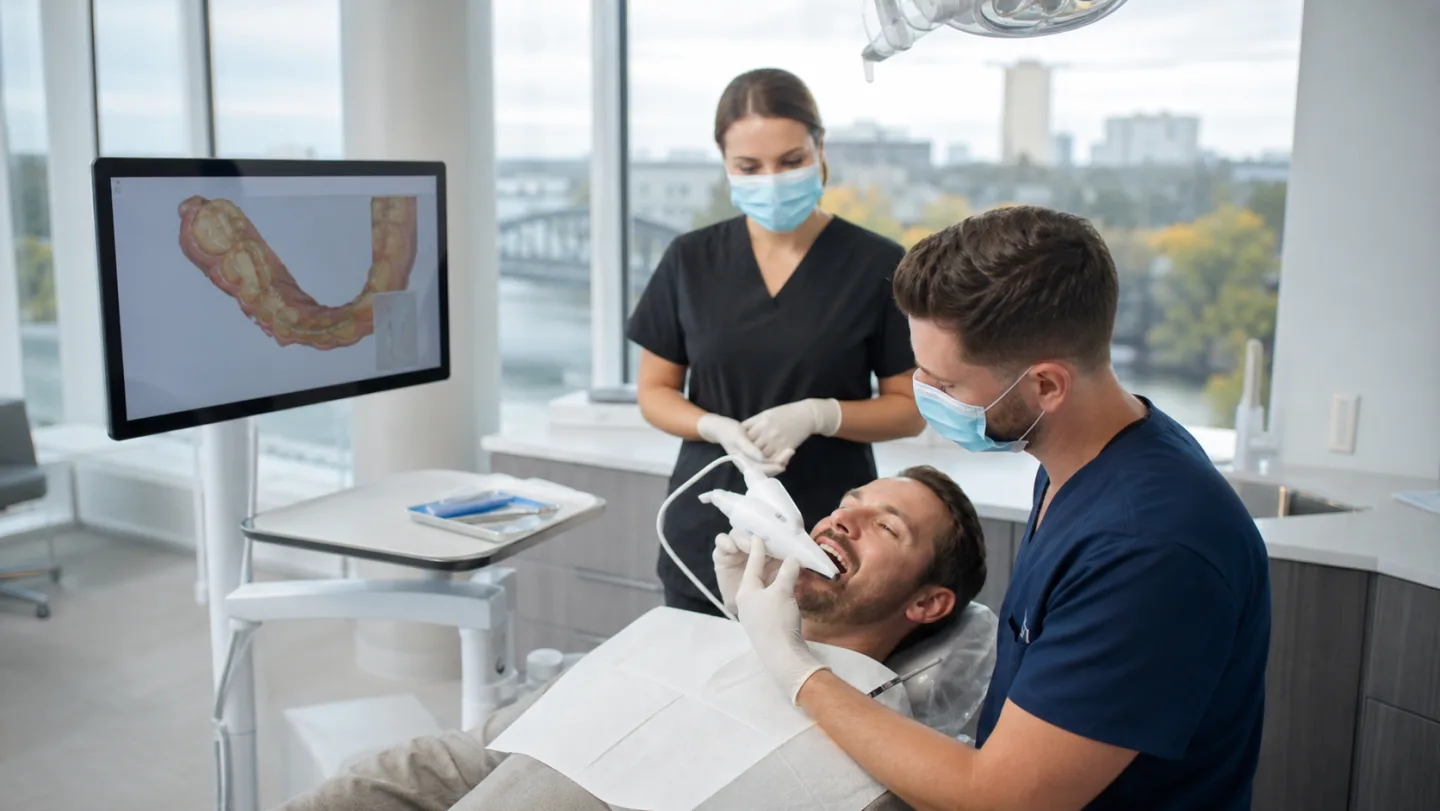
A dentist using a digital scanner while planning a custom dental crown
Food keeps catching there

Dental Crowns for Transcona Residents

After every meal, your tongue goes straight to that one spot. For Transcona residents picking fibres out from around a crowned tooth, here is why it may happen, why it deserves a look, and how it gets examined at our McPhillips Street clinic in Winnipeg.

Let's find a time

Request an appointment

We’ll call to confirm your appointment. For urgent care, please call us directly.

That one stubborn gap

Trapped Food Is a Sign Worth Reporting

Neighbouring teeth normally touch closely enough to steer food away from the gum. When something changes that contact, or when a crown edge no longer sits as it should, bits of a meal can wedge in and stay. Annoyance is the first effect, but lingering plaque at that site is the bigger concern.

Transcona is in Winnipeg, and residents with this complaint can have the tooth checked at Winnipeg North Dental on McPhillips Street. Trapped food does not automatically point to a failed crown, and the dentist’s job is to find out what lies behind it.

Explore dental crowns
Pale teal dental chair with its tray arm and white overhead light in a Winnipeg North Dental treatment room
A pale teal chair with a tray arm, in a room with wood-toned cabinets and a sink.

Contact counts

How a crown touches the tooth beside it plays a large part in whether food can slip through.

Shredded floss is a clue

Floss that tears at the same place every time is a detail that the dentist will want to hear about.

Decay is the risk

Debris sitting at a crown’s margin puts the natural tooth there, which can still decay, under pressure.

Tracking down the cause

What could be behind a food trap.

A few different things can produce the same irritation. An examination narrows them down and shows whether the crown, the tooth, or the gum needs attention.

Possible explanations

The cause may lie with the crown, with the natural tooth beneath it, or with what surrounds them.

  • New decay along the crown’s margin.
  • A crown that has loosened or started to shift.
  • Gum changes that alter the space beside the tooth.
  • Contact with the neighbouring tooth that has changed.

What may be recommended

The response depends on the cause, so treatment for this complaint can range quite widely.

  • A targeted cleaning-routine adjustment for that site.
  • Treatment for gum concerns found during the exam.
  • Repair of decay beside or beneath the margin.
  • Replacing the crown if that proves to be sensible.

If replacing a crown is recommended, the new one has its contacts with neighbouring teeth checked before it is cemented.

If a new crown is needed

How contacts are built into a replacement.

Replacement follows the usual path of a custom crown: preparing the tooth and taking records, then placing the final piece at a later appointment. Timing varies by material and plan.

Request your visit
  1. 01

    Investigating the site

    The dentist inspects the old crown, tooth, root, gums and bite, using X-rays when appropriate, and confirms whether replacing it would help.

  2. 02

    Capturing the fine details

    With the tooth numbed and shaped, a scan or impression records its surroundings, and a bite record and shade information complete the set.

  3. 03

    Holding the space

    A temporary may keep the gap between teeth stable and protect the prepared tooth. Brush it softly, and do not chew sticky foods on it.

  4. 04

    Checking the contacts

    Before final cementation, the fit, bite and looks are reviewed along with how the crown meets its neighbours, and adjustments are made as necessary.

A week of noticing

Describing the problem before you come in.

A clear account can narrow the search considerably. For a week or so, pay attention to when the trouble happens and what seems to set it off.

Do mention whether you see any blood or fraying when you clean that site, even if it seems minor.

What to pay attention to

  • Which foods get stuck, and on which side of the tooth.
  • Whether floss catches, frays or snaps at that spot.
  • Any soreness, swelling or odd taste around the gum.
  • When you first noticed the trouble starting.
Winnipeg North Dental reception area with a modern desk, wood-look floor and frosted glass partition
Black office chairs around a white table beside a window with striped blinds at Winnipeg North Dental

A modern reception desk near frosted glass, and a white table with black chairs.

Small but maddening

A nuisance is a valid reason to book.

You do not need pain to justify a visit, and the irritation of constant picking is enough on its own. If treatment becomes necessary, local anesthetic is the normal choice when a tooth is prepared, and the plan can be explained first.

An exam is a simple start

Having the area looked at does not commit you to anything. You can hear what was found and then decide.

Treatment sensations

Should preparation be needed, the tooth is frozen, but some buzzing or a sense of pressure may remain.

Tender gums

A gum that has been irritated may stay sore for a while. Sensitivity after treatment should also improve.

Keeping that spot clear

A daily routine for the tricky site.

Even a well-fitted crown relies on clean margins. Over the long term, structure under the crown, bite pressure, grinding, hygiene at its edge, decay, gum changes and injuries all influence how well it does.

01

Clean it every day

Work between those two teeth daily, and ask to be shown a technique if the spot is awkward to reach.

02

Keep examinations booked

Your crown, tooth and gums can be reviewed at the exams recommended for you, catching changes early.

03

Do not just live with it

If food begins to trap again, or floss starts to shred, tell the clinic and do not simply pick at it.

Avoid digging at the gum with sharp objects. If you cannot clear something or the area is sore, get in touch with the clinic.

Talk with our team
Winnipeg North Dental exterior with its logo, name and 204-338-3003 displayed above frosted windows

Winnipeg North Dental

Unit-5 2358 Mcphillips Street, Winnipeg, MB R2V 4J6
Get directions (opens in a new tab)
Getting it sorted

Crown Checks on McPhillips Street for Transcona Residents

Transcona residents have their crowns reviewed and treated at Winnipeg North Dental, Unit 5, 2358 McPhillips Street, Winnipeg. Map directions are a click away on this page.

Call (204) 338-3003 about swelling, pain or a loose crown. The online form is for routine requests and is not final until the clinic has confirmed it.

Questions about coverage?

Talk with our team before your visit or learn about CDCP.

A little clarity before your visit

Your questions, answered.

Helpful details about dental crowns in Transcona.

Ask our team
Is food getting stuck around a crown a real problem?

It can be. Trapped debris encourages plaque at the crown’s margin, where the natural tooth is open to decay. It is worth telling the clinic about.

Does trapped food mean my crown was badly made?

Not necessarily. Decay, loosening and gum changes can develop over time, so the exam looks at what is going on now, and no one has to be blamed.

Can the contact between my crown and the next tooth be changed?

It depends on the cause and on the crown itself. The dentist can explain what could be done after looking at how the two teeth meet.

Why do my gums feel sore near that tooth?

Food pressing against the gum can make it tender, though it can have other causes too. If soreness persists or you notice swelling, call the clinic.

Do I need a new crown to fix this?

Replacement is one possibility, not a foregone conclusion. Some causes can be managed in other ways, and the dentist bases advice on the exam findings.

How does someone in Transcona get a food trap examined?

Use the form on this page, or call (204) 338-3003, and say which tooth is affected. It is then looked at on McPhillips Street in Winnipeg.

Stop picking at it

Have that food-trapping crown looked at.

Send your request to the McPhillips Street clinic and they can follow up about a convenient time.

Patient testimonials

Kind words from our patients

★★★★★ 5.0 from 440+ reviews on Google

Close to home

Areas we serve

Convenient dental care on McPhillips Street for families across northwest Winnipeg and nearby communities.

Explore all service areas

A healthier smile is one visit away

Ready for dental care that feels genuinely comfortable?

✓ New patients welcome ✓ Direct insurance billing ✓ Multilingual team

How can we help?

Our dental team is here for you.

Ready to book or have a question? Choose the option that works best for you.

For urgent dental concerns, please call us directly.

Send us a message

Our team will reply during clinic hours.



