Skip to content
Winnipeg North Dental
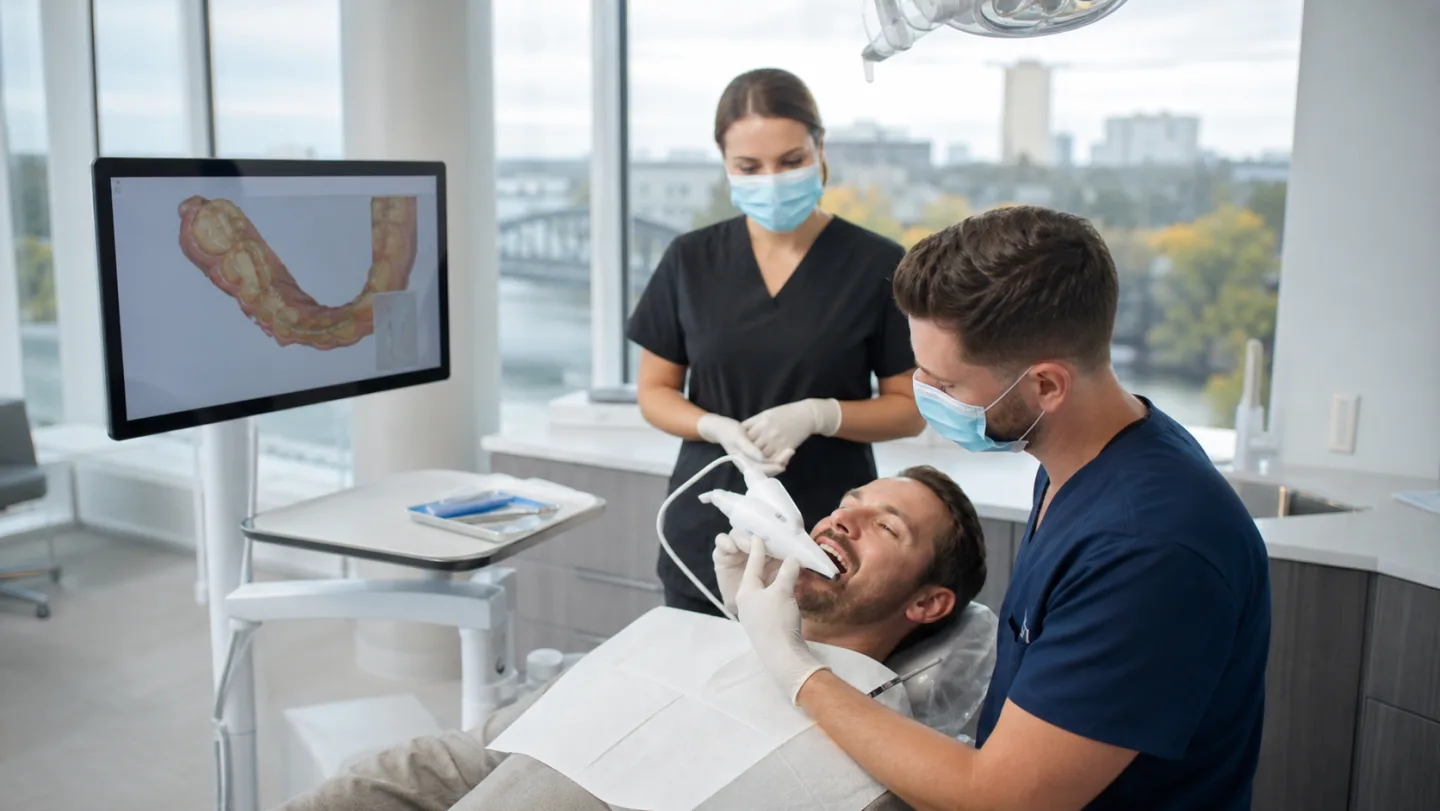
A dentist using a digital scanner while planning a custom dental crown
Does a crown come with a root canal?

Dental Crowns for St. Vital Residents

Plenty of people assume the two treatments always arrive as a pair. If you live in St. Vital and that worry is making the word crown sound bigger than it is, this page untangles when they are linked and when they are not, at Winnipeg North Dental on McPhillips Street.

Let's find a time

Request an appointment

We’ll call to confirm your appointment. For urgent care, please call us directly.

Two separate treatments

Outside Protection and Inside Treatment Are Different Jobs

A crown works on the outside of a tooth. It covers and reinforces the visible part when damage has left it fragile. Root canal therapy works on the inside, treating inflammation or infection in the nerve and pulp. Plenty of crowned teeth never have root canal treatment at all.

St. Vital is in Winnipeg, and people who live there are examined for crowns at our McPhillips Street clinic. The two treatments do overlap in one common situation: a back tooth that has had root canal therapy may need a crown to lower the chance of it fracturing. The examination is what tells you which situation is yours.

Explore dental crowns
Black office chairs around a white desk beneath a framed landscape print in the Winnipeg North Dental consultation room
A white table and black chairs in a quiet room with a snake plant by the blinds.

Not automatically paired

A crown may be recommended for a cracked or heavily filled tooth whose nerve is perfectly healthy.

A common combination

Molars and premolars treated internally are often covered afterward to help guard against splitting.

The nerve can change later

Even with a crown in place, deep decay or cracks can sometimes inflame the nerve in later years.

Telling the cases apart

Three ways a crown and a root canal can relate.

Seeing the possibilities side by side can calm the fear that one treatment always drags the other along.

A crown with no root canal

Here the issue is structural, and the inside of the tooth is not the concern.

  • An enormous older filling leaving only slim sections of natural enamel.
  • A fractured cusp on a tooth that otherwise responds normally.
  • Biting surfaces ground down so far that the tooth needs a new top.
  • A misshapen tooth that needs its outline rebuilt for chewing.

A crown after a root canal

This pairing comes up most often with teeth at the back of the mouth.

  • A molar weakened once decay and the canals have been cleaned out.
  • A premolar that would be at higher risk of breaking under chewing.
  • A treated tooth that also had a large amount of structure missing.
  • Coverage planned to protect the investment in the internal treatment.

Whether your tooth needs either treatment, or both, is settled by examination and X-rays. This page cannot tell you which applies.

If a crown is all you need

The usual path to a finished crown.

Custom crowns generally involve one appointment for preparation and records and a later one for placement, with the gap depending on material and plan.

Request your visit
  1. 01

    Looking at root and nerve

    The dentist evaluates the tooth, root, gums and bite. Appropriate X-rays help show whether the inside of the tooth raises any concern.

  2. 02

    Freezing and shaping

    Local anesthetic is given and the tooth is reduced to receive the crown, followed by a scan or impression, bite record and shade notes.

  3. 03

    Covering it in the meantime

    You may leave with a temporary crown protecting the tooth. It calls for careful cleaning and a break from sticky foods.

  4. 04

    Final checks and cementing

    The dentist verifies fit, contacts, bite and appearance, makes any adjustment needed, and then cements the crown.

Clearing up the worry

Questions about the nerve inside.

If root canal therapy is what you are really anxious about, say so. Asking directly tends to bring clearer answers than wondering.

Symptoms like lingering pain, swelling or sensitivity that will not settle are worth phoning about rather than waiting for a routine visit.

Ask the dentist

  • Do the X-rays show any sign of trouble with this tooth’s nerve?
  • Is the crown being recommended because of structure, the nerve, or both?
  • If I already had a root canal here, why does the tooth now need covering?
  • What signs after a crown would suggest the nerve needs attention?
Dental treatment chair in soft blue beside a sink and storage cabinets in a Winnipeg North Dental room
White chairs, potted plants and a blue bench below abstract artwork in the Winnipeg North Dental waiting area

A blue dental chair under bright lighting, and a waiting area with a patterned rug.

When anxiety runs ahead

Taking it one treatment at a time.

Hearing one recommendation can make you brace for a list of others. Preparation for a crown is normally carried out with local anesthetic, and you may notice pressure or vibration. Afterward, mild sensitivity or tender gums may occur and should ease.

Ask what is actually planned

Knowing exactly which treatment is proposed for your tooth can shrink a vague worry into something specific.

Sensitivity is not a verdict

Short-term twinges after preparation are common and do not by themselves mean the nerve is failing.

Speak up if it worsens

Pain that grows rather than fades is a reason to contact the clinic so the tooth can be reassessed.

Watching the tooth over time

Keeping the crowned tooth healthy.

Crown material cannot decay, but the natural tooth around and below the margin can. Brushing well, cleaning between teeth and attending exams helps catch changes in the crown, tooth or gums.

01

Guard the margin

New decay at the crown edge is one route by which trouble can reach the tooth, so clean there with care.

02

Reduce heavy forces

Grinding can stress both crown and tooth, and a protective appliance may be worth asking about.

03

Let X-rays keep watch

Regular examinations, with X-rays when appropriate, allow the area under the crown to be monitored.

Reach out to the clinic if the crown shifts, feels too high, catches food, tears floss, or sensitivity is not getting better as expected.

Talk with our team
Winnipeg North Dental’s frosted windows and doors beneath a large sign with its logo and phone number

Winnipeg North Dental

Unit-5 2358 Mcphillips Street, Winnipeg, MB R2V 4J6
Get directions (opens in a new tab)
Getting the tooth examined

Crown Assessments for St. Vital Residents on McPhillips Street

For St. Vital residents, crown assessment and treatment happen at Winnipeg North Dental, Unit 5, 2358 McPhillips Street, Winnipeg. The directions link gives you the way there.

With swelling, a fractured tooth or strong pain, call (204) 338-3003 rather than using the form. An online request is only a request until the clinic confirms a time.

Questions about coverage?

Talk with our team before your visit or learn about CDCP.

A little clarity before your visit

Your questions, answered.

Helpful details about dental crowns in St. Vital.

Ask our team
Does every crown require a root canal first?

No. Many crowns are placed on teeth with healthy nerves, simply because the outer structure needs reinforcing after damage or a large filling.

Why would a tooth need a crown after a root canal?

A back tooth can be at greater risk of fracture after internal treatment, so coverage may be recommended to help protect it.

Can a tooth with a crown still need a root canal later?

It can. Deep decay, cracks, earlier damage or other factors may inflame the nerve before or after the crown goes on.

Is sensitivity after a crown a sign of nerve trouble?

Not necessarily. Some temporary sensitivity is expected and should improve. If it lingers or grows, contact the clinic so it can be checked.

How will I know which treatment my tooth needs?

An examination of the tooth, root, gums and bite, along with appropriate X-rays, is how the dentist works out what is required.

Where are St. Vital residents seen for a crown?

Assessment and crown appointments take place at the clinic on McPhillips Street in Winnipeg. Request a time here or phone (204) 338-3003.

Find out what the tooth needs

Have the tooth examined before you assume the worst.

Request an assessment at the McPhillips Street clinic, and the clinic will follow up with you to set the appointment.

Patient testimonials

Kind words from our patients

★★★★★ 5.0 from 440+ reviews on Google

Close to home

Areas we serve

Convenient dental care on McPhillips Street for families across northwest Winnipeg and nearby communities.

Explore all service areas

A healthier smile is one visit away

Ready for dental care that feels genuinely comfortable?

✓ New patients welcome ✓ Direct insurance billing ✓ Multilingual team

How can we help?

Our dental team is here for you.

Ready to book or have a question? Choose the option that works best for you.

For urgent dental concerns, please call us directly.

Send us a message

Our team will reply during clinic hours.



