Skip to content
Winnipeg North Dental
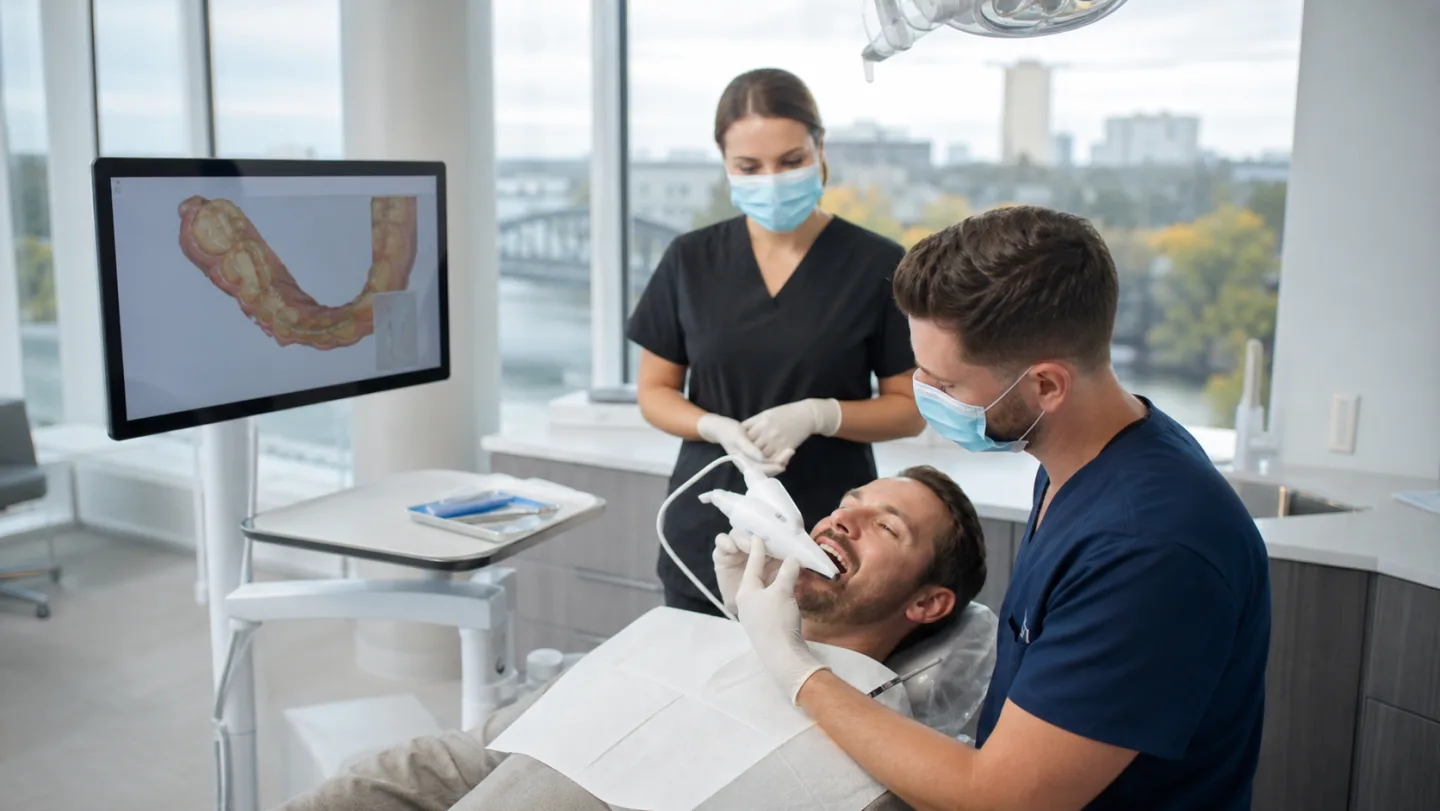
A dentist using a digital scanner while planning a custom dental crown
Back on the ice with a crown

Dental Crowns for Southdale Residents

If you play a contact sport, train hard or simply lead a physical life, you may wonder how a crowned tooth will hold up. For Southdale residents with that question, this page looks at impact, clenching and protection, with treatment at Winnipeg North Dental on McPhillips Street.

Let's find a time

Request an appointment

We’ll call to confirm your appointment. For urgent care, please call us directly.

Crowns and physical activity

Force, Impact and a Tooth That Needs Support

A crown restores strength and a new chewing surface to a tooth that has been weakened, perhaps by a past blow, a crack or a large filling. Trauma is also one of the factors that affects how long a crown serves you. So for people who play contact sports or clench during heavy effort, thinking about protection is a natural part of the plan.

Southdale is in Winnipeg, and people from there have crowns planned and placed at our McPhillips Street clinic. Mention your sports and training at the assessment. It gives the dentist a fuller sense of the forces your teeth face and opens a conversation about guarding the crown afterward.

Explore dental crowns
Abstract painting and a white desk in the bright reception area of Winnipeg North Dental
A white reception desk with a glass partition and a blue and white painting.

Talk about your activities

Contact sports, weightlifting and other strain all add to the picture of how your teeth are used.

Clenching under effort

Many people bite down hard while lifting or competing, and that pressure is worth mentioning.

Protection is a fair question

Asking whether a mouthguard or other appliance suits you can help protect both crown and teeth.

What took the hit

Damage that a crown is designed to address.

When a filling alone would not give a tooth enough support, a crown covers its visible portion and spreads chewing forces across a restored surface.

Common reasons for a crown

Several of these can follow a hit to the mouth, though wear and decay play a part too.

  • A tooth knocked during play that has since fractured or chipped badly.
  • A back tooth needing extra protection following root canal work.
  • Older restorations so broad that the tooth around them is fragile.
  • Cracked or flattened cusps from years of clenching under load.

Active-life factors to raise

These details help the dentist understand the conditions your crown will face.

  • Which sports you play and whether contact to the face is likely.
  • Whether you already wear a mouthguard, and how well it fits.
  • Grinding or bracing your jaw during workouts or at night.
  • Any earlier injuries to the same tooth or the teeth beside it.

Your training log tells part of the story, and the examination tells the rest. Material and suitability are settled once the tooth itself has been looked at.

Getting it done

Crown appointments, start to finish.

Expect at least two sittings for a custom crown: one to shape and record the tooth, another to place what was made. Material and plan decide how far apart they fall, which helps when you are working around a sports calendar.

Request your visit
  1. 01

    Assessing the foundation

    The dentist reviews the tooth, root, gums and bite with suitable X-rays, which matters especially if the tooth has taken a blow.

  2. 02

    Preparing the tooth

    Once freezing takes hold, the dentist trims the tooth to make room for its cover, then gathers a scan or impression, shade details and a bite record for the lab.

  3. 03

    Taking it easy with the temporary

    A temporary may cover the tooth for now. It is less sturdy, so avoid sticky food and ask whether to pause contact sport until placement.

  4. 04

    Fitting the permanent crown

    Before anything is permanent, the new crown is seated and judged for fit, how it touches its neighbours, how you close on it and how it looks, with tweaks made prior to cementing.

Planning around your schedule

Questions for an active patient.

If you have games, races or a training block coming up, it is reasonable to ask how treatment fits around them.

If a tooth is broken or knocked loose during play, phone the clinic rather than sending an online request.

Bring these up

  • Should I avoid contact sport while wearing the temporary crown?
  • Would a mouthguard need to be refitted once the crown is in?
  • Does clenching during training affect the material recommended?
  • What should I do if the crown takes a hit later on?
Dental treatment chair in soft blue beside a sink and storage cabinets in a Winnipeg North Dental room
White chairs, potted plants and a blue bench below abstract artwork in the Winnipeg North Dental waiting area

A cushioned blue chair in a treatment room, and plants beside a sunlit window.

In the treatment chair

Sitting still is the main task.

For someone used to moving, holding still may feel like the hard part. The tooth is ordinarily numbed before shaping, leaving you aware of pushing or a buzz more than pain, and any gum soreness or twinges in the days after should fade.

Rest after preparation

Giving the tooth a quiet day or two after shaping is sensible, especially before any hard physical effort.

Notice clenching

If you catch yourself bracing your jaw in the chair, let it relax, and mention the habit to the dentist.

Report odd bites

After an intense workout, a crown that suddenly feels high or sore deserves a call to the clinic.

Keeping it in play

Long-term care for an athlete’s crown.

Hard training does nothing for the thin strip of natural tooth bordering your crown, and that strip can still develop cavities. Give it a careful brush and clean between the teeth daily, and keep your exam visits so the whole area is reviewed.

01

Wear protection consistently

Trauma is one of the things that shortens crown life, so ask whether a guard is right for your sport.

02

Clean around the edge

Brushing well and cleaning between teeth helps prevent decay at the border where crown meets tooth.

03

Get checked after a knock

Even without obvious damage, a blow to a crowned tooth is worth having looked at during your next visit or sooner.

Contact the clinic if your crown shifts, feels high, snags floss, gathers food, or remains sensitive longer than you were told.

Talk with our team
Winnipeg North Dental’s frosted windows and doors beneath a large sign with its logo and phone number

Winnipeg North Dental

Unit-5 2358 Mcphillips Street, Winnipeg, MB R2V 4J6
Get directions (opens in a new tab)
Between seasons or mid-season

Crown Care for Southdale Residents at McPhillips Street

Southdale residents are seen for crown treatment at Winnipeg North Dental, Unit 5, 2358 McPhillips Street, Winnipeg. Open the directions link for a map to the clinic.

A tooth broken in a game or one that is hurting should be reported by phone at (204) 338-3003, not by form. Form requests are confirmed by the clinic before they stand.

Questions about coverage?

Talk with our team before your visit or learn about CDCP.

A little clarity before your visit

Your questions, answered.

Helpful details about dental crowns in Southdale.

Ask our team
Can I keep playing contact sports with a crown?

Raise this at your assessment, since the answer depends on your sport and your tooth. Trauma affects crown longevity, so ask how to protect the tooth during play.

Should I wear a mouthguard after getting a crown?

Asking whether a guard or other protective appliance suits you is sensible, especially if your sport carries a risk of impact.

What if my crown gets hit during a game?

If it loosens, breaks, feels high or the tooth hurts, phone the clinic. A blow can affect the crown or the tooth beneath it.

Is a temporary crown strong enough for training?

A temporary is meant for short-term protection and needs gentle treatment. Ask whether to ease off contact activity until the final crown is placed.

Does clenching while lifting harm a crown?

Heavy bite forces and grinding influence how long a crown lasts. Mention the habit so the dentist can factor it into your plan.

How does a Southdale athlete arrange a crown visit?

Send a request on this page or call (204) 338-3003, mentioning your sport. All crown appointments are at the clinic on McPhillips Street in Winnipeg.

Protect the tooth you play with

Book an assessment before the next season.

Submit the form for the McPhillips Street clinic, and the clinic will contact you to agree on an appointment time.

Patient testimonials

Kind words from our patients

★★★★★ 5.0 from 440+ reviews on Google

Close to home

Areas we serve

Convenient dental care on McPhillips Street for families across northwest Winnipeg and nearby communities.

Explore all service areas

A healthier smile is one visit away

Ready for dental care that feels genuinely comfortable?

✓ New patients welcome ✓ Direct insurance billing ✓ Multilingual team

How can we help?

Our dental team is here for you.

Ready to book or have a question? Choose the option that works best for you.

For urgent dental concerns, please call us directly.

Send us a message

Our team will reply during clinic hours.



