Skip to content
Winnipeg North Dental
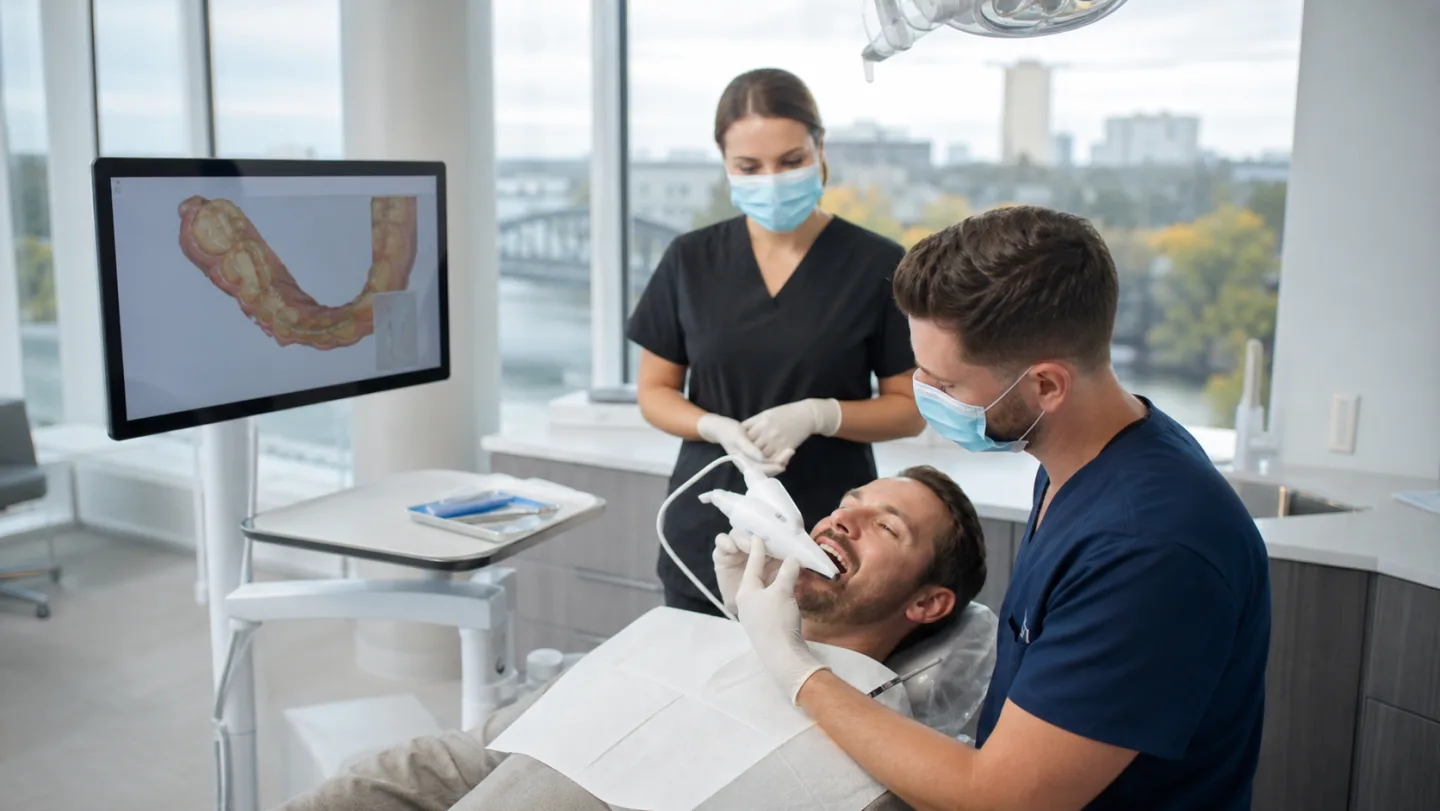
A dentist using a digital scanner while planning a custom dental crown
Crown words, translated

Dental Crowns for Shaughnessy Park Residents

Dental terms can go by fast when you are lying back in a chair. Shaughnessy Park residents can use this plain-language guide to the words they may hear when a crown is discussed at our McPhillips Street clinic.

Let's find a time

Request an appointment

We’ll call to confirm your appointment. For urgent care, please call us directly.

A small glossary for patients

Crown Terms in Everyday Language, for Shaughnessy Park Patients

If you have nodded along while someone mentioned margins and contacts, you are in good company. Those words carry precise meanings for dental professionals, but no one expects you to know them already. Understanding a few of them makes it much easier to follow your own treatment and ask a sharper question.

So here is the vocabulary, more or less in the order you would meet it during crown care at Winnipeg North Dental on McPhillips Street in Winnipeg. If a word comes up that you do not recognize, stop and ask what it means. Whether a crown suits your tooth is still something only an assessment can settle, and a clear explanation is part of that.

Explore dental crowns
White meeting table with a keyboard and tall black chairs in a Winnipeg North Dental consultation room
A consultation room with a keyboard resting on a white table.

Crown

A custom cover over the visible part of a tooth, which restores its shape and protects it.

Margin

The edge where the crown meets your natural tooth, and the place to keep especially clean.

Contacts

The points at which a crown touches the teeth beside it and the ones it bites against.

Two groups of terms

The words you may hear, sorted.

Some of these describe why a crown is being considered, and others describe how it gets made. Knowing which is which helps you follow along.

Words about your tooth

You are most likely to hear these during the examination, when your dentist is explaining what has been found.

  • Fracture: a break in the tooth, which can be small or large.
  • Structure: the healthy natural tooth that is still there.
  • Root canal therapy: treatment for inflammation or infection inside a tooth.
  • Foundation: the tooth, root and gums that a crown has to rely on.

Words about your crown

These tend to come up once a crown has been recommended and the work of making it begins.

  • Preparation: numbing and shaping the tooth to make room for its cover.
  • Scan or impression: a detailed record of the shaped tooth’s form.
  • Shade: the colour information used to guide the appearance of the crown.
  • Cementation: securing the finished crown onto the prepared tooth.

No list could hold every word you might encounter, so treat a confusing term as a good reason to interrupt and ask for plain language.

The vocabulary in order

Follow the appointments through their terms.

Typically a custom crown passes through clinical preparation and detailed records and then returns for placement. Lab timing varies with the material and with what has been planned.

Request your visit
  1. 01

    Assessment

    This word covers the look your dentist takes at the tooth, root, gums and bite, plus appropriate X-rays, ahead of deciding if a crown fits your situation.

  2. 02

    Preparation and records

    Your tooth is frozen and reduced in shape. Records then follow: a scan or impression, a bite record that notes how your teeth meet, and a shade.

  3. 03

    Temporary crown

    This short-term cover may shield a prepared tooth, hold its spacing and let you function until the permanent piece is finished. Be gentle and avoid sticky foods.

  4. 04

    Try-in and cementation

    Try-in means testing the crown in place for fit, contacts, bite and appearance. Any adjusting comes next, and final cementation finishes the job.

Questions in your own words

Nothing you ask will sound silly.

Write down whichever words have confused you so far, even if you cannot spell them. You can also ask the dentist to point to what they are describing on an X-ray or a photo of your tooth.

Cost words matter too. Ask what an estimate includes, and bring your insurance or CDCP details so you can check what your plan means by its terms.

Jot these on a note

  • Any term from a past dental visit you never quite understood.
  • Your medications and details about your health history.
  • What you would like to know about this tooth above all else.
  • A way to take notes during the conversation, if that helps you remember.
Slatted window blind and a tall plant in the Winnipeg North Dental waiting area
Teal dental chair with its tray arm in a treatment room at Winnipeg North Dental

Window blinds in the waiting area, with a treatment chair in the smaller photo.

Knowing what you are feeling

A few comfort terms worth understanding.

Being told what a sensation is called, and why it happens, can take some of the mystery out of it. Ask for a running explanation if knowing what comes next helps you stay settled.

Local anesthetic

This is the numbing medicine, often called freezing, that is normally used for crown preparation.

Pressure and vibration

These sensations may remain even though the tooth is numb, so they are worth knowing about ahead of time.

Gum tenderness

Soreness around the gum line can come up after preparation for a while and is expected to ease.

Terms for later on

The language of long-term care.

Once your crown is on, a different set of words becomes useful. Knowing them helps you describe a problem more clearly when you call, and understand the answer you get back.

01

High bite

A crown that hits before your other teeth. It should be checked and adjusted, as waiting for the tooth to adapt is not the advice.

02

Interdental cleaning

Cleaning between teeth with floss or similar tools. It reaches the sides of the margin that a brush struggles to get to.

03

Recurrent decay

New decay in the natural tooth beside or under the margin. The crown itself cannot get a cavity, but the tooth it covers still can.

When something feels off and you do not have the word for it, describe it however you can and the clinic can take it from there.

Talk with our team
Sign reading Winnipeg North Dental over large front windows at the McPhillips Street clinic

Winnipeg North Dental

Unit-5 2358 Mcphillips Street, Winnipeg, MB R2V 4J6
Get directions (opens in a new tab)
The practical words

Where Shaughnessy Park Residents Have Crown Care

Shaughnessy Park is in Winnipeg, and residents have crown care at Winnipeg North Dental, Unit 5, 2358 McPhillips Street. The directions link gives you the details for your visit.

Requesting is not the same as booking: this page’s form asks for a time, then the clinic confirms it. To talk instead, call (204) 338-3003.

Questions about coverage?

Talk with our team before your visit or learn about CDCP.

A little clarity before your visit

Your questions, answered.

Helpful details about dental crowns in Shaughnessy Park.

Ask our team
What do people mean by a cap?

In everyday speech, cap is usually another word for a crown, meaning a cover over the visible part of the tooth. If someone says it about your tooth, ask them to confirm that is what they mean.

What is a bite record?

It captures how your upper and lower teeth come together. Along with a scan or impression, it guides the shape of the crown so it can work with your bite.

What does restoration mean in this context?

A restoration is any dental work that repairs a tooth, so fillings, onlays and crowns all count. Your dentist may use the word for your crown in particular.

What is the difference between fit and bite?

Fit describes how the crown sits on your tooth, while bite describes how it meets the teeth opposite. Both are checked at the try-in, along with contacts and appearance.

Does cementing mean the crown can never come off?

It means the crown is fixed in place for regular use, though it is not impossible for one to loosen. If yours ever moves, contact the clinic so it can be looked at.

What does full coverage mean compared with an onlay?

Full coverage means the crown surrounds the visible tooth. An inlay or onlay is custom-made too, but it covers only selected areas of a back tooth.

What should I say when requesting a visit from Shaughnessy Park?

Plain words are fine, such as this tooth broke or I was told I need a crown. Use the form or phone (204) 338-3003, and the clinic will reply about a visit in Winnipeg.

Plain answers welcome

Bring your questions, in whatever words you have.

Ask for a crown assessment at our McPhillips Street clinic, and we’ll be in touch to arrange the details.

Patient testimonials

Kind words from our patients

★★★★★ 5.0 from 440+ reviews on Google

Close to home

Areas we serve

Convenient dental care on McPhillips Street for families across northwest Winnipeg and nearby communities.

Explore all service areas

A healthier smile is one visit away

Ready for dental care that feels genuinely comfortable?

✓ New patients welcome ✓ Direct insurance billing ✓ Multilingual team

How can we help?

Our dental team is here for you.

Ready to book or have a question? Choose the option that works best for you.

For urgent dental concerns, please call us directly.

Send us a message

Our team will reply during clinic hours.



