Skip to content
Winnipeg North Dental
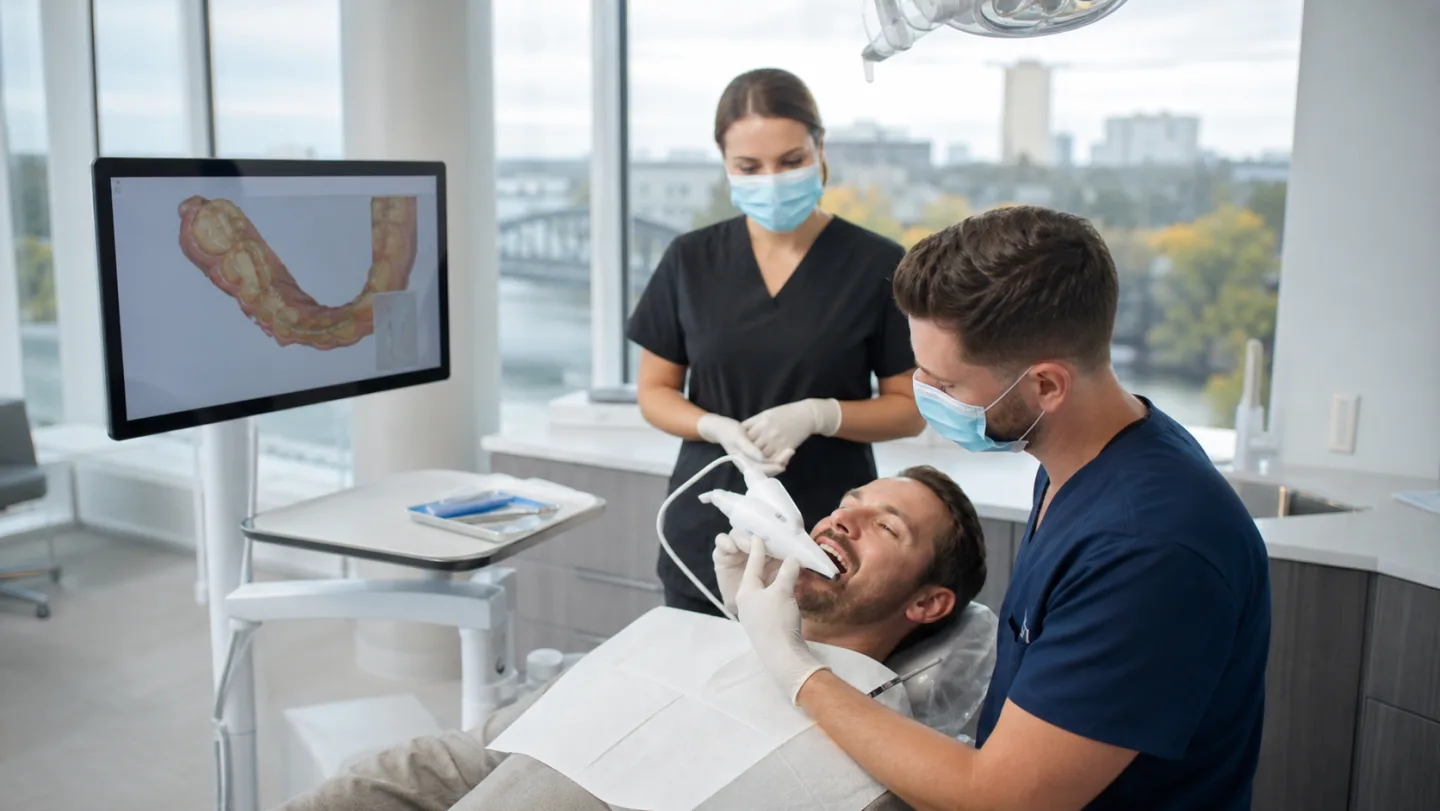
A dentist using a digital scanner while planning a custom dental crown
When a crown you already have acts up

Dental Crowns for Riverbend Residents

Floss that shreds, food stuck in the same spot, a bite that suddenly feels different. If an existing crown is bothering you in Riverbend, those signs are worth having examined.

Let's find a time

Request an appointment

We’ll call to confirm your appointment. For urgent care, please call us directly.

Your crown feels off

Troubleshooting an Existing Crown: For Riverbend Patients

Crowns are built to be durable, but they are not set-and-forget. Decay can begin at the edge where crown meets tooth, gums can change, and the nerve inside may become inflamed even after placement. Often the first hint is minor: a catching sensation, lingering sensitivity, or a feeling that the bite has shifted.

An examination helps show what is behind the symptom, and whether the crown needs an adjustment, replacing, or simply watching. Riverbend residents can have that examination at Winnipeg North Dental on McPhillips Street in Winnipeg, and if a new crown is called for, the work is done there too.

Explore dental crowns
Teal dental chair and equipment in a Winnipeg North Dental treatment room
Existing crowns are examined in treatment rooms like this at our clinic.

Signs you can spot

Shredded floss, trapped food, movement or a raised bite are all worth mentioning.

Look at what lies beneath

X-rays can help the dentist assess the root and tooth under the existing restoration.

Don’t wait on a loose crown

If a crown has started to move, please phone the clinic and explain what you are noticing.

Decoding the symptoms

What might be going on around the crown.

A symptom gives a hint rather than a diagnosis. Still, knowing the possibilities can help you describe what is happening and ask sensible questions.

Things you may be noticing

Make a note of what happens and when, because those details help guide the examination.

  • The bite feels high or lands on this tooth first.
  • The crown shifts slightly when you chew or press it.
  • Floss snags or frays every time you pass this tooth.
  • Sensitivity that has not improved the way you expected.

Things that may be behind it

Your dentist checks the restoration as well as the tooth and tissues around it to find a likely cause.

  • New decay in the natural tooth at the crown’s edge.
  • Changes in the gum tissue surrounding the tooth.
  • A crack, trauma or earlier damage affecting the tooth.
  • An inflamed nerve, which can occur even under an established crown.

The way forward depends on the cause and is decided after assessment. A replacement crown is only one of several possible outcomes.

How we look into it

From symptom to answer, and possibly a new crown.

The first part is detective work. If replacement becomes the plan, a custom crown generally needs a preparation visit, then a later placement visit, on a timeline set by material and plan.

Request your visit
  1. 01

    Hear the story

    Describe what changed, and when. The dentist examines the crown, tooth, gums and bite, then selects X-rays that would be useful.

  2. 02

    Explain the cause

    You hear what was found and which options make sense. That might mean a simple bite adjustment, watchful monitoring, or further treatment.

  3. 03

    If replacing, prepare

    With the tooth numbed, it is readied for a new restoration. New records, including a scan or impression, follow, and a temporary may be fitted.

  4. 04

    Fit the replacement

    The new crown gets tried on for fit, bite, contacts and appearance. Once those are satisfactory, it is adjusted as needed and cemented.

Keep some notes

A symptom diary beats a vague memory.

Symptoms tend to vanish as soon as you sit in the dental chair. Jotting down a few specifics beforehand gives the dentist more to work with.

Costs follow the treatment that is actually needed, so an estimate makes more sense after assessment. Coverage from insurance or CDCP varies by plan.

Details worth recording

  • Roughly how old the crown is, and where it was placed, if you know.
  • What triggers the symptom, such as cold drinks, chewing or flossing.
  • Any knock, injury or hard bite shortly before the trouble started.
  • Your present medications and health history updates.
Waiting room at Winnipeg North Dental, with chairs along a sunlit window
View of a dental chair and cabinets at Winnipeg North Dental

Our Winnipeg clinic’s waiting area.

A sensitive area

Tender around that tooth? Let’s go gently.

A tooth that has been bothering you can make anyone a little guarded. Tell the dentist which spots react, so that the area can be approached with this in mind during your examination.

Show us the exact spot

Pointing with a finger can be more useful than a description when a symptom is hard to explain.

If treatment is needed

Preparing a tooth for a new crown is normally done with the area numbed by local anesthetic.

Ask what happens next

Before you leave, make sure you know what the findings mean for this tooth.

Once the problem is sorted

Helping this not happen again.

Not all crown problems are preventable, but several of the causes respond to ordinary care. Bring the tooth’s margin into your routine and keep recommended appointments.

01

Rethink your flossing

Ask how to clean this specific tooth well, including any tricky spots along the gum line.

02

Consider grinding

If bite forces played a role, ask whether a protective appliance is worth considering.

03

Report new changes early

Contact the office whenever the bite, the fit or your sensitivity starts to differ from what is normal for you.

Examinations after treatment give the dentist a regular opportunity to review the tooth and its restoration.

Talk with our team
Winnipeg North Dental’s front entrance, seen from outside on McPhillips Street

Winnipeg North Dental

Unit-5 2358 Mcphillips Street, Winnipeg, MB R2V 4J6
Get directions (opens in a new tab)
Getting it checked

A Crown Check for Riverbend Residents

Riverbend is among the areas in the north part of Winnipeg. Your examination and any new crown take place at Winnipeg North Dental, Unit 5, 2358 McPhillips Street; click through for directions.

Filling in the form starts a request, which the clinic then confirms by getting in touch. A crown that is loose or has caused sudden trouble warrants a call: (204) 338-3003.

Questions about coverage?

Talk with our team before your visit or learn about CDCP.

A little clarity before your visit

Your questions, answered.

Helpful details about dental crowns in Riverbend.

Ask our team
Why does my floss keep shredding on one crown?

Repeated shredding is worth reporting, since it can point to an issue at the margin or contact area. An examination is how the actual reason gets identified.

My old crown suddenly feels high. How can that happen?

Changes to the crown, the tooth or surrounding teeth may play a role, so have the bite looked at instead of hoping it will pass. The dentist can check and adjust where appropriate.

Can you examine a crown placed by another dental office?

Yes, you can request an assessment regardless of where your crown was made. If you can get any past records, ask us whether they would be useful.

How can a tooth under a crown end up needing a root canal?

A nerve may become inflamed before or after placement because of cracks, deep decay, earlier damage or other factors. Your dentist evaluates this using an examination and appropriate X-rays.

Does an old crown have to be replaced just because of its age?

Age alone is not the measure. Crowns have no set expiry, so the decision depends on the condition of the crown, the tooth and the gums at the time they are assessed.

What is the quickest way for Riverbend patients to raise a crown problem?

Phoning (204) 338-3003 lets you describe the problem directly. For non-urgent concerns, you can also use the request form on this page for a visit to our McPhillips Street clinic.

Something feels wrong?

Get your existing crown examined.

Request an appointment at our Winnipeg clinic, and the staff will reply to work out a time. Call if it cannot wait.

Patient testimonials

Kind words from our patients

★★★★★ 5.0 from 440+ reviews on Google

Close to home

Areas we serve

Convenient dental care on McPhillips Street for families across northwest Winnipeg and nearby communities.

Explore all service areas

A healthier smile is one visit away

Ready for dental care that feels genuinely comfortable?

✓ New patients welcome ✓ Direct insurance billing ✓ Multilingual team

How can we help?

Our dental team is here for you.

Ready to book or have a question? Choose the option that works best for you.

For urgent dental concerns, please call us directly.

Send us a message

Our team will reply during clinic hours.


