Skip to content
Winnipeg North Dental
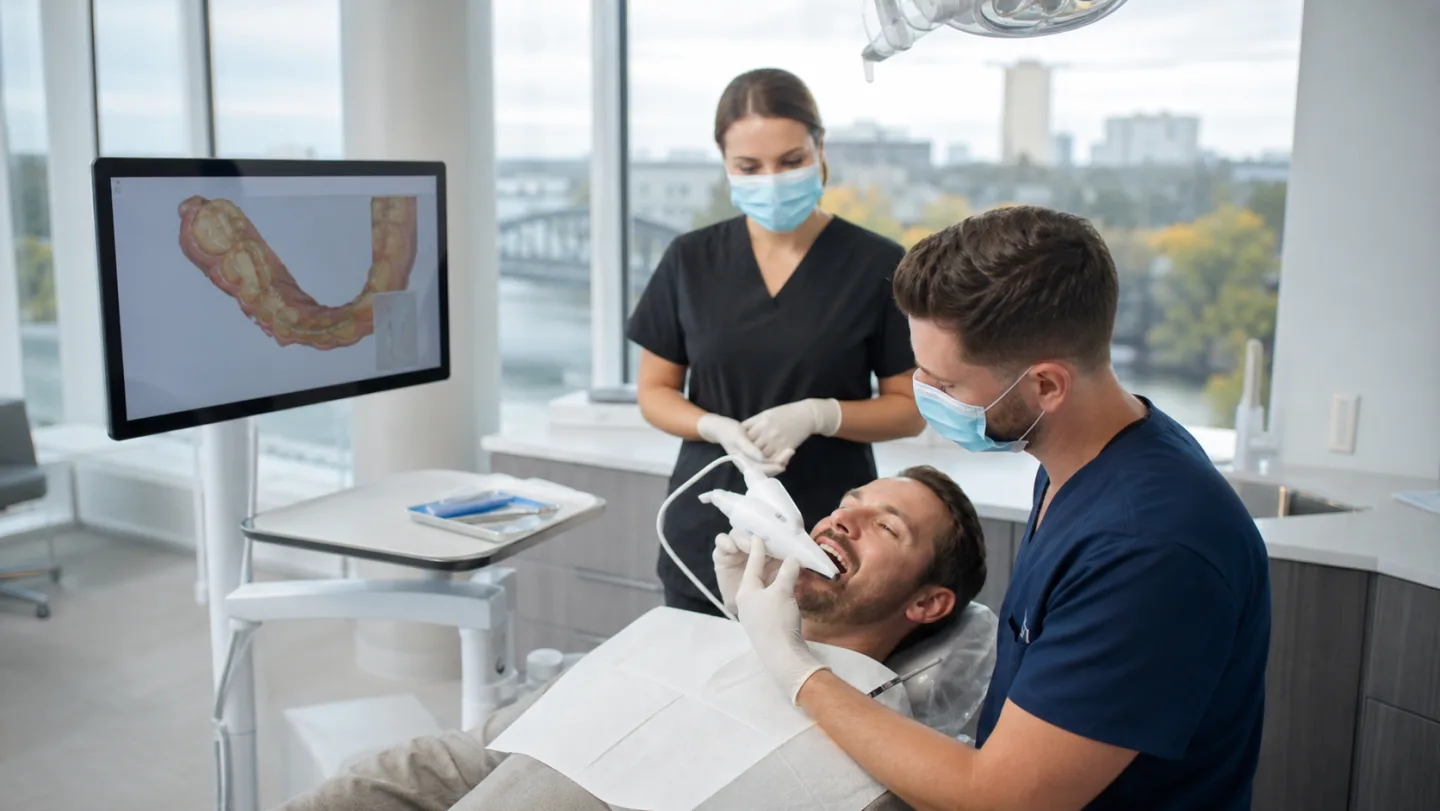
A dentist using a digital scanner while planning a custom dental crown
A jaw that tires easily

Dental Crowns for Pembina Residents

Keeping your mouth open for a long stretch can be the hardest part of dental work if your jaw gets sore or stiff. For Pembina residents facing a crown, this page explains which parts of treatment ask the most of your jaw, and what you might raise beforehand at Winnipeg North Dental on McPhillips Street.

Let's find a time

Request an appointment

We’ll call to confirm your appointment. For urgent care, please call us directly.

Planning around jaw comfort

Knowing Which Steps Need Your Mouth Open

Crown treatment has a few phases where the dentist needs clear access to the tooth: shaping it, then capturing its new form with a scan or impression. Placement involves trying the crown in, checking how you close, and cementing. If your jaw clicks, tightens or aches with effort, it helps the team to know this before work begins.

Pembina is in Winnipeg, and patients there are cared for at our McPhillips Street clinic. You do not need to explain the cause of your jaw trouble. Simply describing what happens when you open wide for a while gives the dentist useful information while planning your visits.

Explore dental crowns
Dental treatment chair in soft blue beside a sink and storage cabinets in a Winnipeg North Dental room
A treatment room with a light blue chair, an overhead light arm and a corner sink.

Tell the team early

Mentioning jaw stiffness when you request a visit means it is known before your tooth is prepared.

Ask about pauses

It is reasonable to ask whether you can signal for a moment to close and rest during treatment.

Bite checks matter more

If your jaw is sensitive, a crown that meets too firmly may be especially noticeable, so report it.

Why a crown was suggested

The tooth’s needs come first.

A crown covers the visible surface of a tooth when a filling would not provide enough strength. It restores shape and gives you a chewing surface designed around your bite.

Typical reasons for coverage

Crowns are often discussed when a tooth faces higher risk of breaking down further.

  • Remaining walls around an old restoration that have become thin and brittle.
  • Internal treatment on a premolar or molar leaving it vulnerable under load.
  • Cracks running through the tooth, or chewing surfaces flattened by wear.
  • Form so altered by damage that the tooth no longer chews properly.

Jaw details to share at assessment

These observations can help shape how treatment is approached for you.

  • Roughly how many minutes of opening wide you manage before it starts to ache.
  • Whether your jaw clicks, locks or tires on one side.
  • Any clenching or grinding you or others have noticed.
  • Past dental visits that left your jaw sore afterward.

A web page cannot look at your tooth or your jaw. Describe both at your appointment, and the examination will show whether coverage is right.

Visit by visit

Where the jaw effort falls.

Your jaw is asked to work at two main sittings: the one where the tooth is shaped and recorded, and a later one where the finished crown goes on. How far apart they fall hinges on what the crown is made of and on your plan.

Request your visit
  1. 01

    Assessment with X-rays

    The dentist examines the tooth, root, gums and bite, along with appropriate X-rays, before confirming that a crown is the right choice. Mention your jaw here.

  2. 02

    The longest open-mouth stretch

    With the tooth frozen, it is shaped, and a scan or impression records it. A bite record and shade details are also taken at this visit.

  3. 03

    A provisional crown

    In the interval, a stand-in cover may guard the shaped tooth and keep its neighbours from drifting. Soft chewing suits it, and toffee-like foods do not.

  4. 04

    Try-in and closing checks

    The crown is tried in, and you will close on it a few times so contacts and bite can be refined before it is cemented.

Before your preparation visit

Questions for a sensitive jaw.

Raising these in advance lets you both plan around your comfort. Frame them as questions, since what is possible depends on the treatment.

If your jaw is painful or locking right now, phone the clinic and describe what is happening.

Ask whether

  • I can raise a hand to stop and close my mouth for a moment.
  • a scan or an impression would be used, and how long each takes for my tooth.
  • anything about my bite should be checked before the crown is designed.
  • a protective appliance is worth considering if I clench.
White chairs, potted plants and a blue bench below abstract artwork in the Winnipeg North Dental waiting area
Abstract painting and a white desk in the bright reception area of Winnipeg North Dental

White chairs and plants by a window, and the reception counter beside a wooden floor.

Easing the strain

Small things that can help on the day.

The tooth itself is ordinarily frozen before shaping, which tends to leave a dull push or buzz rather than pain. Jaw fatigue is a separate matter, and saying when you need a break is entirely fair.

Agree on a signal

Before the shaping starts, you could ask whether lifting a hand will work as your cue that the jaw needs a short rest.

Move slowly afterward

Once you are home, give your jaw an easy evening, and some tooth sensitivity or gum soreness may also appear briefly.

Say if closing feels odd

A tired jaw can make it harder to judge the bite, so describe anything unusual during checks.

In the weeks after

Protecting the crown and your jaw.

Your jaw may forget the visit quickly, but the seam where crown and natural tooth join needs attention for years, because that natural edge is still open to decay. Daily brushing, flossing or similar cleaning, and regular exams keep watch over it.

01

Report a high bite promptly

A crown that hits before your other teeth should be adjusted rather than left for your jaw to compensate.

02

Consider grinding protection

Heavy forces affect crown longevity, so ask whether an appliance could reduce the strain on it.

03

Keep up your checkups

Routine visits are when the crown’s fit and the health around it can be reviewed over the years.

Contact the clinic if the crown moves, feels tall, traps food, frays floss, or sensitivity does not improve as you were told it would.

Talk with our team
Winnipeg North Dental’s frosted windows and doors beneath a large sign with its logo and phone number

Winnipeg North Dental

Unit-5 2358 Mcphillips Street, Winnipeg, MB R2V 4J6
Get directions (opens in a new tab)
Flagging your jaw when you book

Crown Visits for Pembina Residents on McPhillips Street

Pembina residents receive crown care at Winnipeg North Dental, Unit 5, 2358 McPhillips Street, Winnipeg. You will find a directions link next to the address.

If a tooth breaks or is aching, call (204) 338-3003 instead of filling in the form. The clinic will confirm before any request becomes a booked time.

Questions about coverage?

Talk with our team before your visit or learn about CDCP.

A little clarity before your visit

Your questions, answered.

Helpful details about dental crowns in Pembina.

Ask our team
Which crown visit keeps my mouth open the longest?

Usually the preparation appointment, because the tooth is shaped and then scanned or impressed. Placement involves try-in, bite checks and cementing.

Can I take breaks during crown preparation?

That is a good thing to ask before you begin. Agreeing on a hand signal ahead of time makes it easy to let the dentist know you need a moment.

Will my jaw be sore after the appointment?

Some people find their jaw feels tired after a long visit. Tooth sensitivity or tender gums can also occur afterward and should settle.

What if my new crown makes my jaw feel off?

Call the clinic. A crown that contacts too heavily should be checked and adjusted, not left for your bite to get used to.

Can a crowned tooth still need a root canal later?

Yes. Deep decay, cracks or earlier damage can inflame the nerve either before or after a crown is placed.

How do Pembina residents let the clinic know about jaw trouble?

Mention it in your request or when you phone (204) 338-3003. Your crown treatment itself takes place at the clinic on McPhillips Street.

Comfort is worth planning

Request a crown assessment and mention your jaw.

Use the request form for the McPhillips Street clinic, and someone from the clinic will be in touch to arrange timing.

Patient testimonials

Kind words from our patients

★★★★★ 5.0 from 440+ reviews on Google

Close to home

Areas we serve

Convenient dental care on McPhillips Street for families across northwest Winnipeg and nearby communities.

Explore all service areas

A healthier smile is one visit away

Ready for dental care that feels genuinely comfortable?

✓ New patients welcome ✓ Direct insurance billing ✓ Multilingual team

How can we help?

Our dental team is here for you.

Ready to book or have a question? Choose the option that works best for you.

For urgent dental concerns, please call us directly.

Send us a message

Our team will reply during clinic hours.



