Skip to content
Winnipeg North Dental
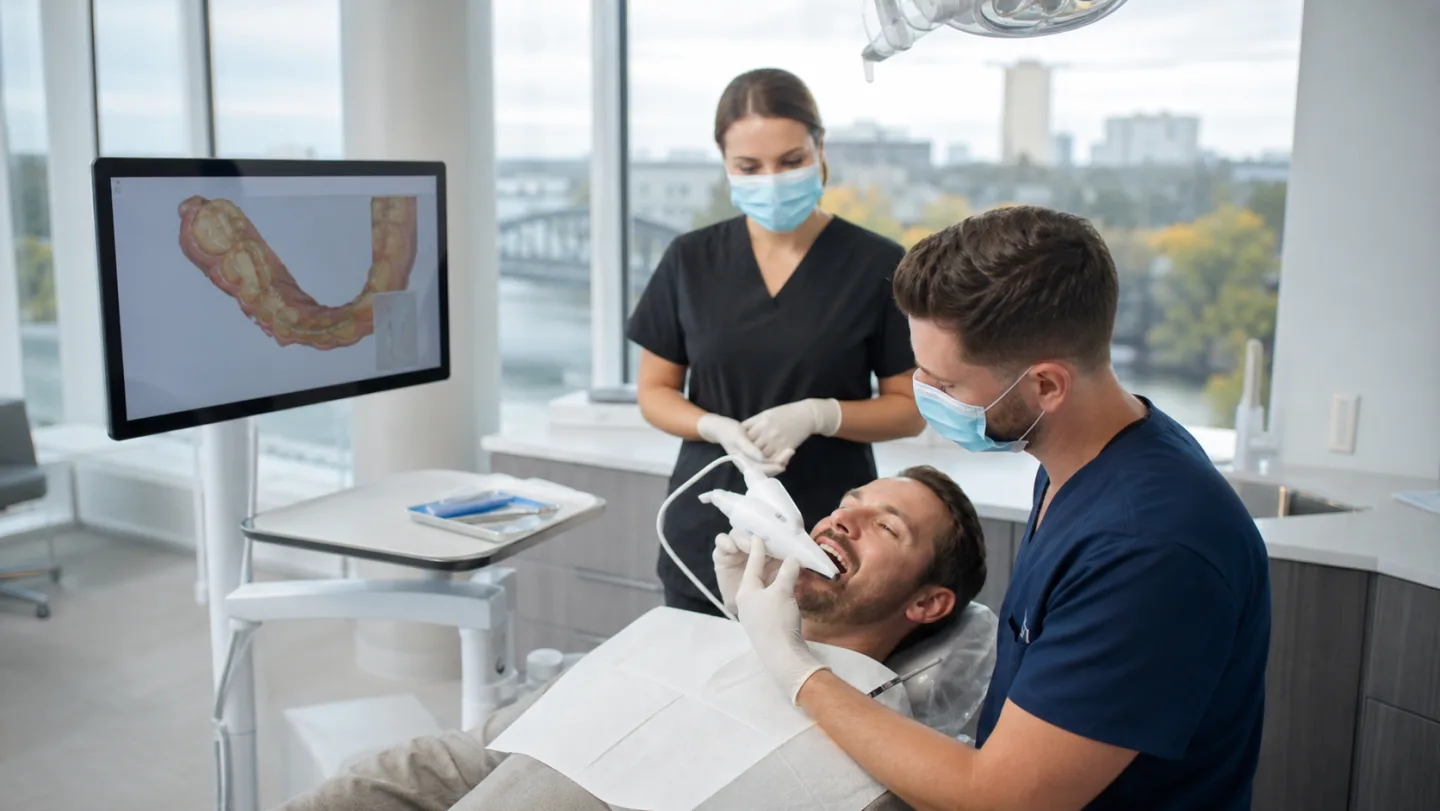
A dentist using a digital scanner while planning a custom dental crown
Chewing on the other side

Dental Crowns for Meadows West Residents

Moving food away from one tooth can become so routine that you hardly notice doing it. For Meadows West residents, that habit is a good reason for an examination at our clinic on McPhillips Street.

Let's find a time

Request an appointment

We’ll call to confirm your appointment. For urgent care, please call us directly.

A habit that says something

When You Have Been Protecting a Tooth, for Meadows West Patients

People are remarkably good at working around a tooth they no longer trust. You cut food smaller, steer it to the opposite side and stop thinking about why. Meals carry on as normal, more or less, and the tooth never quite gets dealt with.

That workaround does not tell anyone what is wrong. The cause could be a crack, a large old filling, decay, a gum problem or something else altogether, and a crown would only suit some of those. An examination at Winnipeg North Dental on McPhillips Street in Winnipeg can look for the reason. If a crown does turn out to fit, restoring chewing function on that side is one of the things it is designed to do.

Explore dental crowns
Reclined pale blue dental chair with a wood-look floor beneath it at Winnipeg North Dental
A reclined dental chair on a wood-look floor.

Name the habit

Telling the dentist you avoid one side is useful information, even without any obvious pain.

Find the reason

An evaluation aims to separate what can be repaired from what needs a different kind of care.

Chew with purpose

Where suitable, a crown gives the tooth a fresh surface planned to work with your bite.

What may be behind it

Avoiding a tooth is a clue, not a diagnosis.

Several different problems can lead you to spare one side. Some of them point toward a crown, and others do not, which is why looking first matters.

Where a crown enters the discussion

The source of trouble may be structural, leaving a tooth that needs broader reinforcement than a small repair could give.

  • Little natural tooth remains around a big filling.
  • A crack has appeared or a piece has broken away.
  • Heavy wear has altered the tooth’s chewing surface.
  • A back tooth treated by root canal has no coverage.

Where something else may come first

Other findings could call for a different plan, or for additional treatment before any restoration is considered.

  • Decay that can be managed with a smaller filling.
  • Inflammation or infection inside the tooth itself.
  • Gum changes that are affecting the area around it.
  • A filling or existing crown that is sitting too high.

These are only possibilities, and they are not meant for working out your own diagnosis at home. Your examination decides which of them, if any, applies.

Getting that side back

How crown treatment would run, if it is advised.

Most custom crowns have a preparation appointment and a later placement. Material and treatment plan both affect how much time falls in between.

Request your visit
  1. 01

    Tracking down the trouble

    Your dentist looks at the tooth, root, gums, bite and any appropriate X-rays. Describing what you avoid eating can help focus that search.

  2. 02

    Making space and taking records

    After numbing, the tooth is reshaped. A scan or impression, a record of your bite and shade notes then provide the guide for your final crown.

  3. 03

    Staying careful for a while

    A temporary crown may protect the area during production. It is not yet the moment to return to tough or sticky foods on that side.

  4. 04

    Testing how it chews

    Fit, contacts, bite and appearance are reviewed at the try-in. Adjustments can be made if needed, and the crown is cemented afterward.

Watch your next few meals

Notice which foods you are dodging.

Patterns like this are often unconscious. Paying attention at a few meals before your appointment can turn a vague sense of trouble into something clearer to describe.

It also helps to ask what treatment each possible finding would involve, and to get an estimate before you commit to anything.

Details you might jot down

  • Which side you favour, and for roughly how long you have done so.
  • Foods you now avoid, such as anything hard, cold or chewy.
  • Whether the discomfort comes when biting down or letting go.
  • Any older work on that side, such as a filling or crown.
Low blue bench and potted plant across from the white reception counter at Winnipeg North Dental
Black swivel chair at a white table beside a snake plant at Winnipeg North Dental

A blue bench near the reception counter, and a chair at a white consultation table.

You are allowed to be wary

A tooth you have guarded deserves gentle handling.

It makes sense to be protective of a tooth that has been bothering you. Mention it before anything begins. Local anesthetic is normally used for crown preparation, though pressure or vibration can remain noticeable.

Warn before testing

If biting on something is likely to hurt, let the dentist know before any bite check on that tooth.

Ask what is being tested

It can ease nerves to hear why a certain check is being done, so feel free to ask as it happens.

Report changes promptly

Worsening pain or swelling before your visit is a reason to phone the clinic rather than use the form.

Using both sides again

Returning to normal meals takes a little attention.

Some temporary sensitivity or gum tenderness can follow crown work, and it should improve. After that, a crown is meant to be chewed on, with the same regular care you give your other teeth.

01

If your bite feels high

Do not fall back on chewing elsewhere to avoid it. Contact the clinic, as a heavy contact should be checked and adjusted.

02

If the avoidance returns

Slipping back into favouring that side could signal something to review. A crowned tooth can still have problems beneath it.

03

Daily care at the margin

Brush thoroughly along the edge of the crown and clean between your teeth, because natural tooth there can still decay.

Attend your recommended examinations, so that the crown, tooth and gums on that side continue to be monitored.

Talk with our team
Winnipeg North Dental entrance doors with window film and planting beds along the sidewalk

Winnipeg North Dental

Unit-5 2358 Mcphillips Street, Winnipeg, MB R2V 4J6
Get directions (opens in a new tab)
Getting it looked at

An Examination for Meadows West Residents

Meadows West is in Winnipeg. Residents come to Winnipeg North Dental at Unit 5, 2358 McPhillips Street for crown care, and there is a directions link here to help you plan.

Phone (204) 338-3003 if a tooth is getting worse. For anything routine, the form sends your request, and the clinic then replies about a time.

Questions about coverage?

Talk with our team before your visit or learn about CDCP.

A little clarity before your visit

Your questions, answered.

Helpful details about dental crowns in Meadows West.

Ask our team
I can still eat fine on my other side. Does the sore tooth matter?

It is still worth checking. Working around a tooth leaves whatever is wrong unexplained, and the reason could be something that needs attention.

Does chewing on one side mean I need a crown?

Not on its own. It shows that something is bothering you, but the cause might call for a filling, gum care, root canal therapy or nothing beyond monitoring.

Why does it only hurt with certain foods?

Different foods test a tooth in different ways. Rather than guess at why, tell your dentist which ones cause the reaction, as it can help direct the examination.

After a crown, can I chew normally on that tooth again?

Restoring function is a goal of a crown, once it is placed and your bite has been checked. Report any heavy contact or lingering sensitivity to the clinic.

Can I use that side while I have a temporary on?

Ask for specific advice at your visit. A temporary offers short-term function but is not as robust, so sticky foods should be avoided and care taken.

What wording helps when a Meadows West resident calls about this?

Just say that you have been avoiding a tooth when chewing, and which side. Call (204) 338-3003 or use the form to ask for an assessment on McPhillips Street.

Stop working around it

Find out why that tooth has been off-limits.

Ask for an assessment on McPhillips Street. The clinic will be in touch afterward to agree on when you can come in.

Patient testimonials

Kind words from our patients

★★★★★ 5.0 from 440+ reviews on Google

Close to home

Areas we serve

Convenient dental care on McPhillips Street for families across northwest Winnipeg and nearby communities.

Explore all service areas

A healthier smile is one visit away

Ready for dental care that feels genuinely comfortable?

✓ New patients welcome ✓ Direct insurance billing ✓ Multilingual team

How can we help?

Our dental team is here for you.

Ready to book or have a question? Choose the option that works best for you.

For urgent dental concerns, please call us directly.

Send us a message

Our team will reply during clinic hours.


