Skip to content
Winnipeg North Dental
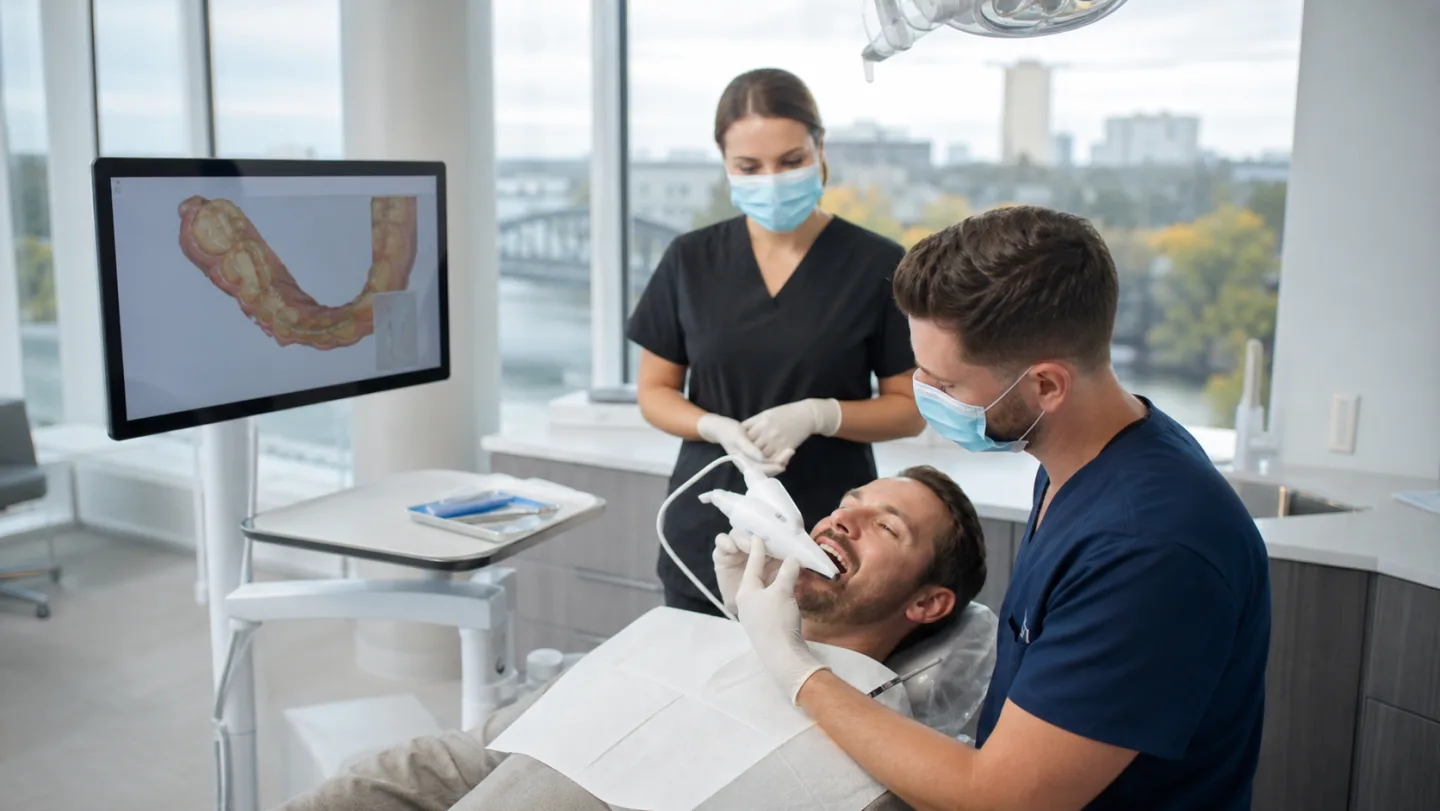
A dentist using a digital scanner while planning a custom dental crown
After a knock to the tooth

Dental Crowns for Kildonan Park Residents

A slip, an elbow or a hard bite on something unexpected can break a tooth in seconds. Kildonan Park residents can read how a damaged tooth is assessed for a crown at our McPhillips Street clinic, and when to call first.

Let's find a time

Request an appointment

We’ll call to confirm your appointment. For urgent care, please call us directly.

Sudden damage

When Injury Leaves a Tooth Weakened, for Kildonan Park Patients

Dental injuries tend to come without warning, and they leave you with a broken edge your tongue keeps finding. Some breaks are minor. Others take a good part of the tooth with them or leave a crack running through what is left, and the difference may not be obvious from a look in the mirror.

A crown is one possibility once things are clear, as it can reinforce a fractured tooth and restore its shape. It is not the first thing to decide, though. Your dentist at Winnipeg North Dental on McPhillips Street in Winnipeg would first look at the tooth, root and gums, because damage from an injury is not always limited to the part you can see. If you are in pain or worried, call the clinic instead of using the form.

Explore dental crowns
Abstract blue artwork on the wall above a bench near the Winnipeg North Dental reception desk
An abstract blue painting hangs above a bench beside the reception desk.

Call if it is urgent

If a tooth is painful or the injury worries you, a phone call is the right first step.

The root counts too

A tooth that looks mostly fine may still need the area beneath it to be examined.

Repairs vary

A small chip and a large fracture are not likely to call for the same treatment.

Sizing up the damage

What an injured tooth may need.

After an injury, the goal is to find out what has happened to the tooth and what support it now requires. A crown sits at the far end of a range of possible repairs.

When a crown may be raised

Full coverage is typically discussed when there is too little left for something smaller to hold on to.

  • A fracture has removed a sizeable part of the tooth.
  • A crack calls for reinforcement and a new surface.
  • An existing filling lost much of the tooth around it.
  • Root canal therapy became necessary, and a back tooth needs protection afterward.

What else may be looked at

Your dentist considers whether the injury affected more than the visible crown of the tooth.

  • X-rays as appropriate, to review the root.
  • The gums around the injured area.
  • Whether your bite still meets as it should.
  • Neighbouring teeth that took some of the same force.

A tooth can respond to trauma over time, so the dentist may talk about keeping an eye on it even after the visible damage has been repaired.

Once the dentist suggests coverage

How treatment usually unfolds.

Once things have been assessed, a custom crown commonly follows a route of preparation and records and then placement at a later visit. Timing varies with the material and treatment plan.

Request your visit
  1. 01

    Find out what happened

    Tell the dentist how and when the injury took place. They will evaluate the tooth, root, gums and bite with appropriate X-rays before confirming whether a crown suits it.

  2. 02

    Prepare the broken tooth

    With the area frozen, the remaining tooth is shaped. A scan or impression comes next, plus a bite record and shade information to guide the crown.

  3. 03

    Protect it in between

    A temporary may keep an already injured tooth covered while the final crown is made. Keep it clean with a soft touch, and stay away from anything sticky.

  4. 04

    Set the final crown

    After checks on fit, contacts, bite and appearance, the crown can be adjusted as needed, and is then cemented in position.

What to share with the clinic

The details of the injury help.

You do not have to be sure what is wrong. Simply explain what happened, what has changed since then and whether the tooth feels different, and the dentist can ask you for anything further.

Injury-related work may raise questions about costs. Ask about estimates, and bring your insurance or CDCP details so that you can review your plan.

What is helpful to tell us

  • How and when the tooth was hurt, in your own words.
  • Any pain, or sensitivity to hot or cold, since then.
  • Whether the tooth feels loose, or your bite seems different.
  • Your medications and health history, along with any earlier work on that tooth.
Consultation room with a low plant, patterned window blinds and black seats around a table
Blue upholstered bench and rug in the waiting area at Winnipeg North Dental

Black seats in a consultation room, and a blue bench and rug in the waiting area.

A shaken-up patient

It is normal to feel rattled after an injury.

An accident can leave you more anxious about dental treatment than usual, especially if the tooth is tender. Let the dentist know how you are feeling, and ask what each step involves before it happens.

Point out the sore spots

Tell the dentist which area hurts, so they know before they begin examining it.

Freezing for preparation

Crown preparation normally involves local anesthetic, although pressure can still be felt.

Take it one step at a time

If you feel overwhelmed, it is reasonable to ask for a moment during the appointment.

In the weeks and years ahead

An injured tooth deserves ongoing attention.

Even after a repair, trauma stays part of that tooth’s history. The nerve can become inflamed before or after a crown goes on, and previous damage is one of the possible reasons why.

01

Note any changes

Sensitivity that is not settling, new pain or a change in how the tooth feels are all good reasons to call the clinic.

02

Guard against repeat damage

New trauma can affect how long a crown lasts. If you play contact sports, ask whether a protective appliance is worth discussing.

03

Attend your exams

Recommended examinations give the dentist a regular look at the crown, the tooth underneath and the gums around it.

Keep up with brushing and cleaning between your teeth too, as the crown’s margin can still be affected by decay.

Talk with our team
Winnipeg North Dental front entrance with planted beds along the walkway

Winnipeg North Dental

Unit-5 2358 Mcphillips Street, Winnipeg, MB R2V 4J6
Get directions (opens in a new tab)
Where to bring the tooth

Crown Care for Kildonan Park Residents After an Injury

Kildonan Park is in Winnipeg. If your injured tooth needs assessment, the care takes place at Winnipeg North Dental, Unit 5, 2358 McPhillips Street, and directions are linked here.

A painful or worrying injury is a reason to phone (204) 338-3003 and not use the form. For a concern that can wait, send a request and the clinic will confirm with you.

Questions about coverage?

Talk with our team before your visit or learn about CDCP.

A little clarity before your visit

Your questions, answered.

Helpful details about dental crowns in Kildonan Park.

Ask our team
I broke a tooth. Should I book online or call?

Call the clinic at (204) 338-3003 if you are in pain or worried about the injury. The form works for non-urgent questions, because a request is only a request until the clinic confirms a time.

Does a chipped tooth always need a crown?

No. A small chip may call for a much smaller repair, while a larger fracture might need broader coverage. Your dentist determines this after looking at the tooth.

My tooth looks fine after the accident. Should it be checked?

If you are concerned about it, yes, get in touch. Damage is not always obvious from the outside, and the clinic can talk about whether an examination makes sense for you.

Could the tooth need a root canal after an injury?

It could. The nerve may become inflamed for reasons including previous damage, and this can happen before or after a crown is placed. Ask the dentist what to watch for.

Can a tooth that was knocked and repaired get a crown later?

It can be considered if the tooth needs more support. Suitability depends on what remains of it and on the condition of its root and gums.

What should I do about cost if the injury was unexpected?

Ask for an estimate once the dentist has looked at the tooth. The amount depends on the care recommended, and any coverage depends on your own plan.

How can someone in Kildonan Park have an injured tooth seen?

Start with a phone call to (204) 338-3003 and describe what happened. The clinic is on McPhillips Street in Winnipeg, and staff can talk about the next step with you.

Do not ignore a damaged tooth

Have the injured tooth looked at.

For a concern that is not urgent, send your request to our Winnipeg clinic and we’ll reply about a time. If it is painful, phone instead.

Patient testimonials

Kind words from our patients

★★★★★ 5.0 from 440+ reviews on Google

Close to home

Areas we serve

Convenient dental care on McPhillips Street for families across northwest Winnipeg and nearby communities.

Explore all service areas

A healthier smile is one visit away

Ready for dental care that feels genuinely comfortable?

✓ New patients welcome ✓ Direct insurance billing ✓ Multilingual team

How can we help?

Our dental team is here for you.

Ready to book or have a question? Choose the option that works best for you.

For urgent dental concerns, please call us directly.

Send us a message

Our team will reply during clinic hours.



