Skip to content
Winnipeg North Dental
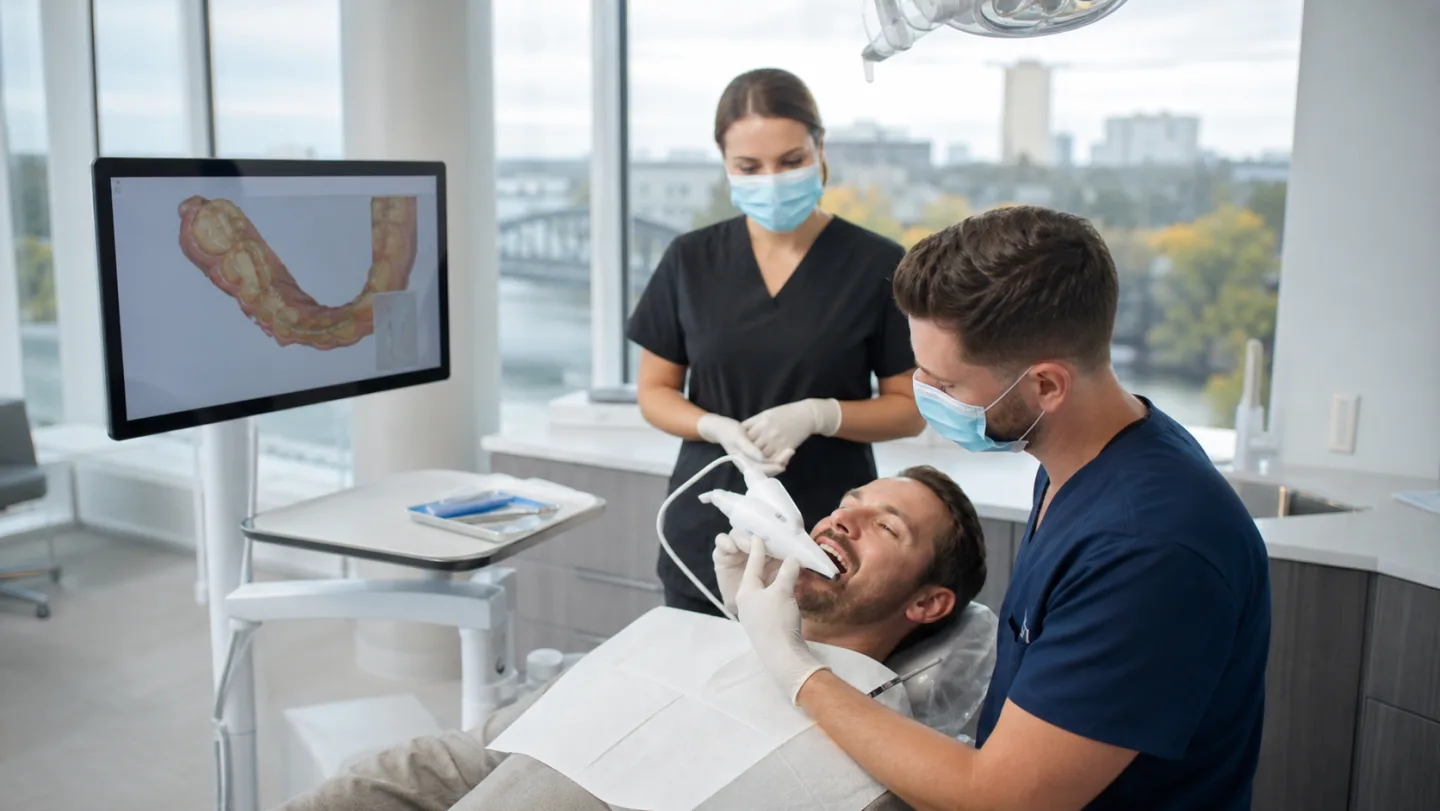
A dentist using a digital scanner while planning a custom dental crown
Crown, bridge or implant?

Dental Crowns for Inkster Gardens Residents

These three words get mixed up constantly. If you are unsure which applies to your tooth, Inkster Gardens residents can begin with the differences here, then have the tooth examined at our McPhillips Street clinic.

Let's find a time

Request an appointment

We’ll call to confirm your appointment. For urgent care, please call us directly.

Clearing up the confusion

Saving a Tooth or Replacing One? A Guide for Inkster Gardens Patients

The simplest way to separate these treatments is to ask one question: is the tooth still there? A crown goes over a tooth you still have, protecting and rebuilding it. A bridge is a fixed replacement for a missing tooth, held in place by teeth or implants. Implants belong to the replacement family too.

If your tooth is damaged but present, your dentist will want to know whether its foundation can support a crown. If it cannot, a conversation about replacement may follow. That judgment comes from an examination at Winnipeg North Dental, on McPhillips Street in Winnipeg, rather than from anything you could determine on your own.

Explore dental crowns
Reception area at Winnipeg North Dental with a glass divider and abstract wall art
The reception area at the clinic, with a white counter and abstract wall art.

Tooth still present

A crown is designed to protect and rebuild a tooth that remains in your mouth.

Tooth already gone

Replacing a missing tooth calls for a different conversation, about bridges or implants.

In between?

If a tooth is badly damaged, examination can show whether keeping it is realistic.

Protect or replace

Which question are you really asking?

Before comparing treatments, it helps to know which situation you are in. Your dentist’s findings may confirm it or change your thinking.

The tooth may be saved

A crown is one of the possibilities when a tooth is compromised yet its underlying structure looks able to carry one.

  • A large old filling with limited natural tooth around it.
  • A back tooth that has undergone root canal therapy.
  • Cracks or heavy wear calling for reinforcement.
  • A change in shape or structure that affects how it works.

Replacement may be discussed

When a tooth is already missing, or its foundation will not support a restoration, the discussion moves on.

  • A gap where a tooth was lost or removed earlier.
  • A root or supporting tissue the dentist has concerns about.
  • Too little remaining structure to hold a crown predictably.
  • A wider plan that involves several teeth.

Suitability for any of these treatments comes from your assessment, so treat these lists as a guide to your questions and not as a diagnosis.

If a crown is the answer

How crown treatment differs in practice.

Should the tooth be a candidate, treatment typically involves a preparation appointment, then a return visit for placement. The gap depends on the material and the wider plan.

Request your visit
  1. 01

    Judge the foundation

    The dentist inspects the tooth, its root, gums and bite. X-rays are used when appropriate, and this is the point where suitability is decided.

  2. 02

    Shape the existing tooth

    Because a crown fits over your own tooth, that tooth is numbed and shaped first. A scan or impression, bite record and shade details follow.

  3. 03

    Wait with protection

    A temporary might cover the tooth while the crown is created. During this time, go lightly with cleaning and pass on sticky foods.

  4. 04

    Set it in place

    Fit, contact with other teeth, bite and appearance are all reviewed at try-in. Refinements come first, and the crown is then cemented on.

Know your starting point

Come ready to describe what you are hoping for.

It helps to think about what you want from the tooth or the space: comfortable chewing, a fuller smile, or simply keeping a tooth for as long as sensibly possible. These goals shape the conversation.

Different treatments carry different costs and coverage rules. Ask for an estimate on each option being seriously considered, and check your insurance or CDCP details.

Clarify these for yourself

  • Whether the tooth is present, broken, or already gone.
  • Whether keeping your own tooth matters to you, and why.
  • Past advice about this tooth, including anything about bridges or implants.
  • Your medical history, medications and any recent health changes.
Treatment room at Winnipeg North Dental with a teal chair, a sink and wood-look cabinets
Winnipeg North Dental consultation room with a potted plant beside the window

One of the clinic’s treatment rooms, with its consultation room alongside.

A lot to take in

You do not need to choose on the spot.

Hearing several treatment names in one appointment can be overwhelming. Ask the dentist to explain them in simple terms, go back over anything unclear, and take the information away to think about.

Ask for pictures

If you find X-rays or diagrams useful, ask whether the dentist can show you what they are describing.

During preparation

Crown preparation normally involves local anesthetic, and you may notice pressure or vibration.

After preparation

Tenderness in the gum or brief sensitivity may follow, and should improve.

Whatever you choose

Crowned teeth need looking after, too.

Choosing a crown means your natural tooth stays in the picture, and it still needs your attention. These are the things to keep doing once the restoration is in place.

01

The natural part

Your own tooth beneath and beside the crown’s edge can develop decay, so it needs daily brushing and cleaning between teeth.

02

The check-ups

At examinations recommended for you, the dental team can see how everything is holding up.

03

The warning signs

A high bite, a crown that shifts, shredding floss, or sensitivity that is not improving should all prompt a call.

A crowned tooth can sometimes need a root canal later, because cracks, deep decay or earlier damage can inflame the nerve.

Talk with our team
Winnipeg North Dental’s storefront with a sign showing 204-338-3003

Winnipeg North Dental

Unit-5 2358 Mcphillips Street, Winnipeg, MB R2V 4J6
Get directions (opens in a new tab)
Getting an answer

Inkster Gardens Residents Can Have the Tooth Assessed on McPhillips Street

Inkster Gardens is in Winnipeg. Any assessment or crown treatment for residents is carried out at Winnipeg North Dental, Unit 5, 2358 McPhillips Street, and you can get your bearings with the directions link.

The clinic reviews each online request and contacts you to confirm a time. A broken tooth that is causing you trouble is better handled by phoning (204) 338-3003.

Questions about coverage?

Talk with our team before your visit or learn about CDCP.

A little clarity before your visit

Your questions, answered.

Helpful details about dental crowns in Inkster Gardens.

Ask our team
What is the difference between a crown and a bridge?

A crown covers a tooth that is still present. A bridge is a fixed way of replacing a missing tooth, supported by teeth or implants. Which one applies depends on your mouth.

Does a crown replace a missing tooth?

A crown on its own covers and protects an existing tooth. To fill a gap, your dentist would talk with you about replacement options, and you can read about bridges and implants on the pages linked below.

My tooth is badly broken. Can it still have a crown?

Possibly. That depends on how much structure is left and the health of the root and gums. Call the clinic so the tooth can be examined, and ask what your findings mean.

When does saving the tooth stop being realistic?

There is no general rule for this. It comes down to whether the foundation can predictably support a restoration, and your dentist can explain how your particular findings bear on that.

Is there any benefit in keeping my natural tooth?

That is a very good question for your assessment. The dentist can compare your options for this tooth, so that you can weigh them against what matters most to you.

What should I say when I call from Inkster Gardens?

Explain that you would like a tooth assessed and are unsure which treatment fits. Call (204) 338-3003 or use the form, and the clinic will reply about a visit at Unit 5, 2358 McPhillips Street, Winnipeg.

Sort it out

Learn which treatment your tooth really calls for.

Ask for an assessment at our clinic on McPhillips Street, and we will get back to you to arrange it.

Patient testimonials

Kind words from our patients

★★★★★ 5.0 from 440+ reviews on Google

Close to home

Areas we serve

Convenient dental care on McPhillips Street for families across northwest Winnipeg and nearby communities.

Explore all service areas

A healthier smile is one visit away

Ready for dental care that feels genuinely comfortable?

✓ New patients welcome ✓ Direct insurance billing ✓ Multilingual team

How can we help?

Our dental team is here for you.

Ready to book or have a question? Choose the option that works best for you.

For urgent dental concerns, please call us directly.

Send us a message

Our team will reply during clinic hours.



