Skip to content
Winnipeg North Dental
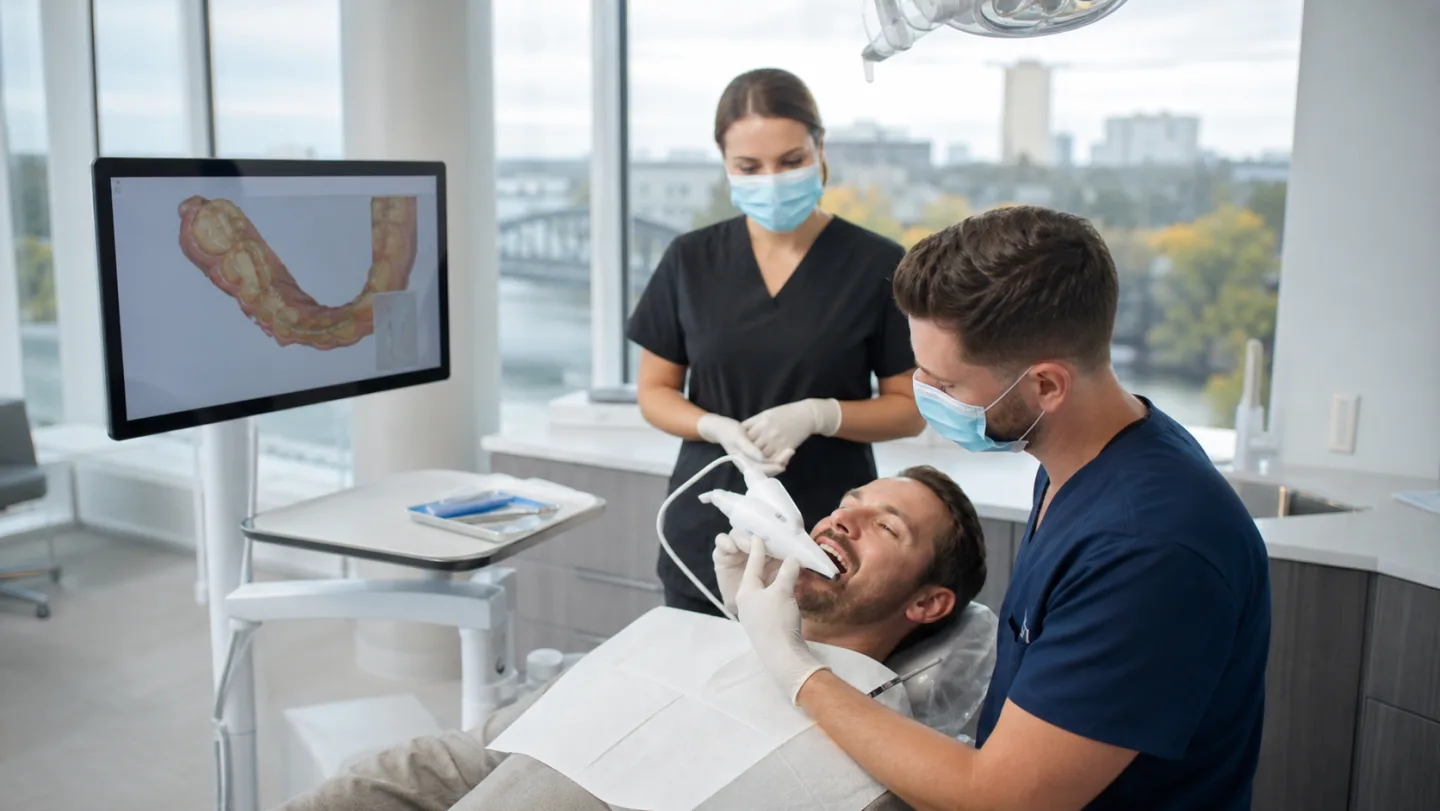
A dentist using a digital scanner while planning a custom dental crown
Ice, pens and bottle caps

Dental Crowns for Elmwood Residents

Most people have a tooth habit they would rather not admit to. If you live in Elmwood and suspect yours has caught up with a tooth, here is an honest look at hard habits, crowns, and the assessment offered at our McPhillips Street clinic in Winnipeg.

Let's find a time

Request an appointment

We’ll call to confirm your appointment. For urgent care, please call us directly.

Teeth used as tools

Everyday Habits Can Add Up on a Weak Tooth

Chewing ice, gnawing a pen, or tearing tape with your teeth puts a hard, narrow force on enamel that was built for food. A tooth that already carries a big filling or a fine crack has less margin for that kind of treatment, and it may eventually fracture or wear down.

Elmwood is in Winnipeg, and residents concerned about a tooth affected this way can have it assessed at Winnipeg North Dental on McPhillips Street. Where a crown is the suitable repair, it adds reinforcement and a fresh chewing surface. It does not make the tooth into a tool, however, so the habit is worth rethinking as well.

Explore dental crowns
Bright waiting area at Winnipeg North Dental with white chairs, a navy bench and a large striped window blind
White chairs and small tables by a window with striped blinds, and a navy bench.

No lectures

Mention your habits plainly. They are useful clinical information and nothing to feel embarrassed about.

Force matters

How your teeth meet and what they are asked to do both bear on a restoration’s longevity.

Crowns are not armour

A covered tooth can still be damaged, and a crown itself may chip or loosen under hard use.

Habit meets tooth

Hard use, and what a crown can do about it.

A restoration may rebuild what has been lost, yet the forces that caused the damage will still be there. Both halves of that equation deserve attention.

Where a crown can help

After an assessment, full coverage might be proposed for damage of these kinds.

  • A cracked tooth that needs reinforcement overall.
  • Heavy wear that calls for a new biting surface.
  • A fractured tooth with limited structure remaining.
  • A flattened shape that affects the way you chew.

Where you can help

None of these is a medical instruction, only common sense for looking after any tooth.

  • Keep scissors handy for packaging and tape.
  • Let drinks melt their ice, and leave it in the glass.
  • Notice whether you chew pens when concentrating.
  • Ask about clenching or grinding if you suspect either.

Whether the damage calls for a crown at all depends on the cause and on what remains of the tooth. A filling or onlay might suit a smaller problem.

If a crown goes ahead

Four stages to rebuilding a worn or cracked tooth.

A typical custom crown is prepared and recorded at one appointment, and fitted at a subsequent one. Your material and treatment plan set the spacing, so the timing can differ between patients.

Request your visit
  1. 01

    Finding the true cause

    A check of tooth, root, gums, bite and relevant X-rays shows what happened, and tells the dentist whether a crown would be a sensible repair.

  2. 02

    Making room for the crown

    After numbing, the tooth is shaped to accept a covering. How you bite is recorded along with the shade and a scan or impression of the prepared tooth.

  3. 03

    Treating the temporary kindly

    Your temporary, if you have one, is less sturdy than the final crown. Stay away from sticky foods and clean around it with extra gentleness.

  4. 04

    Testing before bonding

    The final crown is tried in to judge contacts, fit, bite and appearance. It is fine-tuned wherever needed, and then cemented into place.

Be candid with us

Tell the dentist what your teeth really do all day.

Nobody needs a confession, only an accurate account. A dentist deciding how to restore a tooth is better served by knowing what that tooth is regularly up against.

If you are unsure whether you grind at night, say so. A bed partner’s comment or morning jaw tightness may be worth mentioning.

Habits worth mentioning

  • Crunching ice or very hard candy.
  • Holding pens, pins or tools between your teeth.
  • Opening things with your teeth, however rarely.
  • Clenching when you are busy or under stress.
Consultation room at Winnipeg North Dental with a white desk, black chairs and a tall potted plant by the window
Blue dental chair beside light wood cabinets in a Winnipeg North Dental treatment room

A white consultation desk and black chairs, along with a blue treatment chair.

Nothing to be ashamed of

You can be honest about how the damage happened.

Worrying about being judged keeps some people from booking at all. Whatever caused the damage, the appointment is about the tooth and what it needs now. Your dentist normally uses local anesthetic for preparation, and you are free to ask about each step.

What numbing covers

Freezing takes care of sharp feeling at the tooth, but you could still sense some vibration or pushing.

How it may feel later

Tender gums and passing sensitivity are possible after shaping, and they should improve as time goes on.

When habits are hard to stop

Changing a long-standing habit is slow going. Being open about the struggle is helpful for everyone.

Breaking the cycle

Protecting the repair from the same old forces.

A crown’s lifespan is not fixed, and the way you use it is part of that. Supporting tooth structure, bite forces, grinding, margin hygiene, decay, gum changes and injury all weigh in.

01

Rethink hard objects

A new crown has no special immunity to ice or pens, so give it the respect you would like your teeth to get.

02

Ask about appliances

If grinding is part of your picture, raise whether a protective appliance is a good idea for your bite.

03

Report any movement

If the crown shifts, your bite seems high or floss tears at the same spot, let the clinic know about it.

Daily brushing and cleaning between teeth still matter, because the natural tooth at the crown’s margin can decay.

Talk with our team
Front of Winnipeg North Dental, showing dark siding, a white sign band and a glass door entry

Winnipeg North Dental

Unit-5 2358 Mcphillips Street, Winnipeg, MB R2V 4J6
Get directions (opens in a new tab)
Where to bring it

Cracked and Worn Tooth Care on McPhillips Street for Elmwood Residents

Elmwood residents receive crown assessment and treatment at Winnipeg North Dental, Unit 5, 2358 McPhillips Street, Winnipeg. The directions link can help you find it.

Something has just snapped and it hurts? Phone (204) 338-3003 and do not rely on the form, which is only a request that the clinic follows up.

Questions about coverage?

Talk with our team before your visit or learn about CDCP.

A little clarity before your visit

Your questions, answered.

Helpful details about dental crowns in Elmwood.

Ask our team
Can chewing ice really crack a tooth?

It can contribute, particularly with a tooth that already has a large filling or an existing crack. The dentist can look for signs of that kind of damage.

Can I chew ice once I have a crown?

It is wiser not to. Crowned teeth remain vulnerable to trauma and heavy force, and the crown itself is not designed to stand up to hard objects like that.

Do I have to admit to my habits at the appointment?

Nothing forces you to, but honest details help. Knowing how a tooth is used helps the dentist explain the damage and plan a suitable repair.

How can I tell if a habit has already caused damage?

Sometimes you cannot. Flattened edges, chips or sharp pain when biting are clues, though only an exam can show how much the tooth has been affected.

Is a filling enough if the damage is small?

Quite possibly. When enough natural tooth remains to support it, a direct filling might be all that is required, and that gets decided at the assessment.

How should an Elmwood resident describe this type of damage?

Say what the tooth is doing and, if you know, what caused it. Phone (204) 338-3003 or use this page, and the visit takes place on McPhillips Street.

Whatever the habit

Get a tooth you have been hard on checked over.

Request a crown assessment on McPhillips Street, and the clinic will be in touch regarding a suitable time.

Patient testimonials

Kind words from our patients

★★★★★ 5.0 from 440+ reviews on Google

Close to home

Areas we serve

Convenient dental care on McPhillips Street for families across northwest Winnipeg and nearby communities.

Explore all service areas

A healthier smile is one visit away

Ready for dental care that feels genuinely comfortable?

✓ New patients welcome ✓ Direct insurance billing ✓ Multilingual team

How can we help?

Our dental team is here for you.

Ready to book or have a question? Choose the option that works best for you.

For urgent dental concerns, please call us directly.

Send us a message

Our team will reply during clinic hours.



