Skip to content
Winnipeg North Dental
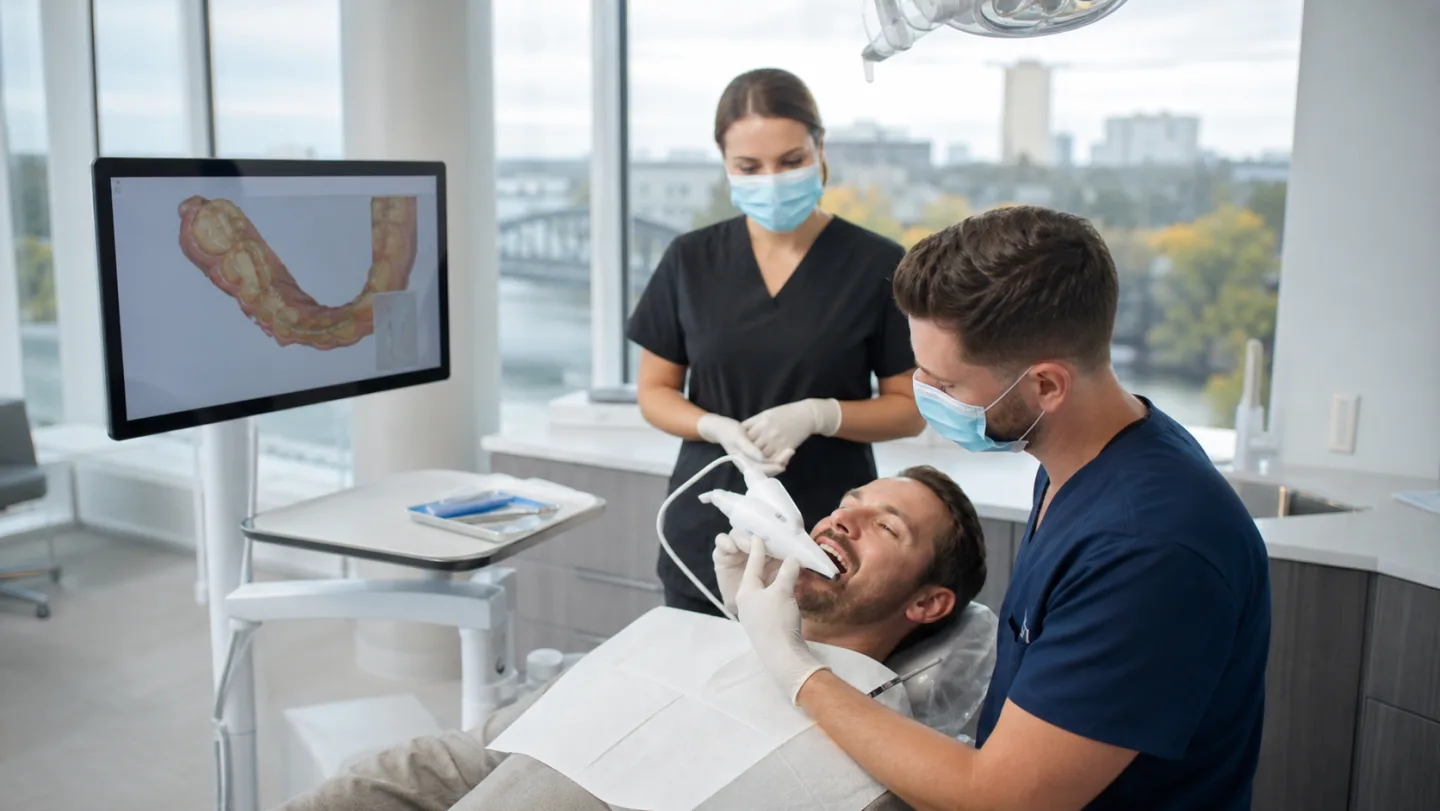
A dentist using a digital scanner while planning a custom dental crown
Between your trips in

Dental Crowns for East St. Paul Residents

Treatment takes place in the city, but living with a crown happens at home. East St. Paul residents can read what to watch for, and how to report it to our clinic on McPhillips Street in Winnipeg.

Let's find a time

Request an appointment

We’ll call to confirm your appointment. For urgent care, please call us directly.

Most of a crown’s life is spent at home

Staying on Top of a Crown, for East St. Paul Patients

East St. Paul is outside the City of Winnipeg, so each appointment means coming into the city. That is a sensible thing to think about before committing to treatment. Most of the time with a crown is spent at home, including the stretch with a temporary on the tooth and everything after placement.

This page concentrates on those periods, and on giving clear information when something feels wrong. Treatment itself takes place at Winnipeg North Dental on McPhillips Street in Winnipeg. A clear phone description can help the clinic work out what to do next, and asking how follow-up works ahead of time means you will not need to figure it out when a problem occurs.

Explore dental crowns
Winnipeg North Dental front desk with a glass screen, a computer monitor and white flowers
A front desk with a glass screen and white flowers.

Know the normal

Temporary sensitivity and gum tenderness can follow treatment, and should be improving over time.

Know the signals

Movement, a high bite, shredding floss or trapped food are all things worth passing along.

Keep the number close

Save (204) 338-3003 in your phone, so that reaching the clinic is simple if a question comes up.

Sorting what you notice

Separating settling-in from something to report.

These lists are rough guidance for deciding when to pick up the phone. When in doubt, call and describe it, because a clear description is more useful than guessing on your own.

What can happen early on

Some reactions are common just after a tooth has been worked on, and they should ease rather than increase.

  • A brief reaction in the tooth to temperature.
  • Tender gum tissue around the edge of the work.
  • A new surface that your tongue keeps investigating.
  • A short period of noticing the crown as you chew.

What deserves a phone call

Other signs point to something that should be looked at, regardless of how recently the crown was placed.

  • Your teeth hit on the crown before anywhere else.
  • The crown or temporary moves, or it comes off entirely.
  • Sensitivity is not improving the way it was expected to.
  • Floss repeatedly frays or food gets packed into one spot.

These signs do not tell you what the cause is. Only an examination can do so, since a crowned tooth can have other issues, such as nerve inflammation or new decay.

The treatment itself

The in-clinic steps you would be coming in for.

Custom crowns generally mean preparation and records, and later a placement visit. Material and treatment plan affect the time between those appointments.

Request your visit
  1. 01

    Assessment in Winnipeg

    Evaluation of tooth, root, gums, bite and suitable X-rays comes before any confirmation. Ask here how follow-up works for people coming in from outside the city.

  2. 02

    Preparation in Winnipeg

    With the tooth numbed, it is shaped and then recorded through a scan or impression, bite record and shade. Instructions for the following days are given.

  3. 03

    Temporary at home

    If you have a temporary crown, it covers the prepared tooth and holds spacing. Avoid anything sticky, clean gently and call about any change.

  4. 04

    Placement in Winnipeg

    When ready, your crown is tried in and reviewed for fit, contacts, bite and appearance. Final cement goes on after any adjustments have been made.

Ask this up front

Settle the follow-up questions before treatment starts.

It is far easier to raise these at an assessment than to work them out when your tooth is bothering you. They are also questions that a thoughtful patient coming in from outside the city might reasonably ask.

Ask too about records of your treatment, including what a future dentist might need to know about this crown, and how such information could be obtained.

Follow-up questions to raise

  • What should I do first if my temporary comes off at home?
  • How would a small bite adjustment be arranged after placement?
  • Which symptoms should prompt a call rather than waiting?
  • How often would you suggest having this crown examined?
Dental chair with pale blue upholstery, seen from its foot end, in a Winnipeg North Dental room
Low blue bench and patterned rug by a wall with framed art at Winnipeg North Dental

A pale blue dental chair seen from its foot, and a bench on a patterned rug.

Peace of mind from home

It helps to know a call is not a nuisance.

People who live outside the city sometimes hold back on a small concern, hoping it will go away. Please do not. A short call can reveal whether something can wait or should be looked at, which is reassuring either way.

Describe it simply

State which tooth it is, what you feel, when it began and whether it is getting better or worse.

Say what set it off

Mention whether it began with a certain food, with flossing or for no reason you can identify.

Mention any worsening

Say so plainly if pain or sensitivity is increasing, because that may change the advice you are given.

Over the longer term

Ongoing care that continues after treatment ends.

A crown has no fixed lifespan, so looking after it remains part of your routine. Supporting tooth, bite, grinding, hygiene, material and any new decay will all influence how it does.

01

Your everyday routine

The margin between crown and tooth is the part to focus on. Brush it well and clean between your teeth each day.

02

Your routine checks

Attend recommended examinations, so a dentist can keep an eye on the crown, tooth and gums. Book them when you plan your trips in.

03

Keeping your details

Note the date and the tooth treated. It is a small record to keep, and handy if you ever need to speak to a dentist about it.

If you are noticing a change in the crown and cannot tell whether it matters, it is reasonable to call and ask.

Talk with our team
Front of the Winnipeg North Dental building, with white and navy panels and tall glazed windows

Winnipeg North Dental

Unit-5 2358 Mcphillips Street, Winnipeg, MB R2V 4J6
Get directions (opens in a new tab)
Your clinic in the city

Crown Care in Winnipeg for East St. Paul Residents

East St. Paul lies outside the City of Winnipeg, and residents come into Winnipeg for crown treatment at Winnipeg North Dental, Unit 5, 2358 McPhillips Street. See the directions link for help.

Please use (204) 338-3003 for concerns with a tooth or crown. The online form is for appointment requests, which the clinic will respond to about timing.

Questions about coverage?

Talk with our team before your visit or learn about CDCP.

A little clarity before your visit

Your questions, answered.

Helpful details about dental crowns in East St. Paul.

Ask our team
How will I know if a crown problem can wait?

Call and describe it. The clinic can tell you what they would suggest based on what you report, though some concerns cannot be judged without seeing the tooth.

What should I tell the clinic when I phone about a crown?

Mention which tooth, whether it has a temporary or a final crown, what has changed, and when you first noticed it. Include anything that makes it better or worse.

Is it normal for my gum to be sore after crown treatment?

Temporary tenderness can occur and should improve as things settle. Let the clinic know if your gum is not getting better, or seems to be getting worse.

Do I have to come back if my bite is only slightly off?

A contact that is too heavy should be checked and adjusted rather than left for the tooth to adapt. Contact the clinic to discuss arranging a visit.

What should I do if my crown comes off at home?

Call the clinic and ask what to do next. Explain whether you have any pain, because that helps them advise you.

How do East St. Paul residents begin crown treatment?

Send a request using the form on this page or call (204) 338-3003. Your assessment will be at the McPhillips Street clinic, and you can ask about follow-up then.

Know what comes after

Start treatment with your follow-up questions answered.

Request an assessment at the McPhillips Street clinic, and the clinic will contact you to work out when you can come in.

Patient testimonials

Kind words from our patients

★★★★★ 5.0 from 440+ reviews on Google

Close to home

Areas we serve

Convenient dental care on McPhillips Street for families across northwest Winnipeg and nearby communities.

Explore all service areas

A healthier smile is one visit away

Ready for dental care that feels genuinely comfortable?

✓ New patients welcome ✓ Direct insurance billing ✓ Multilingual team

How can we help?

Our dental team is here for you.

Ready to book or have a question? Choose the option that works best for you.

For urgent dental concerns, please call us directly.

Send us a message

Our team will reply during clinic hours.



