Skip to content
Winnipeg North Dental
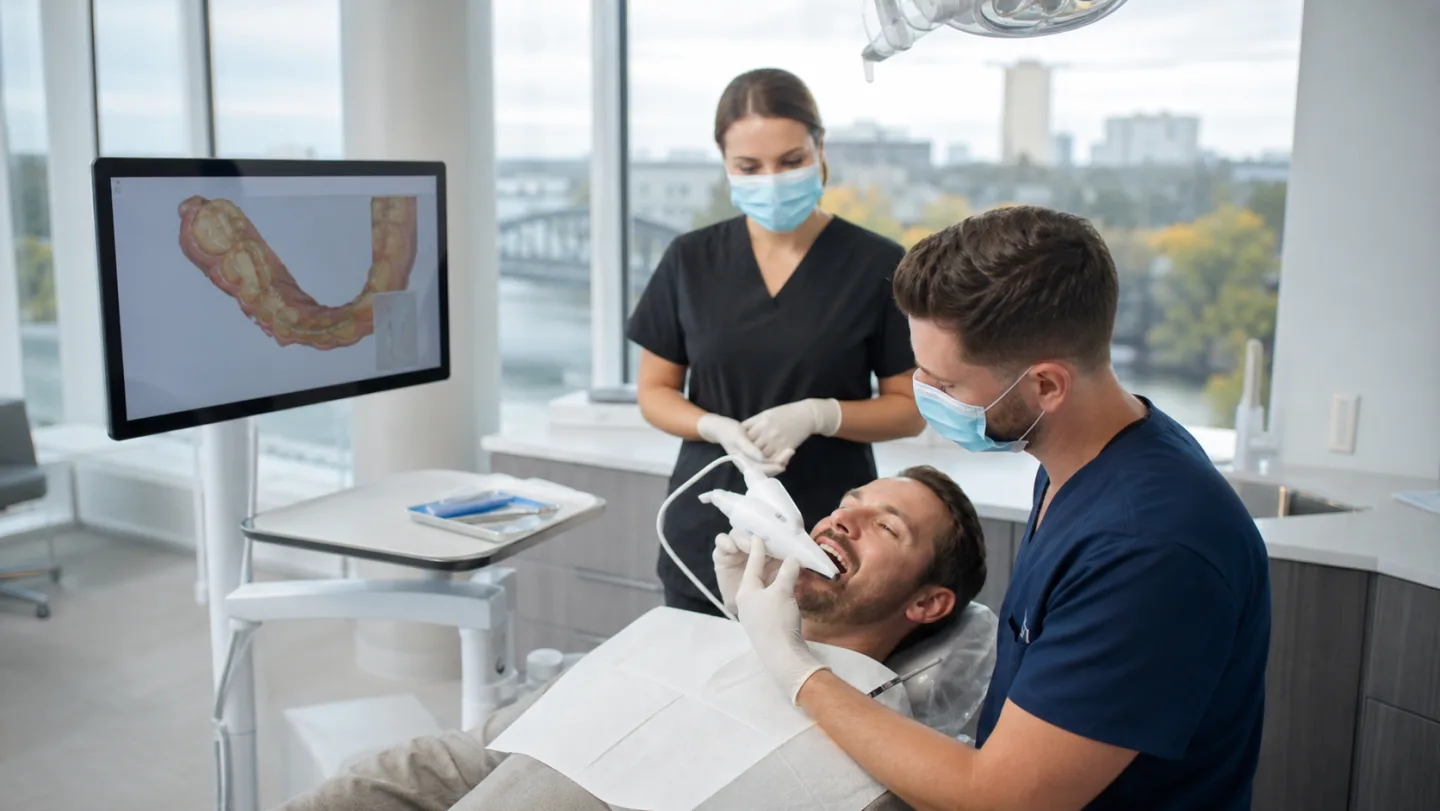
A dentist using a digital scanner while planning a custom dental crown
When your hands make flossing a chore

Dental Crowns for Bridgwater Residents

Sore joints, a weak grip or limited reach can make cleaning between teeth genuinely difficult. If you live in Bridgwater and are getting a crown, this page explains why the edge of that crown still depends on daily care, and what you can ask about at Winnipeg North Dental on McPhillips Street.

Let's find a time

Request an appointment

We’ll call to confirm your appointment. For urgent care, please call us directly.

The part a crown cannot protect

Crown Material Is Safe From Decay, the Tooth Edge Is Not

A crown is made from material that cannot develop cavities, which leads some people to assume a crowned tooth needs less attention. In fact, the natural tooth beside and beneath the crown’s margin can still decay, and plaque likes to gather exactly there. Reaching that line each day matters more, not less, once a tooth has been crowned.

Bridgwater is in Winnipeg, and crown care for people living there happens at our McPhillips Street clinic. If your hands make brushing or flossing a struggle, mention it during your assessment. It is a fair question whether a different cleaning method or tool would make the margin easier for you to reach.

Explore dental crowns
Abstract painting and a white desk in the bright reception area of Winnipeg North Dental
A small blue bench and potted plant beside the reception counter and a painting.

Margin decay is possible

The tooth around the crown’s edge can still get cavities, which is why daily cleaning there stays important.

Your hands count

Arthritis, injury or reduced strength are real factors in home care and are worth mentioning to the dentist.

Exams back you up

Routine examinations let the crown, tooth and gums be looked at professionally between your own efforts.

Reasons behind a crown

Why the tooth is being covered.

A crown is placed over the visible part of a tooth when a filling would not give it enough support. It strengthens weakened structure, rebuilds shape and creates a new biting surface.

Situations where a crown is common

These tend to leave a tooth at higher risk than a filling alone can address.

  • Fillings that have grown over the years until little tooth surrounds them.
  • Posterior teeth left brittle after the canals inside were treated.
  • Cracks, or wear patterns that leave the tooth needing a stronger top.
  • A compromised tooth that needs both its look and function rebuilt.

Home-care details to share

These help the dentist understand what daily cleaning realistically looks like for you.

  • Which movements, such as gripping floss or angling a brush, are hardest.
  • Whether you use a manual or powered toothbrush now.
  • Teeth or areas you already find you miss regularly.
  • Any cleaning tools you have tried and given up on.

Telling the dentist what your hands can manage shapes the cleaning advice. Whether coverage fits the tooth at all is something only an examination settles.

Crown appointments

The steps, and where cleaning comes in.

Most custom crowns are completed over a preparation visit with records and a later placement visit. Timing depends on material and the treatment plan.

Request your visit
  1. 01

    Assessing the tooth and gums

    Your dentist looks at the tooth, root, gums and bite, with suitable X-rays, before confirming a crown. The gum condition matters for long-term cleaning.

  2. 02

    Preparing and capturing records

    After the tooth is numbed and reshaped, a scan or impression is taken along with your bite and shade, and these guide the final crown.

  3. 03

    Cleaning around the temporary

    A temporary crown may protect the tooth meanwhile. Clean it gently and avoid sticky foods; ask for tips if your grip makes this awkward.

  4. 04

    Placement and a cleaning talk

    Fit, contacts, bite and appearance are checked and adjusted before cementing. This is a good moment to ask how you might reach the new margin most easily.

Planning your daily routine

Questions to ask about cleaning.

These are worth raising as questions. What suits you depends on your hands, your mouth and the particular tooth.

Floss that tears every time at the same crown is a reason to let the clinic know, whatever tool you use.

Cleaning questions for your visit

  • Is there a tool that might be easier for me than regular floss?
  • Which part of this crown’s edge is most important to reach each day?
  • Would a different toothbrush handle help with my grip?
  • How often should the crown and gum be checked, given my situation?
Dental treatment chair in soft blue beside a sink and storage cabinets in a Winnipeg North Dental room
White chairs, potted plants and a blue bench below abstract artwork in the Winnipeg North Dental waiting area

A soft treatment chair under a light arm, and a waiting room with white chairs.

Comfort in the chair

Making the visit easier on your body.

Freezing ordinarily keeps the shaping itself from hurting, and a pressing or humming sensation is what tends to come through. If sitting still or holding your head in one position is uncomfortable, tell the team so they know.

Mention joint pain

If your neck, back or hands ache when you stay in one position, saying so helps the team understand what you need.

Expect brief tenderness

Short-term sensitivity or sore gums may follow preparation and should improve over the following days.

Take your time leaving

There is no need to hurry out of the chair after treatment, especially if your joints are stiff.

A realistic routine

Keeping the crown edge clean, your way.

Thorough brushing, cleaning between teeth and regular examinations protect the natural tooth at the margin. Doing what you can each day, and letting exams catch what you miss, is a reasonable approach.

01

Focus on the gumline

Angle your brush toward where crown meets gum, since that seam is where trouble most often starts.

02

Watch bite forces

Grinding and heavy bite pressure affect crown longevity, so ask whether a protective appliance makes sense.

03

Keep your examinations

Regular checkups help the dentist spot new decay, gum changes or wear around the crown early.

Call the clinic if the crown moves, feels high, keeps trapping food, shreds floss repeatedly, or remains sensitive longer than expected.

Talk with our team
Winnipeg North Dental’s frosted windows and doors beneath a large sign with its logo and phone number

Winnipeg North Dental

Unit-5 2358 Mcphillips Street, Winnipeg, MB R2V 4J6
Get directions (opens in a new tab)
Booking an assessment

Crown Care for Bridgwater Residents on McPhillips Street

If you are in Bridgwater, your crown visits and any later checks on the margin are at Winnipeg North Dental, Unit 5, 2358 McPhillips Street, Winnipeg. Select the directions link for a map.

If a tooth is broken or painful, phone (204) 338-3003 rather than using the form. Requests sent online are confirmed by the clinic before they are appointments.

Questions about coverage?

Talk with our team before your visit or learn about CDCP.

A little clarity before your visit

Your questions, answered.

Helpful details about dental crowns in Bridgwater.

Ask our team
Can a crowned tooth still get a cavity?

The crown itself cannot, but the natural tooth beside and under its edge can. That is why cleaning the margin daily stays important.

What if I cannot manage regular floss?

Mention it at your appointment and ask whether another cleaning method might work for your hands. Do what you can in the meantime.

Why does floss keep shredding on my crown?

Repeated shredding is worth reporting. The contact or the crown edge may need to be checked by the dentist.

How long will my crown last?

There is no set lifespan. Remaining tooth structure, bite, grinding, cleaning around the margin, material and new decay all play a role.

Is the temporary crown harder to clean?

It needs a gentler touch than the final crown. Avoid sticky foods, clean carefully, and ask for guidance if your grip makes it tricky.

How do Bridgwater residents request a crown assessment?

Use this page’s form or phone (204) 338-3003, and mention anything that makes home care hard. The visit is at the clinic on McPhillips Street.

Care that fits your hands

Request a crown assessment and talk about home care.

Fill out the form for the McPhillips Street clinic, and the clinic will get in touch to set up a visit.

Patient testimonials

Kind words from our patients

★★★★★ 5.0 from 440+ reviews on Google

Close to home

Areas we serve

Convenient dental care on McPhillips Street for families across northwest Winnipeg and nearby communities.

Explore all service areas

A healthier smile is one visit away

Ready for dental care that feels genuinely comfortable?

✓ New patients welcome ✓ Direct insurance billing ✓ Multilingual team

How can we help?

Our dental team is here for you.

Ready to book or have a question? Choose the option that works best for you.

For urgent dental concerns, please call us directly.

Send us a message

Our team will reply during clinic hours.



