Skip to content
Winnipeg North Dental
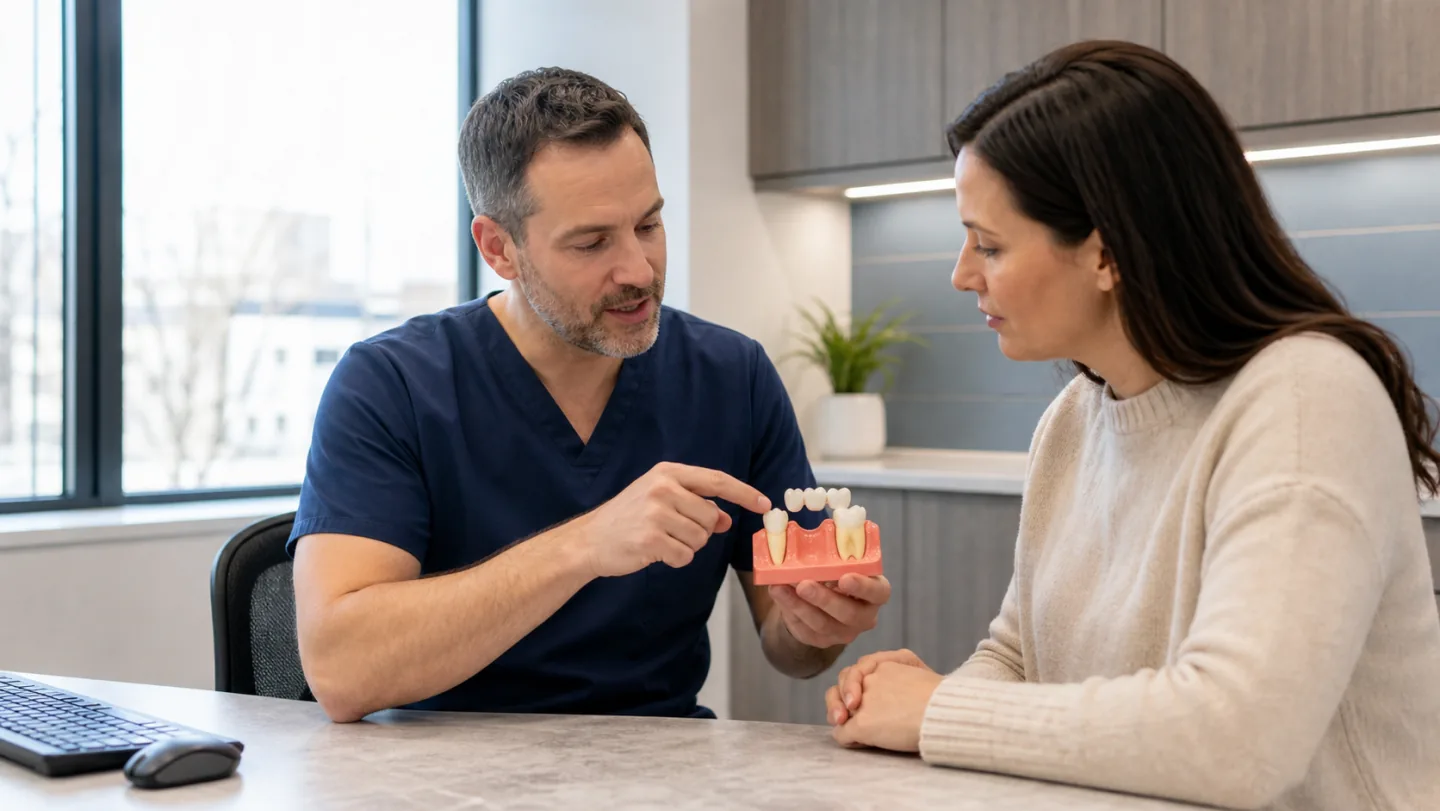
A dentist explaining how a fixed bridge can replace a missing tooth
Teeth that already feel sensitive

Dental Bridges for Transcona Residents

If a sip of something cold already makes the teeth around your gap wince, the thought of having them shaped for a bridge may be the very thing holding you back.

Let's find a time

Request an appointment

We’ll call to confirm your appointment. For urgent care, please call us directly.

Sensitivity comes first

Planning Around Teeth That React

Sensitivity is a symptom, not a diagnosis. A tooth may react because of receding gums, a worn surface, an old filling, decay or something deeper, and the reason matters when that tooth is being considered as support for a bridge.

So the sensible first step for anyone in Transcona, an area of Winnipeg, is working out why those teeth respond the way they do. That examination, and any bridge treatment that follows, happens at our McPhillips Street clinic.

Explore dental bridges
Bright reception at Winnipeg North Dental with a rug, a navy bench and a white front counter
Front counter, rug and navy bench in the Winnipeg North Dental reception.

Find the reason

Your dentist can explore what is behind the reaction before deciding if that tooth could be an anchor.

Say what sets it off

Cold, sweets, biting pressure and brushing can all point in somewhat different directions.

Keep other designs in view

Implant support avoids using natural anchors, where bone, health and healing make it suitable.

Sorting out the sensitive tooth

Could a sensitive tooth still hold a bridge?

That question has no general answer, because it depends on what the examination finds. Two lines of inquiry usually guide the conversation.

What is behind the sensitivity

Your description of the symptoms is combined with a close look at the tooth and surrounding gum.

  • Exposed root surfaces where gums have drawn back.
  • Decay or leaking edges around older fillings.
  • Wear, cracks or other surface damage.
  • Root health, checked with X-rays when appropriate.

What that means for support

Any bridge support must be able to take on chewing forces in addition to its own existing job.

  • Whether the tooth should be treated first.
  • How much sound structure would remain after preparation.
  • A different neighbour, implant or removable partial as alternatives.
  • How your bite loads the teeth in that part of your mouth.

A cantilever, with support on only one side, is kept for carefully selected situations. It is not a standard workaround for a tooth you would rather not use.

Taking it a stage at a time

How sensitive teeth move through bridge treatment.

Should a tooth-supported bridge turn out to suit you, the stages are the same as for anyone else. The difference is telling us how things feel along the way.

Request your visit
  1. 01

    Map your symptoms

    Point out which teeth react, to what, and for how long the feeling lasts. An examination of the gap and its neighbours builds on that.

  2. 02

    Address the foundation

    Your dentist explains whether anything needs care first. When ready, anchors are prepared for crowns, or healed implants are evaluated for connection.

  3. 03

    Protect while you wait

    Scans or impressions, bite records and shade information are taken. Prepared teeth may then be covered by a temporary bridge as the final piece is made.

  4. 04

    Verify before securing

    Contacts, your bite, the margins and cleaning access get checked, and you can mention if anything feels different from what you expected.

Keep a short record

Specifics help more than simply saying it hurts.

For a few days before your visit, notice what triggers a reaction and whether it fades in seconds or lingers. That sort of detail gives your dentist a real starting point.

Any toothpaste or product you already use for sensitivity is worth mentioning. Ask about expected costs after your dentist has identified a suitable plan.

Your sensitivity notes

  • Which foods or temperatures bring on the feeling.
  • How long the sensation lingers afterward.
  • Anything you take regularly, plus diagnosed health issues.
  • Whether anything has wakened you at night, or started hurting by itself.
Consultation desk and chairs at Winnipeg North Dental with a landscape painting on the wall
Teal dental chair with an overhead light arm in a Winnipeg North Dental treatment room

Consultation desk and a teal-chair treatment room at Winnipeg North Dental.

Keeping you informed

Worried about the feeling? Tell us early.

Being wary of treatment is understandable when your teeth are already touchy. Talk to your dentist about freezing, what you may notice afterward and how you would like to be kept informed.

Ask about freezing

Find out how your dentist plans to keep prepared teeth comfortable while the work is done.

Report a tender temporary

Mention it if something feels off during the waiting stage, as a prepared tooth may react for a while.

Request a short pause

A moment to rest is easy to ask for, so settle on a way to signal it.

After the bridge is secured

Living with it when your teeth tend to react.

A new bridge can take some getting used to. If sensitivity carries on or gets stronger, tell the clinic instead of quietly tolerating it, since it may be a sign that something should be checked.

01

Clean gently, but reach underneath

Your usual floss cannot drop down between connected units. Ask us which threader, super floss, interdental brush or water flosser would suit tender areas.

02

Note what changes

Lingering sensitivity, bleeding, swelling, a bad taste, a changed bite or movement in the bridge are all things to report.

03

Keep your examinations

Natural anchors can decay along their margins even under a well-made crown, so careful cleaning and regular check-ups both matter.

Severe or sudden pain deserves a phone call to the clinic rather than a request through the website.

Talk with our team
Front of Winnipeg North Dental with blue-grey siding, a white sign band and shaded windows

Winnipeg North Dental

Unit-5 2358 Mcphillips Street, Winnipeg, MB R2V 4J6
Get directions (opens in a new tab)
Where sensitive teeth get looked at

Your Assessment at Our McPhillips Street Clinic

Patients from Transcona receive their examination and any bridge treatment at Winnipeg North Dental, Unit 5, 2358 McPhillips Street, Winnipeg, MB R2V 4J6.

Mention your sensitivity when you call or complete the form. Clinic staff will contact you, and a time is confirmed only at that point.

Questions about coverage?

Talk with our team before your visit or learn about CDCP.

A little clarity before your visit

Your questions, answered.

Helpful details about dental bridges in Transcona.

Ask our team
Can a sensitive tooth be used to support a bridge?

Sometimes, once the reason is understood and any needed treatment has been dealt with. A tooth with deeper trouble may not be suitable, and your dentist will explain which applies.

Will crowning a sensitive tooth make it better or worse?

It is hard to predict without knowing why the tooth reacts. A prepared tooth can feel sensitive for some time, so ask what is realistic in your case.

Is it normal for teeth to feel different after preparation?

Some awareness of a prepared tooth is not unusual, and a temporary may help protect it. Report anything that is strong, keeps getting worse or concerns you.

Should I avoid a bridge if cold already bothers me?

Not before you know the cause. An examination might show something simple to address, or it might point toward a design that does not depend on that tooth.

What if my bridge is fitted and sensitivity stays?

Pick up the phone rather than putting up with it. Your dentist can check the bite, the margins and the health of the supporting tooth to work out what is going on.

How do Transcona residents mention this when booking?

Write about it in the form on this page, or say so when you call (204) 338-3003. The clinic will be in touch to arrange your examination.

Start by finding the cause

Have those touchy teeth looked at first.

Transcona residents can request a bridge assessment at our Winnipeg clinic, and the team will respond to arrange a visit.

Patient testimonials

Kind words from our patients

★★★★★ 5.0 from 440+ reviews on Google

Close to home

Areas we serve

Convenient dental care on McPhillips Street for families across northwest Winnipeg and nearby communities.

Explore all service areas

A healthier smile is one visit away

Ready for dental care that feels genuinely comfortable?

✓ New patients welcome ✓ Direct insurance billing ✓ Multilingual team

How can we help?

Our dental team is here for you.

Ready to book or have a question? Choose the option that works best for you.

For urgent dental concerns, please call us directly.

Send us a message

Our team will reply during clinic hours.



