Skip to content
Winnipeg North Dental
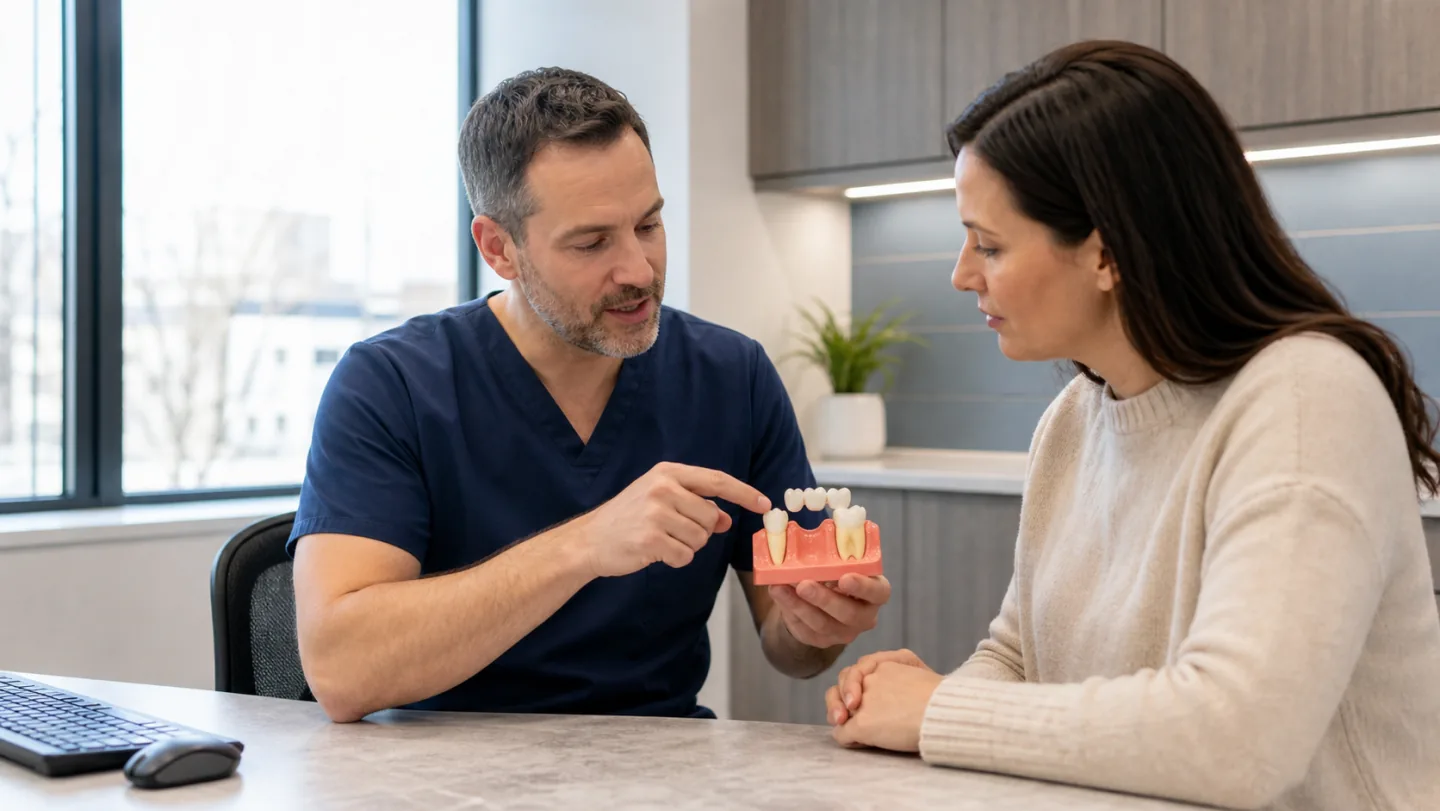
A dentist explaining how a fixed bridge can replace a missing tooth
A space that seems to be changing

Dental Bridges for Scotia Heights Residents

Does the gap look narrower than it once did, or does your bite no longer land the same way? Teeth around a space can shift, and that can influence how it might be restored.

Let's find a time

Request an appointment

We’ll call to confirm your appointment. For urgent care, please call us directly.

Spacing and bite balance

Tilting Teeth, Changing Bites: Scotia Heights Patients

Teeth keep each other in position to some degree. When one goes missing, a neighbour can lean into the space, and the tooth that used to meet it from the opposite jaw may also move. These changes are often gradual and easy to miss.

Helping to maintain spacing and bite balance is one purpose of a bridge, though a shift that has already occurred needs to be examined before anything is proposed. Scotia Heights is in Winnipeg, and residents can have this checked at our McPhillips Street clinic.

Explore dental bridges
Dental chair facing a wall monitor, with a sink and cabinets behind it, at Winnipeg North Dental
A treatment room with cabinets and a monitor at Winnipeg North Dental.

Alignment is examined

How potential anchor teeth sit and angle is part of deciding whether a bridge could fit.

Both jaws matter

Opposing teeth influence how a replacement would be shaped, so your whole bite is taken into account.

A recent gap is worth a look

Having a recent gap looked at gives you information about it before more time passes.

Movement around a space

What drift can do, and how it is weighed.

A shifted tooth is not automatically a problem for a bridge, though it adds things to think about when support and appearance are planned.

Changes you might notice

Some of these are easy to dismiss until you look back at an older photo or start paying attention at meals.

  • A gap that looks narrower or more angled.
  • A tooth above or below the space looking longer.
  • Food catching in spots where it never used to.
  • A sense that your teeth close differently.

What planning takes into account

Your dentist considers whether the available space and the angles of the neighbouring teeth can suit a restoration with good proportions.

  • Room available for a natural-looking replacement.
  • Whether a leaning tooth could support a crown.
  • Contact with the opposing teeth during side-to-side movement.
  • A daily cleaning pathway around any uneven areas.

Sometimes other treatment or a different replacement option deserves discussion first. That comes down to examination findings and what you are hoping to achieve.

Checking the fit of the space

How a bridge is planned when things have moved.

The usual stages apply, with close attention to whether the space and the bite can accommodate the replacement tooth.

Request your visit
  1. 01

    Measure up what has changed

    Your dentist looks at alignment and how your teeth meet, along with roots, gums and existing dental work, and talks you through the findings.

  2. 02

    Get supports ready

    Where natural anchors are used, they are prepared for crowns with their position in mind. Implants, if part of the plan, are checked once healed.

  3. 03

    Record the bite closely

    Bite records are collected together with scans or impressions and shade details. A temporary may then protect your prepared teeth.

  4. 04

    Balance the contacts

    At the try-in, side-to-side movement is checked along with margins, looks and cleaning access. Adjustments come first, then secure attachment.

Dig up an old photo

A picture can show how a gap has changed.

Older photos of you smiling can be surprisingly useful. They give you, and your dentist, a rough sense of how your teeth used to sit compared with today.

Findings may affect both the plan and any estimate. Save your cost questions until you have heard the recommendation, then ask for the figures that apply to it.

Things to think over

  • Roughly when you lost the tooth, and how.
  • New places where food gets stuck.
  • Any jaw tiredness, or a change in how your teeth come together.
  • Your medication list, along with your insurance or CDCP details.
Reception counter, blue bench and potted plant in the Winnipeg North Dental front area
Snake plant beside a window in the consultation room at Winnipeg North Dental

The front area and a consultation room at Winnipeg North Dental.

Changes can feel unsettling

Seeing teeth move can be unnerving. Ask about it.

It is natural to worry when part of your smile no longer looks the way you remember. Share what you have noticed, and you can go through what it may or may not mean.

Point to what bothers you

A mirror and your own finger can often explain more than a technical description ever could.

Ask what is urgent, and what is not

Your dentist can tell you which findings call for action and which can be monitored for now.

Speak up about sore spots

Tenderness in your jaw or around a shifted tooth is useful to mention before an examination begins.

Holding your bite steady

Stay alert to small changes after treatment.

The goal is a replacement that works with your bite for the long term. Your own awareness, along with regular dental visits, helps catch anything that starts to shift.

01

Notice how your teeth close

If your bite feels different after your bridge is in, let the clinic know so the contacts can be reviewed.

02

Keep every margin clean

Bridges need a different cleaning route. We can demonstrate how a threader, small brush or water flosser reaches under yours.

03

Book your examinations

Appointments over the years give your dentist the chance to compare your teeth, gums and restoration with earlier findings.

If you notice movement in the bridge itself, or a chip or rough edge, call instead of waiting for your next visit.

Talk with our team
Two-tone building face and tall windows at the Winnipeg North Dental entrance

Winnipeg North Dental

Unit-5 2358 Mcphillips Street, Winnipeg, MB R2V 4J6
Get directions (opens in a new tab)
From Scotia Heights

Have Your Spacing and Bite Checked at Our Clinic

Scotia Heights residents have their assessment and any bridge treatment at Winnipeg North Dental, Unit 5, 2358 McPhillips Street, Winnipeg, MB. Check the directions link for your route.

To begin, submit the form or give us a call and describe what seems to have changed. Your request is confirmed by the clinic once a time has been agreed.

Questions about coverage?

Talk with our team before your visit or learn about CDCP.

A little clarity before your visit

Your questions, answered.

Helpful details about dental bridges in Scotia Heights.

Ask our team
Do teeth really move after one is lost?

They can. A neighbouring tooth may tip toward the space, and the opposing tooth can change position too, though the amount differs from one person to another.

My gap looks smaller now. Can it still take a bridge?

That depends on how much room remains and the angle of the teeth around it. An examination shows whether a replacement with suitable proportions could fit.

Will a bridge straighten a tilted tooth?

A bridge replaces missing teeth and is not designed to move others. If alignment is a concern, ask whether anything else should be considered before planning.

Can a bridge help stop further shifting?

It is intended to help maintain spacing and bite balance. No one can promise that nothing will ever change, which is one reason regular examinations matter.

Could my bite problem be unrelated to the gap?

Possibly. Bites can change for several reasons, and existing restorations and wear may play a part. Your dentist can examine these alongside the space itself.

How can someone in Scotia Heights have a shifting gap looked at?

Phone (204) 338-3003 or send a request through this page, and mention any shifting you have noticed. Our Winnipeg clinic will reply to work out the appointment.

Look before more changes

Find out how your space is doing now.

Scotia Heights residents are welcome to ask our Winnipeg clinic about a gap that seems different. We’ll get in touch about timing.

Patient testimonials

Kind words from our patients

★★★★★ 5.0 from 440+ reviews on Google

Close to home

Areas we serve

Convenient dental care on McPhillips Street for families across northwest Winnipeg and nearby communities.

Explore all service areas

A healthier smile is one visit away

Ready for dental care that feels genuinely comfortable?

✓ New patients welcome ✓ Direct insurance billing ✓ Multilingual team

How can we help?

Our dental team is here for you.

Ready to book or have a question? Choose the option that works best for you.

For urgent dental concerns, please call us directly.

Send us a message

Our team will reply during clinic hours.



