Skip to content
Winnipeg North Dental
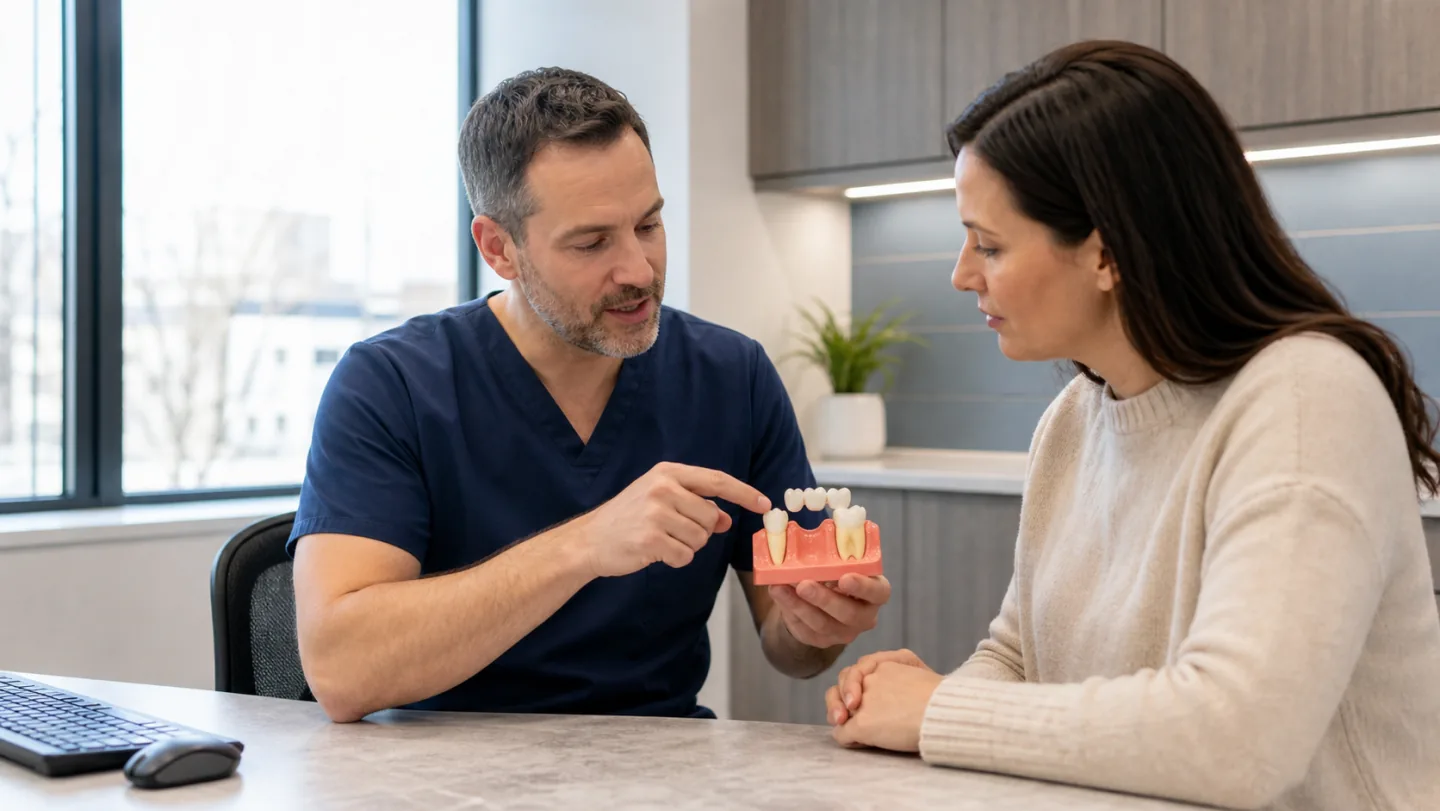
A dentist explaining how a fixed bridge can replace a missing tooth
What about the teeth beside the gap?

Dental Bridges for Riverbend Residents

Hesitant about having good teeth shaped to hold a bridge? That is a fair concern, and it deserves a straight answer before you decide.

Let's find a time

Request an appointment

We’ll call to confirm your appointment. For urgent care, please call us directly.

Protecting what you still have

Anchor Teeth, Explained for Riverbend Patients

A traditional bridge holds on through crowns placed over the teeth on either side of the space. Those teeth have to be prepared first, and that change is permanent. If they are healthy and untouched, it is reasonable to ask whether this is worth it.

Sometimes the answer is yes, sometimes implants or another option make more sense. Riverbend residents can get an answer based on their own teeth at our McPhillips Street clinic in Winnipeg, where potential anchors are examined before any recommendation is made.

Explore dental bridges
Winnipeg North Dental consultation room with framed art and window blinds
A quiet room for asking hard questions, at Winnipeg North Dental.

Examined before recommended

A tooth is only considered as an anchor after its gums, roots and existing dental work are reviewed.

Trade-offs in the open

Preparation is a permanent change, and you should understand that before you agree to it.

Other supports exist

Implants can hold a bridge without enlisting natural teeth, where they are suitable.

Choosing a foundation

Is this tooth up to the job?

An anchor carries its own chewing load along with part of the replacement tooth’s. So potential supports are evaluated carefully, one by one.

What we look for in an anchor

A good candidate must be able to handle the added work and stay healthy with careful cleaning.

  • Sound root health beneath the visible tooth.
  • Healthy gums and supporting tissue.
  • Alignment that allows a suitable path for the bridge.
  • Existing restorations in acceptable condition.

When teeth may not be the answer

Certain findings can move the discussion away from a tooth-supported design altogether.

  • Weak or compromised neighbours may not bear the planned load.
  • A long span places different demands on its supports.
  • Implant planning weighs bone, health and healing.
  • One-sided support suits only carefully selected situations.

A neighbour that already has a large filling or crown raises different considerations from one that has never been treated. We’ll explain how this applies to your own teeth.

If you go ahead

What happens to the anchor teeth.

Here is the path of a tooth-supported bridge, with attention to what is being done to your natural teeth at each stage.

Request your visit
  1. 01

    Evaluate each candidate

    Your dentist reviews each potential support and may discuss diagnostic records. You get to hear what each tooth’s condition means for the plan.

  2. 02

    Shape the supports

    Prepared anchors are given a form that can accept the crowns. Ask us what this involves before it begins.

  3. 03

    Protect them in the interim

    Once prepared, these teeth may be covered with a temporary bridge while your permanent restoration is being fabricated.

  4. 04

    Inspect the margins

    Margins where crown meets tooth get a close look at fitting, alongside bite and contacts, before final bonding or attachment.

To help us evaluate them

Tell us about the history of those teeth.

Old fillings, a past root canal, sensitivity or a crack you were once told about can all affect whether a tooth is a suitable anchor. Share whatever you remember.

Your assessment may lead to a comparison of options, so ask for estimates on those you would seriously consider.

Good to mention

  • Any treatment you recall on teeth beside the gap.
  • Sensitivity to hot, cold or biting on those teeth.
  • Prescribed or over-the-counter products you rely on, and any health news.
  • Whether CDCP or an insurer is involved in paying for your dental work.
Winnipeg North Dental treatment room with a monitor near the dental chair
Bright waiting space with a window at Winnipeg North Dental

Treatment and waiting areas at our clinic on McPhillips Street.

Asking the tough questions

It is your tooth. Ask anything.

You can ask why a tooth needs preparing, what would change if it were not, and what the alternatives are. Feeling confident about a permanent decision starts with getting clear answers.

Understand before agreeing

Preparation should never feel like a surprise, so ask to go over it until it makes sense.

Bring up sensitive spots

If an anchor tooth is already tender, that is important information for your dentist.

Ask for a pause

Raise a hand if you want a brief stop during preparation, or agree on another signal beforehand.

Looking after the anchors

Your supporting teeth are still natural teeth.

Beneath a crown, an anchor tooth can still develop trouble. Protecting these teeth over the long term is the central task of aftercare.

01

Attend to the margins

Plaque along the edges of the crowns raises the risk of decay, so daily removal matters a great deal.

02

Report changes in feeling

Sensitivity, swelling, bleeding or an unusual taste around an anchor should be mentioned instead of being watched at home.

03

Have them examined

Your dentist can monitor anchors over time, including their margins, gums and how they handle your bite.

Sudden or urgent trouble with a supporting tooth is a reason to phone, and not to use the form.

Talk with our team
Street-level view of the Winnipeg North Dental entrance

Winnipeg North Dental

Unit-5 2358 Mcphillips Street, Winnipeg, MB R2V 4J6
Get directions (opens in a new tab)
On to McPhillips Street

Have Your Anchor Teeth Assessed in Person

For patients living in Riverbend, an area of north Winnipeg, the review of your potential anchors and any treatment that follows take place at Winnipeg North Dental, Unit 5, 2358 McPhillips Street.

Fill out the form or call to ask about a visit. Your appointment is set only after the clinic has confirmed it with you.

Questions about coverage?

Talk with our team before your visit or learn about CDCP.

A little clarity before your visit

Your questions, answered.

Helpful details about dental bridges in Riverbend.

Ask our team
Do healthy teeth have to be shaped for a bridge?

With a tooth-supported design, the anchors are prepared so that crowns can fit over them. Implant-supported bridges do not use natural teeth as anchors, so ask if that route is open to you.

Is preparing an anchor tooth reversible?

No. Once tooth structure has been removed, it cannot be put back, and that tooth will need a covering from then on. This is why we go through the decision carefully first.

Can a tooth with a root canal support a bridge?

It may, depending on its root health and how much structure remains. Your dentist would assess it individually before including it in any plan.

What if an anchor tooth develops problems later?

Since the units are connected, trouble in one support can affect the whole bridge. Report symptoms promptly and keep up with regular examinations.

Can Riverbend residents ask for just an anchor tooth assessment?

You can request an assessment and explain your concern. Use the form here or phone (204) 338-3003, and the clinic at 2358 McPhillips Street will follow up with you.

Decide with the facts

Find out what your neighbouring teeth can handle.

If you live in Riverbend, request an assessment at our Winnipeg clinic, and we’ll be in touch about scheduling it.

Patient testimonials

Kind words from our patients

★★★★★ 5.0 from 440+ reviews on Google

Close to home

Areas we serve

Convenient dental care on McPhillips Street for families across northwest Winnipeg and nearby communities.

Explore all service areas

A healthier smile is one visit away

Ready for dental care that feels genuinely comfortable?

✓ New patients welcome ✓ Direct insurance billing ✓ Multilingual team

How can we help?

Our dental team is here for you.

Ready to book or have a question? Choose the option that works best for you.

For urgent dental concerns, please call us directly.

Send us a message

Our team will reply during clinic hours.



