Skip to content
Winnipeg North Dental
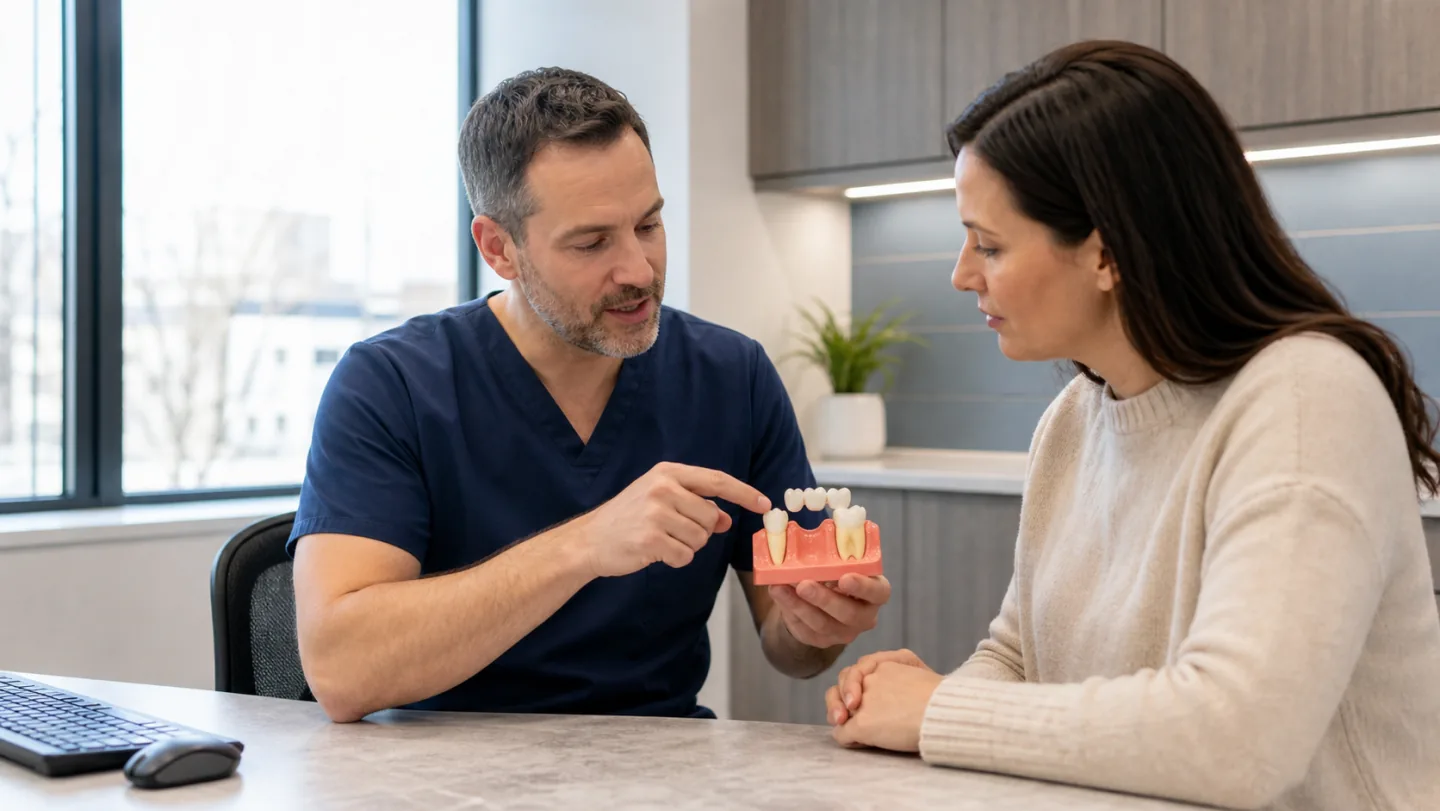
A dentist explaining how a fixed bridge can replace a missing tooth
If you gag easily in the dental chair

Dental Bridges for River Heights Residents

For some people the hardest part of getting a bridge is not the missing tooth at all. It is the thought of trays, materials and instruments near the back of the mouth. Saying so up front is the most useful thing you can do.

Let's find a time

Request an appointment

We’ll call to confirm your appointment. For urgent care, please call us directly.

A sensitive reflex

Getting Through Bridge Records When You Gag Easily

Making a bridge means capturing an accurate copy of the teeth involved, along with how your upper and lower teeth meet. That record comes from a scan or from impressions, and both involve working inside the mouth for a while. A strong gag reflex is common, and it is information your dentist can plan around.

River Heights is an area of Winnipeg, and residents there who want to replace a tooth are seen at our McPhillips Street clinic. Tell us about the reflex when you get in touch, so it is part of the plan from the first appointment.

Explore dental bridges
Treatment room at Winnipeg North Dental with a pale aqua dental chair and a wall-mounted screen
The pale aqua chair in a Winnipeg North Dental treatment room, with a screen mounted on the cabinetry behind it.

Mention it before you sit down

Knowing about the reflex in advance lets the team pace each step around it.

Ask about scans and impressions

Records may be taken digitally or with impression material, so ask which applies to your plan.

Ask how to signal a pause

Before work begins, you might ask how you should let the team know you need a moment.

Designs, and the work each needs

Every bridge type still needs an accurate record.

Whichever design suits your mouth, the dental team must capture the teeth or implants that will carry it. Here is what each option relies on.

Natural teeth as supports

Suitable teeth beside the space receive crowns, and those crowns hold the artificial tooth between them.

  • The anchor teeth are shaped before records are taken.
  • Gum health, roots and older fillings on them are reviewed first.
  • A cantilever version uses support from one side only, in selected cases.

Implants as supports

Dental implants can hold a bridge for several missing teeth while leaving natural neighbours unprepared.

  • Implants are allowed to heal before the bridge stage.
  • Planning weighs bone, overall health and healing.
  • Records then capture how the implants sit for the connection.

Your bite, the length of the space and the health of potential supports all influence which design is recommended after your assessment.

Where the reflex might come up

The stages, marked for gag-prone patients.

Some appointments involve more work near the back of the mouth than others. Knowing which step is which can make the whole process feel more manageable.

Request your visit
  1. 01

    The examination

    Your dentist looks at gums, alignment, root health and existing restorations on teeth that might support the bridge, and you can describe your reflex.

  2. 02

    Preparing the supports

    When natural anchors are used they are shaped for crowns. When implants are used, their readiness for the connection is checked.

  3. 03

    Taking the records

    This is usually the stage gag-prone people worry about, because a scan or impression is taken along with bite and shade details.

  4. 04

    The final fit

    Contacts, bite, margins, appearance and cleaning access are all confirmed before the bridge is attached for good.

Before the records visit

Notice what sets off the reflex for you.

Triggers differ. For some people it is reclining far back, for others it is something touching the palate or the tongue. The more specific you can be, the easier it is for the team to work with you.

If an earlier experience with impressions went badly, it is worth describing what happened so the team understands what to watch for.

Things to think about in advance

  • Which positions or sensations tend to trigger gagging.
  • Whether breathing through your nose is easy for you.
  • Any medicines you take and health issues you live with.
  • What has helped you get through earlier dental appointments.
Waiting area at Winnipeg North Dental with white chairs by a shaded window and a navy bench
Reception desk at Winnipeg North Dental with a tall snake plant beside a blue upholstered bench

Seating by the shaded window in the Winnipeg North Dental waiting area, and the reception desk beyond.

You are not being difficult

A strong reflex is just part of how you are built.

Gagging is an automatic response, not a lack of willpower. There is no need to feel embarrassed about it, and no reason to keep quiet while you struggle.

Ask about breaks

You can ask whether a short pause between steps is possible while you settle your breathing.

Know what comes next

Hearing a quick explanation before each step can take away some of the surprise.

Speak up mid-appointment

If something is becoming too much, let the team know right away rather than pushing through in silence.

Living with it afterward

Cleaning under the bridge without strain.

Once the bridge is in, daily care moves to home. Plain floss cannot pass between the linked units, so plaque beneath the replacement tooth needs another way out.

01

Tools that stay near the front

Our team can show you a floss threader, super floss, interdental brush or water flosser, and you can say if any of them bothers your reflex.

02

Signs worth a phone call

Phone if the bridge moves, food keeps packing around it, gums bleed or swell, a bad taste lingers, a surface chips or the bite changes.

03

Ongoing checkups

Natural anchor teeth can decay where they meet the bridge, so routine examinations remain important.

Call the clinic about any urgent problem with the bridge rather than sending a request through the form.

Talk with our team
Winnipeg North Dental storefront with its name in raised letters above two dark-framed glass doors

Winnipeg North Dental

Unit-5 2358 Mcphillips Street, Winnipeg, MB R2V 4J6
Get directions (opens in a new tab)
Where you will be seen

Bridge Care for River Heights at Our Clinic

River Heights patients have their bridge assessment, records and fitting at Winnipeg North Dental, Unit 5, 2358 McPhillips Street, Winnipeg, MB R2V 4J6.

A form submission tells us you are interested; it does not lock in an appointment. Expect a reply to work out the timing.

Questions about coverage?

Talk with our team before your visit or learn about CDCP.

A little clarity before your visit

Your questions, answered.

Helpful details about dental bridges in River Heights.

Ask our team
Can I get a bridge if I gag during impressions?

A strong reflex does not by itself rule out a bridge. Suitability depends on your teeth, gums and supports, and the reflex is something the team can plan around.

Is a scan easier than an impression?

People experience them differently. Ask which method would be used for your bridge, and say which parts of either one concern you.

How many times will records need to be taken?

That depends on your design and plan. Your dentist can tell you which appointments involve records once the assessment is done.

What is the temporary bridge for?

A temporary may protect shaped anchor teeth and keep the space looking filled while the permanent bridge is being made.

Can decay start under a bridge?

Yes, natural anchor teeth can decay at the margins. Careful daily cleaning and regular examinations help catch and limit that risk.

How can River Heights residents flag a gag reflex when booking?

Mention it in your request on this page or when you call (204) 338-3003. The clinic will be in touch to arrange your assessment.

Raise it early

Plan a bridge that accounts for your reflex.

River Heights residents can request an assessment at our clinic on McPhillips Street in Winnipeg and tell us about gagging from the start.

Patient testimonials

Kind words from our patients

★★★★★ 5.0 from 440+ reviews on Google

Close to home

Areas we serve

Convenient dental care on McPhillips Street for families across northwest Winnipeg and nearby communities.

Explore all service areas

A healthier smile is one visit away

Ready for dental care that feels genuinely comfortable?

✓ New patients welcome ✓ Direct insurance billing ✓ Multilingual team

How can we help?

Our dental team is here for you.

Ready to book or have a question? Choose the option that works best for you.

For urgent dental concerns, please call us directly.

Send us a message

Our team will reply during clinic hours.



