Skip to content
Winnipeg North Dental
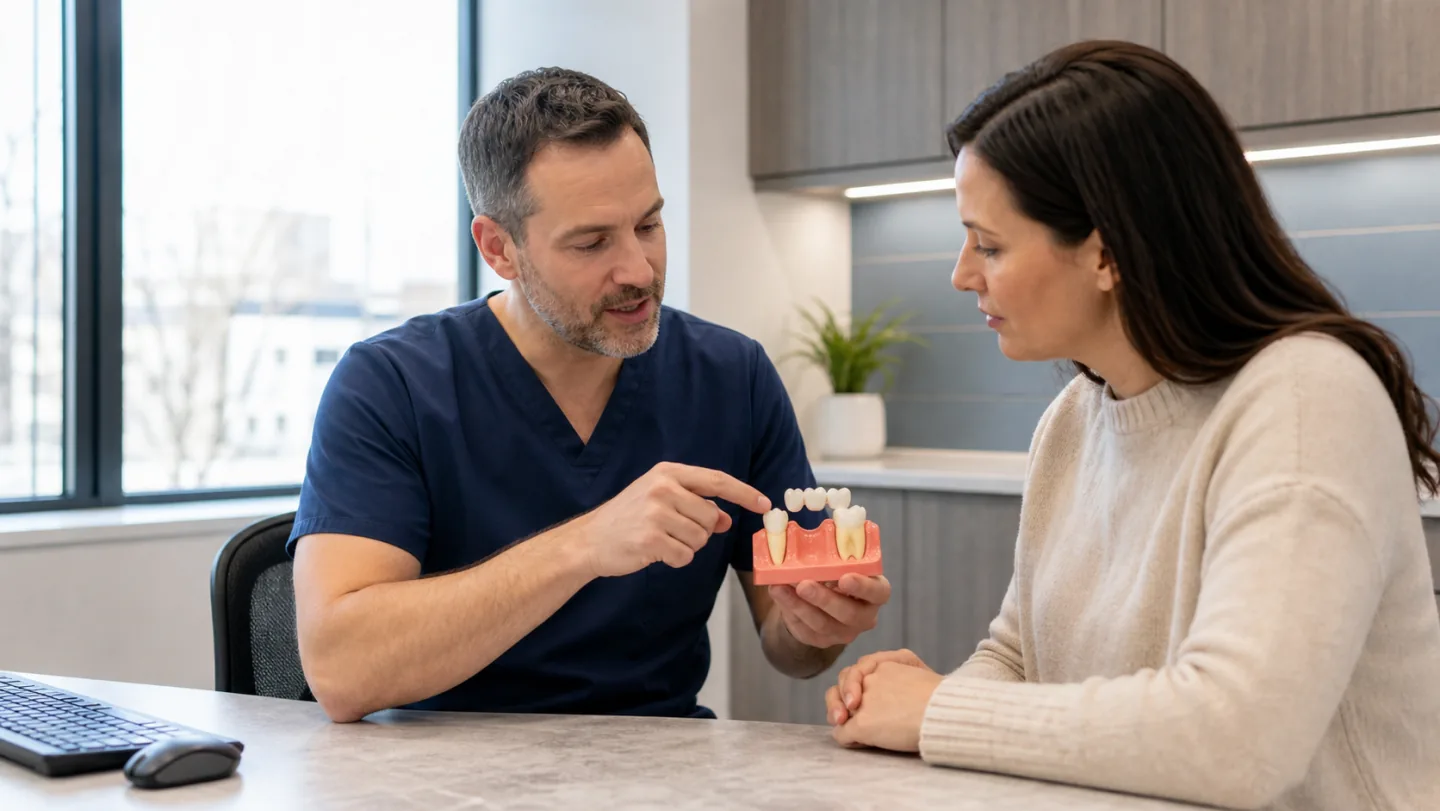
A dentist explaining how a fixed bridge can replace a missing tooth
A bridge for a strong bite

Dental Bridges for Northwood Residents

Do you wake up with a sore jaw, or have you been told your teeth show wear? How hard your teeth meet is a question to raise before any bridge is designed.

Let's find a time

Request an appointment

We’ll call to confirm your appointment. For urgent care, please call us directly.

Force changes the design

Clenching, Grinding and Bridges: Northwood Patients

A bridge joins several parts into one piece, and your bite pushes on that piece at every meal. Opposing teeth, jaw movement and any habit of clenching or grinding all feed into what shape and material may be appropriate.

A strong bite does not settle the matter on its own, though it is a good reason for careful planning. Northwood is in Winnipeg, and patients living there can have their bite and the space reviewed at our McPhillips Street clinic before a design is proposed.

Explore dental bridges
Consultation room at Winnipeg North Dental with a snake plant and sunlight through window blinds
The consultation room at Winnipeg North Dental, with a snake plant by the window.

Your bite gets recorded

Bite records help guide how a bridge is shaped and how it will meet opposing teeth.

Share any habits

Mention clenching or grinding, even if you have only been told about it by someone else.

Support must match the load

Anchor teeth or implants have to be capable of carrying the forces you actually produce.

Reading your bite

What heavy forces mean for the plan.

Your dentist considers both signs of force in your mouth and what those signs mean for a restoration.

Signs your dentist may look for

Your teeth often show how they have been used, whether or not you were aware of the habit.

  • Flattened or worn chewing surfaces.
  • Chips and cracks, or fillings that keep failing.
  • Teeth that meet unevenly as your jaw moves.
  • Jaw tenderness you may have noticed on waking.

How the design responds

Those findings can influence several decisions about the bridge, or whether another option would be more suitable.

  • Material selected in light of your forces.
  • Shape of the surfaces that meet opposing teeth.
  • Number and strength of the supports involved.
  • Caution about long spans and one-sided designs.

Because force and wear vary so much, your dentist cannot judge any of this from a description alone. An examination is what makes the recommendation specific.

Bite-aware treatment

Where your bite comes up at each stage.

These stages apply to most bridges. Here they are described with an emphasis on how your bite is considered in each one.

Request your visit
  1. 01

    Discuss what you have noticed

    Sore jaws, headaches on waking or chipped teeth all belong in the conversation. Your dentist then examines supports, alignment and wear.

  2. 02

    Prepare suitable support

    Anchor teeth are reshaped when they are part of the plan. If implants are being used, they are reviewed once healed.

  3. 03

    Record your bite carefully

    Bite information is captured with your scans or impressions and shade details. A temporary may be placed to protect prepared teeth.

  4. 04

    Test the contacts

    Your dentist checks how the bridge meets opposing teeth, including side-to-side movement, along with margins and looks, before securing it.

Clues worth collecting

Ask around about your grinding.

Many people do not know they grind while asleep. A partner or someone at home may have heard it, and you may have noticed a tired jaw in the morning.

Your dentist may raise more than one option once your bite has been assessed. Ask for estimates for those that interest you.

Worth bringing up

  • Any mouthguard or night appliance you own or have worn.
  • Teeth or fillings you have chipped or broken before.
  • Current medications and anything new in your health.
  • Your insurance or CDCP particulars.
Winnipeg North Dental waiting area with a striped window blind, side tables and plants
Dental chair and instrument arm in a Winnipeg North Dental treatment room

The waiting area and a treatment chair at Winnipeg North Dental.

If your jaw gets sore

A tender jaw should be part of the plan.

Holding your mouth open can be tiring if your jaw muscles are already tense. Bring this up at the start and let your dentist know if it begins to bother you.

Mention morning soreness

Tell your dentist about any jaw ache or tightness that you have been noticing lately.

Ask for a rest

Set up a way to signal a short break so that you can relax your jaw when needed.

Say how the bite feels

During adjustment, describe where the bridge touches first. Your own feedback is useful here.

Living with the forces

Keep an eye on wear over time.

Habits such as clenching do not disappear when a bridge goes in. Keep reporting what you notice, and combine that with careful daily cleaning.

01

Report a change in contact

If your bridge starts touching sooner than other teeth, or you feel a new high spot, ask the clinic to check it.

02

Check for chips

Run your tongue over the surface every so often. Roughness or a chip is a good reason to get in touch.

03

Clean under the joined teeth

Ordinary floss is blocked by the connected units, so ask to be shown a threader, brush or water flosser for your bridge.

Ask about ways of protecting your bridge if grinding is a concern. Anything urgent, such as a loose or broken bridge, calls for a phone call.

Talk with our team
Winnipeg North Dental front entrance with a railing and door signs, seen from outside

Winnipeg North Dental

Unit-5 2358 Mcphillips Street, Winnipeg, MB R2V 4J6
Get directions (opens in a new tab)
Northwood bite checks

Have Your Bite Reviewed at McPhillips Street

For patients living in Northwood, the bite review and any bridge treatment take place at Winnipeg North Dental, Unit 5, 2358 McPhillips Street, Winnipeg, MB.

Submit the form or call us to ask about a consultation. Please wait to hear from the clinic, which will finalize the appointment with you.

Questions about coverage?

Talk with our team before your visit or learn about CDCP.

A little clarity before your visit

Your questions, answered.

Helpful details about dental bridges in Northwood.

Ask our team
Can I have a bridge if I grind my teeth?

Possibly, but grinding is an important factor in planning. Your dentist looks at your supports, wear pattern and bite before suggesting a design or a different approach.

How do I know whether I clench or grind?

You may notice morning jaw soreness or worn teeth, though many people have no idea. Your dentist can look for signs and discuss what they could mean.

Will a heavy bite break a bridge?

Forces can affect any restoration over time, and no one can promise a specific lifespan. Careful design, regular checks and quick reporting of chips or changes all help.

Would an implant bridge handle my bite better?

There is no blanket answer, because implants also need to carry the planned forces. Your dentist considers bone, health and how your teeth meet before comparing the options.

Can the bite on a new bridge be adjusted?

Contacts are reviewed and adjusted at the try-in, ahead of final attachment. If your bite feels different later on, call the clinic so it can be checked.

How do Northwood residents arrange a bite and bridge consultation?

Use the form on this page, or call (204) 338-3003 and mention clenching or grinding. Our Winnipeg clinic will respond to discuss your appointment.

Tell us how you bite

Plan a bridge around your actual forces.

If Northwood is home, ask our Winnipeg clinic for a bite and bridge review. We’ll be in touch to arrange a time with you.

Patient testimonials

Kind words from our patients

★★★★★ 5.0 from 440+ reviews on Google

Close to home

Areas we serve

Convenient dental care on McPhillips Street for families across northwest Winnipeg and nearby communities.

Explore all service areas

A healthier smile is one visit away

Ready for dental care that feels genuinely comfortable?

✓ New patients welcome ✓ Direct insurance billing ✓ Multilingual team

How can we help?

Our dental team is here for you.

Ready to book or have a question? Choose the option that works best for you.

For urgent dental concerns, please call us directly.

Send us a message

Our team will reply during clinic hours.



