Skip to content
Winnipeg North Dental
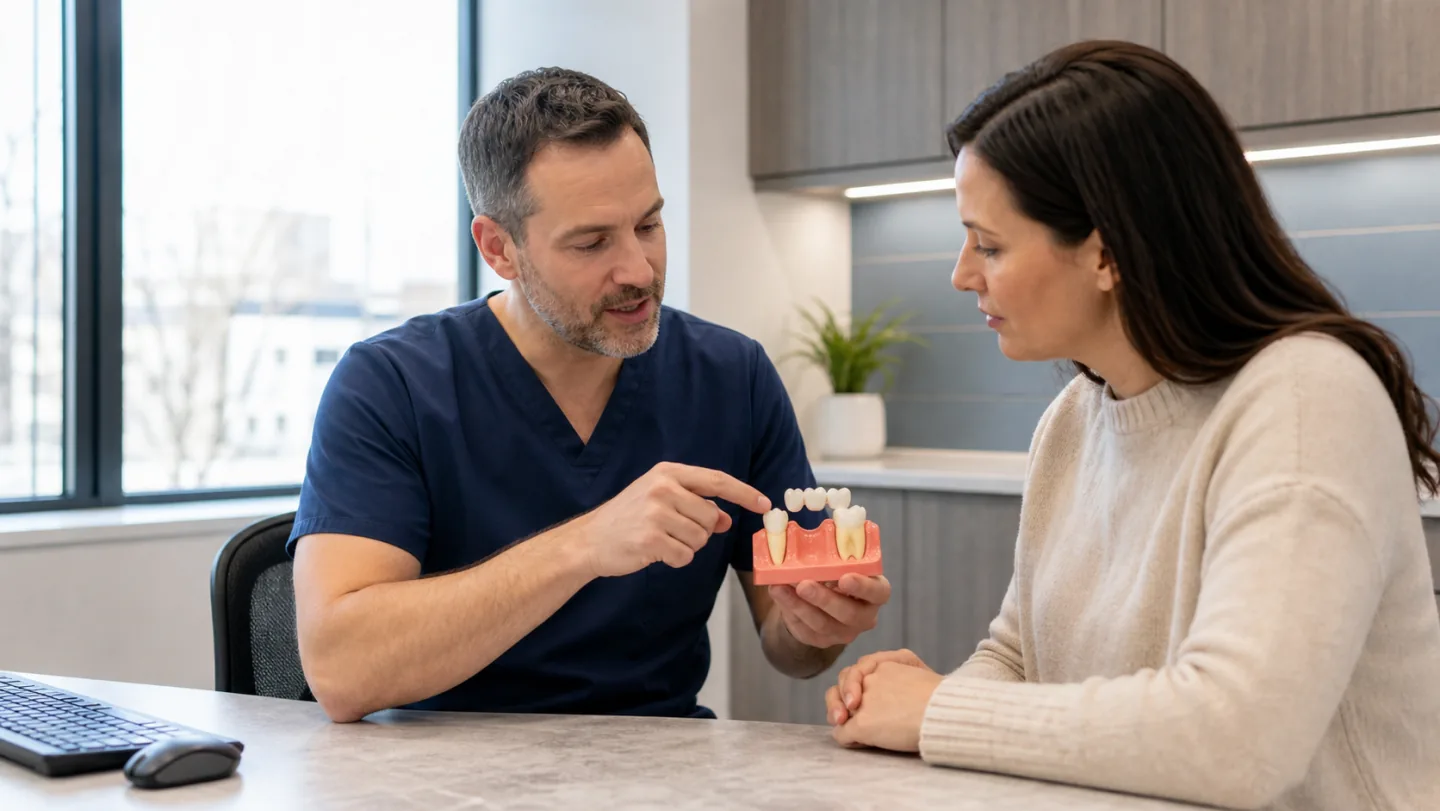
A dentist explaining how a fixed bridge can replace a missing tooth
If cavities keep finding you

Dental Bridges for Kildonan Park Residents

Some people seem to get decay no matter how carefully they brush. If that sounds familiar, it makes sense to ask how a bridge would fit with your cavity history before committing.

Let's find a time

Request an appointment

We’ll call to confirm your appointment. For urgent care, please call us directly.

Decay and tooth replacement

Bridges for Cavity-Prone Teeth: Kildonan Park Patients

The artificial tooth in a bridge cannot decay, yet any natural tooth holding it up still can. The vulnerable place is the margin, where the crown meets the tooth, and plaque left there over time can cause trouble that is hard to see.

A history of fillings does not rule out a bridge, though it does make cleaning and regular examinations especially important. Kildonan Park is in Winnipeg, and patients from the area can talk this over at our McPhillips Street clinic.

Explore dental bridges
Front desk and tall glass partition inside Winnipeg North Dental
The front desk and a framed print at Winnipeg North Dental.

Share your cavity record

Telling your dentist how often you have needed fillings helps give the plan useful context.

Margins get attention

Edges where a bridge meets the tooth are reviewed before attachment and at later examinations.

Cleaning is a design issue

A workable daily route for plaque removal is part of what a bridge has to offer you.

Where the risk sits

What a cavity-prone mouth brings to the plan.

Decay risk touches both the choice of design and the habits you will keep up long after the bridge is attached.

Looking at the supports

Before suggesting that a tooth carry a bridge, your dentist weighs up its condition and the state of any older repairs.

  • Active decay on or between neighbouring teeth.
  • Fillings and crowns that may be near the end of their life.
  • Root health and gum condition at possible anchors.
  • Whether implant support is worth discussing instead.

Planning for the years ahead

A plan for someone who gets cavities easily ought to be realistic about the upkeep it will demand of them.

  • A cleaning method you are able to keep up with.
  • Bridge margins that your tools can actually reach.
  • Examinations at intervals that suit your risk.
  • Preventive options your dental team may suggest.

Existing decay usually has to be dealt with as part of the overall plan. The order of treatment is something your dentist can explain after an examination.

Fitting decay into the sequence

Address cavities, then build the bridge.

Everyone’s order of care differs, but here is the general route, with decay risk kept in view from the first examination to the last check.

Request your visit
  1. 01

    Find out what is going on

    Your teeth, gums and existing restorations are examined, and X-rays may be taken when appropriate. Findings and priorities are then explained.

  2. 02

    Ready the foundation

    Any necessary treatment is discussed first. Anchor teeth are then prepared when required, or implants that have healed are assessed for connection.

  3. 03

    Collect the records

    Your bite, shade and scans or impressions direct the fabrication. A temporary may cover prepared teeth, so ask how you should clean around it.

  4. 04

    Inspect the edges

    Margins and cleaning access are reviewed with bite, contacts and appearance, and your bridge is secured once those checks are complete.

Think about your patterns

Be upfront about what your mouth tends to do.

Nobody is going to judge you for having a lot of fillings. A truthful account of your experience and routines gives your dentist more to work with.

Costs depend on what is found and treated, so an estimate makes the most sense after your examination. Have your plan details available if you have coverage.

Helpful to tell us

  • How many fillings you have had lately, even approximately.
  • Any dry mouth you notice, along with your full list of medications.
  • How you clean between your teeth on an average day.
  • Coverage information, such as an insurance plan or CDCP.
White chairs, a small child’s chair and potted plants below a window at Winnipeg North Dental
Wood-front cabinets and a teal dental chair in a Winnipeg North Dental room

Seating by a window and a treatment room at Winnipeg North Dental.

Tired of bad news?

Years of fillings can wear you down.

Repeated cavities can leave you dreading what comes next. Let us know if that is how you feel, because your dentist can explain findings at a pace that works for you.

Ask what can wait

If you have several concerns, ask your dentist to help you see what comes first and what can follow.

Speak about sensitivity

Teeth with past decay can be tender. Tell your dentist before examination or treatment gets going.

Get findings in plain terms

Please ask us to explain what an X-ray or a term means until it actually makes sense to you.

Staying ahead of decay

Margins need the most daily attention.

Plaque removal is how you protect your anchor teeth at home, and your examinations back that up. Both matter, particularly with a cavity history like yours.

01

A tool for under the bridge

Floss cannot drop between connected units. Have us show you how super floss, a threader or a water flosser can get in beneath.

02

Keep to your recall schedule

Your dentist can advise how frequently to come in, since margins can develop problems that you would not feel.

03

Report warning signs

Trapped food, a persistent bad taste or swelling near your bridge should prompt a phone call to the clinic.

Ask about preventive options at your examination. Your dental team can talk through what may be appropriate for you.

Talk with our team
Sidewalk view of the Winnipeg North Dental front, with its sign above tinted windows

Winnipeg North Dental

Unit-5 2358 Mcphillips Street, Winnipeg, MB R2V 4J6
Get directions (opens in a new tab)
Kildonan Park, and your care

Discuss Your Cavity History at Our Clinic

Assessment and bridge treatment for Kildonan Park residents take place at Winnipeg North Dental, Unit 5, 2358 McPhillips Street, Winnipeg, MB. Find your way with the directions link.

Call us or use the form to ask about a visit, and add a word about your concern with decay. A staff member will reply so that a time can be confirmed.

Questions about coverage?

Talk with our team before your visit or learn about CDCP.

A little clarity before your visit

Your questions, answered.

Helpful details about dental bridges in Kildonan Park.

Ask our team
Can the false tooth in a bridge get a cavity?

The artificial part does not decay the way enamel does. Natural teeth holding the bridge can, especially at the margins, so these areas need daily care and regular checks.

Do many past fillings mean I cannot have a bridge?

Not by themselves. Your dentist assesses the teeth as they are today, including structure, root health and gums, before saying which options seem reasonable.

Would decay under a bridge be easy to spot?

Not always, as a covered margin can be difficult to see yourself. This is one reason examinations continue to matter once your bridge is in place.

Do existing cavities need treatment before a bridge?

Decay in or around the planned area would normally be addressed as part of the overall plan. Ask your dentist how the order of care applies to your own teeth.

Would implant support remove the decay concern?

Implants themselves do not decay, though they still need good cleaning and your other teeth remain at risk. Suitability depends on bone, health and healing.

What should I do if something feels off around a bridge?

Phone the clinic about bleeding, swelling, a lingering taste or food that keeps packing in. Describing it early allows the clinic to advise you on what to do next.

Where do Kildonan Park residents start if they want this reviewed?

Send your request with the form on this page or call (204) 338-3003. Our Winnipeg clinic will reach out to discuss what you need and find a time.

Ask with your history in mind

Plan tooth replacement around your cavity risk.

If you are from Kildonan Park, talk to our Winnipeg clinic about what a bridge would involve for you. We’ll follow up to arrange a time.

Patient testimonials

Kind words from our patients

★★★★★ 5.0 from 440+ reviews on Google

Close to home

Areas we serve

Convenient dental care on McPhillips Street for families across northwest Winnipeg and nearby communities.

Explore all service areas

A healthier smile is one visit away

Ready for dental care that feels genuinely comfortable?

✓ New patients welcome ✓ Direct insurance billing ✓ Multilingual team

How can we help?

Our dental team is here for you.

Ready to book or have a question? Choose the option that works best for you.

For urgent dental concerns, please call us directly.

Send us a message

Our team will reply during clinic hours.



