Skip to content
Winnipeg North Dental
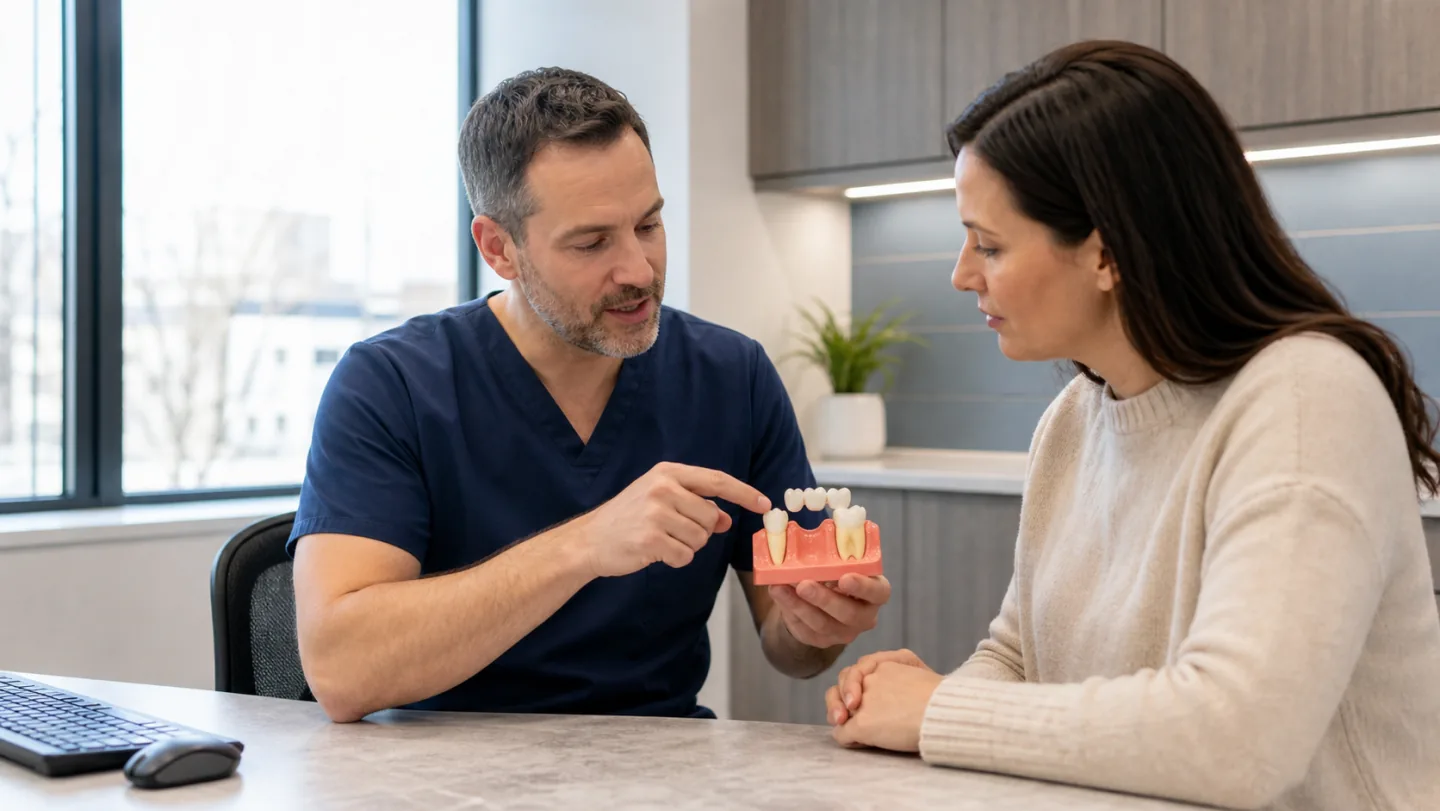
A dentist explaining how a fixed bridge can replace a missing tooth
Your health history and a bridge

Dental Bridges for Aurora Residents

If you take regular medication or live with an ongoing condition, you may wonder how that affects replacing a tooth. The first step is simple: share the full picture so your dentist can plan with it in view.

Let's find a time

Request an appointment

We’ll call to confirm your appointment. For urgent care, please call us directly.

The whole patient, not just the gap

Bridge Planning With Your Health in Mind, for Aurora Patients

A bridge is planned around more than the empty space. Your dentist also needs to understand your general health, because it can bear on which options are reasonable, particularly where implant support is being considered and healing becomes part of the discussion.

We cannot say from a web page what your own condition or prescriptions would mean, and that is exactly why the conversation matters. Care for Aurora residents takes place at our clinic on McPhillips Street in Winnipeg, and your history can be reviewed there before any plan is proposed.

Explore dental bridges
Wide blue bench beneath two abstract paintings, near a tall window blind, at Winnipeg North Dental
A blue bench under two abstract paintings at Winnipeg North Dental.

Share it all

Prescriptions, supplements and diagnoses can all be relevant, even when they seem unrelated to your teeth.

Options may differ

Tooth-supported and implant-supported designs raise different considerations, so one may fit your situation more readily.

Questions are welcome

If you do not understand how something in your history connects to treatment, simply ask us.

What gets reviewed

Health details on one side, dental findings on the other.

A proposal comes from reading both together. Neither your medical background nor the state of the gap is enough to decide on a bridge alone.

From your health history

This is the information only you can supply, and it is worth keeping it current each time something changes.

  • Conditions you are being treated for.
  • Anything you take daily or occasionally, including supplements.
  • Reactions you have had to a drug or a dental material.
  • Recent surgeries or changes to your care.

From your examination

This part comes from looking directly at the space and at the teeth or implant sites that might hold a replacement.

  • Gum health around prospective supports.
  • Root condition and existing restorations on neighbouring teeth.
  • Bite, alignment and the length of the span.
  • Bone and healing factors if implants are on the table.

A suitable plan depends on your dentist weighing these findings together. If something on this page raises a question about your own health, call the clinic and ask.

Your history at each step

How treatment unfolds once the review is done.

The stages of making a bridge stay much the same. Keep telling us about anything new along the way, even if it arises between appointments.

Request your visit
  1. 01

    Start with a full review

    Your medical information is read alongside an examination of the gums, alignment, roots and any dental work on the teeth next to the space.

  2. 02

    Attend to the support

    Anchors are prepared if your design requires this, or healed implants are evaluated for a restorative connection. Ask what each step would involve for you.

  3. 03

    Make the custom piece

    Bite records and shade details, along with a scan or impressions, direct the fabrication work. A temporary bridge may cover prepared teeth until then.

  4. 04

    Verify and attach

    Bite, contacts, margins and appearance are looked over, and so is your access for cleaning. Final attachment waits until these are satisfactory.

Getting your details together

A complete list is more useful than a memory.

Trying to recall doses from the chair is hard for anyone. Writing things down in advance, or bringing the containers themselves, gives your dentist more reliable information.

If you see a physician for an ongoing condition, you may want to have their name handy too, simply so the details are within reach.

Gather these ahead of time

  • Every medication and supplement, including doses if you can.
  • Your diagnoses, and roughly when they were made.
  • Contact details for your physician.
  • Insurance or CDCP documents, if they apply to you.
White desk with a keyboard and black chairs in a consultation room at Winnipeg North Dental
Reception counter with a framed abstract print on the wall at Winnipeg North Dental

A keyboard on a white desk and a framed print by the counter at Winnipeg North Dental.

This stays a conversation

Tell us what makes appointments harder.

Fatigue, stiffness or feeling uneasy in the chair can all affect how a visit goes. Mention what you are managing, and we can talk about what might make your appointments easier.

Ask about appointment length

When you know roughly how long you will be in the chair, you can plan your day and your energy.

Speak up about sitting back

If reclining or holding your mouth open is difficult, tell us before work begins.

Update us as things change

A new prescription or diagnosis between visits is worth a quick mention at your next appointment.

Living with a bridge

Home care should suit how you feel day to day.

Plaque needs removing daily, but the method can be matched to you. Tell the team if something in your health makes a certain tool or routine harder to use.

01

Find a manageable cleaning tool

Options for getting under the bridge include a floss threader, super floss, an interdental brush and a water flosser. Our team can demonstrate them.

02

Keep up examinations

Regular visits let your team check the anchors, gums and bridge, and they offer a natural time to refresh your health history.

03

Phone about any changes

Movement, a chip, a rough edge, a shifted bite, swelling or bleeding are all reasons to call the clinic.

The same goes for a persistent bad taste or food that keeps packing around the bridge.

Talk with our team
Winnipeg North Dental entrance with a dark door frame and a metal railing out front

Winnipeg North Dental

Unit-5 2358 Mcphillips Street, Winnipeg, MB R2V 4J6
Get directions (opens in a new tab)
Where Aurora residents are seen

Bring Your Medical History to Our Clinic

Your assessment and treatment are provided at Winnipeg North Dental, Unit 5, 2358 McPhillips Street, Winnipeg, MB. Use the directions link when working out how to get to us.

Mention any health concerns when you call or complete the form, and the clinic will contact you about the request. A time is only set once you have spoken.

Questions about coverage?

Talk with our team before your visit or learn about CDCP.

A little clarity before your visit

Your questions, answered.

Helpful details about dental bridges in Aurora.

Ask our team
Can I have a bridge if I have a chronic condition?

There is no general answer, because it depends on the condition and on your mouth. Your dentist reviews your history together with the examination findings before discussing what may be suitable.

Why does my dentist need to know about my medications?

Treatment decisions are made more safely with an accurate picture of your health. Some details might be relevant to planning, so share the full list even if an item seems minor.

I take a medication that worries me. What should I do?

Call the clinic and tell the team what you take, ideally well before your appointment. That way your question can be addressed by someone who has your details in front of them.

Does my health matter more with an implant-supported bridge?

Implant planning specifically takes bone, health and healing into account. Your dentist can explain whether those factors favour or limit that route for you.

What if my condition makes cleaning my teeth harder?

Mention it at your assessment, since a bridge relies on daily cleaning to protect the natural teeth holding it. Your team can show you tools and talk over whether a fixed design suits you.

Could my health change which design is offered?

It might, and implant support is where that comes up most directly. Tooth-supported designs still depend on your gums and roots, so your dentist looks at both before proposing anything.

How can Aurora residents arrange a review?

Call (204) 338-3003 or fill out the form on this page, noting anything about your health you would like discussed. Visits take place at our McPhillips Street clinic in Winnipeg.

Start with your history

Let your dentist see the full picture.

If you live in Aurora, ask about a bridge assessment at our Winnipeg clinic, and we’ll reply to discuss your request and arrange a time.

Patient testimonials

Kind words from our patients

★★★★★ 5.0 from 440+ reviews on Google

Close to home

Areas we serve

Convenient dental care on McPhillips Street for families across northwest Winnipeg and nearby communities.

Explore all service areas

A healthier smile is one visit away

Ready for dental care that feels genuinely comfortable?

✓ New patients welcome ✓ Direct insurance billing ✓ Multilingual team

How can we help?

Our dental team is here for you.

Ready to book or have a question? Choose the option that works best for you.

For urgent dental concerns, please call us directly.

Send us a message

Our team will reply during clinic hours.



